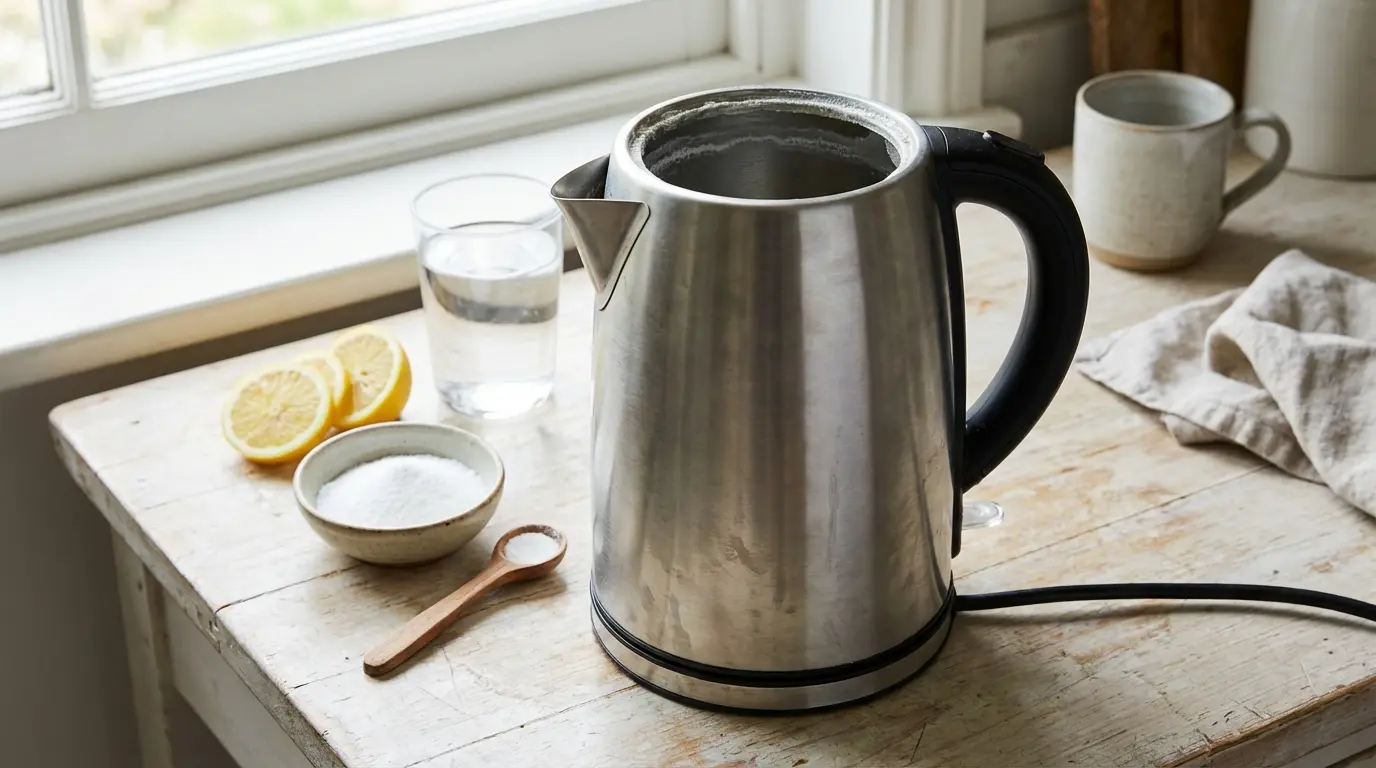
Limescale in an electric kettle is more than just an eyesore. A layer of buildup increases boiling time, consumes more electricity, and can ruin the taste of your morning tea or coffee. The good news is that you do not need expensive chemicals to fix it. Common kitchen staples can do most of the hard work.
Why limescale keeps coming back
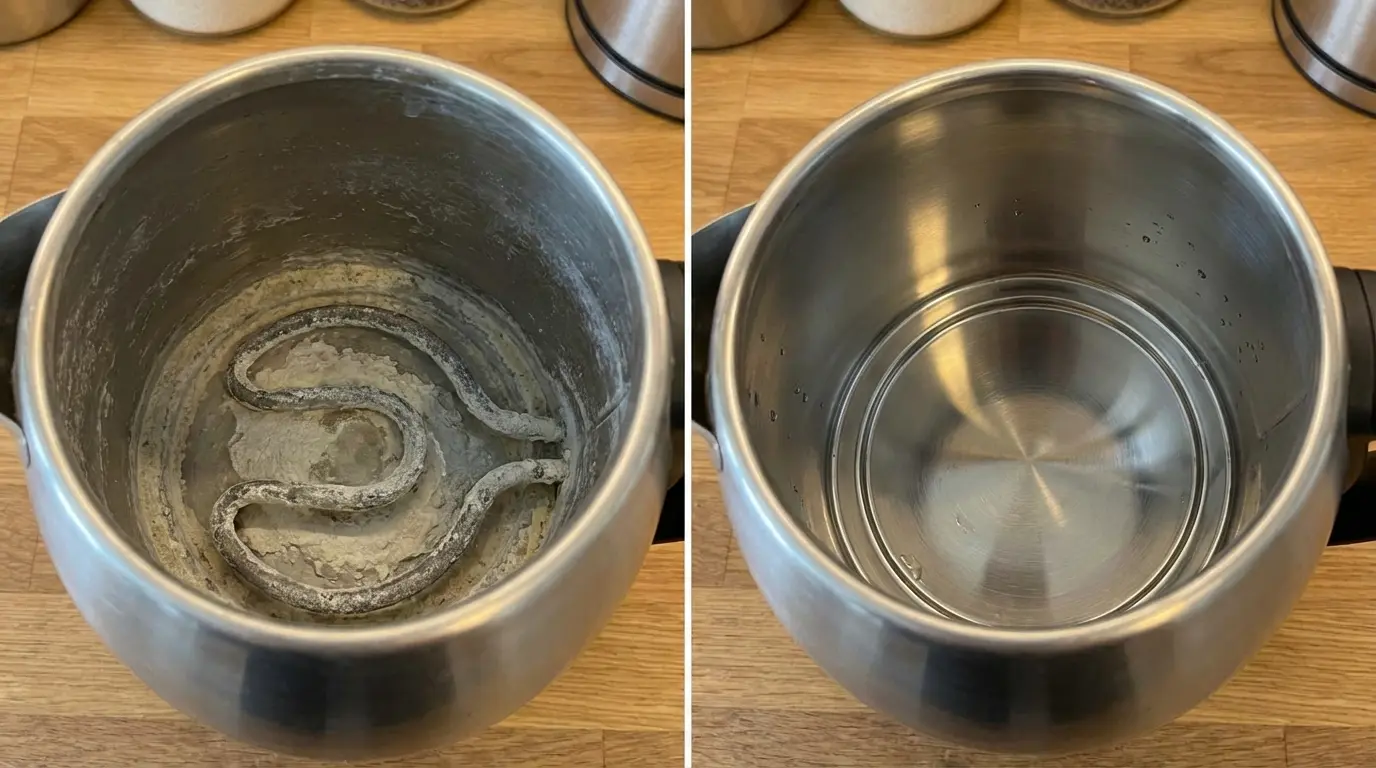
The main culprit is hard water, which contains high levels of minerals like calcium and magnesium. When heated, these minerals settle and form a hard crust. Leaving leftover water in the kettle only speeds up this process. Even a thin layer of scale acts as an insulator on the heating element, causing it to overheat and work less efficiently.
How to descale a kettle step by step
There are two primary methods that are gentle on your appliance and the environment: citric acid and white vinegar.
Citric Acid (The Odorless Method)
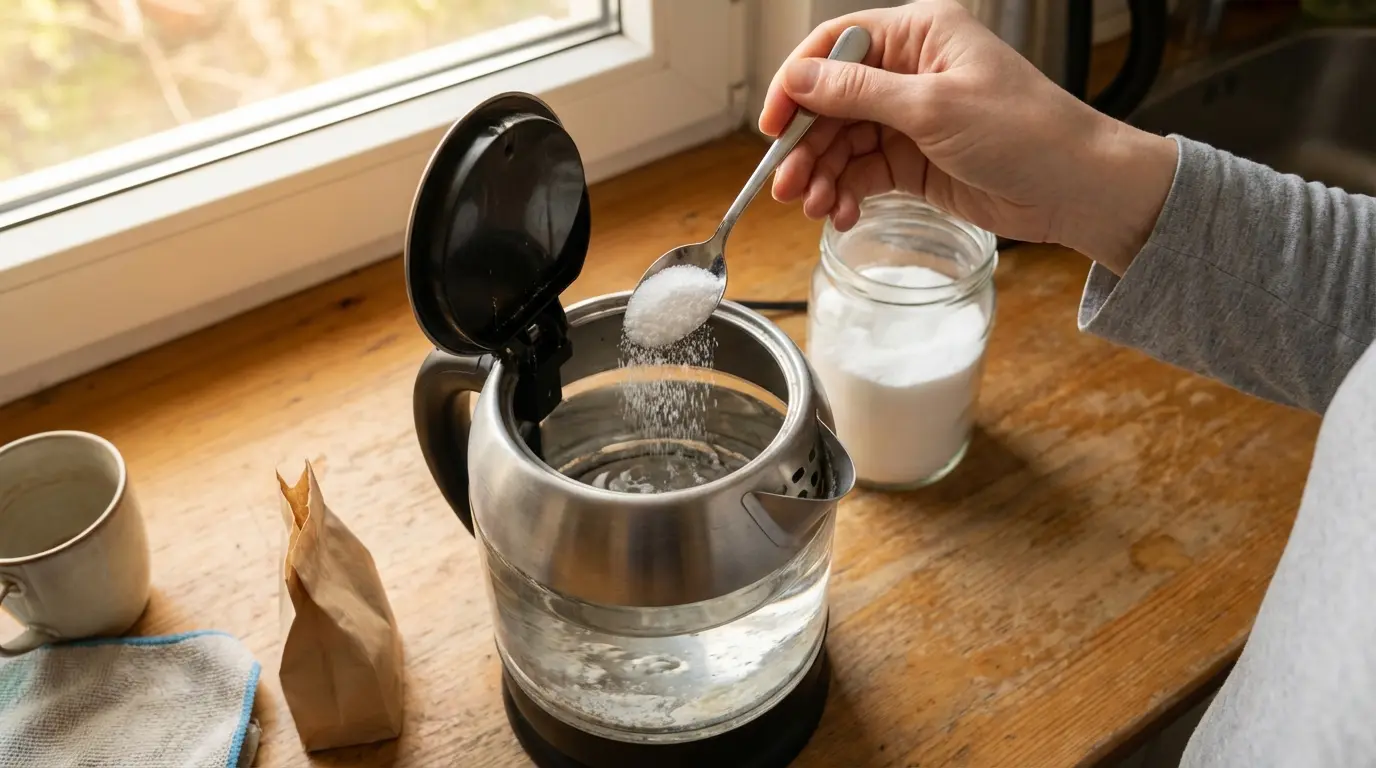
This is the best method for routine maintenance because it leaves no smell behind. Fill the kettle with about a liter of water, add 1–2 tablespoons of citric acid, and bring it to a boil. Once boiled, let the solution sit for at least 30 minutes, or up to an hour for thicker scale.
White Vinegar (For Heavy Buildup)
If your kettle is heavily scaled, white vinegar is a powerful ally. Mix equal parts vinegar and water and bring the solution to a boil. Vinegar is more aggressive, so do not leave it in the kettle for too long after boiling. The main drawback is the strong smell released during the process.
Rinsing and Removing Odors
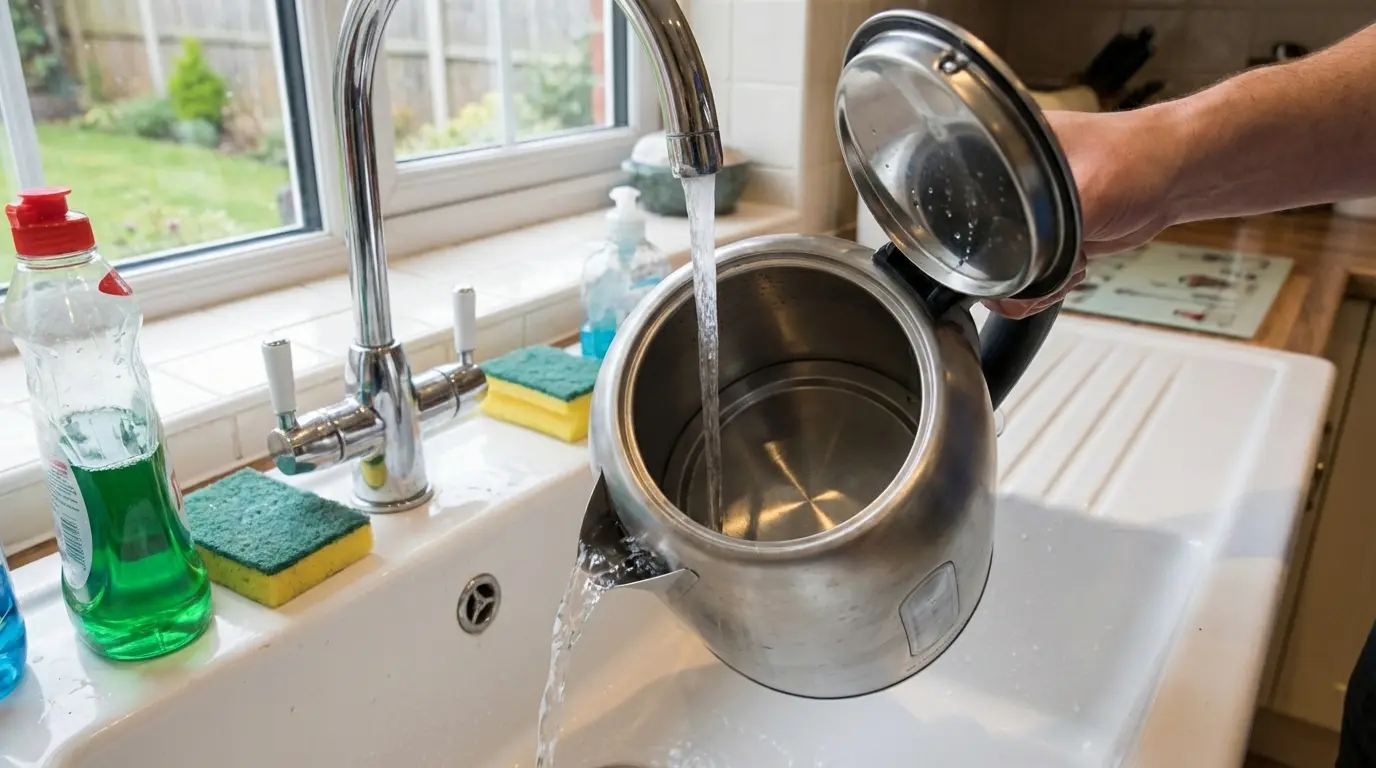
After pouring out the descaling solution, it is crucial to rinse the kettle several times with clean, cold water. We recommend boiling at least one full kettle of clean water and discarding it to ensure all traces of the solution and any vinegar smell are completely gone.
What works better: Vinegar, Citric Acid, or a Descaler?
Citric acid is the winner for regular home use because it is odorless. Vinegar is slightly cheaper and more accessible for very neglected kettles. Commercial descalers are effective but often contain unnecessary chemicals and cost more than natural alternatives. If you descale regularly, citric acid is all you need.
How to prevent rapid limescale buildup
The key is not to let water sit in the kettle. Empty any leftover water after each use and let the kettle dry out. If you live in a very hard water area, consider using a filter jug to remove minerals before boiling.
When it is time to replace your kettle
If the interior surface, especially in plastic models, is pitted, peeling, or if the kettle emits strange odors even after cleaning, it is time for a replacement. Safety and health come first in the kitchen. With a well-maintained kettle, however, you will save energy and money.