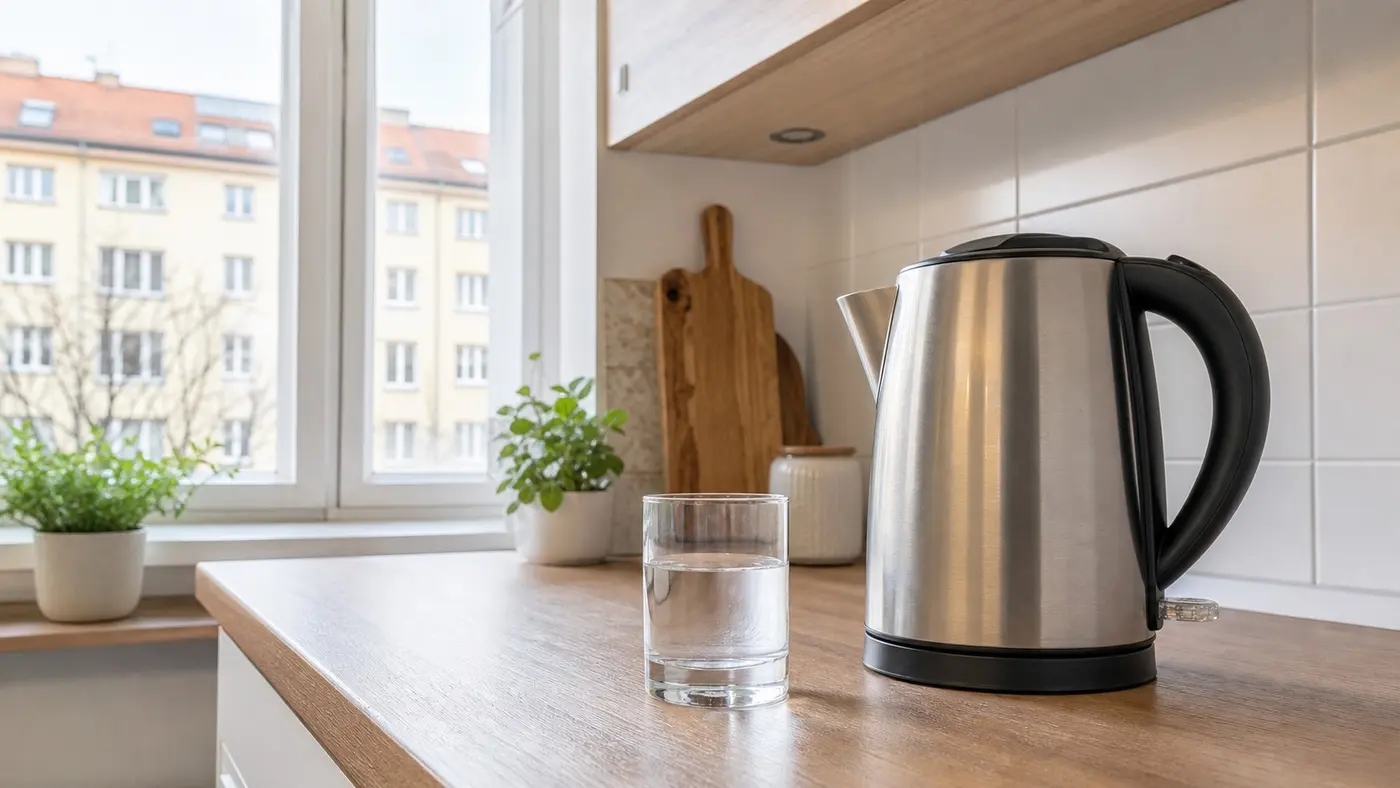
When people ask how to descale a kettle, they usually do not want a chemistry lesson. They want the white flakes gone, the tea to taste normal, and the inside of the kettle left intact. That last part matters. Limescale comes off with acid, but the choice between citric acid, white vinegar, and a commercial descaler changes how the kettle smells afterwards and how much rinsing you need to do.
I see this a lot in Prague flats. A new electric kettle looks fine for the first few weeks, then a pale film appears on the bottom. Leave it for a few months and little chalky pieces start floating in the water. It is not dirt in the usual sense. It is mostly minerals from hard water, left behind every time the kettle boils and cools. The trick is to remove it while it is still a thin layer, before it turns into a stubborn crust.
Why limescale builds up faster than you expect
Hard water is common in many Czech homes, and the speed of buildup varies from one building to another. A kettle in a small rental flat can work harder than people realise: morning coffee, afternoon tea, water for cooking, sometimes several rounds a day for a family. Each boil leaves a little mineral residue. One boil does almost nothing. Thirty boils start to show.
Limescale causes three practical problems. First, it can affect the taste of water. Not always dramatically, but tea and filter coffee show it quickly. Second, it slows heating because the mineral layer sits between the water and the heating base. Third, it makes the kettle look neglected, especially if it is glass.
A thin white film is normal maintenance. A thick, rough layer that flakes off is a neglected buildup. That distinction matters because people often react to heavy scale by making the cleaning solution too strong or leaving vinegar inside overnight. I would rather do two short descaling rounds than punish the kettle with one aggressive soak. Stronger is not automatically safer.
Vinegar, citric acid, or descaler: what to use
White vinegar works. Acetic acid dissolves calcium deposits, and white vinegar cleaning is a perfectly valid household method. The problem is smell. An electric kettle is not a bathroom tap. You drink the water that comes out of it, and vinegar can linger around the lid, the spout filter, and plastic parts.
For routine kettle care, citric acid is usually my first choice. It is cheap, easy to find in Czech supermarkets and drugstores, and it rinses out more cleanly than vinegar. If you want to clean electric kettle buildup without that sharp vinegar smell, citric acid descaling is the calmer option. For a light to medium layer, use about 1 to 2 tablespoons of citric acid in half a litre to one litre of water, depending on the kettle size and the scale.
Vinegar makes sense when you already have it at home or the scale is older and tougher. Keep the mix moderate: one part vinegar to two or three parts water. If the kettle has a lot of plastic around the lid, use a shorter soak and rinse more carefully. The smell can cling longer than you expect.
A commercial descaler is useful for expensive kettles, appliances under warranty, or models where the manufacturer recommends a specific product. Read the manual. That sounds dull, but it prevents avoidable damage. Many manuals allow vinegar or diluted citric acid, and they nearly always warn against immersing the electric base, using abrasive tools, or scraping the heating plate.
A quick decision guide
- Use citric acid for ordinary white film and regular maintenance.
- Use vinegar if citric acid is not available, but plan for extra rinsing.
- Use a commercial descaler for warranty-sensitive or heavily scaled kettles.
- Do not scrape the base with metal tools, even when the scale looks tempting.
Step-by-step kettle descaling
Start by unplugging the kettle from its base and emptying any leftover water. Never immerse the electric part, base, cord, or connector. Treat the inside like a water container, but remember that the appliance is still electrical. A kettle is not just a saucepan with a switch.
For citric acid, pour in half a litre to one litre of water, add 1 to 2 tablespoons of powder, and stir gently with a plastic or wooden spoon. If someone asks me how to descale a kettle without making the kitchen smell sour, this is usually the method I point to first. Bring it briefly to the boil, switch off, and leave it for 15 to 30 minutes. Light scale often loosens fast. Heavy buildup may need another short round.
For vinegar, use a weaker solution, preferably one part white vinegar to two or three parts water. Bring it to the boil, switch off, and let it sit briefly. I would not leave vinegar in a daily-use electric kettle for hours unless the scale is genuinely severe. Short contact and patient rinsing usually give a better result.
Pour the solution away. If loose scale remains, use a soft sponge, cloth, or soft toothbrush. Do not use a knife, screwdriver, wire wool, or anything sharp on the heating base. Scratches give new scale more places to grip, so the kettle can become harder to maintain over time.
The spout and filter deserve attention. If the filter is removable, soak it separately in weak citric acid or diluted vinegar, following the manufacturer’s advice. Wipe the lid rim with a damp cloth. That area often holds small droplets and dust rather than heavy mineral scale, so it rarely needs force.
How to remove the vinegar aftertaste
Vinegar aftertaste is the reason many people stop using vinegar in kettles. One rinse is not enough. After a vinegar descale, run at least two full boils with clean water and pour them away. If the kettle has plastic parts or a removable filter, do three. It feels wasteful for a minute, but it is better than ruining the first pot of tea.
Check the smell with the lid open, not just from the cup. Then boil a smaller amount of fresh water, let it cool slightly, and taste it. Hot water can hide the smell. Lukewarm water makes it obvious. If you still catch a sharp acidic note, rinse again.
If the taste remains after several boils, the issue is often the filter, lid edge, or loosened scale that did not fully rinse away. Remove the filter, wash it separately, wipe the lid area, and run another clean-water boil. In very plastic-heavy kettles, a weak citric acid round after vinegar can sometimes help clear the smell. Keep it gentle. Short soak, weak solution, thorough rinse.
One practical rule: do not use the first clean-water boil after descaling for coffee or tea, even if it smells fine. Pour it away. The second or third boil is usually where the kettle starts tasting normal again.
How often to descale and how to slow limescale down
Frequency depends on water hardness and use. If you boil water twice a day and the water is fairly soft, once every six to eight weeks may be enough. In a busy household with harder water, coffee drinkers, and a kettle that runs all day, every two to four weeks is more realistic. Glass kettles tell on themselves. Stainless steel kettles are quieter about it, so watch for flakes, rough patches, or a dull taste.
You can slow limescale down by not leaving water sitting in the kettle overnight. Empty what is left after use, leave the lid open for a short while, and put the kettle back when the outside is dry. It is not a grand cleaning routine. It is a ten-second habit.
Filtered water can help where scale returns quickly, although filter cartridges need replacing on schedule. Otherwise, the problem just moves from one appliance to another. If your kettle scales fast, check the coffee machine, taps, shower head, and glass shower screen as well. The kettle is often the first visible warning sign in the kitchen.
When cleaning is no longer the answer
If the internal coating is peeling, the kettle smells strange after repeated rinsing, it switches off too early, or the connector looks damaged, descaling will not fix the real problem. With an old cheap kettle, replacement may be more sensible than another aggressive cleaning attempt. Maintenance should extend the life of an appliance, not hide a fault.
Kettle descaling is one of those small kitchen jobs that makes daily life nicer very quickly. The same is true for a degreased extractor hood, clean cabinet fronts, and taps without mineral marks. If the whole kitchen needs attention rather than just one appliance, ČistýKout can help with a Prague-based cleaning visit. The contact form is the easiest way to send a non-binding request and describe what needs doing.