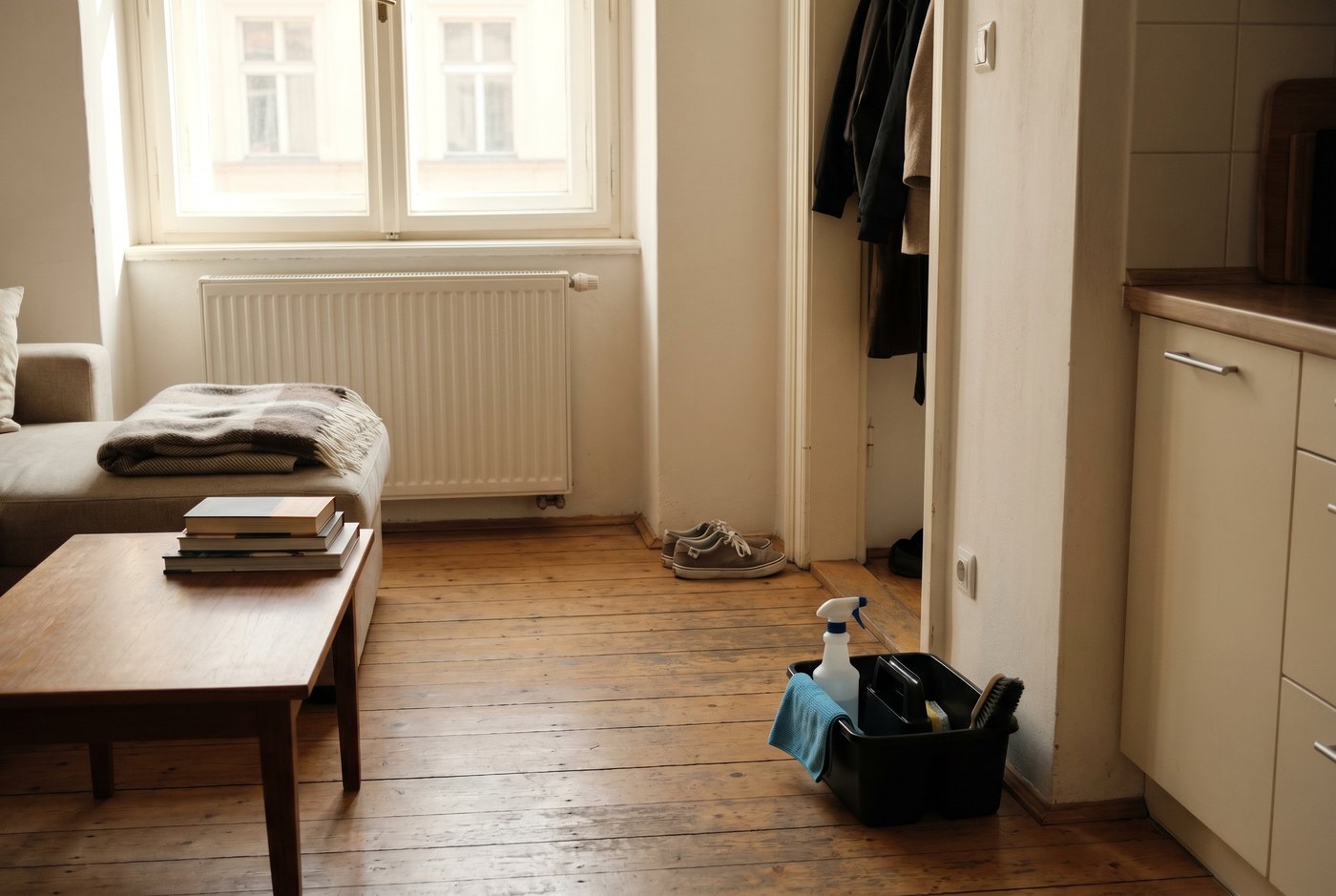
If you're wondering how to prepare your apartment for cleaning, the stress usually isn't about dirt. It's about embarrassment. People book a first cleaning visit in Prague, then spend the hour before arrival stuffing cables into drawers, shoving laundry behind a door, and apologizing for a flat that looks, honestly, like a real flat. I think that's the wrong frame. You are not supposed to prove that you deserve a cleaner. You just need to make sure the cleaner can actually clean instead of sorting your life into piles.
Do you need to clean before the cleaner comes? The short answer, without the guilt
No, you do not need a showroom apartment before a professional arrives. A cleaner expects signs of normal life: dust on shelves, toothpaste marks on the sink, fingerprints on the mirror, crumbs by the toaster, hair in corners, a shower that gets used, a floor that clearly has people walking on it. That's the job.
What slows the visit down is not ordinary mess. It's blocked access. A cleaner can wipe a kitchen counter covered in splashes and grease. That's straightforward. A cleaner cannot properly wipe that same counter if it's buried under unopened post, charging cables, spice jars, receipts, school papers, and three random tote bags from Albert. At that point the time goes into moving objects, not cleaning.
That distinction matters more than most first-time clients realise. Everyday untidiness is normal. A space so cluttered that nobody can reach the surfaces is something else. I don't say that to shame anyone. Small Prague apartments make this very easy to understand. A 2+kk in Karlín, a family flat in Vršovice, an older panelák layout in Stodůlky - they can all be lived in hard and still be cleanable. The issue is not whether the place looks perfect. The issue is whether the cleaner can reach the places you hired them to clean.
People also panic about the wrong things. A greasy hob is normal. A dusty shelf is normal. Water marks in the bathroom are normal. Those are cleaning tasks. What creates a bad first cleaning visit is when the cleaner spends paid time figuring out where to put your things, what not to touch, and how to get to the floor in the first place.
What actually helps to put away or prepare in advance
If you want to prepare home for cleaner visits properly, think in terms of access, safety, and clarity.
Start with valuables, private documents, cash, jewellery, medication, and anything sentimental that would bother you if someone had to move it. This is not an accusation. It's simple risk reduction. When those items are tucked away before the visit, everyone relaxes. There is less awkwardness, less second-guessing, and much less chance of a later "have you seen this envelope?" conversation.
Then deal with loose small items. Chargers, headphones, hair clips, toys, coins, cosmetics, pens, papers, shopping bags, half-finished work notes, and whatever else tends to collect on tables and bathroom counters. These are the things that quietly eat time. Five minutes here, seven minutes there, and suddenly a cleaner has lost half an hour to tiny objects that should never have been part of the service in the first place.
The floor matters more than people think. If you want the apartment vacuumed and mopped, the floor needs to exist as a floor. That means picking up laundry, kids' toys, pet bowls if they are in the middle of the path, and the pile of shoes that somehow became permanent furniture in the hallway. You do not need to organise your storage. You just need to clear the runway.
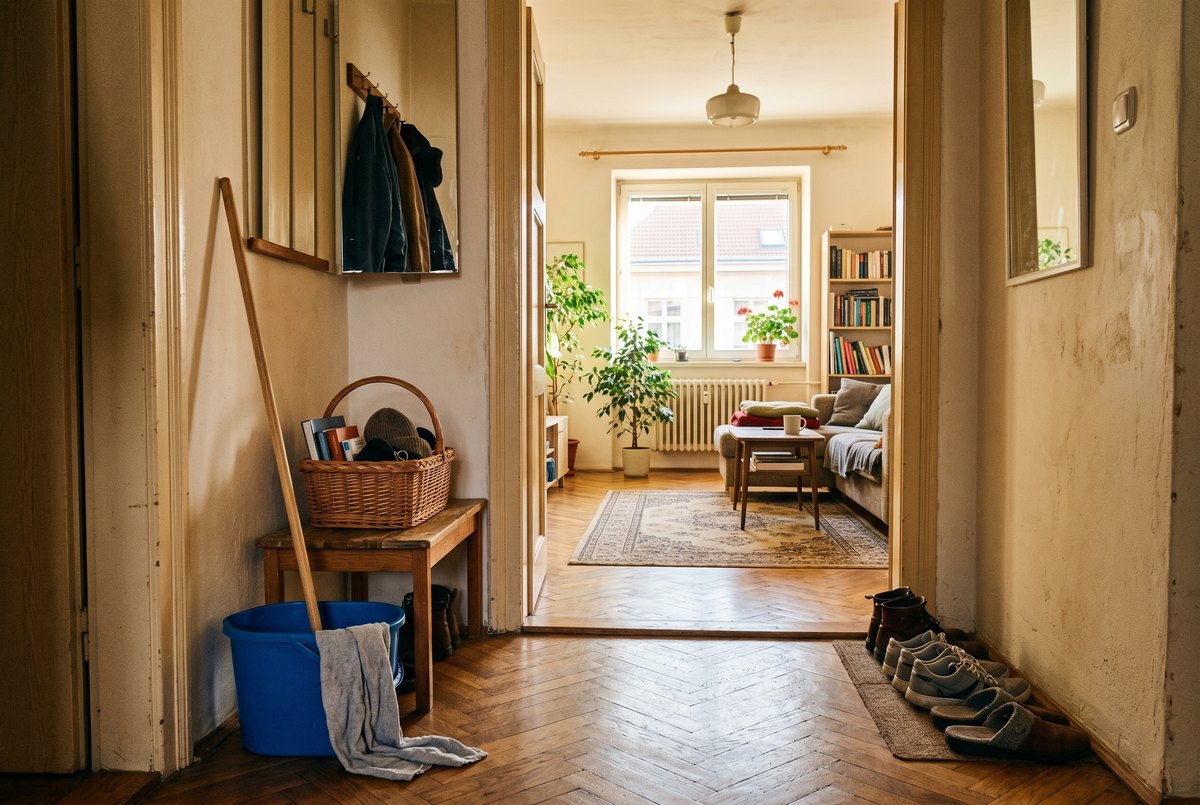
Access instructions are part of the preparation too. If you won't be there, send the code, floor number, building quirks, and entry instructions in one clean message. Mention if the lift is unreliable. Mention if parking is awkward. Mention if the doorbell doesn't work unless you really lean on it. This sounds minor, but it shapes the start of the visit. The smoother the entry, the more time stays available for actual cleaning.
What you should leave for professional cleaning
This is where people waste energy. They scrub the sink, wipe the mirror, and do a rushed pass over the hob because they feel self-conscious, then leave clutter everywhere. That's backwards.
Leave the bathroom and kitchen surfaces to the cleaner. Limescale around the tap, fingerprints on tiles, soap marks, splashes by the sink, grease around the cooker, dust on skirting boards, everyday sanitising in the toilet and shower - that is exactly where professional help earns its keep.
The same goes for vacuuming and mopping. If you do a nervous quick vacuum before the cleaner arrives, you've usually just spent your own time doing a weaker version of the thing you already paid for. Far better to lift objects off the floor and let the cleaner do the real pass, including the edges, corners, and under-furniture zones that routine home cleaning often misses.
Dusting belongs in the service as well. Shelves, side tables, window sills, switches, handles, visible surfaces in the bedroom and living room. I would not burn energy doing half that work in advance unless you have a very unusual request or a severe allergy issue that needs specific handling.
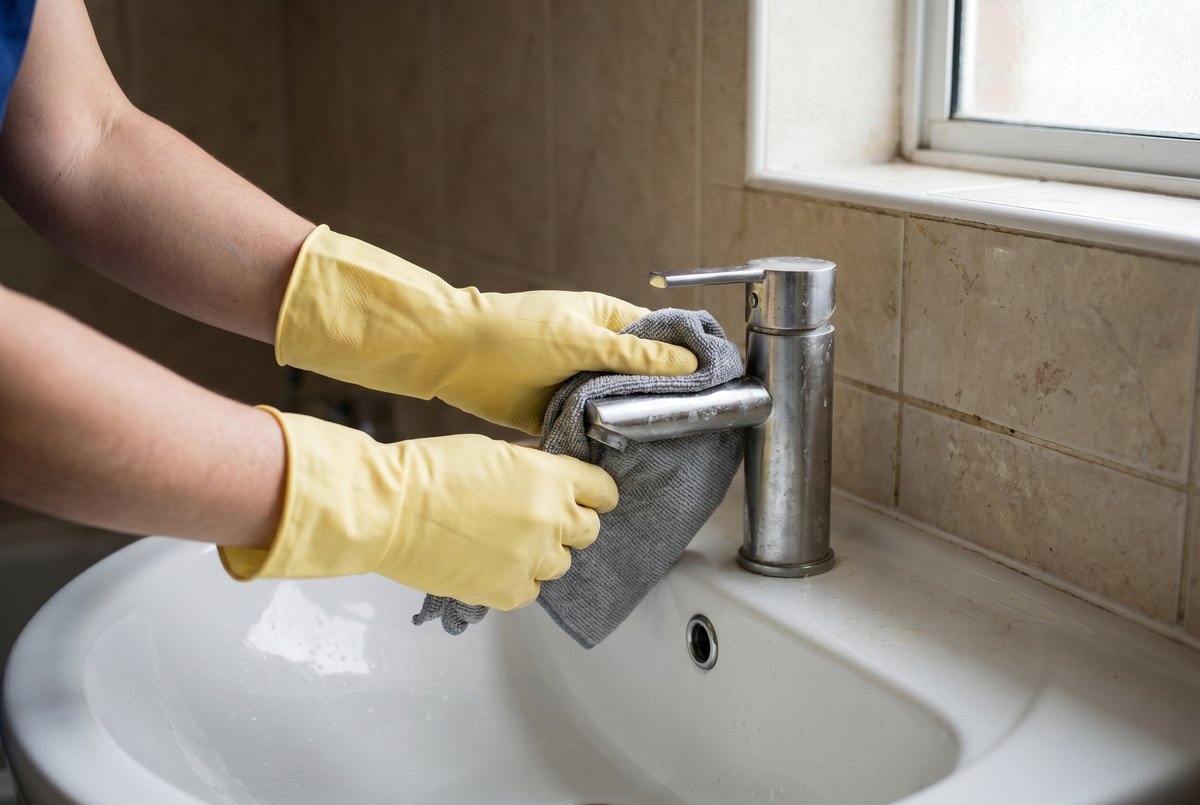
Basic sanitising is not some luxury add-on. For many clients, it's the whole reason to book apartment cleaning. Once people understand that they do not need to pre-clean, only pre-clear, the service suddenly feels less emotionally annoying and much more useful.
How to communicate so the result matches your expectations
A first cleaning visit is partly about the clean itself and partly about calibration. If you have clear priorities, say them plainly. Not "everything, please." That helps nobody.
Try something like this instead: "Please start with the bathroom and kitchen. The bedroom can be lighter today." Or: "The main issue is dog hair in the living room and grease around the stove." Or: "The home office desk should be cleaned carefully around electronics, but papers stay where they are." These short notes save time and give the cleaner a sensible order of work.
I usually think one to three priorities is the sweet spot. More than that, and every area becomes equally important, which means none of them really is. In a bigger Prague flat, especially one with one bathroom plus a separate toilet, this matters fast.
Sensitive surfaces should also be mentioned early. Natural stone, oiled wood, delicate coffee machines, a specific anti-scratch finish, older brass fittings, art prints, a glass cabinet, aquarium equipment, premium monitors on a work desk. That isn't being difficult. It's normal information.
Then there is the time limit. If you booked three hours, expect a good targeted clean, not a miracle. One of the most common mismatches in a first cleaning visit is not bad work. It's unrealistic scope. Four rooms, oven, full detail bathroom work, windowsills, deep kitchen degreasing, and child-related clutter sorting all within a short slot? No. Better to decide what must be done and what can wait.
Pets, children, and home office setups: the awkward real-life cases
Pets, kids, and remote work do not make cleaning impossible. They just change the choreography.
With dogs, think noise and movement. Some dogs are fine. Others lose their minds at the bell, the vacuum, or a stranger carrying a mop bucket. If you know your dog gets stressed, arrange a walk, a separate room, or a quick handoff to someone nearby. Cats are different but not necessarily easier. Open doors, unfamiliar movement, and cleaning products can all be enough to make the whole visit more complicated than it needs to be.
Children add floor clutter and unpredictability. If small toys are everywhere, pick them up before the cleaner arrives. If the child will stay home during the visit, assume the process will be slower and noisier than usual. Sometimes the smartest move is simply going out for an hour. Not because the cleaner can't cope, but because everyone works better without constant crossing paths.
A home office deserves a quick setup of its own. Close the laptop, stack papers you do not want moved, unplug what can be unplugged, and say clearly what should be left alone. A desk with two monitors, headphones, chargers, notebooks, and a coffee mug can be cleaned around, but it should not become a guessing game.
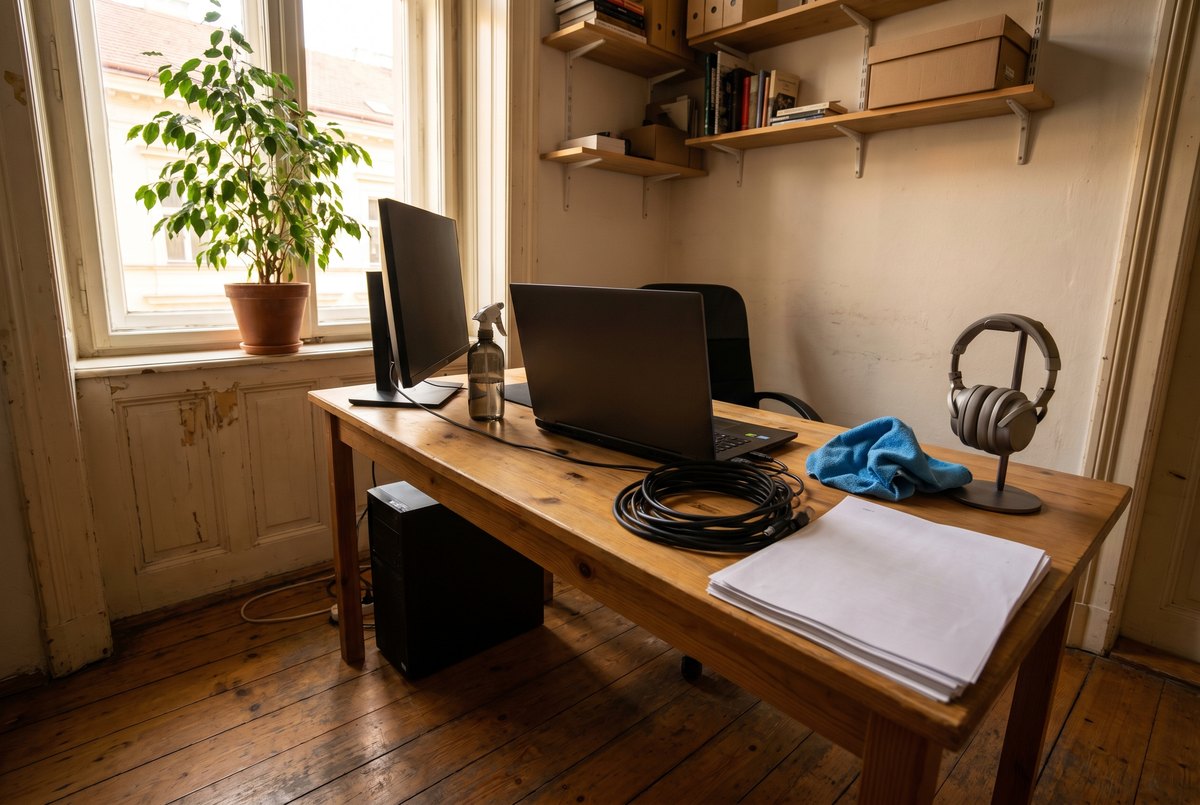
Timing matters too. People working from home often assume the cleaner will somehow operate in the background while calls continue as normal. Sometimes that works. Sometimes you end up trying to explain quarterly numbers while a vacuum is going full volume outside the door. Better to schedule the visit around the loudest part of the work.
A 10-minute checklist before the cleaner arrives
If you want one simple answer to what to do before a cleaner arrives, here it is:
- pick clothes, toys, bags, and loose items up off the floor
- tuck away valuables, documents, cash, and medication
- clear enough of the kitchen counter and bathroom vanity to expose the surfaces
- move dishes so the sink and worktops can actually be cleaned
- decide on two or three priorities for the visit
- flag any delicate surfaces, electronics, or areas to avoid
- send clear entry details, including codes and contact number
- secure pets if they react badly to strangers or equipment
That is enough. Really. The goal is not to perform cleanliness before the cleaner gets there. The goal is to make the paid time count.
If this is your first cleaning visit, keep the rule simple: remove obstacles, protect private items, and communicate priorities. Leave the real cleaning to the professional. And if you're looking to book apartment cleaning in Prague without the usual awkwardness around a first visit, CistýKout is one local option worth considering: /en/contact