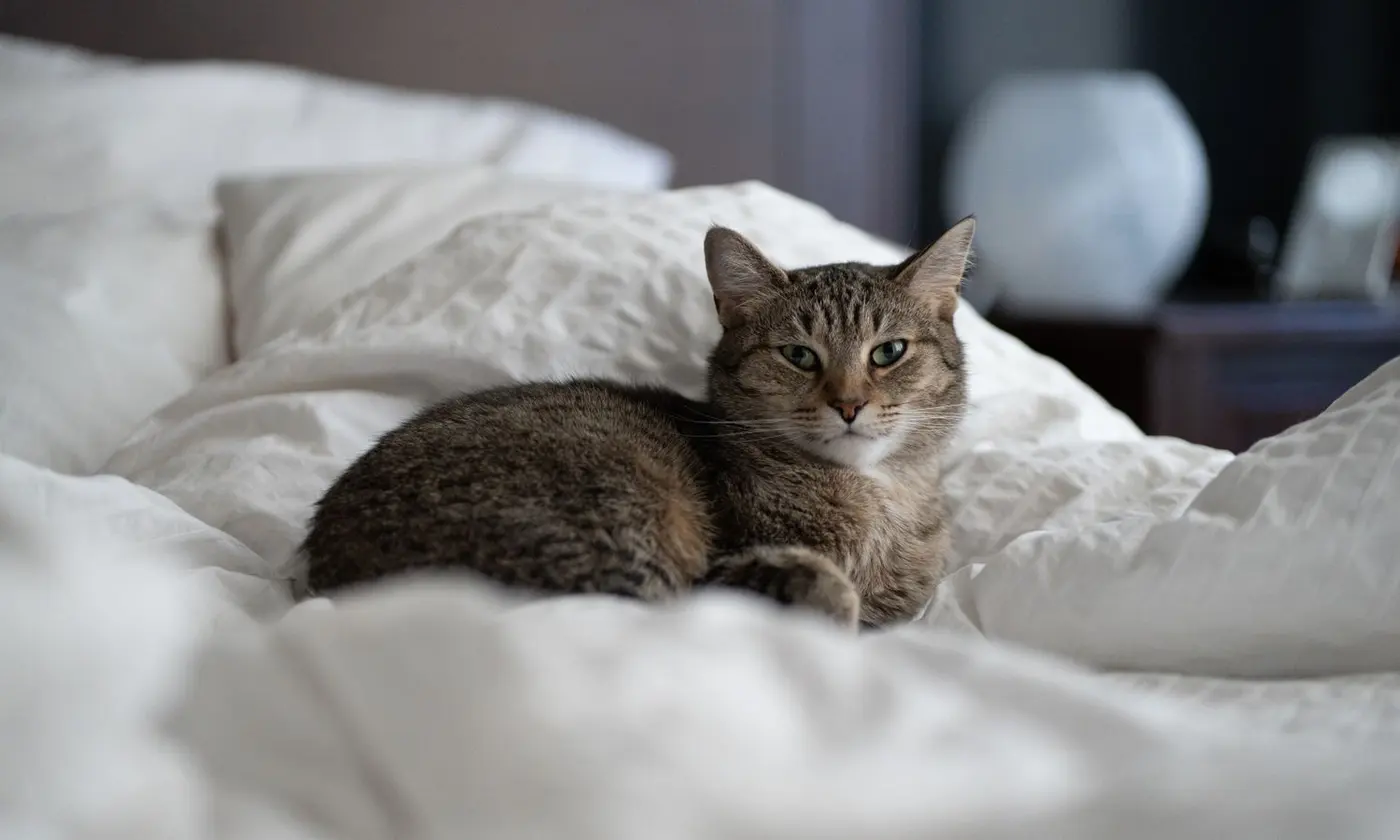
If you are trying to work out how to remove pet hair from laundry, do not begin at the washing-machine controls. Begin with dry bedding. A washer does not dissolve fur. It rinses some away, pushes some farther into the weave, and leaves the rest in the drum, door seal, or pump filter. The next load goes in and a ginger cat hair appears on a clean white T-shirt. One Prague household I know calls this “the cat's second wash.” Fair description.
Why the washing machine cannot remove all the hair
Pet hair is light, springy and sometimes slightly oily. It slips off smooth cotton sateen more readily than it leaves flannel, terry cloth or fleece. Those fabrics have loops and a raised surface that hold individual hairs. Fleece is particularly deceptive. It may look clean, but one pass with a damp palm can produce a grey roll of fur.
Water changes the problem rather than making it disappear. Loose hairs leave the fabric, travel around the drum and collect in the holes, the folds of the rubber seal, and the pump filter. Short, fine hairs may settle on another item. That is why pet hair in a washing machine can still be visible after the cycle, and why a heavily covered dog blanket should not share a load with towels or underwear.
A few hairs will not damage a washer. Large wet clumps mixed with threads, tissue and other debris can restrict a filter or drain path, though. Slow draining, water left in the drum, or a pump making an unfamiliar noise deserves attention. Before opening anything, check the manual for your model. Some filters release a mugful of water; others can flood half a small Prague bathroom unless a shallow tray is ready.
The most useful step happens before washing
Remove bedding slowly instead of rolling everything into a tight bundle. Shake it outdoors if you can, but think about the neighbours below. In a Prague courtyard, a vacuum with a clean upholstery attachment is usually kinder than dropping a cloud of fur onto somebody else's drying rack. Spread the fabric flat, use modest suction, and work in strips so the nozzle does not swallow a corner of the duvet cover.
For the remaining cat hair on bedding, a dry or barely damp rubber glove works remarkably well. Use long strokes to gather the hair into one line, then put it in the bin. A rubber window squeegee does much the same job. Keep sticky rollers for small areas and the final pass; stripping a double duvet cover can consume a silly number of paper sheets.
If you own a tumble dryer, a ten-minute no-heat or low-heat tumble before washing can loosen dry hair and send it to the lint filter. Read the care label first. Wool, waterproof membranes and some mattress protectors do not belong in this routine. Clean the lint filter as soon as the short cycle ends, before the released hair has a chance to travel anywhere else.
The method changes a little by item:
- Shake cotton bedding, then vacuum seams, corners and the area around the zip.
- Work over fleece or a fluffy dog blanket with a rubber glove; shaking alone rarely does enough.
- Clean a mattress protector while it lies flat, then fasten zips and hook-and-loop tabs so they cannot catch more fibres.
- Wash a small pet bed only when the label allows it and its filling is fully enclosed.
A mesh laundry bag is useful for small covers and items with hook-and-loop fasteners because it separates them from the rest of the load. It is not a magic hair trap. The fur remains inside the bag or on the item and still needs to be removed. The bag contains the mess. It does not erase it.
Set the wash for the fabric, not the fur
Wash heavily covered items separately. In my view, that simple rule beats most silicone gadgets advertised online. Mixing pet bedding with everyday clothes spreads fur across more surfaces. If one blanket does not make a sensible load, add only similarly coloured, equally hairy pieces. Do not throw in clean towels just to fill the drum.
Leave room for movement. Bedding needs to lift and fall so water can rinse away loosened hair. As a practical check, you should be able to fit a hand above the dry load. With a bulky blanket, the kilogram rating tells only part of the story: once soaked, the blanket becomes heavy and may struggle to balance.
Choose the programme from the care label rather than the amount of fur. Cotton bedding will often take a standard cotton cycle. Flannel benefits from gentler spinning, while fleece usually needs a synthetics programme and lower temperature. An extra rinse can carry away released hairs, but it cannot replace the dry clean-up. Dose detergent for water hardness, load size and the product instructions. More gel does not create more cleaning; sometimes it simply leaves more residue.
What laundry balls and hair catchers actually do
Silicone paws, discs and laundry balls may collect loose hair. Results vary with the fabric, water level and drum movement. They may help on smooth cotton but will not comb embedded fur from deep fleece. Check that the gadget is suitable for your machine and has no edges that could snag delicate cloth.
Here is the honest trade-off: most devices do not eliminate hair. They move it from the bedding onto the catcher, into a bag, or toward the filter. That can still be useful when you know where to look afterwards. Leave a fur-coated catcher in the drum, however, and the whole problem begins again.
Clean the places that return hair to fresh laundry
After unloading, let the drum dry for a while. Dry hair is easier to collect than wet hair. Wipe the drum with a microfibre cloth, then run gloved fingers through the folds in the door seal. That is where a wet string of hair often hides before the next wash releases it onto another load. Leave the door ajar afterwards if this is safe in your household.
Clean the pump filter as often as the manufacturer recommends and after an exceptionally hairy load when needed. Switch the machine off, let hot water cool, and put down a towel with a shallow container. Some machines provide an emergency drain hose; others do not. Never force the filter and never open it while a programme is running. Refit it carefully and check for drips during the next cycle.
Dryer maintenance is quicker but just as important. Clear the lint screen after every cycle. Inspect the lower filter or heat exchanger according to the appliance manual. A layer of hair restricts airflow and lengthens drying time. Much of the dog hair on blankets that seemed to survive the washer ends up here.
Reduce the amount of hair reaching the bed
The most practical barrier is not a ban from the bedroom. It is a lightweight, washable throw placed over the duvet during the day. Your pet lies on that, you can shake it easily, and the large bedding set needs less frequent washing. If a cat ignores its assigned bed, put a soft washable blanket on its favourite corner. Negotiating with the cat is rarely the productive option.
Match brushing to the animal's coat and tolerance. Spring and autumn shedding may call for more frequent grooming, but harsh over-brushing is not a contest. Vacuum under the bed, the headboard and the mattress when changing sheets. Less loose fur in the room means less fur landing on clean bedding.
For sofas, armchairs and the rest of the flat, continue with our guide to removing dust and pet hair from a home with pets. Bedding still needs its own routine because the decisive work happens while the fabric is dry, before washing.
Laundry frequency depends on who sleeps in the bed. With a shedding pet or allergies, changing sheets weekly and washing the top throw more often can make sense. At quieter times, your normal household schedule may be enough. No universal number matters as much as keeping a removable layer of fur out of the washer.
The short routine is simple: shake, lift the hair with rubber or a vacuum, separate heavily covered pieces, leave space in the drum, and wipe the seal after washing. Treat catchers as helpers. Dry mechanical removal still does the serious work.
When pet hair has spread beyond the bedding and through the flat, contact Čistýkout for a no-obligation cleaning enquiry. Čistýkout is a Prague-based option for cleaning the bedroom and textile surfaces that keep feeding loose hair back into the bed. It will not replace grooming or filter maintenance, but it can reset the room.