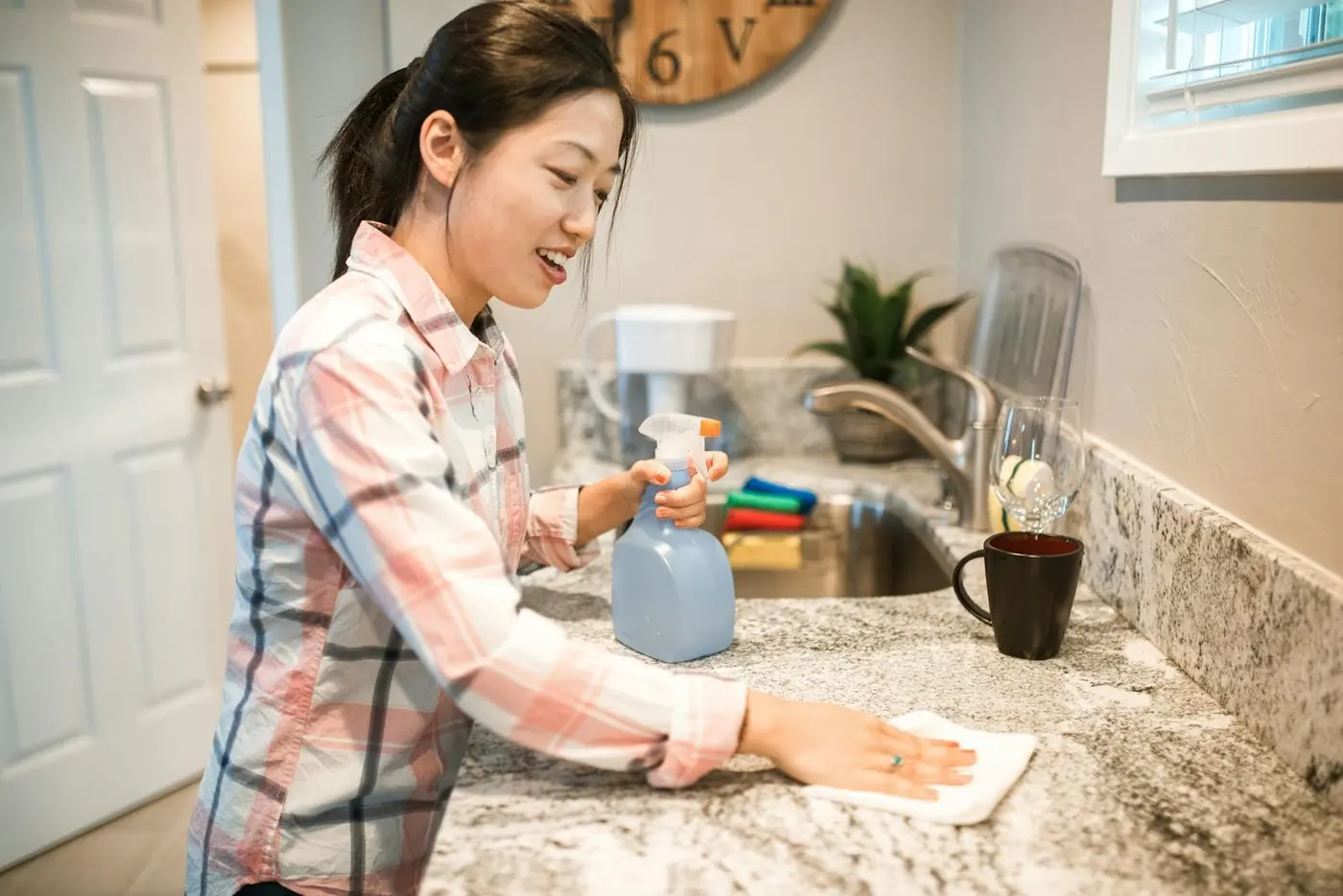
If you are figuring out how to start a cleaning business in 2026, the internet will happily sell you a fantasy: register a trade, buy a mop, post one ad, and the money starts rolling in. I would be careful with that version. While cleaning remains one of the most accessible service businesses you can start in Prague or anywhere else in the Czech Republic, the low barrier to entry is a double-edged sword. The real risk isn’t "can I start?" It’s starting too cheap, saying yes to everything, and realizing by week four that your calendar is full but your bank account is empty.
The good news is that a practical, successful start is absolutely possible. You don’t need a fancy office, a polished team page, or a branded van on day one. What you do need is a legal setup you actually understand, realistic startup costs, liability insurance, and a pricing model that accounts for travel, supplies, and all the invisible work new cleaners often forget to bill. In a city like Prague, that invisible work is where many solo entrepreneurs lose money fast.
Are you starting solo, or do you need a company from day one?
For most beginners, the best answer is simple: start as a sole trader (OSVČ), not a complex company structure. In Czech terms, this means a free trade license rather than opening an s.r.o. before you even have steady clients. If you are cleaning homes, small offices, or short-stay flats yourself, the simpler route is almost always the smarter one.
An s.r.o. can make sense later when you want to hire a team, bid for larger corporate contracts, or more formally separate your personal and business risks. But if your first month likely consists of a few recurring apartment cleans in Prague 6, a deep clean in Karlín, and a weekend move-out job in Smíchov, a limited company is more of an administrative weight than a benefit. If you want a broader orientation before you price anything, it also helps to read our guide on how to start a cleaning company in Czechia.
I have seen many new providers make the mistake of focusing on the wrong things. They spend on branding—new logo, expensive website, uniforms—because it feels like progress. Meanwhile, they have no stable way to get repeat business. Cleaning doesn't scale from aesthetics; it scales from capacity and reliability. How many hours can you actually deliver each week? How much of your day disappears in traffic or parking? At what point will you need help, and can you actually afford it?
What you need to sort out to work legally
The legal entry point for a basic cleaning service in Czechia is relatively straightforward. For standard household cleaning, you normally operate under a free trade activity (volná živnost), which doesn't require formal vocational qualifications. If you are comparing cleaning business license requirements online, this distinction matters: in Czechia, basic household cleaning is usually treated as a free trade rather than a licensed craft in the stricter sense. This is part of why the field is so crowded.
Even so, don’t treat the paperwork as just a box-ticking exercise. You are entering private homes. Clients are handing over keys, security codes, and their pets' safety. A clean, legal base is part of the professional service you provide.
The initial trade registration fee is typically 1,000 CZK. From there, you need a clear way to track invoices, income, and expenses. It doesn't have to be complicated—a simple system is enough at first. What matters is knowing exactly what came in, what went out, and what is actually left for you at the end of the month.
Then there is the item beginners often postpone: insurance for cleaners. I wouldn't wait. One scratched induction hob, a damaged stone sink, or an expensive floor in Vinohrady cleaned with the wrong chemical, and your "low-cost start" becomes a financial disaster. In the Czech market, basic business liability insurance for small sole traders costs just a few thousand CZK per year. That is a very small price to pay for peace of mind compared to paying for damages out of your own pocket.
VAT isn't a day-one issue for most new cleaners serving households. If you are starting small, focus on price discipline and stable service first. However, keep an eye on your turnover. Once you move toward commercial work or larger partnerships, your tax structure will start to matter much more.
And yes, monthly contributions are a reality. In 2026, health insurance for a Czech sole trader is 3,306 CZK per month at the minimum level. Social contributions vary, but they aren't symbolic. Some first-time business owners benefit from initial breaks, but building a budget around "I'll deal with that later" is how small businesses fail before they even find their rhythm.
What realistic startup costs look like in Czechia
People often talk about cleaning business startup costs as if it's either "almost zero" or a massive investment. The truth is in the middle.
A sensible equipment kit for one person usually lands between 8,000 and 20,000 CZK, depending on what you already own. You’ll need a reliable vacuum, mop, bucket, microfiber cloths, gloves, bottles, sprays, degreasers, bathroom cleaners, glass cleaner, floor cleaner, and a few specialist products for things like limescale. It’s not glamorous, but cheap tools will slow you down and make you look like an amateur.
Travel is the hidden cost that kills margins. Prague is unforgiving here. An hourly rate that looks good on paper can collapse once you add up Metro time, parking fees, traffic jams, and the effort of carrying gear into old buildings without elevators. If you have three small jobs across the city, you aren't billing three perfect blocks of time—a huge chunk of your day vanishes in between them.
I also recommend a first-month reserve of at least 25,000 to 50,000 CZK. Not because the business is doomed, but because the first month is naturally unstable. A client might delay, another might cancel, or you might realize a "standard clean" is actually a neglected deep-clean project. Without a reserve, you’ll find yourself accepting bad-fit jobs just to keep cash moving.
So, what is a realistic starting range? For a solo cleaner in Czechia, a modest but sane launch usually lands between 35,000 and 80,000 CZK once you combine equipment, registration, insurance, transport, and a cash buffer. Can you start for less? Yes, but usually only by pretending certain costs don't exist yet.
Where new cleaners lose money first
The first trap is underpricing. New providers often lead with a low hourly rate to "break in." The problem is that clients aren't just paying for the time your hands are moving. They are paying for your travel, supplies, planning, and the fact that you show up reliably. If your price only covers the visible cleaning time, you are essentially subsidizing the client’s service.
The second trap is treating supplies as "unlimited and included." For basic maintenance cleaning, rolling supplies into the rate can work. But for heavy grease, post-renovation dust, or thick limescale in an old apartment, that logic breaks. You need a clear line between what is standard and what is an "extra."
The third trap is trying to offer every service at once. Homes, offices, ironing, windows, carpet cleaning, move-out cleans—the list grows too fast. Broad offers often look unfocused rather than impressive. A narrow service line with clear rules usually wins more trust.
And here is the lesson many learn the hard way: clients often underestimate the condition of their own homes. "It just needs a quick wipe" can easily turn into three hours of scrubbing. Without a solid intake call, photos, or a first-visit inspection, you are pricing in the dark.
How to shape services that actually make money
Recurring cleaning is the healthiest foundation for your business. Not just because it sounds more professional, but because it stabilizes your week. One-off jobs are great for early cash flow, but they are unpredictable and physically exhausting. A business built solely on one-off jobs will keep you busy but leave you fragile.
Define your scope clearly. Decide exactly what a standard bathroom clean includes, whether you handle bed linen or ironing, and how often you do detail work like inside windows. State it plainly. Extra work should be billed extra. That isn't rude; it's professional service design.
If possible, do a first inspection. If not, ask for photos, square footage, the number of bathrooms, and a clear description of expectations. A small flat in Černý Most and a large new-build in Pankrác are not the same job, even if both are described as a "standard weekly clean."
A practical starter model looks like this:
- Recurring home cleaning priced by value or time block.
- Deep cleaning priced only after an inspection.
- Add-ons (ovens, fridges, ironing) charged separately.
- Minimum booking lengths and clear cancellation terms.
Without this structure, your biggest problem won't be the competition—it will be your own operational chaos.
What to do in the first 30 days so you do not end up with an empty calendar
Month one is about building trust. Your profile or website should clearly state where you work, what you clean, what is included, and how the first inquiry works. Keep your messaging plain and honest. Avoid generic corporate speak like "complete solutions for every household." People want to know if you are reliable and realistic.
References are hard to come by at the start, so earn them deliberately. Start with friends of friends, neighbors, or local groups—but avoid the discount spiral. An introductory "thank you" for a referral is one thing; locking yourself into a low rate from day one is another.
Local channels work best. Referrals, community groups, and simple service listings often bring better leads than broad social media ads. If you want a cleaner route to demand in Prague, show up where people are looking for reliability, not just the lowest possible price.
Most importantly, treat that first client as the start of a relationship, not just a job. Ask for feedback. Suggest the next visit before you leave. Take note of the details—pet hair, sensitive surfaces, parking issues, or hard-water buildup. That attention to detail is what turns a random booking into a steady client.
If you are serious about how to start a cleaning business in 2026, don't start with growth fantasies. Start with a calculator, liability insurance, a defined scope, and a price that actually works for you. And if you want to see how a professional Prague-based cleaning offer is framed, take a look at ČistýKout’s contact page. It helps to see what clients actually respond to when they are looking for quality.