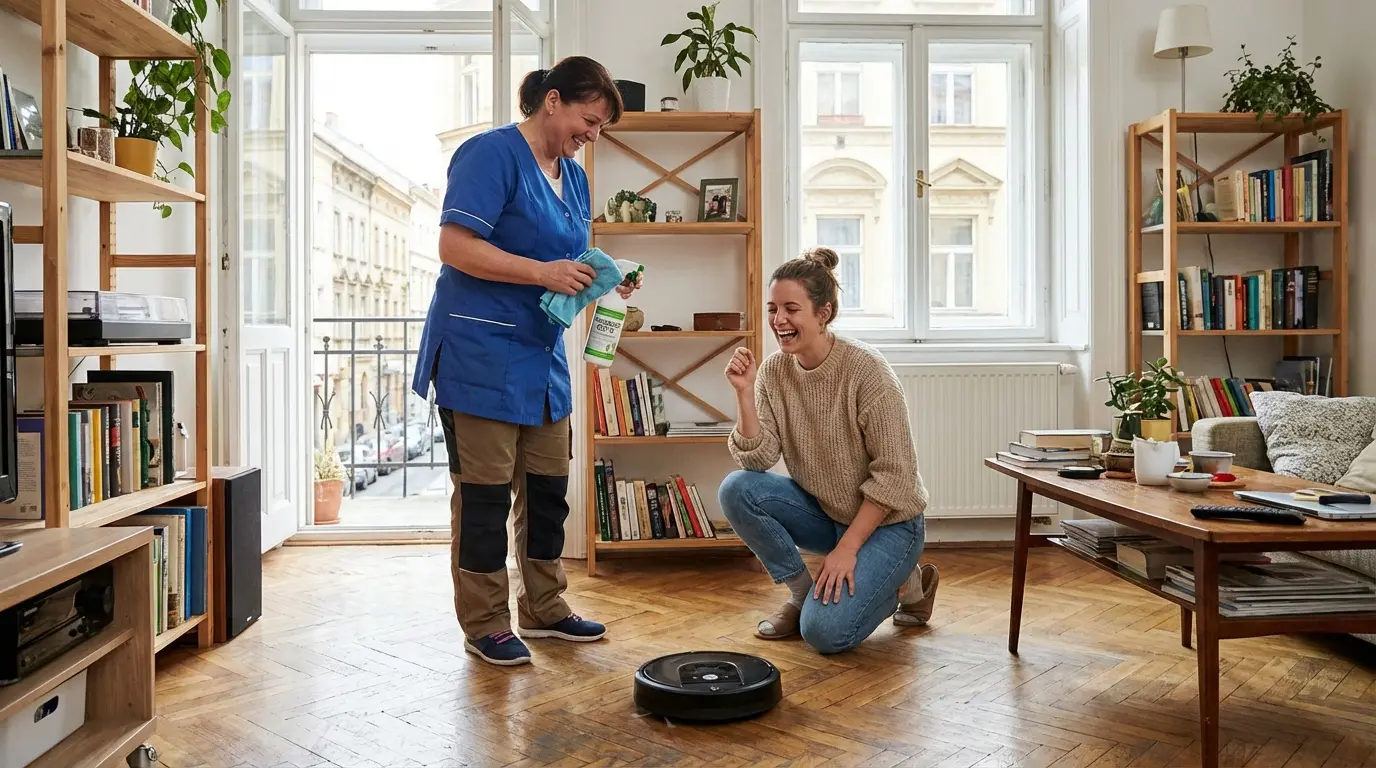
Hybrid cleaning in 2026 is not some shiny future concept anymore. In Czech homes and small cleaning businesses, it is turning into ordinary operating logic: the robot vacuum handles loose daily dirt, the app keeps appointments and notes in order, and a human steps in where surfaces, judgment, and trust still matter. That mix is what actually works.
People often get this wrong. They hear automation and imagine fewer cleaners, fewer decisions, less human work. In reality, the better model is more selective. Machines take over repetition. People focus on quality. A good service in Prague, Brno, or Ostrava does not become less human because it uses better tools. If anything, the human part becomes more visible.
What hybrid cleaning actually means
Hybrid cleaning is the combination of automation, smart tools, and human labor in one service flow. It includes robot vacuums and floor machines, sure, but also shared digital checklists, scheduling software, photo notes from previous visits, stock tracking for detergents, and simple client communication systems that stop jobs from turning messy before they even begin.
On the ground, it looks pretty practical. A cleaner arrives at a flat in Prague 7. The recurring task list is already in her phone. She knows which bathroom tap scratches easily, which kitchen surface reacts badly to strong degreasers, and which room the client wants skipped because a child is sleeping. A robot can deal with open floor space while she handles corners, fingerprints, limescale, grease, and the little visual clues that decide whether a home feels truly clean or only technically cleaned.
That distinction matters. A flat can be vacuumed and still feel tired. It can smell fine and still have dull bathroom fixtures, sticky cabinet fronts, or dust sitting exactly where the eye lands first. Technology is good at consistency. Human work is still better at reading the room.
Where automation genuinely helps
Automation earns its keep in repetitive tasks, recurring schedules, and anything that benefits from reliable memory. This is where Czech households and small service providers can save real time instead of buying gadgets for the sake of it.
Routine floor maintenance
This is the obvious one, but it is obvious for a reason. In homes with children, pets, or heavy daily movement, a robot vacuum can keep loose dirt under control between visits. That changes the economics of a professional cleaning appointment. The cleaner does not start from scratch. She starts from a maintained baseline.
In the Czech market, regular cleaning visits for a standard apartment often land somewhere around 350 to 500 CZK per hour depending on city, frequency, and what is included. If floors are already under control, that paid hour can go toward places clients actually notice: bathroom glass, kitchen grease, switches, handles, baseboards, and neglected edges. Those details are what separate an average service from one people remember.
Scheduling, reminders, and repeat work
A lot of small cleaning businesses still run on chat threads, mental notes, and pure luck. That can work when the owner has six clients and does most of the work herself. It breaks down when the business grows. One rescheduled visit, one sick team member, one client who forgot to leave the key where agreed, and the whole day starts drifting.
Software does not magically fix bad management, but it does reduce avoidable friction. A decent scheduling system can group visits by area, send reminders, store instructions for each home, and reduce the endless back and forth that drains a small business. If you run a two or three person team, that matters more than another piece of hardware.
Quality control and handover notes
Cleaning businesses depend on memory. Which product worked on that stone floor in Vinohrady. Which customer hates perfume-heavy detergents. Which shower corner always needs extra descaling. When that knowledge stays only in one cleaner's head, it disappears the moment she is sick or leaves.
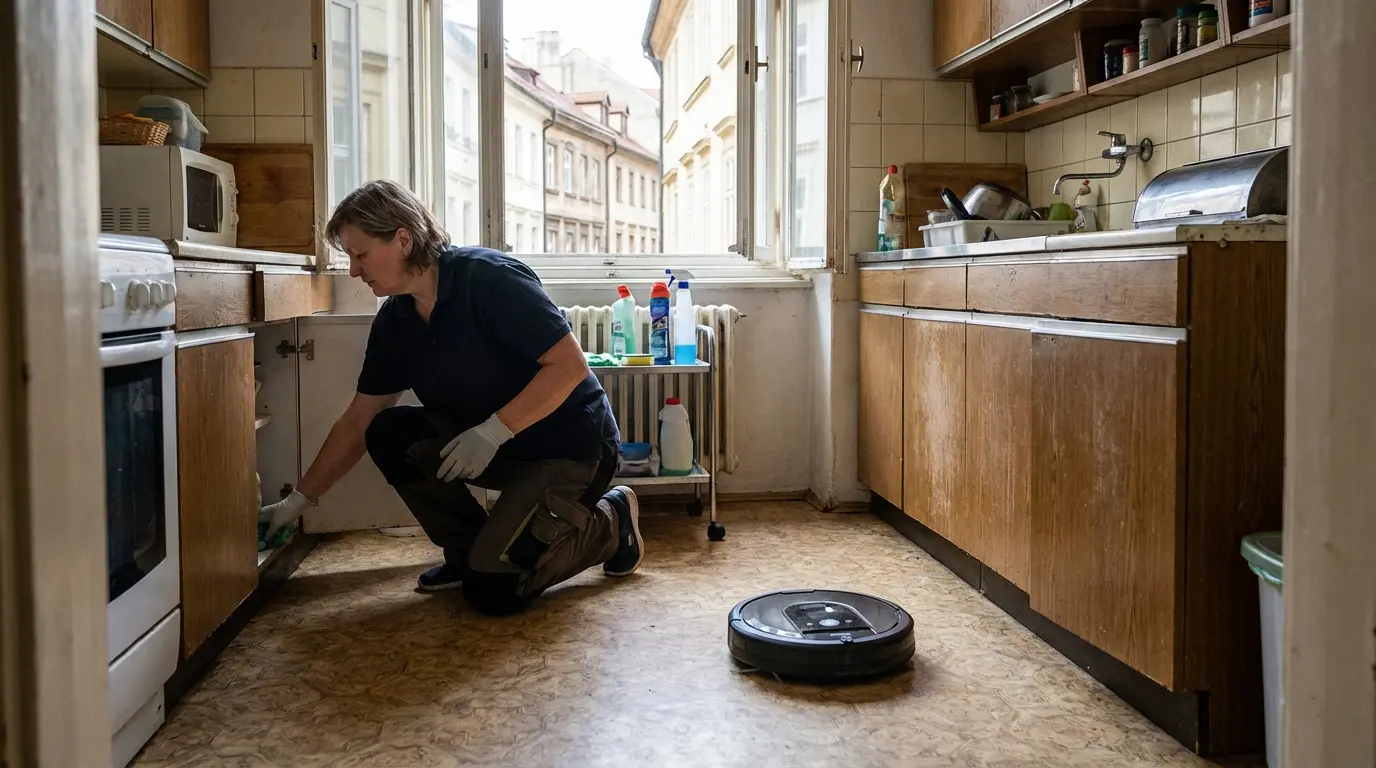
A digital checklist with short visit notes can keep standards steady across different people and recurring jobs. It sounds simple because it is simple. Still, it solves a real problem. Technology is not replacing craft here. It is helping a business hold onto craft instead of losing it in daily chaos.
Where people still beat machines
This is the part that matters most, and honestly, it is the part some tech-heavy sales pitches avoid. The more routine work gets automated, the more valuable human judgment becomes.
Sensitive materials and imperfect homes
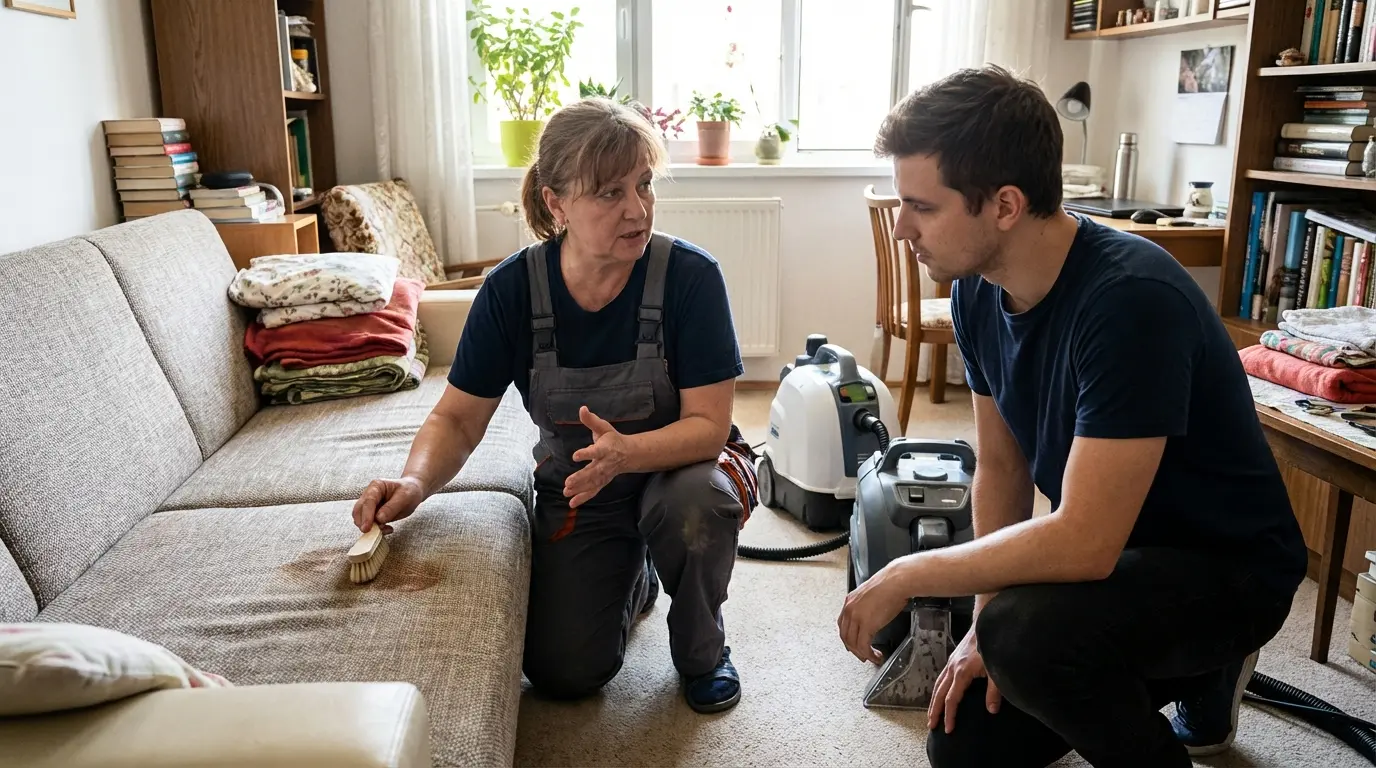
Real homes are not test labs. They have old grout, scratched fixtures, oily fingerprints, limestone residue, badly sealed wood, fabric sofas with mystery stains, and floors that react differently from one room to the next. A machine follows a pattern. A skilled cleaner notices risk.
Anyone who has dealt with a Prague rental flat after years of hard water knows how this goes. One product works. Another leaves a haze. A third smells expensive and does almost nothing. The right call depends on material knowledge, restraint, and experience. You cannot automate that away just because an app looks modern.
Reading the client
Cleaning is also emotional work, even when nobody says it out loud. Some clients are embarrassed about the state of their home. Some are anxious about strangers touching their things. Some want speed. Some want precision. Some ask for a "regular clean" and clearly need a reset after a stressful month.
No workflow app can fully read that mood. A good cleaner or business owner can. They know when to ask one more question, when to reassure, when to recommend a deeper service, and when to leave a technically possible upsell alone. That is not soft fluff. It is part of why clients stay.
Irregular and high-pressure situations
Post-renovation cleaning, move-in resets, end-of-tenancy jobs, illness in the family, Airbnb turnovers after rough guests. These are the jobs where process matters but improvisation matters more. Automation can support the plan, not carry the result.
For small businesses, that difference is serious. Misjudge a one-off job and you can lose half a day and most of the margin. The smartest smaller teams use technology to stay organized, then rely on people to decide what the space really needs.
What this means for Czech households
For households, hybrid cleaning is mostly about balance. You do not need to pay a person to do every tiny repetitive task, and you also should not pretend a robot vacuum can replace a proper cleaning service. The useful middle ground is usually this: routine maintenance through your own smart tools, professional visits at a sensible interval, and occasional deeper cleaning when the home starts slipping.
That approach fits the Czech market quite well. Families are cost aware. A service still has to justify itself. If a robot vacuum helps keep things stable between visits, the professional appointment feels more worthwhile because it covers the jobs that actually require skill. Bathroom buildup, kitchen grease, neglected corners, and visual finishing still belong to people.
There is also a trust angle. Some households are happy to adopt anything that saves time. Others hear automation and expect cold, impersonal service. Sometimes they are right. If a company hides behind an app and stops speaking like normal people, the service feels distant. Better tech should make the experience smoother, not less personal.
What this means for small cleaning businesses
Small cleaning businesses in 2026 do not need to outscale large companies to compete. They need to be clearer, steadier, and easier to work with. Hybrid cleaning gives them a way to do that without pretending to be a startup lab.
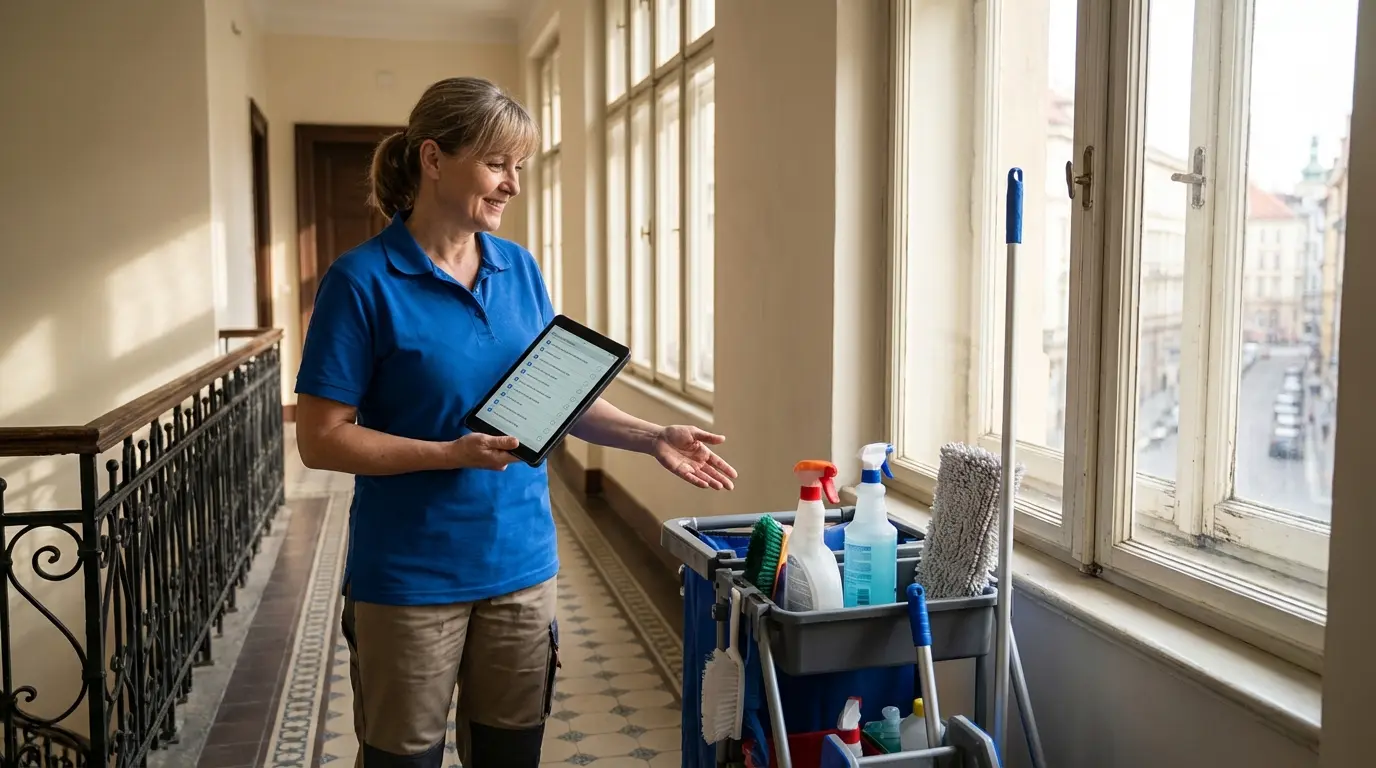
In practical terms, that means three things. First, digitize the boring operational layer: appointments, recurring instructions, route planning, and short service notes. Second, spend money only on tools that save real labor hours. Not toys. Third, train staff around the parts technology cannot do well: material judgment, finishing detail, communication, and problem solving inside lived-in homes.
A small owner in Prague once put it better than most consultants do: "The robot does not win me the next booking. The result does." That is exactly it. Clients rarely care which device cleaned the open floor area. They care whether the flat feels calmer, fresher, and visibly well handled.
Where businesses still make avoidable mistakes
The first mistake is tech worship. Buying expensive equipment without changing workflow usually just creates clutter with a charging dock. The second mistake is the opposite one: treating disorder as proof of personal service and keeping everything in someone's head, phone, or memory.
The better path is less dramatic. Use automation for routine, use people for judgment, and design the service around what the client notices. If that sounds almost boring, good. Most good operations are. They are not trying to look futuristic. They are trying to run cleanly.
So where is this heading?
The next few years will probably split routine maintenance and expert cleaning even more clearly. Daily surface-level upkeep will move further toward home automation and recurring smart support. Human labor will shift toward tasks that require trust, precision, and accountability. That is actually good news for the cleaning trade. It pushes value away from basic repetition and toward skill.
For Czech households and small cleaning businesses, the takeaway is straightforward. The future is not people versus machines. It is a sensible division of work. Technology keeps rhythm and structure. People make the calls, protect quality, and carry responsibility when a home needs more than a repeated pattern. That is what modern cleaning looks like in 2026, and frankly, it is a much healthier model than either extreme.