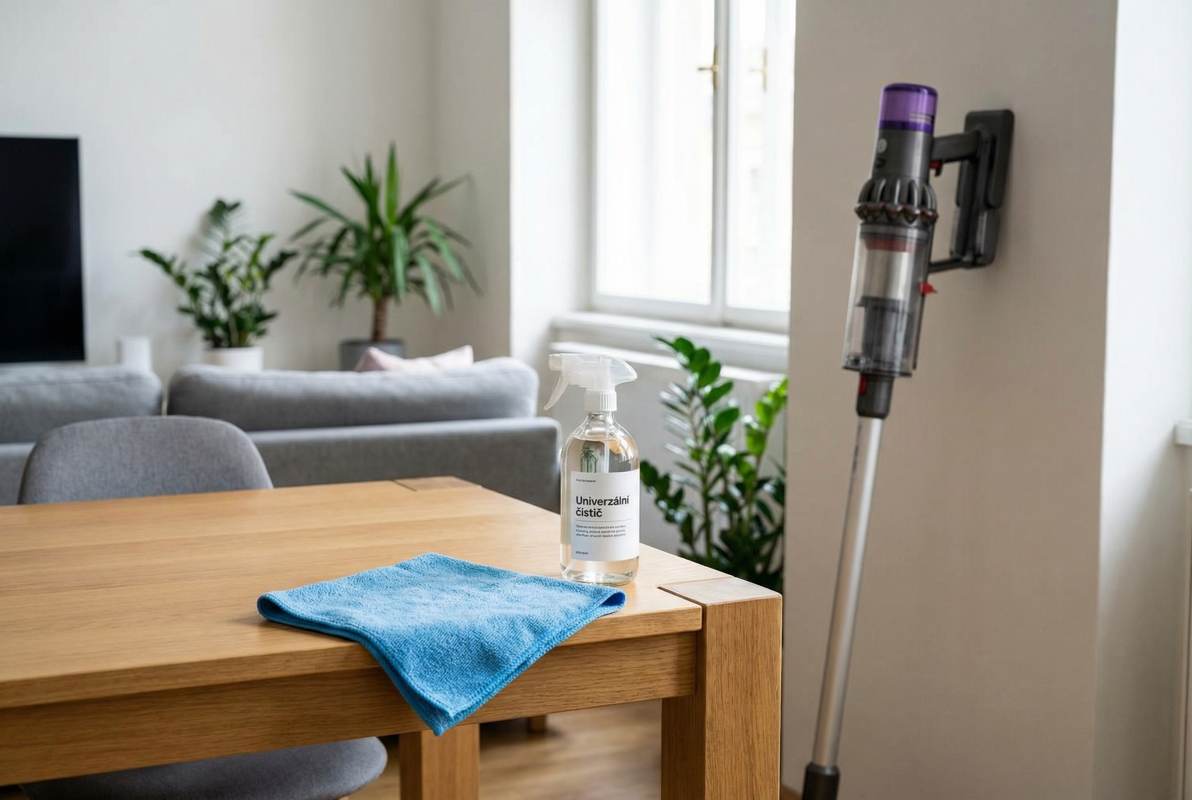
Open the cupboard under the sink and you can usually see the modern cleaning problem immediately. One spray for the bathroom, one for the kitchen, one for glass, one for limescale, one for stainless steel, one for floors, and several half-empty bottles nobody really remembers buying. Minimalist cleaning is not anti-clean. It is anti-clutter, anti-duplication, and a little bit anti-marketing disguised as necessity.
In an ordinary flat, a surprising amount of cleaning can be handled with just three core helpers: white vinegar, baking soda, and a good microfiber cloth. That is not some purist eco challenge. It is a practical system for people who want less decision fatigue, less stuff under the sink, and fewer pointless re-stocks of products that all promise slightly different miracles.
That does not mean these three helpers solve every possible mess. Minimalism is not blind faith. It is knowing what covers most daily situations and where the limit is. When you set it up properly, you get lower costs, a calmer routine, and a system that is actually easy to keep using instead of abandoning after one ambitious Sunday.
Less really is more: why minimalist cleaning makes sense
The biggest benefit of minimalist cleaning is not only environmental. It is mental. When you keep ten different cleaning products at home, cleaning becomes more complicated than it needs to be. You start thinking about what goes where, what should never be mixed, what has run out, and what you need to buy again. Instead of a simple routine, you get a small supply chain sitting under the sink.
Then there is the money. One bottle never looks expensive on its own, but over a few months, the total becomes silly fast. A lot of those products do only a narrow slice of what vinegar, baking soda, or a decent cloth can already handle. Minimalist cleaning is not about being cheap for the sake of it. It is about not paying over and over for labels, scent, and product categories that overlap anyway.
And in a smaller flat, space matters. A crowded cupboard, bathroom shelf, or storage basket does not just look messy. It makes routine cleaning slower because everything needs to be moved, wiped, and put back again. Fewer products usually means fewer sticky bottle bottoms, fewer duplicates, and a much calmer cleaning setup overall.
The minimalist holy trinity: what earns its place

White vinegar is the first helper because it covers the jobs people run into all the time: limescale, streaks, and a good chunk of ordinary kitchen and bathroom residue. It works on taps, shower glass, kettles, mirrors, and many everyday wipe-down tasks. It is cheap, easy to find, and genuinely useful when you use it with a bit of judgement.
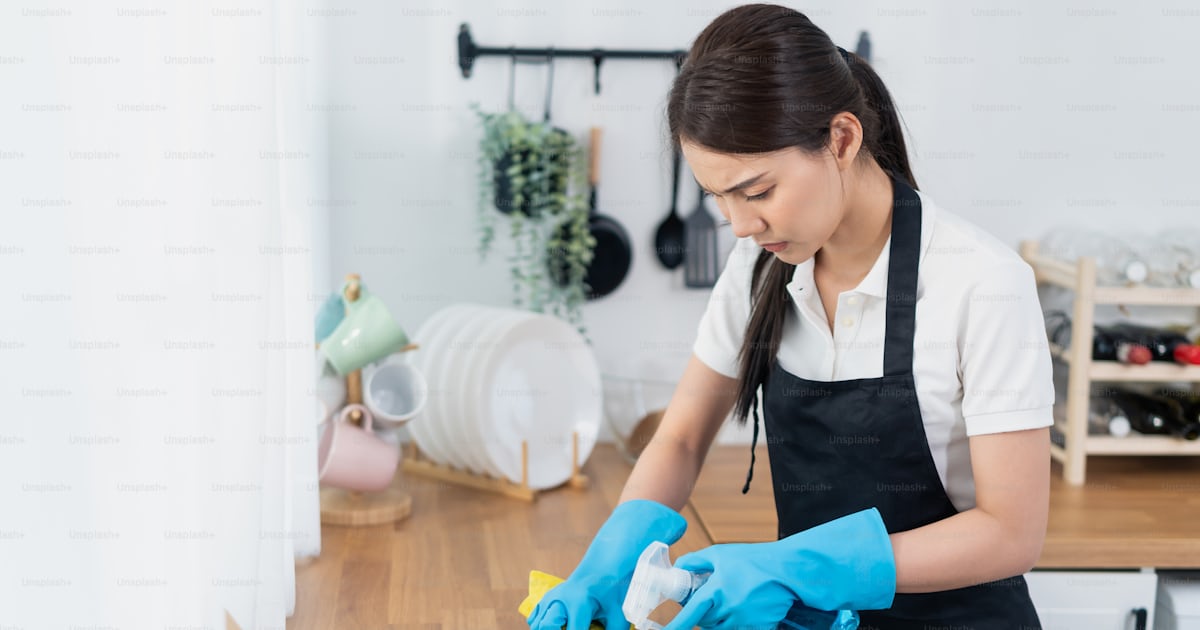
Baking soda does a different kind of work. It does not descale like vinegar does. Instead, it helps with gentle abrasive cleaning, deodorising, and lifting residue where a soft scrub is more useful than a spray. Sinks, grout edges, mugs, and fridges are the obvious examples. It is inexpensive, forgiving, and practical in places where you want to avoid something harsher.
The third helper is a good microfiber cloth. It sounds almost too simple, but this is where many people quietly sabotage minimalist cleaning. If the cloth is poor quality and only smears grime around, you will feel forced to compensate with more chemicals. A proper microfiber cloth removes a lot mechanically on its own. It lifts dust, helps polish glass, wipes surfaces clean, and reduces how often you need to reach for another product at all.
One thing is worth saying clearly: vinegar and baking soda are not magical because they fizz. In many cases, they work better separately than together. Minimalist cleaning is not about theatrical bubbling. It is about using the simplest effective thing in the right place.
Room by room with only 3 helpers

This is where the idea either becomes useful or falls apart. In most real flats, the three-helper system works surprisingly well. You just need to know which tool belongs where and where not to get stubborn about making one product do everything.
Kitchen: grease, sink, and daily mess
In the kitchen, the most useful pairing is usually the cloth and vinegar. For routine wipe-downs of counters, cabinet fronts, or the table, that already covers a lot. Baking soda helps with the sink, small residue buildup, and places where a soft scrub is more useful than repeated wiping. It keeps the setup simple without pretending every kitchen problem is identical.
What minimalist cleaning does not mean is spraying vinegar onto every possible material. Natural stone, some treated worktops, and more sensitive finishes do not want that experiment. The system works best when it respects the surface instead of trying to prove a point.
Bathroom: limescale and mirrors
The bathroom is usually where white vinegar proves its value fastest. Taps, shower glass, and dried water marks respond well when you give vinegar a little time instead of wiping it away immediately. The microfiber cloth then helps finish the job without leaving streaks. Baking soda is useful around grout lines, corners, and small residue spots where a gentler scrub makes sense.
Again, there is an important limit. Marble, travertine, and other natural stone surfaces do not react well to acids. Minimalist cleaning is at its best when it includes restraint. If the material needs a different approach, that is not a failure of the system. It is just common sense.
Living room: dust and floors
In the living room, the cloth is the main star. Shelves, tables, sills, electronics, and everyday dusting often improve more from a good microfiber cloth than from yet another dust spray. When the cloth actually captures the dust instead of shifting it around, the whole routine gets shorter and less annoying.
Floors depend much more on the material. On tile and tougher surfaces, a little vinegar in water can work well. On wood, laminate, or more delicate floors, less water and more caution matter far more. Minimalist cleaning is not a contest to force one solution onto every surface. It is a way to reduce clutter while still respecting what your home is made of.
When minimalism stops being enough and professionals make more sense
Three helpers are enough for a lot of routine maintenance. They are not enough for everything. If you are dealing with years of oven grease, heavy kitchen buildup, post-renovation windows, upholstery cleaning, or a flat after moving, the minimalist setup reaches its limit. That does not mean it failed. It just means the job now needs different tools, more time, or real experience.
That is where CistýKout makes sense. Minimalist cleaning can simplify everyday life. Professional cleaning helps when you want a proper reset without spending your whole weekend on it. Those two ideas are not in conflict. They fit together quite well: keep daily maintenance simple, and bring in help when the job is bigger than the basic three.
Want less chemical clutter at home and sometimes actual time off too?
Minimalist cleaning works well for everyday routines. When it comes to deep cleaning, heavy grease, or a full seasonal reset, book a professional clean through CistýKout and keep things simple even when the mess is not.