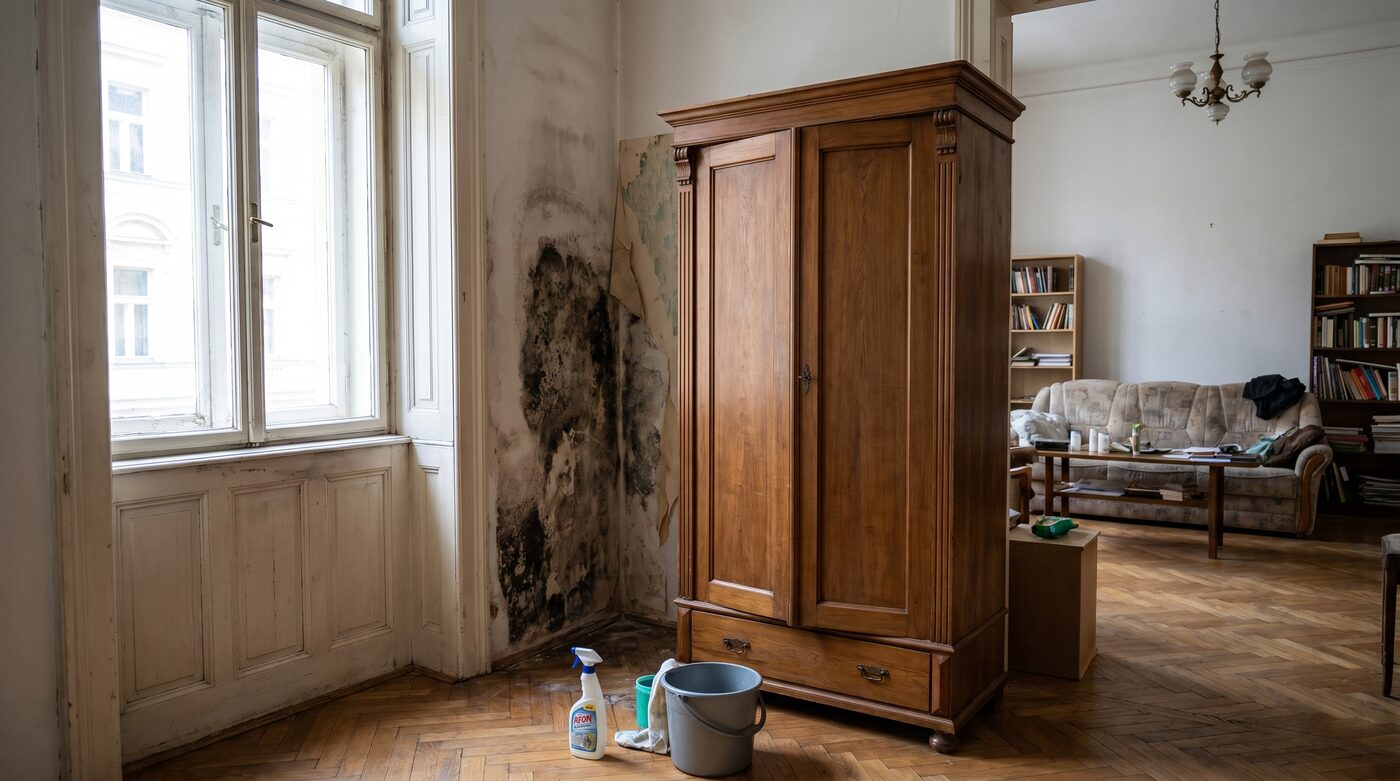
Mold in apartment life often starts as something people file under cleaning. A dark dot in the corner, a grey patch behind a wardrobe, a musty smell after winter. Then they wipe it off, open a window, and hope that was the end of it. Sometimes it is. Quite often it is not. When the same spot comes back two weeks later, you are no longer dealing with a lazy dusting routine. You are dealing with moisture, airflow, condensation, or a building issue that cleaning alone cannot solve.
This is exactly the time of year when people notice it. Late winter and early spring are brutal for hidden corners. You move a wardrobe away from an outside wall, pull a bed away from the corner, open the storage on the balcony, and suddenly there it is. Black specks. A larger map. Paint that looks tired and damp. In Prague flats, especially older rentals and smaller bedrooms with poor airflow, I see the same pattern over and over. People treat mold as a cleaning failure for too long because it feels easier than admitting the flat itself may be part of the problem.
The useful question is not just how to remove mold. The better question is what kind of problem you are actually looking at. A small surface issue is one thing. A repeated return, heavy smell, or constant condensation is something else. Below is the practical split between what you can clean yourself, what should change in the flat's daily routine, and when it is time to stop fighting with a cloth and start dealing with humidity, ventilation, maintenance, or the landlord.
Where mold shows up most often at home
The classic trouble spot is mold behind wardrobe units or behind a bed placed against a cold exterior wall. Furniture sits flush to the wall, air barely moves, and the wall surface stays cooler than the rest of the room. Add winter sleeping habits, closed doors, laundry drying indoors, and modest heating, and you have a neat little mold nursery that stays hidden until someone does a bigger clean or notices the smell.
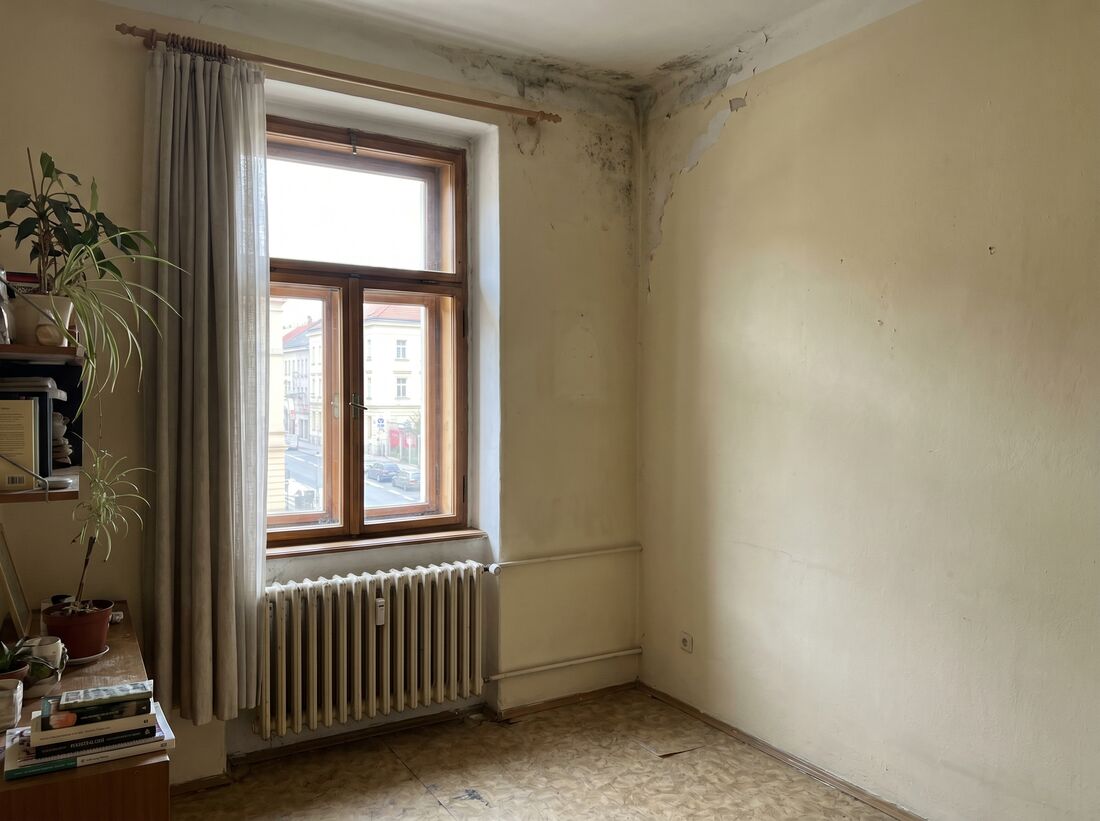
Room corners are next. The top corners of outside walls, corners hidden behind curtains, corners where heat from the radiator never really reaches. In Prague apartments, especially panel flats and older renovated rentals, those corners tell the truth fast. You may only see a thin dark line at first. People ignore it because it looks minor. Then they wipe it once, feel relieved, and find it again the next month.
Windows are another common area. The frame edges, the lower corners, the sill line. If water gathers on the glass every morning and you keep wiping it away without changing anything else, you are not fixing the problem. You are managing the visible symptom. Newer plastic windows in older flats often make this worse. The flat seals better, which is nice for heating bills, but moisture has fewer escape routes.
Bathrooms deserve their own category. Mold near silicone, grout, or the ceiling above the shower is easy to mistake for ordinary bathroom grime. Sometimes it is. But if the black marks return quickly after a proper clean, the room is likely staying damp for too long after every shower. Weak extraction, closed doors, cold surfaces, wet towels, no real drying cycle. It adds up.
How to tell if it is a surface issue or a bigger defect
The first test is simple. Does it come back? If you find one small patch after winter behind a bedside table, clean it properly, dry the area, improve ventilation, and it stays gone, you are probably dealing with a surface-level moisture episode. If the same spot returns, spreads, or shows up in several places, calling it a cleaning issue starts to feel dishonest.
The second clue is smell. Mold in apartment settings often announces itself before you see it clearly. A stale, damp, cellar-like smell in a bedroom or inside a wardrobe matters. It usually means moisture has been sitting there for a while. A flat can look mostly tidy and still have a genuine hidden damp problem.
Third, look at condensation. Do the windows bead up regularly. Does the frame stay wet. Does the bathroom remain steamy and slow to dry long after showers. Those are not random details. They are the environment mold likes. Sometimes the cause is behavioural: too little airing out, laundry drying inside, doors staying shut, low heating. Sometimes it is structural: a thermal bridge, leaking detail, poor extraction, water ingress, badly insulated wall sections.
This is where people get stuck. They want a clean yes-or-no answer. Real flats rarely give you that. A small patch can still point to a bigger issue, and a recurring patch may come from a boring but fixable routine problem rather than a construction defect. I would look at the pattern, not just the stain. Frequency, smell, dampness, room layout, wall temperature, and where furniture sits all matter.
A client case from Vršovice sums it up well. The family kept getting mold behind a large wardrobe in a north-facing bedroom. They cleaned it repeatedly. It returned. In the end the cause was not one dramatic leak. It was three ordinary things working together: the wardrobe was pushed tight to the wall, laundry was drying in the room, and the window was usually left on tilt instead of being opened wide for short bursts. That is frustrating, but it is also useful because it tells you what to change.
How to remove mold safely when the affected area is small
If the affected area is small and localised, you can usually start on your own. Do it carefully, not heroically. Wear gloves. Use respiratory protection if you have it. Keep children, allergy sufferers, and anyone with asthma away from the room while you work. A small patch does not need panic, but it does deserve some respect.
Ventilate the room briefly before cleaning. Use a product intended for mold removal and follow the instructions rather than improvising a chemistry experiment. Treat the affected area, allow the product to work, wipe the surface, and let it dry fully. Then watch what happens over the next several days. For small marks, a calm and controlled clean is usually better than scrubbing half the wall in a cloud of moisture and spores.
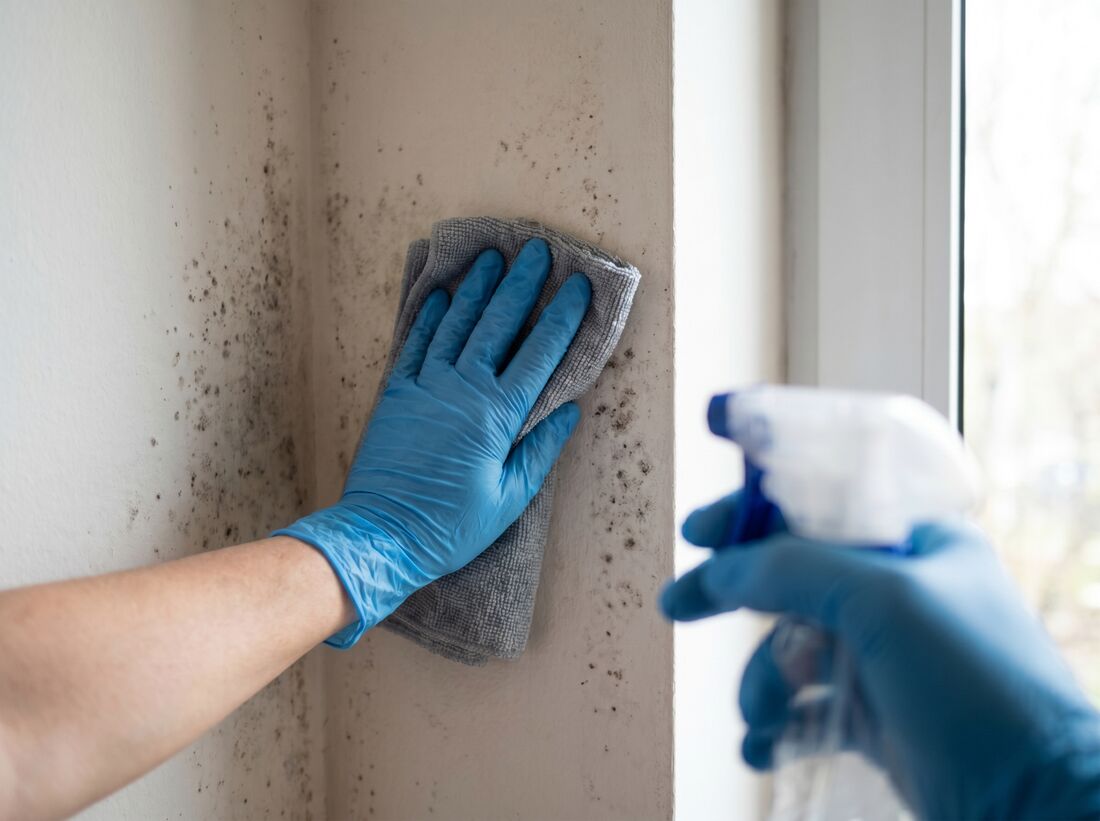
One thing I would not do is mix chemicals. Bleach-based products should not be mixed with acidic cleaners or ammonia-based products. Internet advice can get reckless fast on this topic, and the result can be more dangerous than the original mold.
Be realistic about materials too. Soft items, cheap particleboard back panels, soaked textiles, and heavily affected mattresses or rugs may not be worth saving. Sometimes people spend weeks trying to rescue an item that keeps the smell alive in the flat. Throwing out one badly affected piece can solve more than another round of surface cleaning.
Also, pay attention right after cleaning. If the wall feels cold and damp again within a day or two, or if the stain begins to shadow through quickly, cleaning has only uncovered the symptom. It has not solved the cause.
Ventilation against mold and daily habits that help
This is where the real progress usually happens. Ventilation against mold is not the same as leaving one window cracked all day. In most Czech flats, short intense airing works better. Open properly for five to ten minutes, create a draft if possible, then close again. Do it after showering, after cooking, and in bedrooms in the morning.
Furniture distance matters more than people expect. If a wardrobe or bed sits against an outside wall, give it breathing space. A few centimetres can make a real difference because air can move and the wall surface can dry more evenly. It is not glamorous advice, but it is effective.
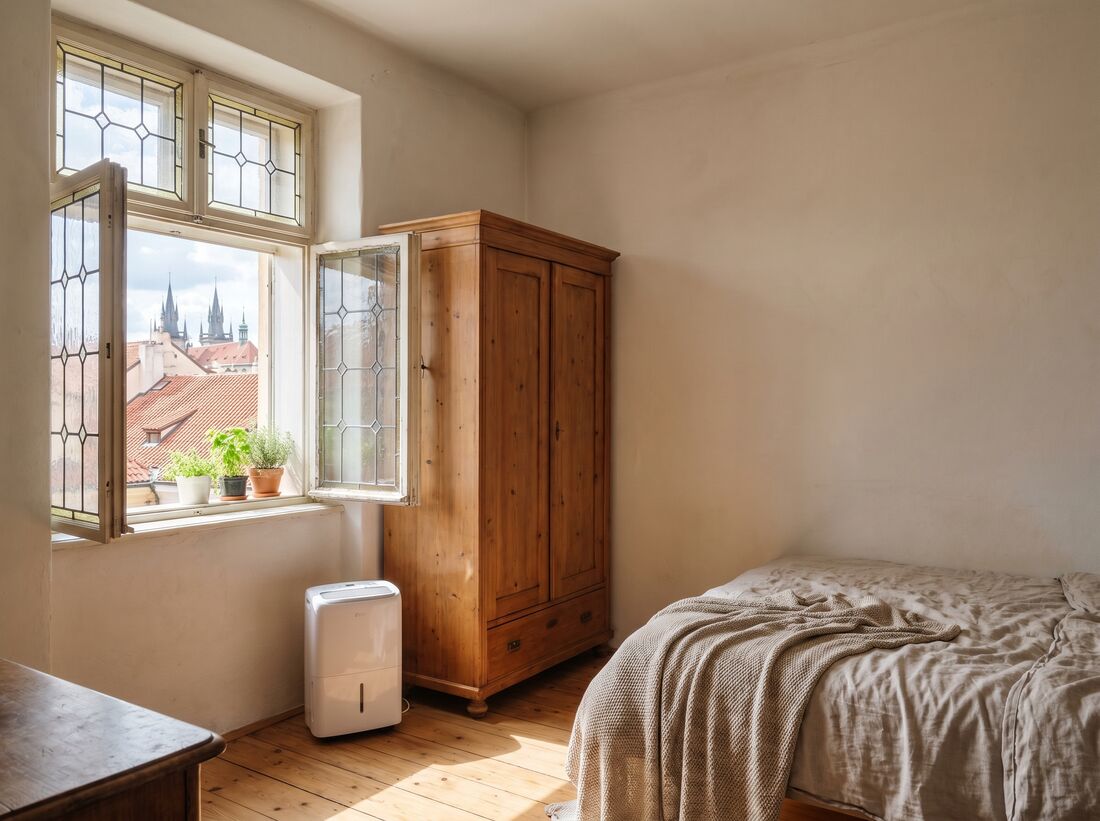
Laundry drying indoors is another big one. I know many Prague flats do not offer a perfect alternative. No balcony, little storage, no dryer. Still, if you dry two loads a week in a bedroom with the door shut and barely ventilate, humidity in apartment conditions will rise fast. Use one room if you must, ventilate during drying, and consider a dehumidifier if the problem repeats every cold season.
Heating plays a part too. A flat does not need tropical temperatures, but very cold corners plus indoor moisture is an easy recipe for mold. Steadier moderate heating usually works better than letting the room go cold all day and trying to recover it quickly at night.
Bathrooms give you an easy test. How long does it take to dry after a shower. If the mirror is still wet after an hour, grout lines stay damp, and the air feels heavy, your extraction is probably not doing enough. Sometimes that means cleaning or repairing the fan. Sometimes it means opening the door after showering. Sometimes both.
When to involve the landlord, maintenance, or professional cleaning
Once mold keeps coming back despite proper cleaning and sensible changes to the flat's routine, start documenting. Take photos with dates. Note the location, the size, and what you changed. If it is a rental, this matters. Landlords are much more responsive when the message is practical and specific rather than emotional.
I would involve the landlord when you suspect a building cause, repeat return in the same place, water ingress, a defective extraction system, or obvious condensation linked to the flat's structure. Keep it factual: where it appears, how often it returns, what you already tried, and whether the wall feels damp or cold. That usually lands better than "we keep cleaning and it still looks bad."
Professional cleaning helps when the affected area is still within a manageable range but needs careful treatment, safer handling, and a thorough reset of the room. It is useful for bathrooms, room corners, window areas, and post-winter deep cleaning where hidden dirt and early mold need to be dealt with properly. But professional cleaning is not a substitute for repairing a leak or fixing poor ventilation. That line matters.
Stop home treatment quickly if anyone in the household develops breathing irritation, eye irritation, or repeated coughing that seems linked to the room. The same applies if you pull furniture away and discover a much larger hidden area than expected. At that point, the priority changes.
Checklist for a home with children or allergy sufferers
For the first two weeks after cleaning, monitor the area properly. Not just a glance from the doorway. Smell the room. Check behind curtains. Touch the wall carefully. Look behind the furniture if that was the original problem zone. In homes with allergy sufferers, I would check weekly through the season when temperature swings are still triggering condensation.
Keep a very simple record. When do the windows fog up. Where was laundry dried. How fast did the bathroom dry after showers. Does the smell return in the morning or the evening. This sounds slightly obsessive until you realise it is often the fastest way to tell whether you are facing a cleaning issue or a flat issue.
If allergies are part of the picture too, it helps to pair this with Keeping pollen under control at home and Mattress cleaning for allergy sufferers.
Stop relying on DIY cleaning alone when:
- mold returns quickly in the same place,
- the affected area spreads under paint, along skirting, or onto multiple walls,
- the room smells musty for days,
- someone in the household reacts physically,
- a hidden area behind furniture turns out to be much larger than expected.
Not every case of mold in apartment living is a disaster. That part is worth saying clearly. A small local patch after winter can often be cleaned and managed with better ventilation and a smarter room setup. Repeated return, larger spread, and constant dampness are different. That is when the cloth stops being the main solution.
If you need help with a careful one-off deep clean in Prague, including bathrooms, corners, window surrounds, and the kind of post-winter reset that makes the problem easier to assess, ČistýKout is a Prague-based cleaning option. You can reach out through the contact form here: https://www.cistykout.cz/kontakt