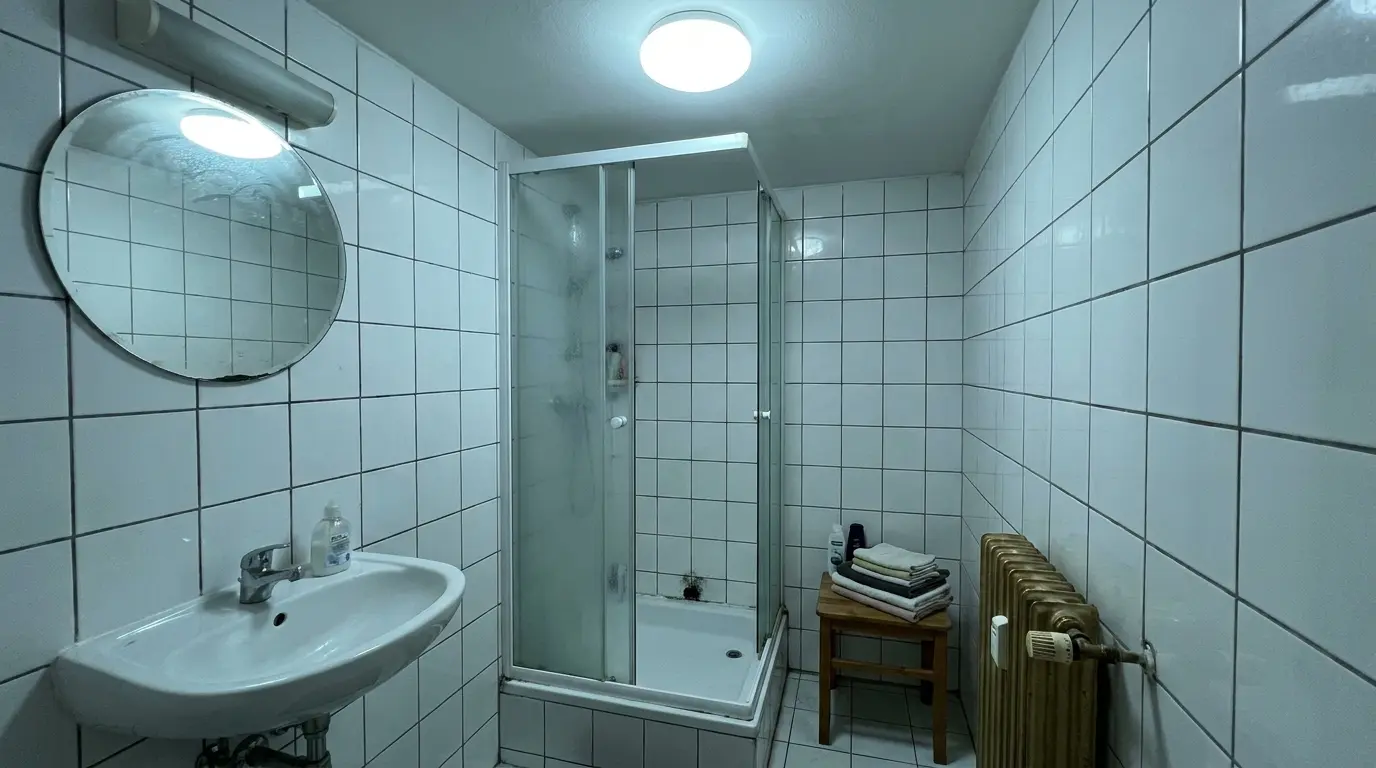
When mold in bathroom shows up again right after winter, most people grab a spray, scrub the corner, and hope that buys them a few quiet months. Sometimes it does. In real Prague flats, especially the small bathrooms with no window and weak extraction, that fix often lasts less than people expect. The surface gets cleaner, but the room still keeps moisture after every shower, and that is where the trouble starts.
I keep seeing the same pattern in spring. All winter long, windows stay shut, heating stays on, laundry dries indoors, and the bathroom takes the hit. By late March or April, the first dark dots appear near the shower seal, the grout starts looking tired, and the ceiling corner above the tub suddenly seems older than the rest of the flat. It feels sudden. Usually it is not. The room has been collecting the conditions for mold for weeks.
Why mold shows up in the bathroom after winter
A bathroom gives mold almost everything it wants: warmth, moisture, and weak airflow. Add a shower used twice a day, damp towels that never quite dry, and an exhaust fan that sounds busy without actually pulling much air, and black mold in bathroom corners becomes a very ordinary spring problem.
Bathrooms without windows are the tricky ones. In newer buildings, the extraction system is often better and the room dries faster. In older Prague flats, especially the compact layouts people know from panel buildings and older rentals, the bathroom may have no natural ventilation at all. Steam lingers. Condensation stays on tile and mirror. Silicone around the shower remains damp longer than it should.
The usual risk zones barely change from flat to flat. Silicone around the tub or shower. Grout lines between tiles. Top corners. The ceiling above the shower. The area around the ventilation grille. A few dots do not always mean a major defect, but a spreading patch, a stubborn damp chill on the surface, or repeated regrowth after cleaning is a different story.
It is also worth looking beyond the bathroom door. If the whole apartment runs humid through winter, if laundry dries inside, if one room is cold while another is overheated, the bathroom may simply be the first place where the problem becomes visible. It is the warning light, not always the full cause.
What you can clean yourself without taking pointless risks
The first useful distinction is surface mold versus a deeper moisture problem. Surface mold usually looks like scattered dots or a thin dark film on silicone, grout, or a corner near the ceiling. It has not started lifting paint, it has not spread over a large area, and the material underneath still feels stable. That is the point where home cleaning still makes sense.
If you are wondering how to remove mold in bathroom areas safely, keep the routine simple. Move out towels and bath mats first. Open whatever can be opened. Turn on the extraction fan. Put on gloves, and if you are using a stronger anti-mold product, wear a respirator too. In a small room with no window, that is not overkill. Lightly dampen the surface before scrubbing so you do not send particles into the air. Then apply the cleaner, let it sit for the required time, and wipe in a controlled way instead of attacking the whole wall at once.
Do not mix cleaning chemicals because some online thread promised a miracle result. In a cramped bathroom, mixing chlorine-based cleaners with acidic products is a bad idea and can become dangerous fast.
Grout can often be cleaned with a small brush and patience. Silicone is less forgiving. If mold sits only on the surface, you may get a decent result. If the silicone has gone dark from within, lost elasticity, or started to peel, cleaning is usually cosmetic and temporary. This is the point where people spend an hour working for a one-week improvement.
The aftercare matters too. Rinse the area, dry it, and let the bathroom fully air out. If the cleaning ends with a wet cloth left on the washing machine and the door shut again, the room goes straight back to the same damp routine.
When mold keeps coming back and why spray alone is not enough
This is where basic maintenance stops being enough. If mold disappears and comes back to the same place two or three weeks later, you probably removed the stain but not the cause. The spray did its job on the surface. The room kept doing the opposite.
A very common setup looks like this: one person showers in the morning, the mirror stays fogged, towels stay damp until evening, water sits on the tub edge, the fan runs too briefly or barely at all, then another shower happens later that day. Repeat that through the colder months and the bathroom never really resets.
The exhaust fan is often part of the problem. It may look normal from the outside while the grille is clogged with dust and residue. Airflow drops. Bathroom ventilation becomes performative instead of useful. In rentals, I also see underpowered fans that were never good enough to begin with. In that situation, humidity in apartment life builds quietly, and the bathroom pays first.
Textiles matter more than people think. Towels, bath mats, robes, floor cloths. If they all stay in one small room, they add moisture and slow drying. Many households think they are fighting mold on the wall when they are really fighting a daily routine that keeps the room wet for too long.
If mold returns to the same ceiling line, keeps showing up through fresh paint, or spreads beyond the usual shower corners, it may point to a bigger moisture issue. A thermal bridge. Water getting behind tile. A leak around the tub. A building ventilation problem. At that stage, a stronger spray is not a serious plan.
When professional deep cleaning makes sense
Professional deep cleaning starts making sense when the affected area is no longer small, when the problem keeps returning, or when the worst spots are hard to reach. Think behind the washing machine, in upper corners, in grout lines that stay dark for months, or in bathrooms where mold mixes with limescale, soap film, and old buildup. That combination matters because a heavily soiled surface is harder to maintain and easier for mold to reclaim.
A professional approach is not just about applying a stronger product. It is about judging the scale, the material, the safe treatment method, and the line between what can still be restored and what should simply be replaced. Darkened silicone is the classic example. The honest answer is often the least romantic one: cleaning will not solve it, replacement will.
Deep cleaning can also be the practical reset after winter. In flats with children, in rentals, or in homes where ventilation has been poor for months, several half-successful DIY attempts often cost more time than one proper intervention. People underestimate that. I do not.
Before a cleaner arrives, preparation can stay simple. Remove cosmetics and loose items. Wash or move out damp textiles. Make the shower, tub, and area around the washing machine accessible. It also helps to note where the problem keeps returning and after what conditions. If the same mold patch appears every spring above the shower and near the fan, that clue saves time immediately.
How to prevent mold over the next few months
Prevention is mostly routine. Short, intense airing works better than vague background ventilation elsewhere in the flat. If there is no window in the bathroom, keep the extraction running longer, leave the door open after showering, and physically remove moisture from the wettest surfaces.
Wiping down water after a shower sounds boring, but it works. In a small bathroom with weak airflow, two minutes with a squeegee can do more than another nicely branded cleaner sitting on the shelf.
Check the ventilation grille once in a while. Vacuum the dust. Wipe off the residue. Keep an eye on grout and silicone before they get visibly dark. Small, regular maintenance is cheaper than waiting for the room to cross into a recurring mold problem.
If you already know your bathroom dries badly, mold keeps returning, and ordinary cleaning no longer fixes it, there is no prize for one more improvised attempt. ČistýKout is a Prague-based cleaning option if you want help with a thorough bathroom reset and practical maintenance support after that. You can use the contact form for a no-pressure enquiry. Sometimes the smartest move is not another spray bottle. It is getting the room back to a condition you can realistically keep clean.