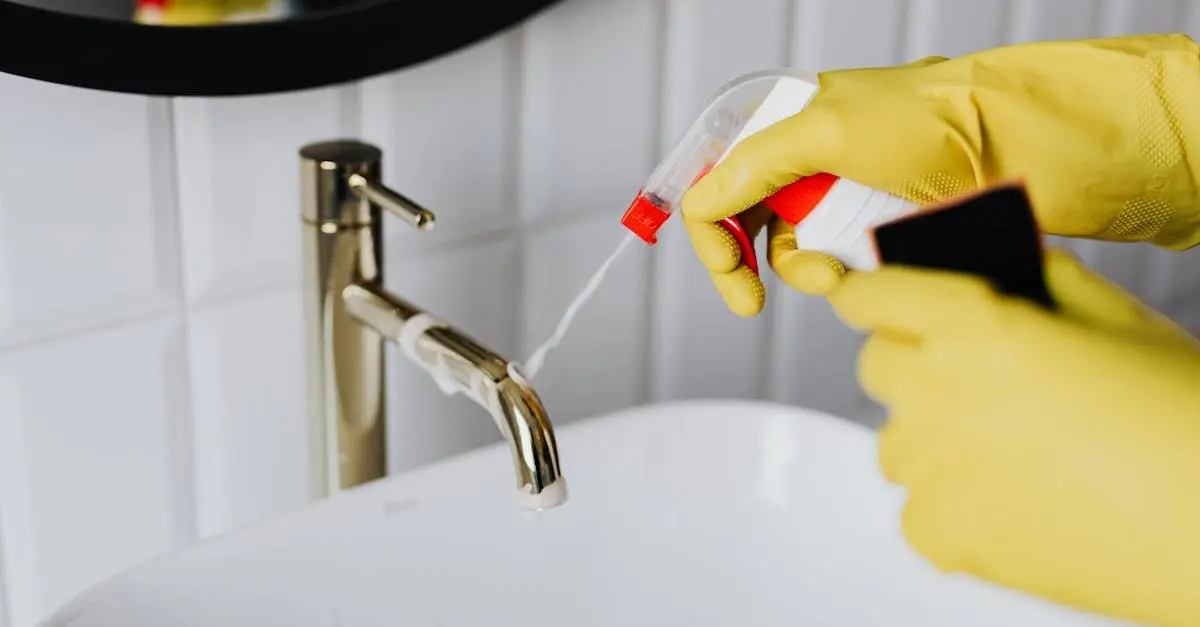
When mold keeps coming back to the same spot in your bathroom, most people do the same thing every time. Spray it, scrub it, feel relieved for a week or two, then get annoyed when the black marks show up again. That loop is the real issue. Mold in bathroom spaces is rarely just a dirty corner problem. More often it is moisture, condensation, weak airflow, and sometimes damaged silicone or a cold building detail working together. I see it most often in small Prague flats where three people shower back to back in the morning and the room never properly dries out.
Where bathroom mold comes from, and why it keeps returning
Mold needs three things: moisture, a bit of organic residue, and a surface that stays damp long enough. A bathroom gives it all three without much effort. Warm steam from a shower lands on colder surfaces, water sits in grout lines and on silicone, and a weak extractor fan leaves the whole room humid for longer than people realize.
The most common mistake is treating a few black dots on grout as a visual nuisance and nothing more. They are usually a signal that the room handles humidity badly. In older apartment blocks, especially bathrooms without windows, the pattern is predictable. Damp towels stay inside, the fan is undersized or noisy so nobody runs it long enough, the door stays shut, and the air still feels heavy the next morning.
There is a big difference between a one-off outbreak and a chronic pattern. If mold appeared after the fan failed, after a long wet winter spell, or after a period when the room was used more heavily than usual, deep cleaning may be enough. If it comes back every few weeks around the same shower edge, on the same ceiling corner, or around the same silicone line, the cleaning itself is not the main problem.
That is why surface cleaning alone rarely fixes recurring mold. You may bleach the mark, wash the tile, and wipe everything down, but if the room still traps moisture in the same spot after every shower, you have only reset the clock. Honestly, this is where many households lose time and money. They keep buying stronger products when the room really needs a drying strategy.
How to tell what can still be cleaned, and what needs replacing
Not all bathroom mold behaves the same way. Grout, silicone, painted walls, and ceilings each have their own limits.
Mold on grout
If the mold sits on cement grout between tiles, it can often still be cleaned successfully. It usually shows up as dark dots or grey staining where water hits most often. If the grout stays firm, does not crumble, and looks much lighter once cleaned and dried, the problem is probably still on the surface.
Mold on bathroom silicone
Silicone is a different story. If it has turned porous, yellowed, started peeling away, or looks black inside the material rather than on top of it, you are usually at the end of what cleaning can do. Scrubbing may improve the look for a short time, but mold on bathroom silicone often means the material itself has to go. Water may also be sitting behind the seal, which is why black mold in shower areas keeps reappearing even after a careful cleaning session.
Mold on paint and ceiling areas
Watch for stains, soft paint, blistering, and repeat growth in one corner near the ceiling. That often points to condensation collecting on a colder surface, or to a building issue such as a thermal bridge. If the area darkens again soon after cleaning and the paint starts flaking, the problem may be deeper than the top coat.
Signs this is no longer just a cleaning task
- silicone is separating from the shower tray or bathtub
- grout stays dark even after cleaning and full drying
- mold returns to the exact same spot within a few weeks
- damp marks appear on the ceiling or around a bathroom window
- the room smells musty again soon after cleaning
At that point, replacing materials or checking the technical cause usually makes more sense than throwing another chemical at it. I remember one rental flat in Zizkov where the family kept cleaning the shower corner every month. The real cause was simple and irritating: the silicone had failed, water was getting behind the tub edge, and the wall was drying painfully slowly. Until the seal was cut out and redone, nothing lasted.
A safe step-by-step way to remove bathroom mold
If you are wondering how to remove bathroom mold safely, keep the process simple. First, prepare the room. Open the door, run the extractor fan, and if possible create some cross ventilation elsewhere in the flat. Wear gloves. If the affected area is bigger or you will be scrubbing overhead, a respirator is a sensible idea too. People often underestimate this part. Between loosened mold particles and cleaning fumes, close-up breathing is not something you want.
1. Remove loose dirt first
Wipe away dust, soap residue, and surface grime before using a mold product. If you put cleaner straight onto a dirty film, it works less effectively. A small brush helps with grout. A microfiber cloth is better for smooth tile and fittings.
2. Match the cleaner to the surface
For grout and tile, a bathroom mold remover made for wet areas is usually fine. For silicone, be realistic. If the discoloration is embedded inside the seal, cleaning will only improve the surface. It will not restore the material. Test any product on a small area first, especially with colored grout or more delicate finishes.
I am not a fan of the "stronger smell means stronger result" mentality. Plenty of people overdo the product, barely ventilate afterwards, and still end up with the same mold problem a month later. Contact time matters. Mechanical cleaning matters. Drying afterwards matters even more.
3. Let it work, then clean mechanically
Give the product the contact time recommended by the manufacturer. Then scrub gently but properly with a brush or sponge. Work in shorter sections rather than attacking the whole shower at once. That way you can see where staining remains and whether it is improving or not.
4. Rinse and dry the area
This is the step people skip all the time. Rinse with clean water, then dry the area thoroughly. That includes grout lines, shower edges, the silicone seam, and corners where water likes to collect. If you leave everything wet after cleaning, you are putting the room straight back into the same damp conditions that created the problem in the first place.
5. Check again after 24 to 48 hours
Once the surface is fully dry, you can judge the result properly. Sometimes grout looks fine while wet, then darkens again the next day. That usually means the staining runs deeper or moisture is still trapped behind the surface.
How to stop mold from coming back after cleaning
Anyone hoping for a miracle bottle will be disappointed. Long-term control usually comes from what happens after the shower, not from the cleaner itself.
Ventilation after showering
Let the extractor fan run for at least 15 to 30 minutes after showering. If there is no window in the bathroom, leaving the door partly open can help, but only if the moisture has somewhere else to go. If all you do is dump steam into a closed hallway, you have not solved much.
Use a squeegee and dry the trouble spots
A quick pass with a shower squeegee does more than most people expect. It takes two minutes. Wiping down the silicone line, the shower screen edge, and the bathtub rim helps too. Those are the areas that stay damp longest.
Keep temperature and drying balanced
A very warm bathroom with poor airflow collects a lot of condensation after a hot shower. A very cold bathroom lets moisture sit on cold corners and ceilings. You do not need tropical heat or a freezing room. You need a space that can dry in a predictable way.
A simple weekly routine for a small bathroom
In compact bathrooms, a short weekly routine works better than dramatic deep cleans every few months:
- wipe grout and silicone around the shower once a week
- check the ceiling corner and the area around the fan or window
- dry bath mats and towels outside the bathroom when possible
- leave the shower enclosure or curtain open so the area can air out
That routine is often the difference between a bathroom that keeps slipping back into mold and one that stays under control after a proper cleaning. It is not about making the room spotless all the time. It is about giving wet surfaces a fair chance to dry.
When to call a professional, or treat it as a building problem
If mold returns to the same area even after deep cleaning and better bathroom ventilation habits, I would stop treating it as a normal cleaning job. Repeated ceiling growth, blackening around silicone soon after replacement, damp marks around windows, or a stubborn musty smell all point to a bigger cause.
At that stage, the best approach is usually a combination. Clean the visible contamination first so you can clearly see where the problem starts again. Then check the technical side: the extractor fan, the seal around the shower or tub, drainage slope, possible leaks behind tile, or a cold structural point in the wall or ceiling.
If you are renting, document the issue with photos and dates. That matters. Mold on a ceiling or behind bathroom fixtures that keeps returning under reasonable daily use may be a property defect, not a housekeeping failure.
If you want help with a deep bathroom clean, heavy buildup around the shower, or regular maintenance, CistýKout is a Prague-based cleaning option and you can reach out through the contact form. Still, it is worth saying this plainly: cleaning can remove visible mold and make the source easier to identify, but it will not solve a construction or ventilation defect on its own. In recurring cases, that distinction is the whole story.