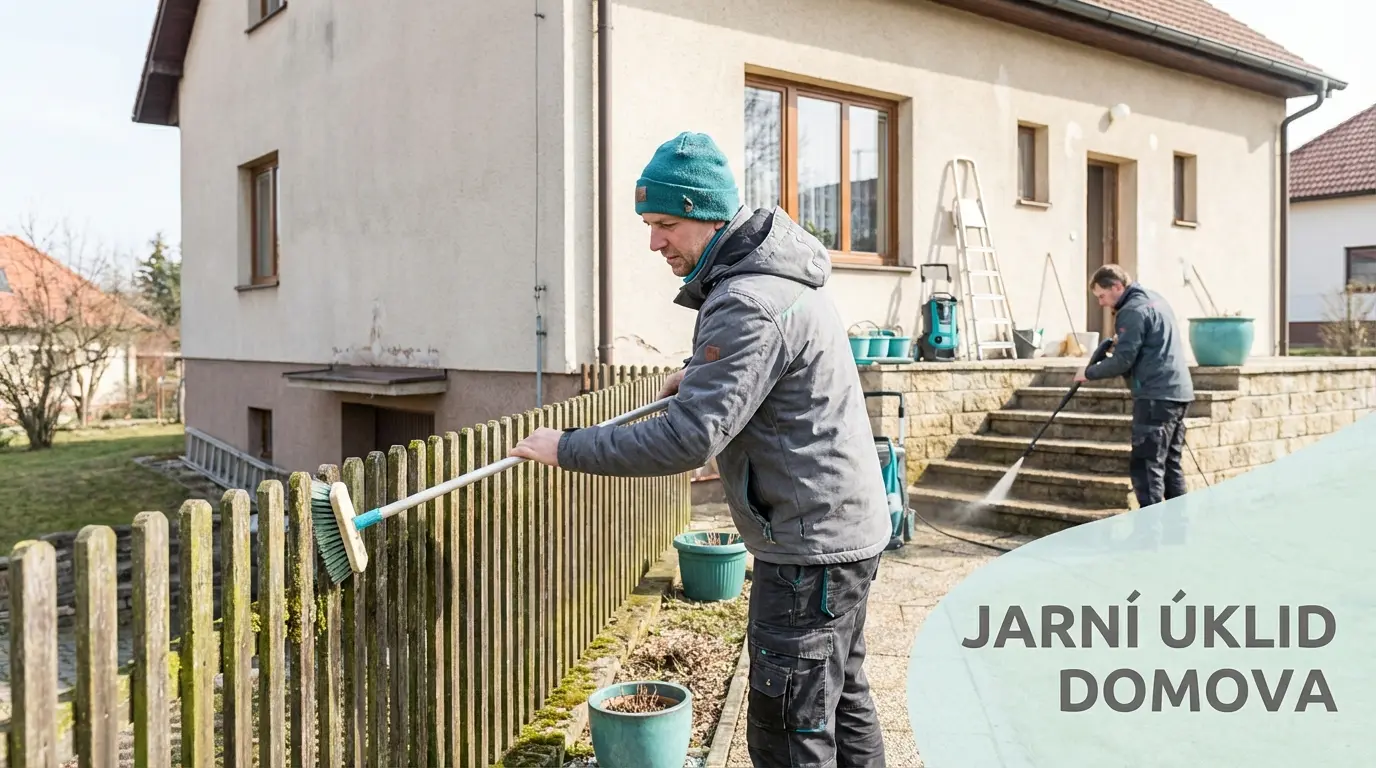
Outdoor spring cleaning: how to bring your home's exterior back after winter
Open your window in April. And instead of fresh air, you get hit with dust and a view of a facade that somehow turned a depressing shade of grey. The contrast with that first bright sun is just brutal. Inside is spotless, but outside? It's like a war zone. Stairs covered in a salt crust, dark stains at the base of the house, and a fence that looks five years older than it did in autumn. At least.
Martin, a client from Central Bohemia, recently told me how shocked he was by what a few months of slush and snow did to his house. The facade near the ground was a mess of streaks, and his front steps were so slippery he was genuinely worried about his kids. So we did a proper deep clean. And suddenly the original colour popped again. The whole entrance felt new. But it wasn't just about the look - it was about not trekking through grime every time you go home.
This spring mission is a rescue operation for your wallet. Moisture and salt quietly eat into surfaces. And what you can solve with a brush today might require a costly renovation in two years. Let's look at how to tackle the grime on your walls, bring life back to paths, and deal with a fence that has lost its shine.
How to remove winter buildup from the facade
A facade acts like a sponge. All winter it soaks up soot from chimneys and road dust. If you live near a main road, you've got that greasy film from exhausts and splashed salt too. And the north side is the worst. That green slime - algae and moss. It's not just ugly; it's a living thing eating your render. Honestly.
Honestly, blasting old render with a pressure washer is just asking for a disaster. You'll literally shatter the surface. Creating tiny holes where dirt sticks even deeper. For the sensitive stuff, soft washing is the only way. Gentle chemicals dissolve the grime, then a low-pressure rinse does the rest. It's smarter.
Do you see dark streaks or biological film? Water alone won't cut it. But aggressive scrubbing can leave permanent marks you'll never hide. You need to know exactly what your wall can handle. And when it's better to let the solution do the heavy lifting.
Be smart about it. Test any product on a small corner first. Then clean in full vertical sections so you don't leave streaks. Focus on the base of the house and under windowsills - that's where the worst grime hides and it's the first thing people notice from the street.
Cleaning outdoor steps and walkways
When it comes to stairs, it's about safety. Plain and simple. A mix of moss, mud, and leftover salt creates an invisible, slippery film. One light spring shower and you're down. Salt is a silent killer for concrete too. It eats into joints and causes crumbling you won't notice until it's too late.
Only have a few steps? Grab a stiff brush, a bucket of water, and get to work. It's a workout, and you'll see where the frost chipped the edges. But for a large terrace or a driveway? That's a whole weekend gone. That's where professional equipment pays off, restoring the colour quickly and evenly.
Watch out for the joints in pavers. If you blast them with too much pressure, the stones will start to shift and your path will eventually fall apart. The goal is a clean surface, not empty gaps. So top up the sand in the joints after cleaning, otherwise weeds will move in by next Tuesday.
Don't ignore those white salt stains. They need to go before they bite into the material for good. A clean, non-slip surface is the foundation of a safe home. Somewhere you don't have to worry about every step when the clouds roll in.
Preparing fences and garden furniture for the new season
A fence won't complain. It just quietly turns grey and starts peeling. Usually, you only notice it when you're ready for that first coffee outside. Wood looks tired and metal parts show tiny rust spots. They seem harmless now, but by next year, you'll be replacing entire sections. Fact.
Don't be too brutal with wooden benches. If you're planning a fresh coat of paint, get rid of everything peeling, but don't shred the wood fibers. With metal, speed is everything. As soon as you see rust, hit it with sandpaper. Stop it before it crawls under the paint like a web.
Try this routine: rinse off the dust first, let it dry completely - and I mean really dry, not just 'sun-warmed' after lunch - and only then decide if a quick oil refresh is enough. A few hours of care now saves you from buying new furniture next year.
Special equipment versus manual work
A pressure washer is a great servant but a terrible master. Watching water 'erase' dirt is addictive, but it's also the fastest way to ruin window seals or chip away at soft stone. And being too eager with chemicals can mean a clean path but a burnt lawn and dead tulips right next to it.
Pay attention to the details. Where is that dirty water draining? Is the cleaner drying in direct sunlight? If it is, it'll leave stains on your facade that are harder to remove than the original dust. These are small things, but they're the difference between a pro result and an amateur attempt that causes harm.
At CistýKout, we rely on experience. We know when a garden hose and a brush are enough and when to bring out the heavy hitters. We don't experiment on your property. The result is just a clean home, zero damage, and you not wasting three weekends in a row.
Want your exterior properly cleaned after winter without the risk?
CistýKout connects you with pros who know exactly what your facade, steps, or fence can handle. No trial and error - just a clean home you'll appreciate the moment you pull into the driveway.