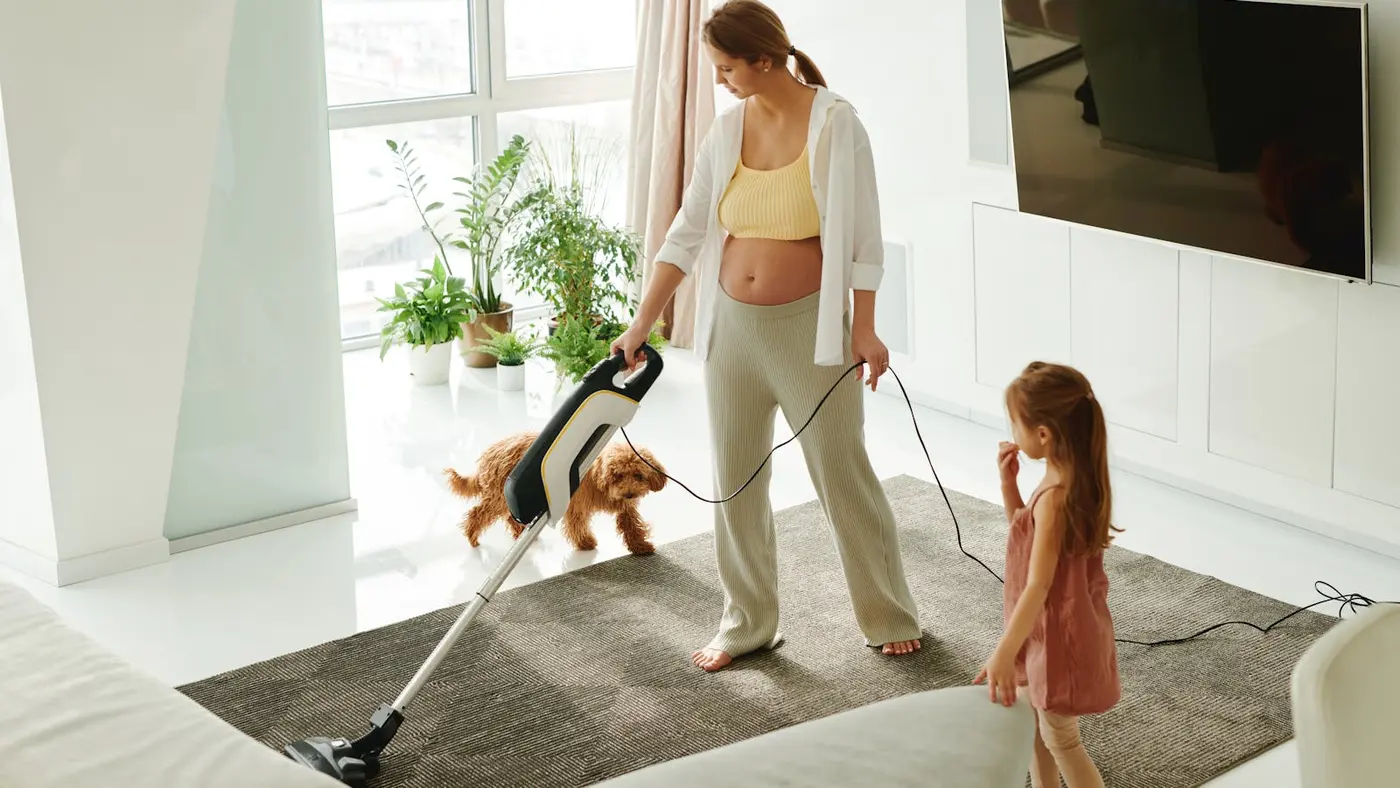
If you live with a dog or cat, you already know the scene. You vacuum in the morning, the floor looks fine for a couple of hours, and by evening you are stepping over new tumbleweeds of fur near the skirting boards. Pet hair in apartment living is annoying in a very specific way because it is never just on the floor. It lands on the sofa, sticks to the throw on the bed, hides under the radiator, and somehow ends up on a black T-shirt five minutes before you leave the flat. That is when it starts to feel like there is pet hair everywhere. During peak shedding season, normal cleaning stops being enough.
This is not a grooming article about coat health. It is a household cleaning playbook for shedding weeks, especially in smaller Prague flats where one hairy sofa and one overused bedroom can make the whole place feel dusty. The real problem is not only fur. It is fur mixed with fine dust, pollen from open windows, and fabric surfaces that keep feeding the mess back into the room. If you only vacuum harder, you usually end up doing the same work again tomorrow.
Why shedding season feels worse than everyday pet mess
Regular pet mess is manageable. A few paw marks, some dust by the door, maybe hair on a blanket. Heavy shedding is different. Fur is light, static, and stubborn. It clings to upholstery, catches on woven fabrics, slides into corners, and combines with dust into those grey clumps that show up under the coffee table and along the edges of the room.
Spring makes the whole thing worse. You air out the flat more often, which is sensible, but you also bring in pollen. Add city dust from a busy Prague street, a dog coming back from a damp walk, or a cat rotating between windowsill, bed, and sofa, and the air starts to feel heavier even when the place looks half-clean. One quick pass with the vacuum does not reset that.
I think this is where people get unnecessarily frustrated. They aim for a spotless apartment when the realistic goal should be control. In peak shedding weeks, success means reducing how much loose hair is circulating and cutting off the spots that keep releasing it back into the room. That is a very different mindset from trying to win a perfection contest against a living animal.
I have seen this play out in Prague flats again and again. One owner with a shepherd mix vacuumed every evening and still felt she was losing. The reason was simple: the floor was not the source. The fabric sofa, dog blanket, and the throw at the foot of the bed were. She kept cleaning the result, not the reservoir.
Which places collect the most hair
People usually think first about the floor. Fair enough. But the worst zones are often the soft surfaces. Sofas, armchairs, throws, pet beds, blankets, decorative cushions, and the bed if your animal is allowed up there. Those are the places where hair settles deep and then gets released again every time someone sits down, shakes a blanket, or opens a window.
The second group is the quiet buildup zone: under the bed, behind bedside tables, next to radiators, around skirting boards, and in corners where fur joins dust and stays put until it becomes visible. In an older panelak flat with laminate or PVC flooring, you usually notice it faster. In newer apartments with matte vinyl floors, it can look cleaner than it really is, which is almost worse because the buildup hides longer.
Then there are the low-priority textiles that quietly become a problem. Curtains. Light throws. Bath mats. Spare blankets. Cushion covers. Anything that gets touched by fur but is not washed often enough. That is where the apartment starts feeling stale, even before the smell becomes obvious.
For cat hair cleaning at home, the main trouble spots are usually predictable: the sofa corner, the windowsill blanket, the bed throw, and any fabric surface the cat treats as permanent territory.
The useful move is to map your problem zones instead of treating the whole flat the same way. Ask three blunt questions:
- Where does the dog or cat actually spend the most time?
- Which areas look hairy again soon after cleaning?
- Which fabrics stay in contact with fur for days before they get washed?
That quick map changes the whole routine. A sofa that holds a cat for six hours a day needs a different schedule from the hallway. The bedroom throw needs more attention than the bookshelf. Once you see the pattern, cleaning gets less random.
How to clean floors and fabrics without blowing the hair around
During dog shedding cleaning, the order of work matters more than most people think. Start with a dry broom and you often just flick the hair into the air and under furniture. Start mopping too early and you turn loose fur into damp streaks near the edges. A lot of wasted effort comes from doing the right tasks in the wrong sequence.
The most effective order is usually this:
- remove hair from upholstery and fabrics first
- vacuum floors, edges, corners, and under furniture second
- finish with light damp mopping to catch the fine residue
That order works because it deals with the sources before the fallout. If you vacuum the floor first but leave the sofa untouched, the floor will not stay clean for long. Hair from the blanket, the pet bed, and the sofa edge simply drops back down.
On hard floors, a decent vacuum with strong suction and a brush that does not spit hair around matters more than scrubbing harder. The mop comes after that, and it should be only slightly damp. Too much water turns fur into sticky strands along the skirting boards. Tile in the hallway can take more moisture. Bedroom timber or laminate needs a lighter hand.
Carpets are mostly about frequency. If shedding is heavy, once a week is cosmetic. In the main zones, a short pass every other day often works better than saving everything for Saturday. Ten focused minutes can outperform a two-hour weekend reset because the buildup never gets the chance to take over.
One small tool makes a big difference: keep a lint roller or rubber glove near the worst spot. Not for the whole flat. That would be tedious. But for the sofa arm, the chair where guests drop a jacket, or the bed throw that suddenly looks furry under daylight. Tiny interventions during the week stop the mess from snowballing.
If someone at home is sensitive to dust or pollen, pay attention to the vacuum filter as well. This is not marketing fluff. A clogged filter can send fine dust back into the room, which means you are technically cleaning while also redistributing the problem.
How to get hair out of sofas, blankets, and pet beds
This is where most routines either start working or fall apart. The floor gets the attention because it is visible. Upholstery and soft furnishings are slower, so they get postponed. But if you are dealing with how to remove pet hair from sofa surfaces, you need more than one internet trick.
For a standard fabric sofa, the fastest method is usually a three-step job: use a rubber glove or rubber brush to gather the fur into clumps, vacuum with an upholstery attachment, then finish with a lint roller for the leftovers. It is not glamorous. It is just reliable. One quick pass with the vacuum alone rarely pulls enough hair from woven fabric.
Blankets and throws are easier if you do a pre-laundry step. Shake them outside the main living area, then run them through a short tumble-dry or air-only cycle if the fabric allows it. A surprising amount of hair ends up in the lint filter before washing even begins. Skip this step and you often move the problem straight into the washing machine drum.
Pet beds are trickier. Cheaper plush beds trap fur deep in seams and stuffing, and that is where smell starts to linger. If a bed still smells stale after washing and drying, the issue is not only surface hair. It is body oil, trapped moisture, and old buildup in the fill. At that point, more fragrance spray is mostly denial.
Odour control is better handled at the source. Wash covers regularly, dry them fully, clean the floor under the bed itself, and do not leave damp laundry sitting around. In a lot of homes, the patch of floor under the pet bed smells worse than the bed cover. Older wood floors and cork are especially good at holding onto that mix of moisture and animal residue.
When home methods stop being enough
Some weeks, your own routine is enough. Some flats reach a point where the combination of fur, odour, heavy-use upholstery, and busy schedules keeps undoing the work. A dog sleeping on the same sofa every day, a dense rug, a hairy throw in the bedroom, and street dust coming through the windows can create a cycle that normal vacuuming only manages, never improves.
That is when professional upholstery cleaning or a deeper apartment clean starts to make sense. Not as a luxury. As a reset. Once the sofa, corners, skirting boards, and hidden buildup zones are properly dealt with, the regular weekly routine becomes manageable again.
How to set a workable routine for peak shedding weeks
The best routine is usually not one huge clean at the weekend. It is a short daily rhythm plus one stronger weekly session. In practice, it might look like this:
- 10 minutes a day on the worst zone: sofa, pet bed area, or bedroom textiles
- a quick vacuum of the main traffic lanes and corners every other day
- weekly washing of throws, covers, and blankets that touch fur directly
- one more thorough weekly pass under the bed, under the sofa, and along the edges
Pair that with brushing the animal. Not because this is secretly a grooming article, but because it is basic cleaning maths. Hair removed before it lands on fabric is hair you do not need to fight later. If you brush the dog on the balcony or in the bathroom and clean that area straight after, you save yourself the second round in the living room.
It also helps to accept that the schedule changes with the season. What felt perfectly adequate in January can fall apart in May. That is not a sign you are doing something wrong. It is just what heavy shedding does in a real home.
When it makes sense to book help
If you feel like you are always cleaning and the hair is back within hours, the usual issue is overloaded textiles and neglected hidden zones. That is exactly where a deeper service helps. Upholstery cleaning, thorough vacuuming under furniture, edge work, and a proper reset of the bedroom can bring the flat back to a level where regular maintenance works again.
For many Prague households, it is also a time decision. Work, commuting, children, a dog or cat in full shedding mode, and suddenly the weekend disappears into laundry and vacuum noise. In that situation, getting help is not indulgent. It is efficient.
If you want a cleaner flat without donating every other evening to pet hair management, ČistýKout is a Prague-based option for regular cleaning, deeper apartment resets, and upholstery-focused help in homes where fur sticks around longer than anyone wants.