If cleaning for allergy sufferers is meant to help in May and June, it cannot be the usual Saturday vacuum and a quick wipe of the table. Prague makes that obvious pretty fast. One warm afternoon, one window open toward a line of trees, and there it is: the yellow dust on the sill. At first it looks harmless. Then it is on your socks, on the throw blanket, on the edge of the bed. Somehow it ends up everywhere.
This spring is following the usual messy handover. Birch is fading, oak and beech are busy, plane trees are still annoying people in the city, and grass pollen starts becoming the main problem around mid-May. So the cleaning routine has to move with the season. Not dramatically. Just more intelligently.
The point is not to turn your flat into a hospital room. Nobody wants to live like that, and frankly, it would not last past breakfast. The useful goal is smaller: keep the pollen load low enough that your eyes, nose, skin, and sleep are not being irritated all evening.
When the routine is right, you notice it in very ordinary ways. The black table does not look dusty two hours after wiping it. You wake up less blocked. You stop sitting on the sofa at 10 p.m. wondering why you are sneezing indoors. The plan below works for a small Vinohrady flat, a family house outside Prague, and most homes in between.
Where pollen hides (even if you clean regularly)
Most pollen does come in through windows. That part is obvious. But it also comes in with you. On a jacket sleeve. In hair. On shoes. On a dog's coat, very reliably. If you live near a park, you know the evening hallway test: wipe the floor and the cloth comes back dirtier than it has any right to, even though you cleaned yesterday.
Vacuuming the visible floor is only part of it. Pollen does not politely stay where it lands. It settles into curtains, sofa fabric, cushions, blind slats, bed frames, lampshades, the fabric basket by the door. Then normal life lifts it again. Someone drops onto the sofa. A child shakes out a blanket. You open the balcony door for five minutes. Back into the air it goes.
That is why symptoms often feel worse at night. You are not imagining it. The home has been collecting pollen all day, and the evening is when you finally sit down in the middle of it.
If you want to reduce pollen indoors, start with the places that actually carry the load. The entryway comes first because shoes, coats, bags, prams, and dog leads all meet there. The living room comes next, especially if you have textiles everywhere. The bedroom matters most, because your face spends hours close to pillows and bedding.
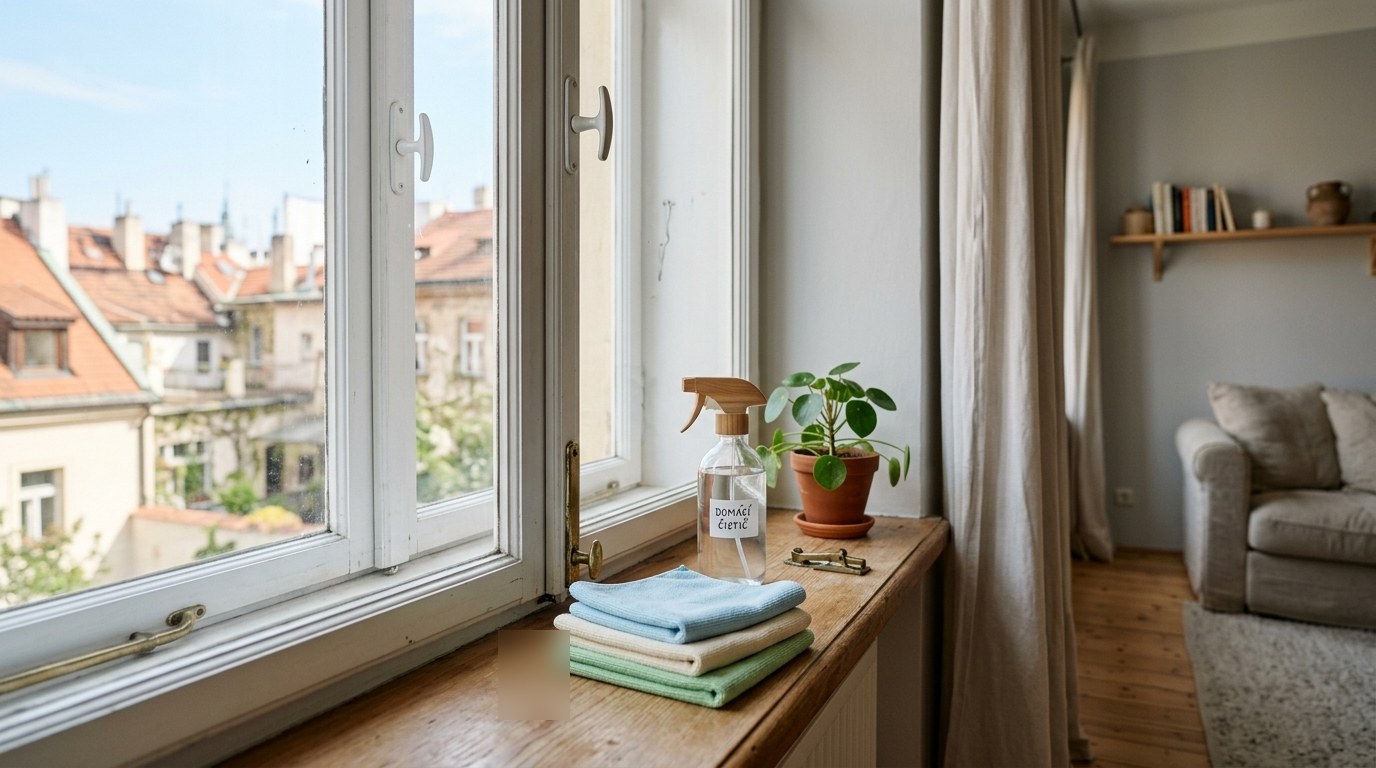
One tiny spot deserves more respect: the inside windowsill under a tilt-open window. It can look fine until low sunlight hits it. In a Prague apartment, that film is often pollen mixed with fine street dust, and it sticks to fabric more than clean pollen would.
How to ventilate without inviting the pollen in
You still need fresh air. Keeping the windows closed for two months is miserable, and it rarely works anyway. The trick is to stop treating ventilation as background noise.
During peak pollen weeks, short ventilation is better than leaving a window cracked all day. Open properly, air the room, then close. In city flats, early morning or later evening is often easier on the nose because wind and traffic dust tend to be lower. Near fields or tall grass, mornings can be worse. Grass pollen has its own schedule, so do not rely only on habit.
Check local pollen reports before you air the flat, especially on days when symptoms are already bad. The weekly bulletins at ProAlergiky.cz and the live overview on Pyly.cz are useful for that.
Pollen screens help, particularly in bedrooms. They will not block everything. Still, they cut down the amount coming in, which is what matters. If you use an air purifier, place it near the window while airing or just after. The sequence is simple: open, air out, close, then let the purifier deal with what is left.
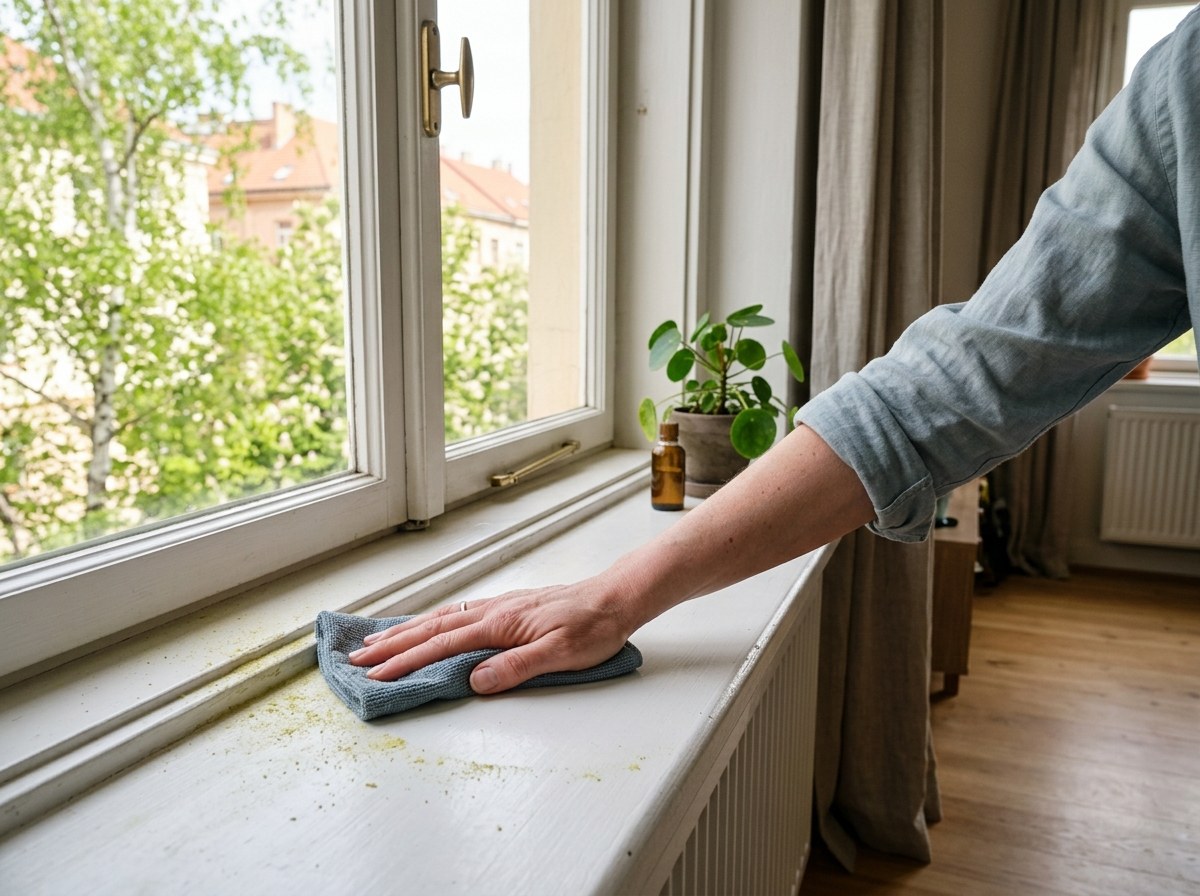
On heavy pollen days, wipe the sill after you close the window. Two minutes. Damp cloth. The floor just below the window too, if you can see dust there. This stops the fresh layer from being walked into the rest of the room.
Clothes are another boring but effective fix. When children come home from the playground, or you come back from the garden, change the outer layer in the hallway. Not every sock and T-shirt, no need to be dramatic. Just the jacket, sweatshirt, or trousers that touched grass, benches, pets, or outdoor dust.
And do not dry laundry outside during peak weeks. I know, the smell is lovely. But sheets and towels hanging outside behave like pollen nets. If someone at home is reacting badly, use an indoor rack or a tumble dryer until the worst weeks pass.
What to clean more often during the spring peak
People hear "indoor pollen" and think "vacuum more." Sometimes that helps. Often it is not enough, because the worst surfaces are the small ones you touch every day: windowsills, the floor by the balcony, dining tables, bedside tables, the sofa arms, the blanket everyone uses.
This is not the season for one heroic weekly clean. It is the season for short, slightly annoying, very useful resets.
For a typical apartment, try this rhythm:
- Daily: Wipe the hallway floor and window zones with a damp cloth.
- Every other day: Vacuum the main walking paths and the sofa.
- Weekly: Change bed linen. During a bad pollen spike, do it every 5 days.
- Weekly: Wipe blinds, bedside tables, and bed frames.
- Every two weeks: Wash throw blankets, cushion covers, and pet beds.
In a family house, do not clean every room with the same intensity just because it feels fair. Pollen is not evenly distributed. The ground floor, entrance, garden doors, and rooms where pets sleep will usually take the hit. Upper bedrooms may stay much cleaner if windows are managed well.
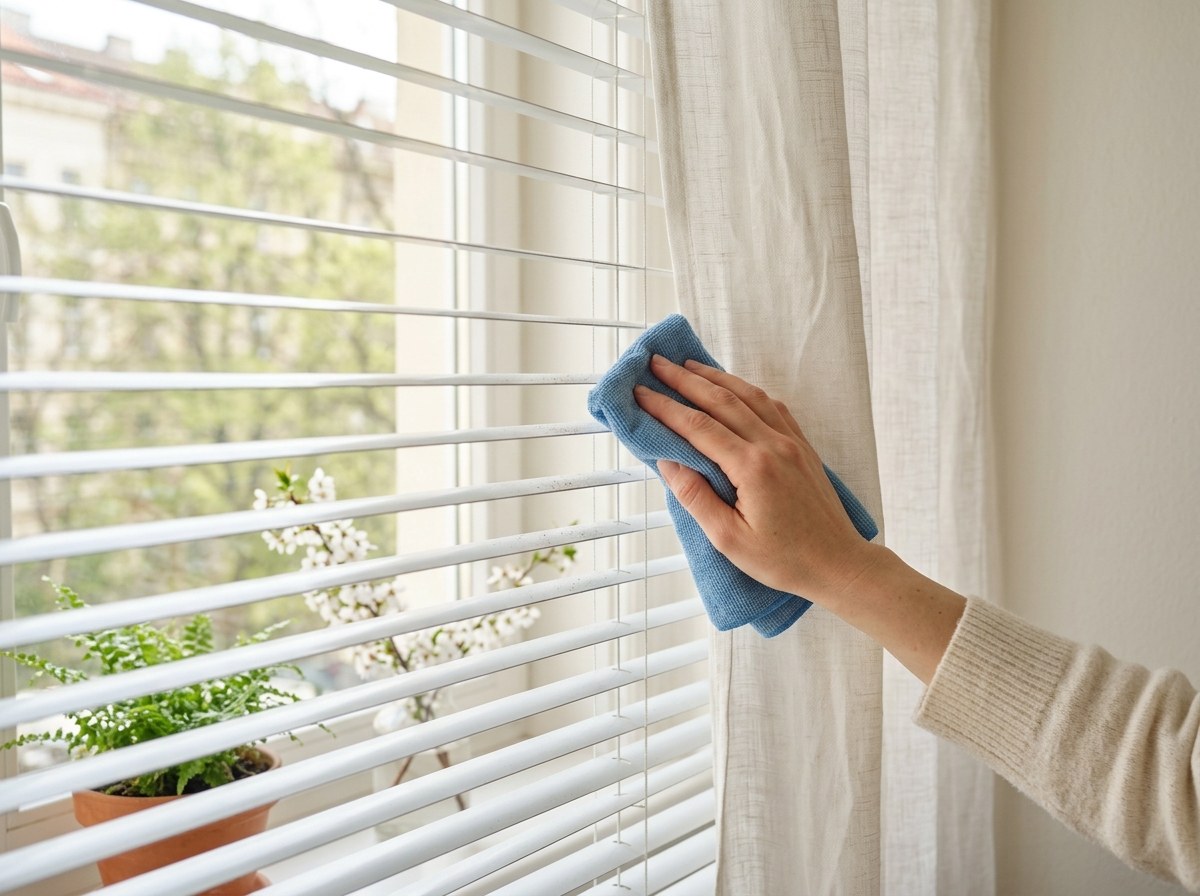
Curtains and blinds are where a lot of routines fall apart. A curtain next to an open window in May is basically a soft pollen collector. If you keep curtains up, wash them more often for these two months. With horizontal blinds, skip dry dusting. It just flicks particles into the room. Use a damp cloth or a blind-cleaning tool that actually traps dust.
Vacuuming and mopping the right way
If HEPA vacuuming is part of your allergy routine, check the vacuum, not just the label. A HEPA filter only helps if the machine is sealed well enough to keep tiny particles from blowing back out. For allergy sufferers, look for a sealed body, a HEPA 13 filter, and attachments for mattresses and upholstery. A cheap vacuum with leaks can make the air feel worse after cleaning, which is the opposite of what you need.
Order matters more than people think. Start higher, finish lower. Wipe surfaces with a damp cloth first, then vacuum, then mop. If you vacuum and only then dust the shelves, you have just put the dust back into circulation.
Dry cleaning is rarely your friend in pollen season. Dry dusters, dry mops, brisk shaking, even a too-enthusiastic brush attachment can lift more than they catch. Damp microfiber is boring. It works.
You do not need to soak the floors. A well-wrung microfiber mop is enough. In a home with an allergy sufferer, mopping busy rooms three or four times a week in May and June is reasonable, especially with pets, a balcony, or children running in and out.
Robot vacuums are fine, with one caveat. Run them when the flat is quiet or empty. If people are walking around, the robot can stir dust before it collects much of it. Afterward, give windowsills, bedside tables, and the entryway a quick damp wipe. Those are the places the robot will not solve.
The allergy-safe bedroom: Protecting your sleep
The bedroom is where pollen becomes personal. You can tolerate a dusty hallway better than a pollen-filled pillowcase. Bedding, pajamas, hair, the mattress surface, and soft toys all collect particles during the day. Then you lie in them for seven or eight hours.
During peak season, wash sheets at least once a week. If symptoms are bad, shorten that to every 5 days for a while. It sounds fussy until you wake up less congested.
An evening routine helps more than people expect. Shower before bed, especially wash or rinse your hair if you spent time outside. Keep outdoor clothes out of the bedroom. Close the window during high-pollen hours, even if you air the room at another time. For children, reduce the soft toys on the bed for May and June. You do not have to remove every beloved animal. Just stop the bed becoming a plush pollen archive.
Sometimes the normal routine still is not enough. That is common in homes with carpets, upholstered headboards, older mattresses, heavy curtains, or pets. A deeper clean of the mattress and upholstery can remove particles a standard vacuum will not reach. For someone with stronger allergies, that can be the difference between "I cleaned" and "I can actually sleep."
When to book a professional service
Book help when pollen keeps coming back faster than you can keep up. There is no prize for spending every weekend washing covers and mopping the same hallway. If you work full-time, have a dog, and a child with allergies, the load is not normal housekeeping anymore. It is seasonal maintenance on hard mode.
Professional cleaning is especially useful in homes with large textile surfaces: heavy drapes, rugs, wall-to-wall carpet, big sofas, upholstered beds. Pollen clings there and does not let go easily. Ordinary vacuuming improves the surface. Professional equipment can reach deeper.
When booking, say clearly that you need cleaning tailored to allergy sufferers. Ask for HEPA vacuuming, damp dusting, and attention to the bedroom, upholstery, mattress, entryway, and window zones. A vague request for "a spring clean" may send the team in the wrong direction. A good brief gets you better relief.
Tell them where symptoms are worst, whether you have pets, which rooms are used most, and where windows are opened. Small details matter here. A cleaner who knows that the child sneezes most after sleeping, or that the dog lies on the sofa after walks, can put effort where it counts.
To breathe easier this spring, do not build the whole plan around one massive clean. Build it around the routine: short ventilation, damp wiping of hotspots, frequent washing, and proper HEPA vacuuming. And when it all starts eating too much of your week, you can send a no-obligation enquiry to ČistýKout. If you already know you need extra help, look at professional home cleaning in Prague or upholstery and mattress cleaning. In Prague and nearby areas, a well-handled professional clean can give an allergy sufferer more real relief than another pile of seasonal tips.