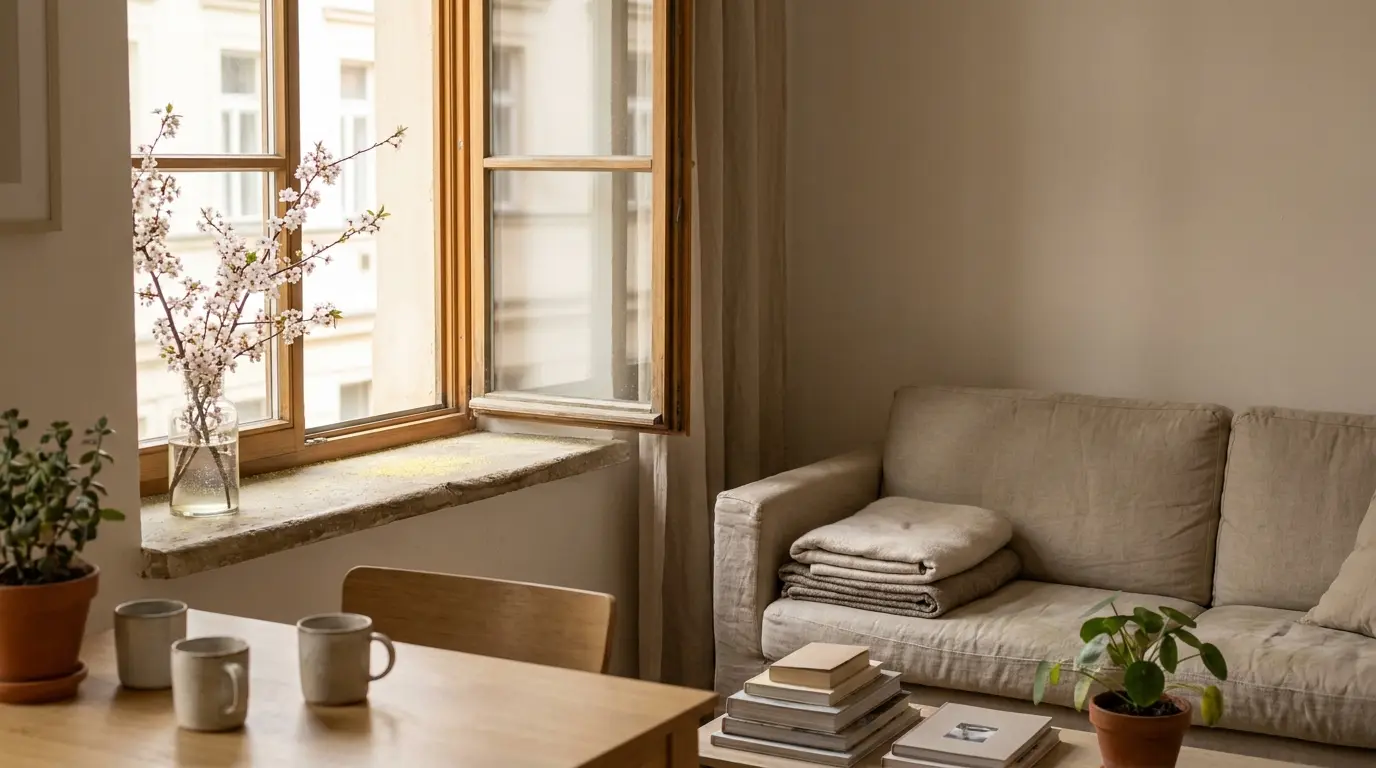
Every April, the same thing happens in a lot of Prague homes. You crack the window for a few minutes because the flat feels stuffy, the light gets nicer, and by evening the windowsill already looks dusty again. Not filthy. Just coated. Enough to annoy you if you have allergies, small kids, or both. Pollen in apartment air is part of it, but only part.
In real homes, spring dirt is mixed. Pollen comes in from outside, obviously, but so do street particles, fine dust, fibres from curtains and blankets, and all the small things people carry in without noticing. A jacket from the tram. Trainers left by the door. A buggy parked in the hallway. A dog that has just come back from Stromovka. That is why many households feel stuck. They clean, the flat looks better for a moment, and then the same haze seems to come back.
Why there is more pollen and fine dust at home in spring
People often start with the window. Fair. Open windows do matter. But if you only focus on ventilation, you miss half the problem.
Pollen gets inside on clothing, hair, backpacks, prams and pet fur. Children are especially efficient at moving outdoor mess from one room to another. Anyone who has watched a child run from the hallway to the sofa in socks knows this already. Adults are not much better, to be honest. We just do it more quietly.
It also helps to separate what you are dealing with. Pollen is seasonal and mostly outdoor. Ordinary dust is the usual indoor mix: fibres, grit, skin flakes, crumbs, tiny particles from the hallway. Then you have textile allergens sitting deep in mattresses, curtains, upholstery and rugs. In practice these do not stay in neat categories. They pile up together. So if your plan is simply "open the windows less," you may reduce one source and still leave plenty indoors.
That is the part people find frustrating. They try one rule, it does not fix spring cleaning allergies, and they give up. A lighter, smarter routine works better than a heroic Saturday reset.
Which spots in the flat collect the most pollen
Hard surfaces are easy to spot, so they get attention. Soft surfaces are where the real buildup hides.
Curtains, sofas, mattresses, rugs, throws and decorative cushions hold onto fine particles for much longer than people expect. Then someone sits down, shakes a blanket, makes the bed, and part of it goes back into the air.
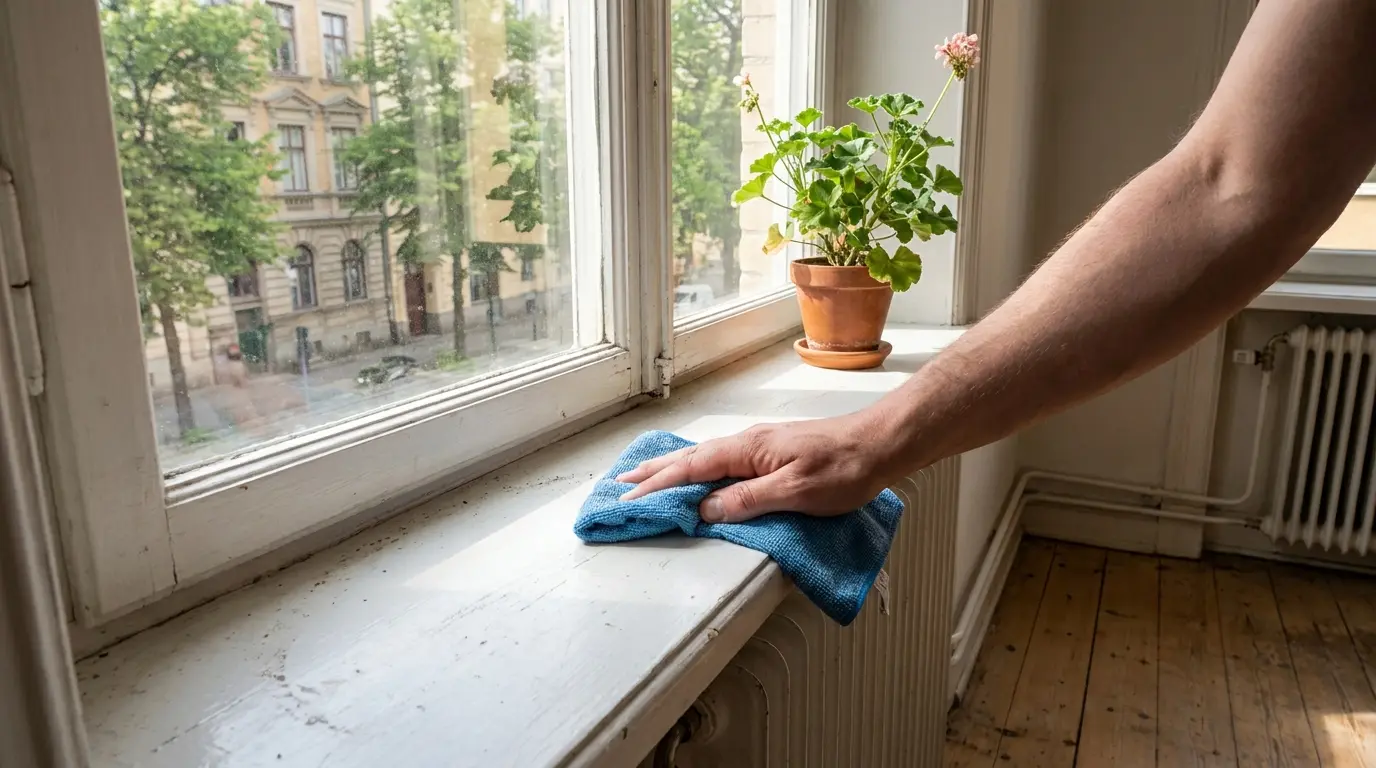
Window frames and sills are another obvious trap. In spring they collect outdoor residue fast, especially in flats facing busy streets or tram lines. If you live near a larger road in Prague 7 or Prague 8, you are rarely dealing with pollen alone. You are getting a mix of pollen and city dust. That is one reason dust in apartment in spring often feels heavier than it did in January.
Then there is the entry zone. Hallway floor, doormat, coat storage, bags, sports gear, school things. It is not glamorous, but it matters. Once pollen settles there, it moves inward quickly.
A cleaning routine that makes sense during pollen season
The goal is not endless cleaning. It is a schedule you can actually keep.
What to do daily
Daily jobs should stay short:
- wipe window sills and nearby surfaces with a damp microfiber cloth
- vacuum the hallway and the floor near the entrance
- wipe the bedroom floor or the main walking path if dust builds fast
- change into home clothes after a long stretch outside
Damp wiping matters more than many people think. Dry dusting often just throws the fine stuff back into the room. If you want to reduce pollen at home, you need to pick it up, not just move it around.
What to do weekly
Once a week, go a bit deeper:
- vacuum upholstery with the right attachment
- vacuum the mattress surface and under the bed
- mop all floors, not only the visible traffic path
- wipe skirting boards, shelves, and top edges that get ignored
- wash blanket covers and anything used every day on the sofa or bed
For allergy-prone households, weekly bedding changes are a sensible baseline. In stronger weeks, pillowcases may need changing sooner. That sounds a little fussy until you remember where your face spends six or seven hours every night.
What to do once a month
This is where people postpone too long:
- wash curtains, or vacuum them properly if washing is not practical
- clean mattress and sofa surfaces more deeply
- wipe blinds, radiators and inner window frames
- check filters in the air purifier or ventilation unit
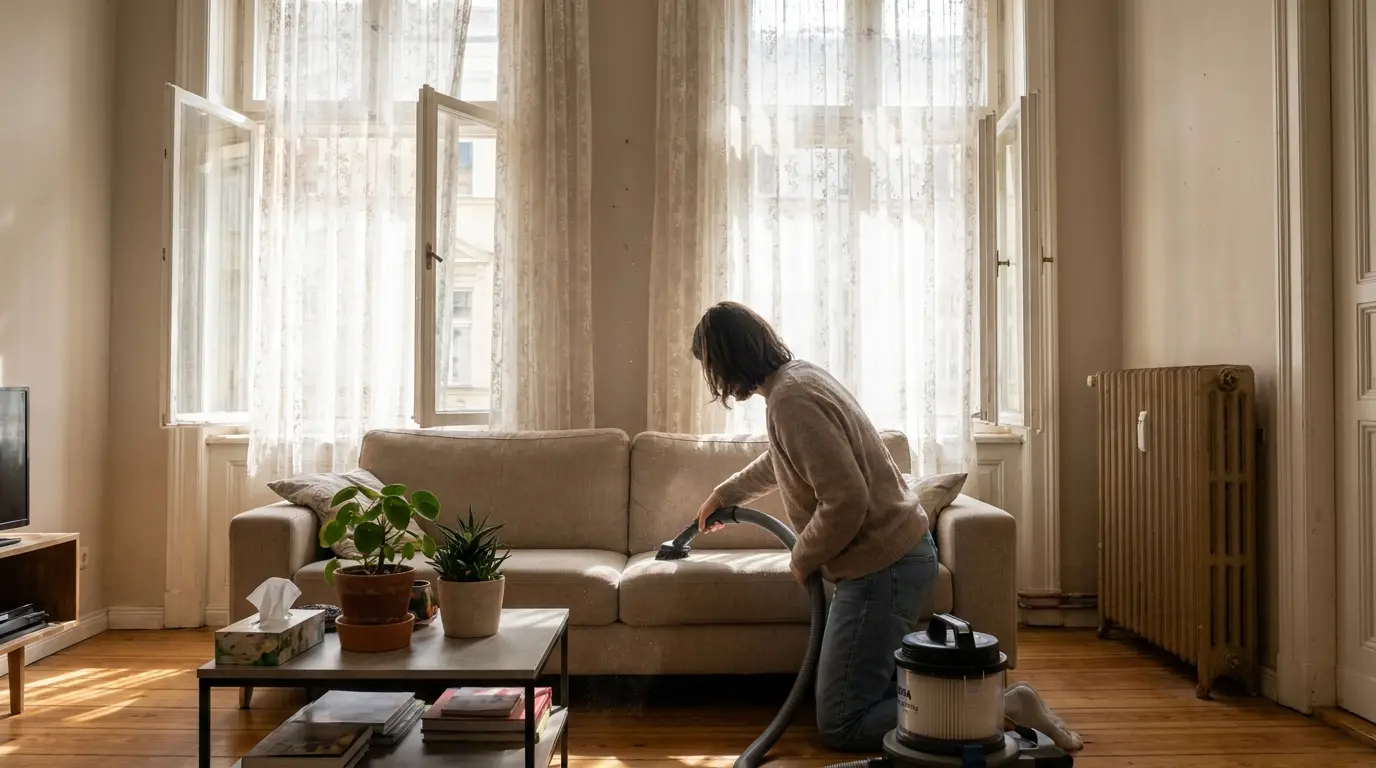
That monthly layer is often the difference between a flat that feels manageable and one that always seems dusty no matter how often the floor gets cleaned.
How to clean textiles and soft surfaces without damaging them
This is where DIY enthusiasm can backfire.
Curtains usually do not need washing every week, but during active pollen season, monthly washing can make sense, especially if windows stay open often. Lightweight curtains usually survive a gentle cycle well. Heavy lined curtains are another story. Check the care label first. It is a boring step, but less boring than ruining a full set of curtains.
Sofas and mattresses deserve more attention than they get. Surface vacuuming helps, but if symptoms are worst at night or first thing in the morning, the issue may be deeper in the fabric. A mattress often improves with careful vacuuming, local treatment and proper drying. Upholstery depends heavily on material. Some fabrics do badly with home shampooing and end up with tide marks or trapped moisture.
I have seen this in normal family flats, not just neglected ones. One household in Prague 6 kept wiping floors and changing bedding, yet the child still woke up congested. The bigger issue turned out to be an older sofa by the window and thick curtains that had been hanging there since winter. Once those were cleaned, the flat felt noticeably calmer. Not perfect. Just better in a way you could feel.
Ventilation, filtration and small habits that make the biggest difference
You do not need to stop airing out the flat. You just need better timing.
Short ventilation is usually better than leaving windows tilted open for hours. After rain is often a better moment. Dry windy days, when pollen is clearly active outside, are not ideal for a long fresh-air session.
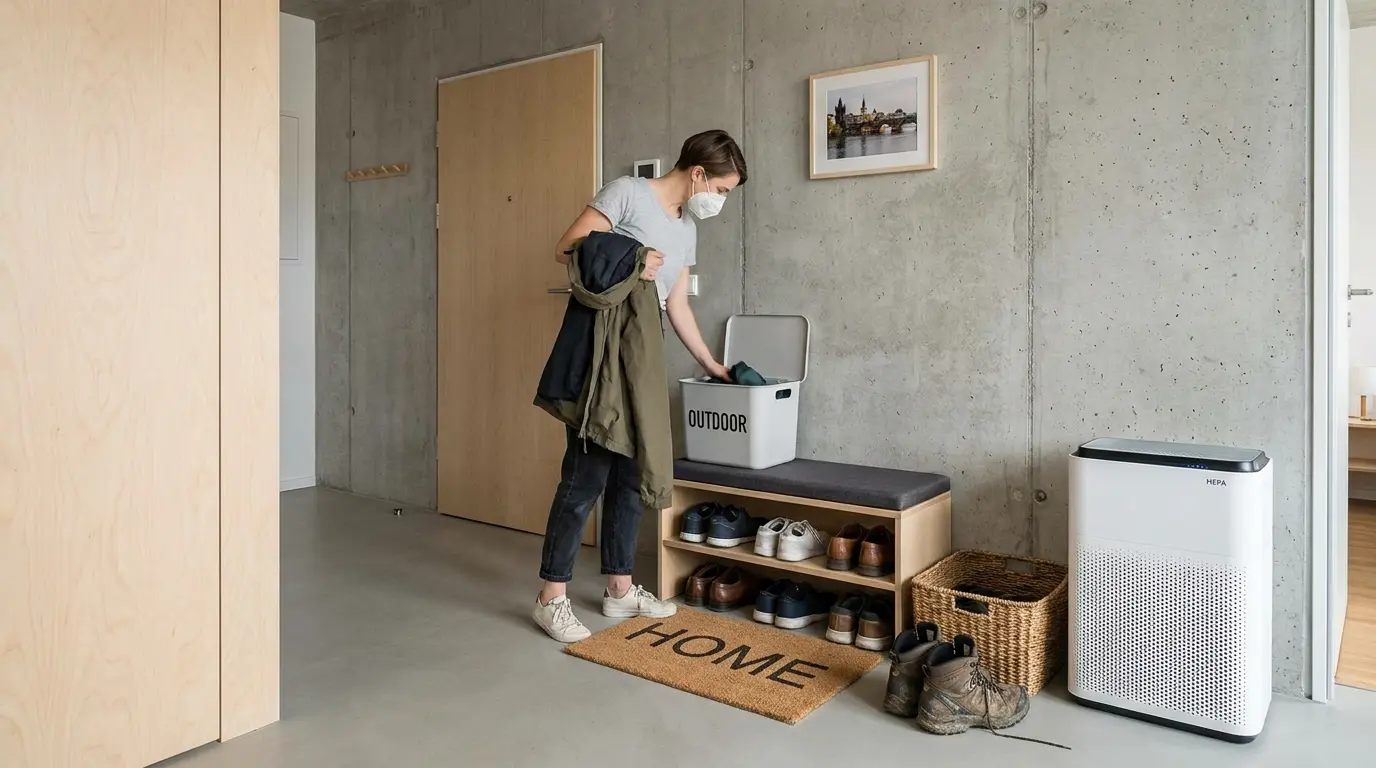
One habit with a surprisingly big effect is changing after you get home. Nothing dramatic. Just do not sit on the bed in the same clothes you wore across town, and do not leave coats on dining chairs. Families with children often benefit from a simple sequence: shoes off, jacket away, wash hands and face, change if needed.
A double doormat setup helps too, one outside the door if possible and one inside. Simple, yes. Still useful. The same goes for putting the air purifier where people actually sleep. In many homes, the bedroom is the best place for it. And if you are shopping for a vacuum, a HEPA model is genuinely helpful here, not just a line on the box.
When it is worth booking a professional deep home cleaning
Sometimes the routine is decent and the flat still does not feel under control. That is usually when deep home cleaning becomes worth considering.
Common signs include:
- symptoms get worse at home even though you clean regularly
- the flat has a lot of upholstery, rugs or heavy curtains that are hard to maintain well
- dust comes back quickly after cleaning
- the home still feels tired after winter, renovation dust, or a hectic family stretch
Professional help makes the most sense when the problem is layered buildup, not visible mess on the surface. Mattresses, sofas, rugs, skirting boards, detailed window areas and neglected textiles are usually where the biggest difference shows up.
When booking, be specific. Do not ask for a generic spring clean and hope for the best. Say you need help because of pollen in apartment conditions during Czech spring, with focus on the bedroom, upholstery, window frames, sills and the entrance zone. The clearer the brief, the better the result.
If you are in Prague and the cycle of wiping, sneezing and re-wiping is getting old, ČistýKout is a practical local option. You can send a no-pressure enquiry through the contact form and describe what needs deeper attention. That usually works better than asking for "general cleaning" and leaving the rest vague.
If you want to set up your own routine first, our guide to spring apartment cleaning step by step without chaos is a useful next read. And if part of the spring mess starts outside, continue with spring cleaning for balconies and terraces.