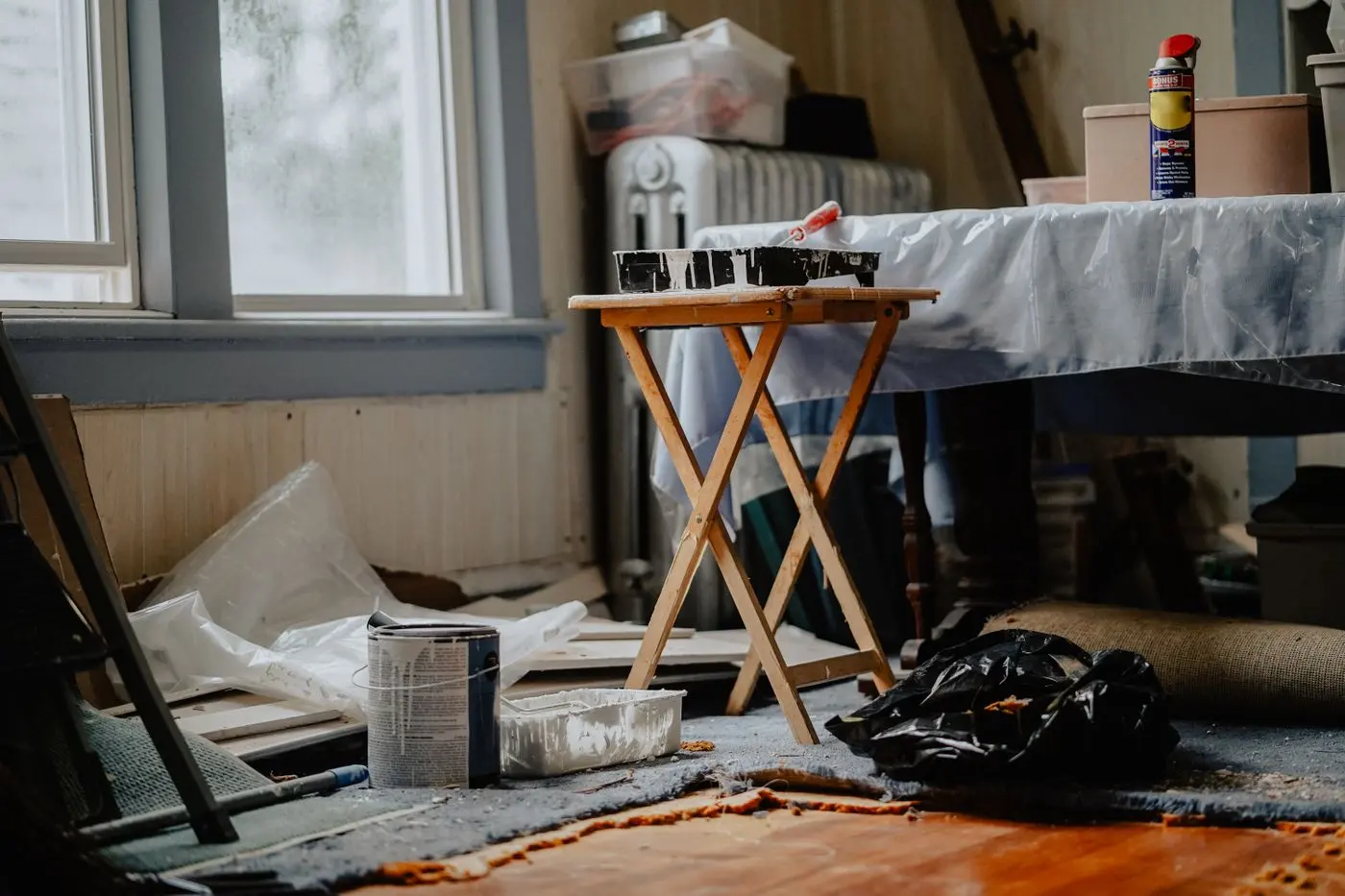
Type “post renovation cleaning cost” into a search box and you probably want one number. I understand the impulse. Still, a 60 m² floor plan is not enough. An empty flat after careful painting might need a good vacuum and mop. A furnished flat of the same size, after tiles were cut and old cabinets ripped out, is another job entirely. In Prague, CZK 3,000 to 18,000 is a workable first range. The useful estimate comes from the dust, residue, windows, furniture and finish you actually have.
Why post-renovation cleaning cannot be priced by floor area alone
Floor area answers one question: how much floor needs vacuuming and mopping? It does not count the ledges above doors, radiator fins, cupboard interiors or gritty window tracks. Nor does it tell anyone whether a white mark is loose plaster dust or dried paint that must be lifted slowly from a new finish.
I would put a well-covered, empty room after painting at the easy end. Sanding plaster or cutting tiles without proper extraction changes the picture. That fine powder rises when somebody sweeps it, works into joints and can leave a grey veil after the first damp wipe. Good construction dust cleaning often means vacuuming, dry microfibre work, damp wiping and then looking again when everything is dry.
Furniture makes a bigger difference than people expect. A bare studio is quick to move through. Add fitted shelves, blinds and ten boxes delivered before the builders left, and every item creates another edge or surface. Protection matters as well. Properly taped sheeting saves hours; old adhesive on lacquered doors or glass quietly adds them back.
That is why I would not choose from the hourly rate alone. CZK 320 an hour can look attractive until you learn that it excludes equipment and the cleaner needs twice as long. A team at CZK 450 per person-hour, carrying a suitable vacuum and products, may finish for less. Ask for expected person-hours and inclusions. Otherwise you are comparing two unrelated numbers.
What pushes the price up
Fine dust is usually the time thief. It sits behind heating, around switches, on cable channels and inside ventilation grilles. I have walked into Prague flats where the floor looked ready for the estate agent’s camera, then found a white line with one finger across the top of a door. The visible floor was never the real test.
Then there is the sticky work: silicone, grout haze, adhesive, expanding foam and paint spots. None of it responds to a square-metre calculation. Each patch has to be identified and treated without damaging what the renovation just installed. A remover that is fine on glass may mark oiled timber, stone or a matt kitchen front. “General dirt” in an enquiry is too vague if this residue is present.
Windows deserve a count of their own. Note the panes and opening sections, but also the frames, tracks, sills and blinds. A full-height balcony door in a Karlín development takes longer than a small bathroom window. Protective film, labels and paint take longer again. Mention difficult access before the day; a dining chair is not access equipment.
One more awkward fact: the dust sometimes comes back. A vent starts running, a gap releases what was trapped inside, or another trade drills one last hole. For heavily affected homes, a shorter visit 24 to 48 hours later is often more honest than promising perfection in one heroic session.
Three sample budgets for Czech apartments
These are planning examples for Prague, not a binding after builders cleaning price list. Parking, stairs, access and short notice can all move the final figure.
Empty studio after painting, 30 m²
The floor and window were covered properly, and there is no furniture. The cleaner vacuums, mops twice, wipes doors, sockets and sills, and cleans a small kitchen, bathroom and one ordinary window. Allow 6 to 9 person-hours, or roughly CZK 3,000 to 5,000. Paint drops and poor masking are the variables. If the decorator sanded filler without extraction, this little flat will not stay in the cheap band.
One-bedroom flat after a kitchen and bathroom renovation, 55 m²
The living room is partly furnished. Grout remains in the bathroom and protective film remains on the new kitchen. Cupboards, three windows, frames, floors and radiators are in scope. Two cleaners will probably spend most of a day here: 16 to 24 person-hours and around CZK 7,000 to 11,000. Adhesive and silicone decide where within that range the bill lands. Kitchen doors and bathroom details can consume as much time as every floor combined.
Furnished flat after a full renovation, 85 m²
Dust has reached shelves, radiators and blinds. There are five windows, an easily marked timber floor and several dry paint spots. The plan includes a team clean and a shorter return after the remaining dust settles. A sensible allowance is 32 to 45 person-hours, including the second pass, or CZK 13,000 to 18,000. Moving belongings and reaching high surfaces create the uncertainty.
DIY avoids the labour invoice, but it is not free. Count your weekend, vacuum hire, filters, cloths and products. Then add the risk of testing the wrong chemical on a new surface. Forty person-hours is several people working for a full weekend. Professional post construction apartment cleaning starts to make sense when the deadline is fixed, finishes are delicate or the powder is exceptionally fine.
What the quote should state in writing
“Deep clean: CZK 8,000” tells you almost nothing. A useful quote names the number of cleaners, expected person-hours and the result they are working towards. It should also say whether travel, machines, chemicals, cloths and filters sit inside the price.
Window cleaning is a classic source of crossed wires. One person means glass; the other imagines glass, frames, tracks, sills and blinds. Spell it out. Do the same for film, glue, silicone, paint spots, cupboard interiors and radiators. I would rather read an awkwardly detailed quote than argue over a beautifully short one after eight hours of work.
Builders’ rubble, plaster bags and old appliances are not small waste. They may require another vehicle and a recycling-centre run. A surprise heap beside the front door changes the day and usually the price.
I would also agree on the final check. Name the person who signs off, the period for reporting a missed spot and whether a short return is included. With fine dust, that clause is useful. Dust appearing again does not automatically prove careless cleaning; it may have escaped from a vent or inaccessible gap.
How to send an enquiry that produces a realistic estimate
The best enquiry is short and specific. Take one wide photograph of each room, then add close-ups of window tracks, film, grout, paint spots and radiators. A flattering doorway shot hides precisely the details that consume time.
Include the Prague district, property type and floor area. Say what changed and when the last dusty work finished. Note whether the rooms are empty, half furnished or packed. Count windows and blinds. Mention high surfaces rather than leaving them as a surprise.
Practical details matter: working water and electricity, lift access, parking and the fixed move-in or handover time. Flag oiled timber, natural stone and matt lacquer. Finally, state your priorities. One client cares about cupboard interiors; another needs spotless windows and a return visit after the dust settles.
This is enough: “58 m² one-bedroom flat in Prague 7. We rebuilt the kitchen and sanded the floors. It is empty except for fitted wardrobes. There are four opening window sections, with film stuck to two frames. Water, power and lift work. We move in on 14 August. Photos attached.” A cleaner can price that. More importantly, they can point to the bits they still cannot price without seeing them.
When I compare DIY with a paid job, I split the work into four piles: dust, stubborn residue, windows and the possible return. That gives a believable post renovation cleaning cost and makes the decision much less fuzzy. Moving soon? Keep the pre-move apartment cleaning plan beside it. If the property is in Prague, you can send those photographs to Čistýkout and ask for a no-obligation estimate. The useful part is not the form itself. It is giving the cleaner the evidence to price the flat you actually have.