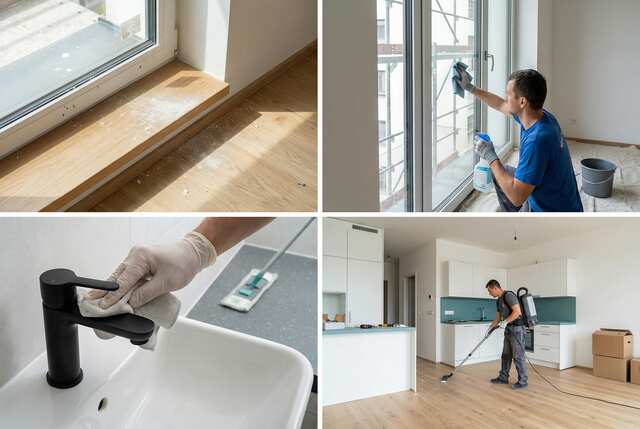
Post renovation cleaning looks harmless from the doorway. Then you walk in properly and notice what is actually there: fine construction dust, stickers on the windows, silicone smears, paint specks, adhesive residue, fingerprints on new surfaces, and that chalky film that keeps reappearing no matter how often you wipe. This is the part many people underestimate. It is not regular cleaning with a better mood and more trash bags. It is a different kind of mess.
The good news is that not every after renovation cleaning job needs a professional team from the first minute. If you painted one room, installed a kitchen, or finished a smaller bathroom update, some of the work is perfectly manageable at home. The tricky part is knowing where DIY stops making financial sense and where it starts putting your time, your nerves, and your new surfaces at risk.
What to clean first after renovation
Remove, sort, and protect before you start cleaning
Start with the obvious clutter: cardboard, foil, painter's tape, empty silicone tubes, leftover packaging, light debris, and anything else that should simply leave the flat. If you skip that step, you keep cleaning around the same mess and carry dust from one room into another. It also helps to identify what you are dealing with before you touch a surface. New vinyl flooring, lacquered kitchen fronts, matte black taps, stone, and coated window frames do not respond well to guesswork.
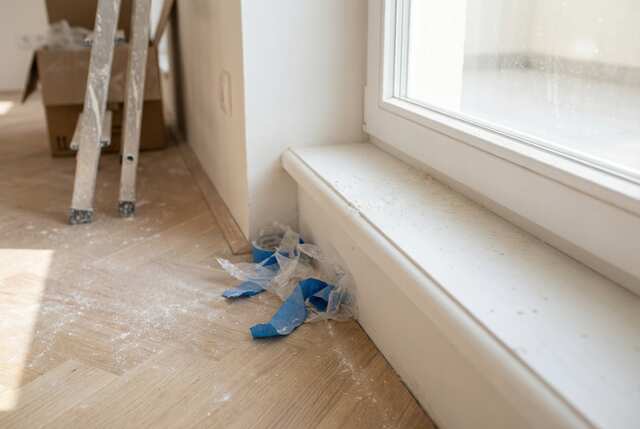
Protect the things that are already clean. Move textiles away if you can. Cover electronics. Keep bedding and clothes packed until the dust is under control. Fine construction dust gets everywhere - drawer runners, switch plates, radiators, light fittings, skirting boards, and the top edge of doors. People often start mopping too early after painting. The result is predictable: a grey paste on the floor and another round of cleaning a few hours later.
Why you deal with heavy mess before fine dust
The first phase is simple: remove what should not stay in the property, collect larger residue carefully, and vacuum the tougher surfaces first. Only then does construction dust cleaning make sense. Work from top to bottom - lights, shelves, window sills, frames, drawers, trim, and only then the floor. If you start at floor level, you will clean it again later anyway.
It also helps to separate annoying dirt from risky residue. Dust on a shelf is frustrating but manageable. Dried paint on a window frame, adhesive on new flooring, silicone on a bathroom fitting, or a cement film on tile is a different problem. That is usually the point where people need to decide whether they are still cleaning, or whether they are starting to experiment on expensive materials.
What you can usually handle yourself
Small finishing cleans after painting or installation
DIY cleaning is often realistic after smaller jobs. A single painted room, a furniture installation, or a kitchen swap without major cutting and sanding usually leaves a mess you can deal with yourself. That often includes removing light waste, basic vacuuming, wiping robust surfaces, reorganising the room, and doing a standard clean in the kitchen or bathroom. If the scope stayed small, paying professionals for everything may not be the best use of money.
A common example is a household after a kitchen replacement. They can usually vacuum the larger debris, wipe cabinets from the outside, clean the floor, and sort the room themselves. What tends to drag on are the details: fine dust inside drawers, residue on trims, grease mixed with dust on top of cabinets, or windows that need proper cleaning before moving back in. In that situation, a partial professional clean can be smarter than booking a full-service job.
When DIY still makes sense financially
- The renovation affected one room or a limited part of the property.
- There are no expensive or delicate materials you are unsure about.
- The mess is mostly dust and packaging, not stubborn paint, silicone, or adhesive residue.
- You have time, a decent vacuum, microfiber cloths, and enough patience for detail work.
- You do not need to move in, rent out, or hand over the property the next day.
Honestly, people rarely misjudge the cleaning method. They misjudge the time. Saving money sounds great until you lose an entire Saturday, another evening, and still find dust in the bathroom joints and on the window rails. If the time trade-off still feels fine, go ahead. Just compare the real effort, not the optimistic version you had in your head before you opened the first drawer.
Fine dust, silicone, paint, and adhesive residue: where the trouble starts
Why fine construction dust is so stubborn
The biggest problem after renovation is often not rubble. Rubble is visible. Micro dust from sanding, drilling, plaster, and cutting is the issue that lingers. It settles into grout lines, switch plates, radiator fins, shower frames, cupboard interiors, and window tracks. A couple who renovated their bathroom might spend two evenings cleaning and still discover dust in the drawer runners, on the shower frame, and behind the mirror cabinet. That is normal. Frustrating, but normal.
Fine dust also behaves differently from ordinary dirt. If you wipe too early with a wet cloth, it turns into a smeared film. If your vacuum is weak or poorly filtered, part of the dust ends up back in the air. That is why professional renovation cleaning is not just about speed. It is about equipment, order, and knowing where the hidden work actually is.
What not to scrape off without thinking
Risky residue includes silicone, dried paint, cement haze, grout remains, stickers on new windows, and leftover adhesives. The classic mistake is simple: someone grabs a blade, a harsh scrub pad, or a strong degreaser and tries to force the issue. It may look effective for a minute. Then the glass shows micro-scratches, the tap loses its finish, or the floor coating dulls. Cleaning after painting and window cleaning after renovation are not always difficult jobs, but they become expensive when the wrong surface meets the wrong method.
Where dirt hides, and why the job takes longer than expected
With a one-room paint job, the mess is usually contained. After a bathroom rebuild or kitchen replacement, residue starts showing up in less obvious places: vents, sockets, under trim, along cable runs, inside window channels, on radiators, and on top edges you do not notice until sunlight hits them. After a full renovation of a larger flat, the main issue is often not visible debris but the last ten percent of dust everywhere. That last ten percent is where most of the time goes.
There is also a psychological factor. By the time the renovation is finished, you want the whole thing over. You want to move in, hand the flat back, list it for rent, or stop spending money. That is usually when people try shortcuts. Stronger chemicals. Rougher pads. A scraper used one time too many. This is where DIY cleaning can quietly become damage control.
Which surfaces are easy to damage
Wood floors, vinyl, and lacquered finishes
New floors deserve caution. Wood can streak, swell, or lose finish if it is over-wet or treated too aggressively. Vinyl can suffer from the wrong product or heavy scrubbing that damages the top layer. Lacquered cabinet doors and fitted storage can react badly to products that feel harmless on tile. A good rule is simple: if you are not sure what the material is, or what should touch it, proceed gently or stop and ask for help.
Glass, window frames, taps, tile, and stone
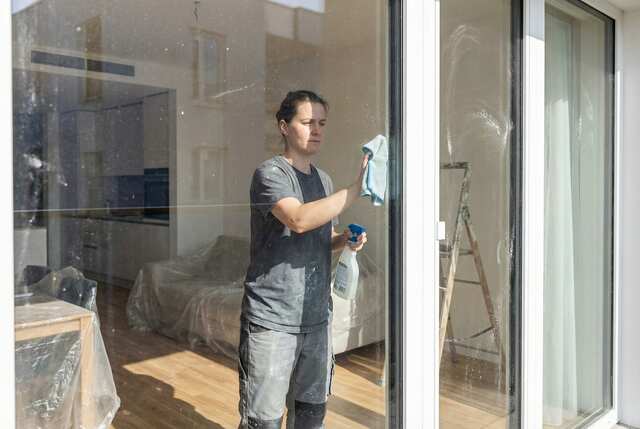
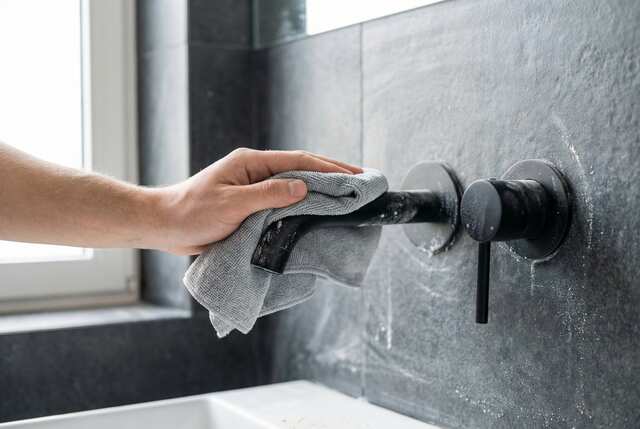
Glass scratches more easily than people think. Window frames can mark too, especially when they still carry fine dust from installation. Matte or black bathroom taps are another weak spot. One unsuitable product can leave them visibly dull. Tile and stone depend on what exactly is left behind. General dirt is one thing. Cement haze, adhesive, or silicone residue is another. Without clarity about the residue itself, trial and error is a poor strategy.
A new kitchen or bathroom is full of vulnerable details
This is where expensive mistakes happen. Seals, edge trims, drawer interiors, shower corners, door edges, runners, handles, and narrow joints all collect residue. Someone who has just finished flooring and painting might sensibly handle the bigger mess alone, then decide not to attack paint spots on trim or stickers on glass with aggressive chemistry. Usually that is the smart call. Cleaning mistakes on a fresh renovation can cost more than the cleaning itself.
When to book professional post renovation cleaning
Practical signs that DIY is no longer the sensible option
- The renovation covered more than one room.
- After the first vacuum, fine dust is still on trim, sills, lights, and inside drawers.
- The property includes expensive or delicate materials.
- You need the home ready quickly for moving in, letting, or handover.
- You do not have stronger equipment, the right products, or several free hours left.
Typical situations where pros save time and stress
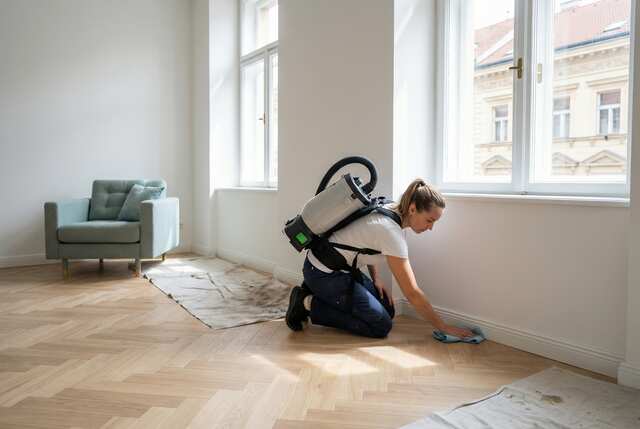
A bathroom renovation often sits in the middle ground. You may handle waste, light tidying, and the first pass yourself, then bring in professionals for the shower frame, fittings, tile finish, and windows. After painting and flooring, many people manage the obvious mess alone and outsource the delicate surfaces and window cleaning. After a full flat renovation, especially in a property that needs to be move-in ready fast, professional help usually makes sense from the start.
What professional post construction cleaning may cost
What affects the price most
If you are looking up post construction cleaning cost, the annoying but honest answer is that price depends on the actual mess. Size matters, but it is not the whole story. The level of dust, number of windows, type of surfaces, access to water and electricity, urgency, and any special residue all affect the quote. On the Czech market you will see hourly rates, per-square-metre pricing, and custom quotes based on photos. For this kind of job, photo-based quoting is usually a good sign, not a red flag.
Rough scenarios by scope
A smaller flat after painting or a light finishing job may sit in the lower thousands of CZK, depending on the number of windows and how detailed the clean needs to be. Once the job includes a renovated bathroom, kitchen installation, several rooms with construction dust, or sensitive finishes, the price rises because detail work rises. A full renovation clean for a larger flat can move much higher because the team is not charging for floor area alone. They are charging for windows, frames, floors, residue removal, cupboard interiors, radiators, and all the places dust settled.
That comparison matters. A smaller cleaning after painting job may cost less than you fear. A full post renovation cleaning service is rarely cheap, but it can still be cheaper than losing two days, buying specialist products, and then paying to fix a damaged finish. If the renovation itself was expensive, the cleaning decision should reflect that.
Why companies often ask for photos before quoting
Photos help everyone. A cleaner can quickly see whether the job is mainly about dust, or whether windows, silicone, paint, adhesive, or cement haze are part of it too. You get a more realistic quote and a lower chance of awkward price changes on site. A useful request usually includes the property type, approximate size, what was renovated, the deadline, and a few close-up photos of the worst areas.
How to request cleaning without overshooting the price
Prepare a useful request
Be specific. "2-room flat in Prague after bathroom renovation and living room painting, fine dust through the property, two large windows, new black taps, need it done by Friday" gives a provider something real to price. "I need post renovation cleaning, how much?" does not. The clearer your description, the less guessing ends up inside the quote.
What to ask before confirming
- Are windows, frames, and sills included?
- Do you clean inside cupboards and drawers?
- Do you handle paint residue, silicone, stickers, and adhesives?
- Is light waste removal included, or only the cleaning itself?
- Do you need photos first, and how quickly can you confirm the final price?
If you are unsure how serious the mess really is, the easiest next step is to send a request with photos and ask professionals for a realistic estimate. On CistýKout, you can compare cleaners, review provider profiles, and find someone who already handles post renovation cleaning rather than basic weekly cleans. That is the real value here: less uncertainty, less time wasted, and less risk to a renovation you already paid for.
FAQ
How long does post renovation cleaning take?
It depends on the size of the property, the scale of the works, and how much fine dust is left behind. A small finishing clean may take a few hours. A larger flat after full renovation can easily take a full day or more.
Is DIY post renovation cleaning worth it?
Yes, when the job was small and the surfaces are straightforward. Not always when the property is full of dust, windows need careful cleaning, or residue sits on expensive materials.
Do I need to send photos for a quote?
Not always, but it usually speeds things up and makes the quote more accurate. For renovation cleaning, photos often save time on both sides.