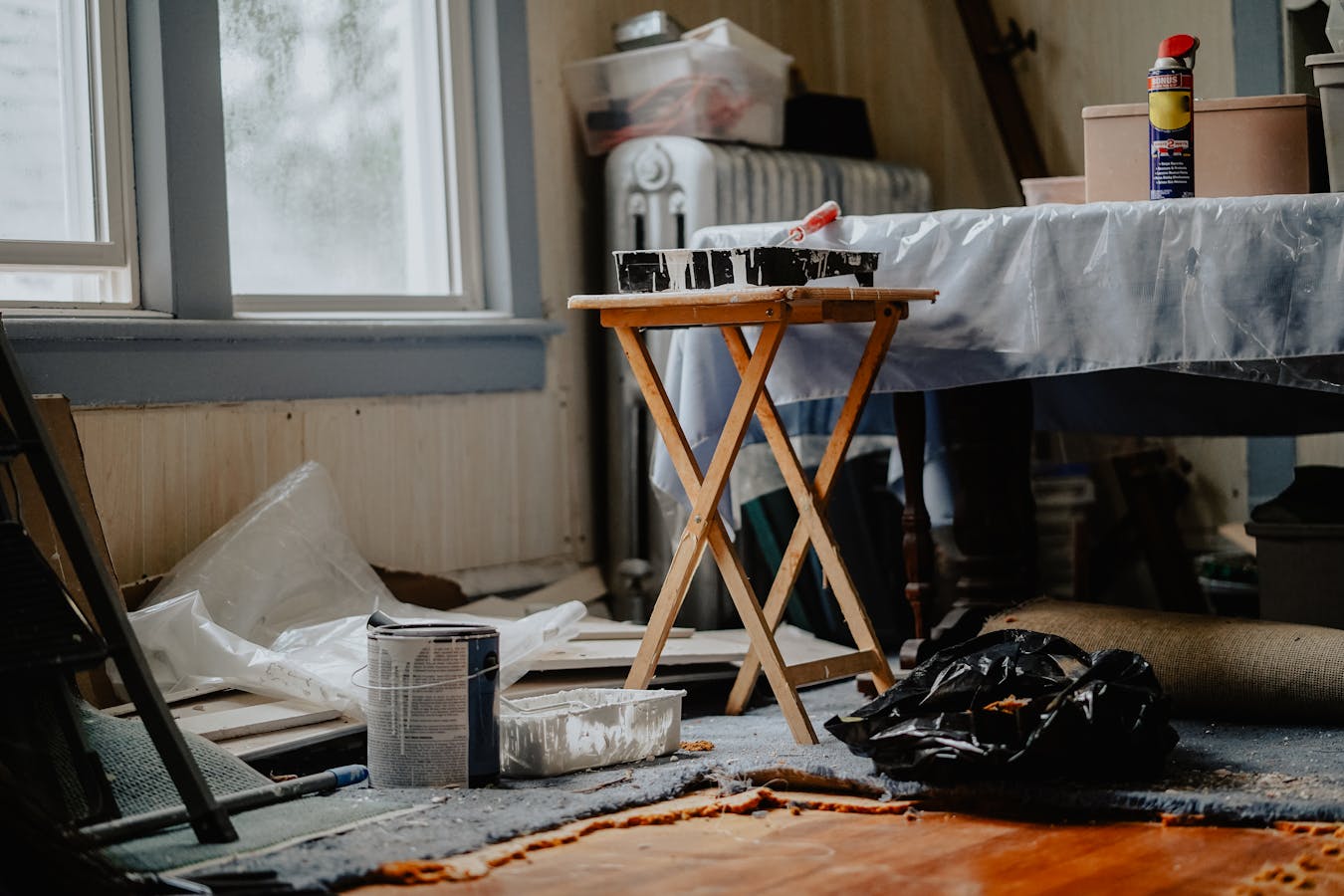
Cleaning up an apartment after a renovation often looks easier than it actually is. The painters have finished, the kitchen installers have packed their tools, and the walls look great. There isn’t even a big pile of rubble in the middle of the room. But then you run a finger along a shelf, open a kitchen drawer, or see the sunlight hitting the windows, and you realize it: there is a fine, grey film over absolutely everything. Construction dust doesn't act like normal household dust. It floats, it lingers, and if you tackle it in the wrong order, you’ll spend the whole weekend just moving it from one spot to another.
In Prague apartments, this is a classic scenario. People survive the chaos of a kitchen installation or a fresh coat of paint and assume the last step will be a quick wipe-down. That’s usually the trap. This fine dust gets into fabrics, settles deep into electronics, and sits on top of door frames. If you rush in with a damp cloth too early, you just turn that dust into a muddy streak. If you’re wondering how to handle the aftermath without chasing the same grey haze for days, it helps to understand exactly what you're up against.
Why fine construction dust is different from normal mess
Cleaning after a renovation isn't just about "dirt" in the traditional sense. The real challenge is the powdery residue left behind by plaster, paint sanding, or cutting laminate panels. This stuff is significantly lighter than the dust you find under your bed; it stays airborne longer and travels much further than you’d think.
First, there’s the reach. This dust finds its way into spots that look completely sealed off. Check the top edges of your doors, the inside of your "closed" drawers, lamp fittings, and even the cable bundles behind your TV. In an older Prague panelák after heavy drilling, that pale grey film can end up in rooms that weren't even part of the renovation.
Then there’s the "rebound" effect. You wipe down a dark sideboard, move on to the floor, and ten minutes later, the sideboard looks dusty again. It’s not that you did a bad job; it’s that dust is still falling from the curtains, the tops of the wardrobes, or the radiator grilles because the room was cleaned in the wrong sequence. This is why post-renovation cleaning feels so endless—the dust keeps reappearing until you've dealt with the top half of the room properly.
Finally, you have to worry about damage. Fine grit from drilling or plastering can actually scratch new vinyl floors, lacquered furniture, or those sleek black appliances if you just rub it around with a dry cloth. Soft furnishings act like sponges for this stuff, too. If you sit on a dusty cushion or shake a curtain too soon, you’re just launching a fresh cloud of particles back into the air.
The right post renovation cleaning order after painting or kitchen installation
If I could give you just two rules for post-renovation cleaning, they would be: always work from the ceiling down, and always remove dust dry before you ever touch a bucket of water. Most people skip one of these, which is why the flat never quite feels "finished."
Start by ventilating the space. I don’t mean just cracking a window; I mean a full, intense burst of cross-airflow if the layout allows it. Next, get a vacuum with a clean filter and a soft brush attachment. If your vacuum starts blowing out that "dusty" smell the second you turn it on, stop. It means the filter isn't catching the fine particles and you're just recirculating the problem.
Work in zones: ceilings, the tops of wardrobes, light fixtures, curtain rails, and the upper edges of doors. Move down to the walls (which often hold more dust than you think), then furniture, windowsills, and skirting boards. Only then should you touch the floor. Starting with the floor feels productive, but it’s a waste of time—everything you clean from higher up will just land right back on your clean floor.
The second rule is just as vital: dry first, then damp. You want to vacuum or lift the dust gently with a microfiber cloth before you use any water. If you go in with a wet mop too early, that fine powder turns into a grey paste that gets stuck in the wood grain or the grooves of your windowsills. Anyone who has tried to scrub "paint mud" out of a textured skirting board knows exactly how frustrating this is.
I remember a client in Prague 2 who spent hours mopping after a bedroom repaint and couldn't figure out why the floor was still "gritty" the next morning. The issue wasn't the floor; it was the radiator cover and the lampshade. Once those were vacuumed, the next mop-down actually worked. The order isn't a suggestion—it's the only way to get a real result.
The spots people forget most often
Most of us clean what's at eye level, but construction dust doesn't care about your line of sight.
The most common "misses" are the sliding tracks of windows, light switches, the very top edge of interior doors, and door hinges. After a kitchen install, the absolute worst dust traps are the tops of the upper cabinets and the back corners of the lower drawers. If you’ve had fitted wardrobes put in, check the rails and the corners inside—they’re usually worse than the floor.
Don't assume "closed" means "clean." Fine dust from drilling can slip through tiny gaps in cupboard doors. If you put your clean dishes or clothes back too soon, you’re just creating a second round of work for yourself.
Textiles are the final frontier. Curtains, throws, cushions, and rugs hold onto dust far longer than hard surfaces. They don’t always need a deep professional clean, but they almost certainly need a thorough vacuuming or a trip to the laundry. Also, don't forget your air purifier or AC filters. If they’re loaded with renovation dust, they’ll just blow it back into the room the next time you turn them on.
When a household vacuum is not enough
Not every painting job requires industrial equipment. Sometimes, with enough patience and microfiber cloths, you can handle it yourself. But there is a clear line where household tools start to fail.
You’ll know you’ve reached that line if:
- You vacuum, but you can still see "sparkles" of dust in the air when the sun hits.
- Your vacuum filter clogs every five minutes, and you lose suction.
- You have expensive new finishes—like matte kitchen fronts or oiled wood floors—that you’re terrified of scratching.
Professional machines with HEPA filtration are designed to actually trap these microscopic particles rather than spitting them back out. If dust has worked its way into mattresses or deep upholstery, a standard home vacuum usually just skims the surface.
I usually recommend professional help in three specific cases: if the renovation lasted more than a couple of days and dust spread through the whole flat; if anyone in the house has allergies or asthma; or if you’ve just invested in high-end floors that require very specific care. Saving a bit of money by doing it yourself isn't worth it if you accidentally ruin a brand-new floor with the wrong scrubbing technique.
How to get the flat back to normal without repeated dust fallout
Here is a pro tip: expect to do a second and third light wipe-down. It’s not a failure; it’s just physics. Some dust will always settle hours after the air has stilled.
After your first big clean, let the room "rest" for a few hours with the windows closed. Then, do a quick follow-up wipe of all horizontal surfaces. The next day, check your darkest furniture and your windowsills. That quick 10-minute follow-up is usually more effective than trying to be 100% perfect in one exhausting go.
If you have an air purifier, run it on high for a few hours. And keep an eye on your textiles—the sooner you get the dust out of the curtains, the sooner the room will stop feeling "stuffy."
Your 48-hour checklist:
- Re-wipe main surfaces 4–6 hours after the big clean.
- Check the "hidden" spots (door tops, skirting boards) the following morning.
- Vacuum or wash any textiles that stayed in the room during the work.
- Clean your vacuum filter—it’s probably exhausted.
- Check the floors in the evening light; that's when leftover streaks show up best.
The secret to a clean apartment after a renovation isn't speed, it's the sequence. Once you stop treating construction dust like normal dirt, the process gets much easier. If you'd rather skip the frustration and let someone else handle the grit, ČistýKout is a Prague based cleaning option for post-painting and renovation cleanup. Feel free to reach out through the contact form for a no-pressure quote.