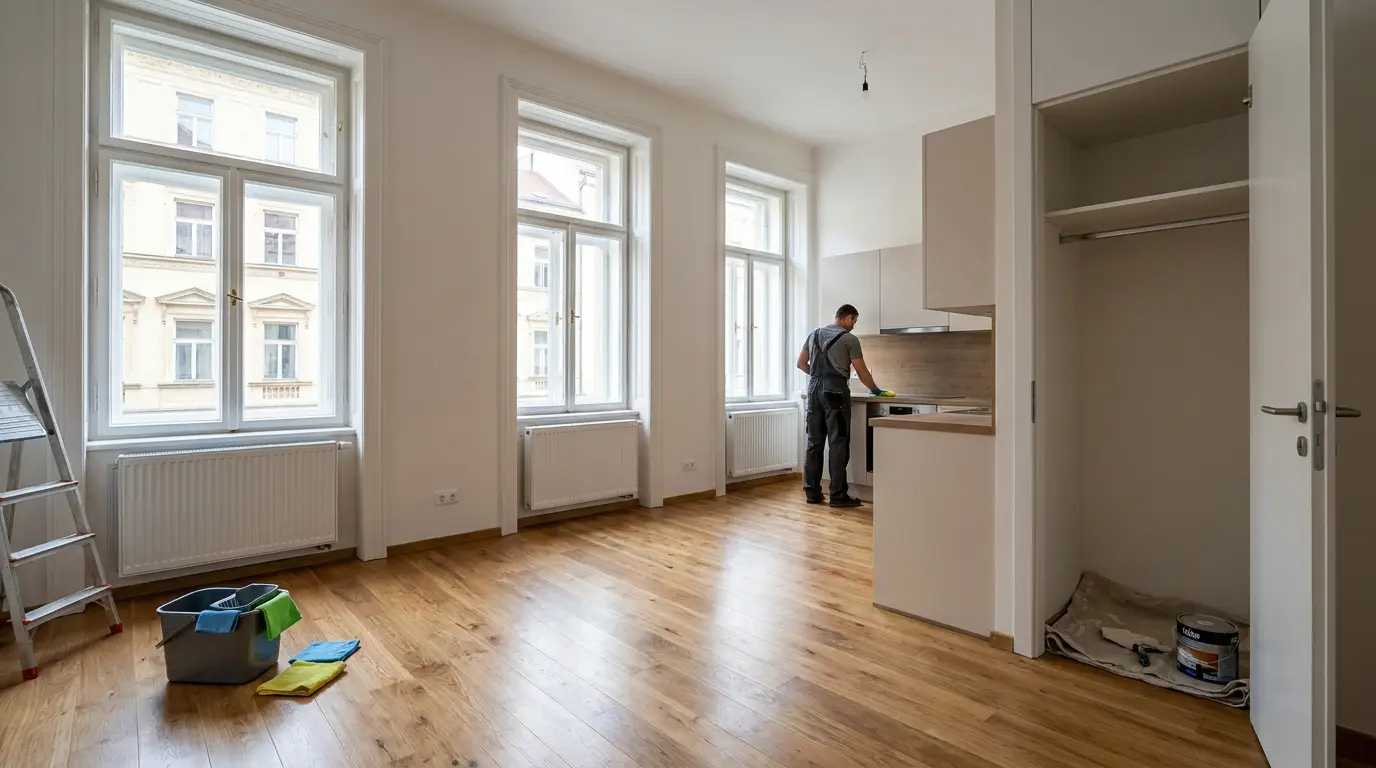
Post renovation cleaning does not start with a mop. It starts with admitting what is actually left in the flat after painting, drilling, a kitchen install, or a small remodel. Not just the obvious mess. Fine construction dust is awkward because it looks harmless until you notice where it travels. It settles on top door edges, inside drawers, on curtain fabric, in floorboard gaps, and on the shelves you thought were protected. If you get the order wrong at the start, the flat can look clean for an hour and still fail the first real-life test, like opening a wardrobe or turning on a bedside lamp.
I keep seeing the same pattern in Prague flats. Someone finishes painting in Vinohrady, swaps flooring in a newer building in Stodulky, or has trades in for a day to fit a kitchen. Then comes the optimistic plan: one pass with the vacuum, two rounds of mopping, done. That is usually where the trouble starts. Fine dust after drilling or sanding gets smeared with water, pushed deeper into edges, and turns into that pale film people hate on floors, sills, and bathroom fittings. This piece is not another generic checklist. It is a practical guide based on the type of mess you actually have, the right cleaning order, and the point where home cleaning stops being worth the effort and proper post renovation cleaning becomes the smarter call.
Why fine construction dust is a different problem from normal mess
Normal household dust is mixed with fibers, hair, and everyday dirt. Construction dust in an apartment behaves differently. It is finer, harsher, and often mixed with plaster, paint residue, grout dust, cut laminate particles, or filler. That is why it shows up in places that seem unrelated to the work itself.
The worst spots are usually the ones that still look respectable from a distance. Top edges of door frames, rails in sliding wardrobes, sockets, switches, blind slats, radiator fins, the inside lip of a drawer, the shelf above a washing machine. In an older Prague panelak flat, you can drill in the living room and still find pale dust in the hallway cupboard. Airflow carries it further than people expect.
This is why cleaning after painting is rarely just about wiping visible surfaces. If you use a wet cloth too early, the dust turns into paste. On dark vinyl you see streaks straight away. On white window sills you notice it later, when the light hits the surface and the haze comes back. People get frustrated because they did clean. They just cleaned in the wrong sequence. If construction dust in apartment storage areas is part of the problem, include wardrobes, drawers, and hallway cupboards in the scope from the start.
Most households underestimate fine dust in three zones:
- high surfaces, including light fixtures, top shelves, curtain rails, and door frames
- hidden interiors, especially drawers, wardrobes, and textiles
- detail lines, such as skirting boards, window frames, switches, and floor edges
Miss one layer and the dust starts circulating again. Open a cupboard, shake a throw blanket, switch on bathroom ventilation, and the room never quite feels finished.
How to plan cleaning after painting or a small renovation
Start by splitting the flat into zones. Where did the work happen, and where did the dust drift? That difference matters. The room that was painted or drilled is your main zone. Nearby rooms, the hallway, and often the bathroom are secondary zones because tools, packaging, foot traffic, and ventilation spread fine dust beyond the obvious area.
The smartest order is top to bottom, then dry to damp, then rough removal to final detailing. So no, mopping is not the first move. First remove offcuts, tape, dust sheets, packaging, and any larger debris. Then vacuum upper surfaces, edges, details, and only after that move to damp wiping and floors.
Before the first mop, do three things:
- air the flat out briefly and properly, instead of leaving a window cracked all day and letting more dust settle around
- check the vacuum filter and dust container, because a tired machine will just blow part of the dust back out
- prepare separate cloths for dusty first-pass work and for the final finish
Here is the part people do not love hearing. If trades are still returning to adjust lights, fit trim, or finish silicone, a full deep apartment cleaning is premature. Clean only what you need for safe use, close off the finished rooms, and wait for the genuinely final pass. Otherwise you pay for the same effort twice, whether the cost is your own time or a cleaner's.
On larger flats, a simple system works well: one clean zone, one transition zone, one active work zone. In a 3-room apartment after a kitchen install, the bedroom may already be finished and closed, the hallway is transitional, and the kitchen-living area stays active. That one change stops a lot of pointless repeat cleaning.
What to vacuum dry first and what to clean later
The first round should be dry. Always. In post renovation cleaning, it makes sense to start with ceilings, light fittings, top door edges, wardrobe tops, and frame lines. Then work down to skirting boards, sills, radiators, sockets, and switches. Floors come after that. If you start on the floor, dust from above will drop back down and waste the whole pass.
A weak vacuum with a poor seal is close to useless for this kind of work. Without a decent filter, ideally HEPA level, it can push part of the fine dust back into the air. You can see it in a shaft of light. You are vacuuming, but the room still looks foggy. That is a bad sign. Fine dust after drilling needs capture, not recirculation.
Drawers and wardrobes need proper attention too. Do not just wipe the front panels. Empty them, vacuum the corners, runners, lower edges, and shelf joints. Textiles hold more dust than people think. Curtains, cushion covers, throws, and even the coat hanging near the work area can carry that dry mineral smell and residue long after the room looks fine.
Blinds and radiators are another trap. Dust sits in the slats and narrow channels, then drops out over the next few days. If I had to give one field-tested tip, it would be this: slow down on details. Big surfaces are quick. Details decide whether the room is truly clean or just camera clean.
Once the dry pass is done, damp cleaning makes sense. Not with one all-purpose rag for everything. Use separate cloths for sills, bathroom surfaces, kitchen fronts, and final polishing. Change water more often than feels convenient. The second the cloth is loaded with fine dust, you are smearing instead of removing.
How to remove the white film from floors, window sills, and the bathroom
That chalky white layer after painting or plaster work usually appears when fine dust was not fully removed dry before water hit the surface. On vinyl it leaves pale streaks. On dark tile it shows as cloudy marks. On black bathroom fixtures it can look almost like limescale, except it appeared right after the works were finished.
The fix is simple in theory and annoying in practice. Go back a step. Remove the loose residue again as dry as possible, either with a vacuum or a nearly dry microfiber cloth. Then use a small amount of clean water and wipe immediately dry. Shorter repeated rounds usually work better than one dramatic soaking pass, especially on laminate and wood-based flooring.
For window sills and plastic window frames, work in smaller sections. One cloth to loosen the film, one dry cloth to lift what remains. In the bathroom, pay attention to what the residue actually is. Fine dust, grout haze, silicone smears, paint specks, and normal water marks are not the same problem. Natural stone does not forgive the wrong cleaner. Matte black fittings do not love anything abrasive.
A deeper intervention is usually needed when:
- the pale film comes back even after two or three careful rounds
- hardened grout or paint marks stay in corners and joints
- windows, frames, and sills have a mix of dust, glue residue, and greasy fingerprints from trades
- dust reached ventilation, soft furnishings, and hidden areas behind furniture
At that stage, you are often beyond simple cleaning after painting. You are dealing with a mixed post construction mess, and that is where one random supermarket cleaner and a bucket of water usually stop being enough.
When home cleaning stops paying off
Most people can handle one freshly painted room on their own. After a kitchen install, flooring replacement in two rooms, curtain rail drilling, and finishing work on windows, the equation changes. Not because wiping is some mysterious expert discipline, but because the number of details explodes. Windows after trades, dust on light fittings, packaging waste, white film on floors, residue in cupboards, fingerprints on tiles, fine dust on textiles. Suddenly you have spent the whole day cleaning and the flat still does not feel ready.
Home cleaning usually stops paying off when three things combine: time pressure, sensitive surfaces, and spread. If a child is moving back into the room the next day, you work from home, and the new floor is not something you want to experiment on, hiring post renovation cleaning can make perfect sense. The biggest saving is often not just labour. It is avoiding repeated cleaning and surface damage.
When you ask for a quote, describe the scope properly. Do not just say "flat after renovation." Say something like: 2-bedroom flat in Prague 6, full wall painting, shelf drilling, vinyl floor replacement in one bedroom, windows and frames need cleaning, inside wardrobes need dust removal, and we need final removal of fine construction dust in the apartment. That is the level of detail that helps a cleaner judge time, equipment, and whether this is standard deep apartment cleaning or proper post renovation work.
That is also where Cistykout can help. If the request is specific, it is much easier to match the right cleaner and the right type of service instead of pretending every dusty flat needs the same package. And honestly, that difference shows in the result.
If you are staring at white residue after painting, drilling dust in cupboards, or that stubborn construction haze that keeps coming back, send a no-pressure enquiry through Cistykout's contact form. We are Prague-based, and clear scope usually leads to a much cleaner finish and a more realistic plan from the start.