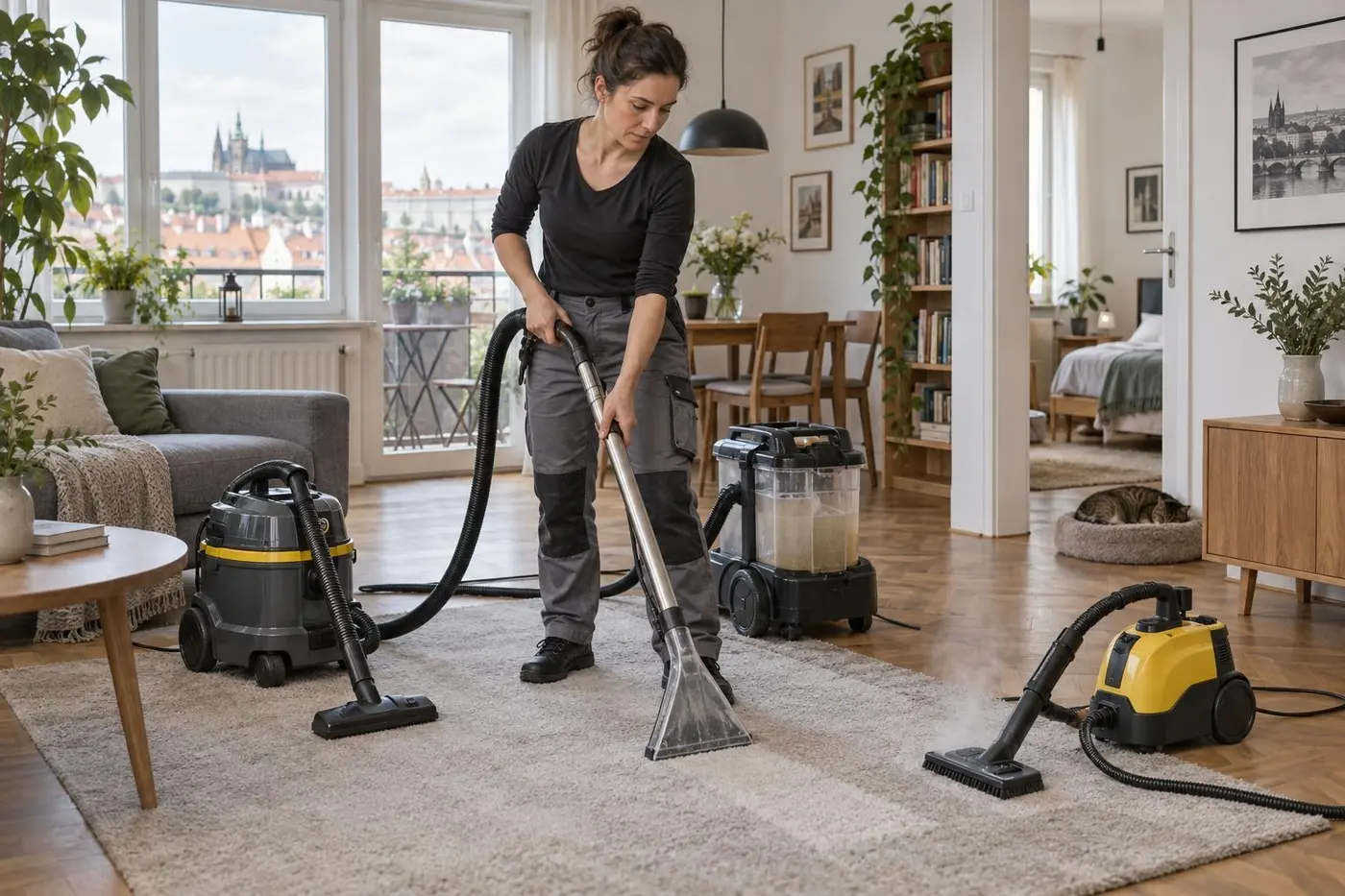
Your first expensive piece of professional cleaning equipment should solve a bottleneck you can name and measure. A commercial vacuum usually wins in repeat home cleaning. An extractor makes sense when clients already ask about sofas, mattresses or carpet. A steam cleaner can pay its way in bathrooms and on durable greasy surfaces. Pick one because it fits paid work in your diary, not because it makes the boot of your car look more professional.
Start with the work that slows you down
Keep a timer in your pocket for one week. Note the minutes spent vacuuming, working on the bathroom, dealing with textile surfaces and cleaning your tools afterwards. Include carrying time, plug changes and the evening rinse after the paid visit has ended.
Add another column for work you could not sell. How many people asked about sofa extraction in the past two months? Did you turn down an after-build clean because your vacuum was not suitable for fine construction dust? Do clients genuinely request steam, or do they simply want cleaner grout?
Repeat home cleaning earns through frequency and efficient routines. Textile work can become a separately priced service. After-build jobs place different demands on filtration and machine durability.
A solo cleaner in Prague 10 had been saving for an extractor. Her notes showed two sofa enquiries in three months, while a poor vacuum slowed nearly every regular clean. She bought the vacuum and kept renting an extractor. Better economics, even if it felt less ambitious.
Commercial vacuum: the volume and fine-dust option
A commercial cleaning vacuum will not automatically support a higher price. Its return hides in minutes saved and fewer interruptions. If you clean two or three homes a day, solid wheels, available bags, a long cable and replaceable parts matter more than maximum wattage. Noise counts when the client works from home.
Ask which dust the machine is approved for, how the filter is cleaned and what replacement costs. Drilling or sanding dust needs a vacuum specified for that job. Some hazards require a properly classified machine. Do not improvise here.
The difference from a household model tends to show up by the fourth property of the week. The tube stays firm, the cable reaches and the motor copes with daily use. Two fewer plug changes in a panel-block flat sound trivial. Across ten weekly visits, they become real time.
Here is an illustrative calculation. The vacuum costs CZK 12,000 and saves 18 minutes per visit. You value an hour of working time at CZK 400, so those minutes are worth CZK 120. Allow CZK 20 per use for bags, filters and a service reserve. The net benefit is CZK 100, which gives a payback of 120 paid uses. At ten uses a week, that is roughly twelve weeks. Count time only if you can use it for another job or a genuinely shorter working day. An empty half hour in the calendar is not revenue.
Extractor: a new service with drying time and responsibility
A carpet extractor for cleaning business owners changes the offer. It creates paid work on carpets, mattresses and sofas, so payback can be quick. It can also sit in storage when demand exists only in the owner's imagination.
Carpet and upholstery are not interchangeable. Fibre, colour fastness and safe moisture levels differ. Dry vacuum first, read the care information and test an inconspicuous area. Walking away is cheaper than explaining colour bleed or damaged filling.
Price the whole cycle, not just nozzle time:
- transport, inspection and dry vacuuming;
- preparing solution, applying it and extracting the dirty water;
- extra suction-only passes to reduce residual moisture;
- emptying tanks, flushing the hose and drying the machine.
The visible extraction may take forty minutes while the diary loses two hours. Tell the client that the textile will need time to dry. Material, ventilation, room temperature and the amount of solution all affect the result, so a fixed promise made before inspection is risky.
Suppose the extractor costs CZK 28,000. A specialist job sells for CZK 1,700. Deduct CZK 800 for two hours of your time, CZK 120 for cleaning solution, CZK 100 for transport and CZK 80 as a repair reserve. The contribution is CZK 600, giving a payback of about 47 uses. Three real bookings a month mean more than a year. Eight bookings bring it closer to six months. The decisive specification is not pump pressure. It is the number of paid uses you can genuinely sell.
Commercial steam cleaner: useful speed, real surface risk
A commercial steam cleaner earns its place on durable grout, sanitary ceramic and greasy details. A point nozzle works around taps and shower edges. On the same stubborn build-up every week, it saves scrubbing time and wrists.
Steam is not a universal shortcut. Remove dust, hair and loose dirt first. Heavy mineral deposits may still need the correct product and dwell time. Steam can finish the work; it does not replace the chemistry. The manufacturer's steam-cleaner instructions also warn against untreated wood, parquet and painted or plastic-coated surfaces.
Take care around laminate, wood, painted edges, glued joints and delicate fabric. Follow the surface and machine instructions, then test an unseen spot. If you cannot identify the material and confirm that it tolerates steam, choose another method. One lifted cabinet edge can wipe out profit from many visits.
For a model calculation, take an CZK 18,000 machine that saves 25 minutes on a suitable bathroom. At CZK 400 an hour, the time is worth about CZK 167. Deduct CZK 35 for cloths, descaling, brushes and servicing. The net benefit is CZK 132 per visit, so payback takes roughly 137 uses. If you would use steam twice a month, this is unlikely to be the first purchase. Four suitable bathrooms every week tell a different story.
A simple payback calculation before you buy
One spreadsheet is enough:
Payback in uses = total initial investment / net benefit per use.
Initial investment includes the machine, essential nozzles, the first filters or cloths and a transport box. A large extractor may also require paid storage or different transport.
Net benefit combines usable time saved with extra margin from a new service. Deduct solution, bags, cloths, travel, machine cleaning and a repair reserve. Handle VAT according to your tax position. These are worked examples, not price recommendations. Use your actual rate, quotes and booking history.
Run a cautious scenario with half the expected demand, then a realistic one based on measured jobs. If the purchase works only under optimistic assumptions, it is not ready.
Buy, rent or test demand first
Rental buys evidence. Two or three extractor jobs reveal the handling, clean-up, drying issues and whether the machine fits your car. A steam-cleaner trial shows how many surfaces on your route are suitable. A vacuum trial tests the cable and floor head in real work.
You can also pre-sell the service to current clients. Make the offer concrete: "I am opening six sofa-extraction slots in November. The estimated price is CZK 1,500 to 2,200 depending on size. Would you like the details?" Six bookings mean something. Six polite expressions of interest without a date do not.
Used cleaning business equipment can make sense if you test it under load. Inspect the cable, hose, seals, wheels, suction, filter availability and parts prices. Run clean water through an extractor's spray and recovery system. A bad smell, leak or irregular motor note is not cosmetic.
My short answer is conditional. For a stable round of regular home cleaning, buy the commercial vacuum first. Put the extractor first only when textile demand has already been tested. Choose steam when suitable bathrooms and durable details repeat across your schedule, not when most client homes contain sensitive finishes. The right first machine already has a job waiting for it.
If you are looking at the same decision from the client's side, send Čistýkout a no-obligation cleaning enquiry. Čistýkout is a Prague-based option for arranging professional home cleaning. Cleaners reviewing their own rates may also find our guide to setting cleaning service prices useful. New operators can also use our step-by-step guide to starting a cleaning business.