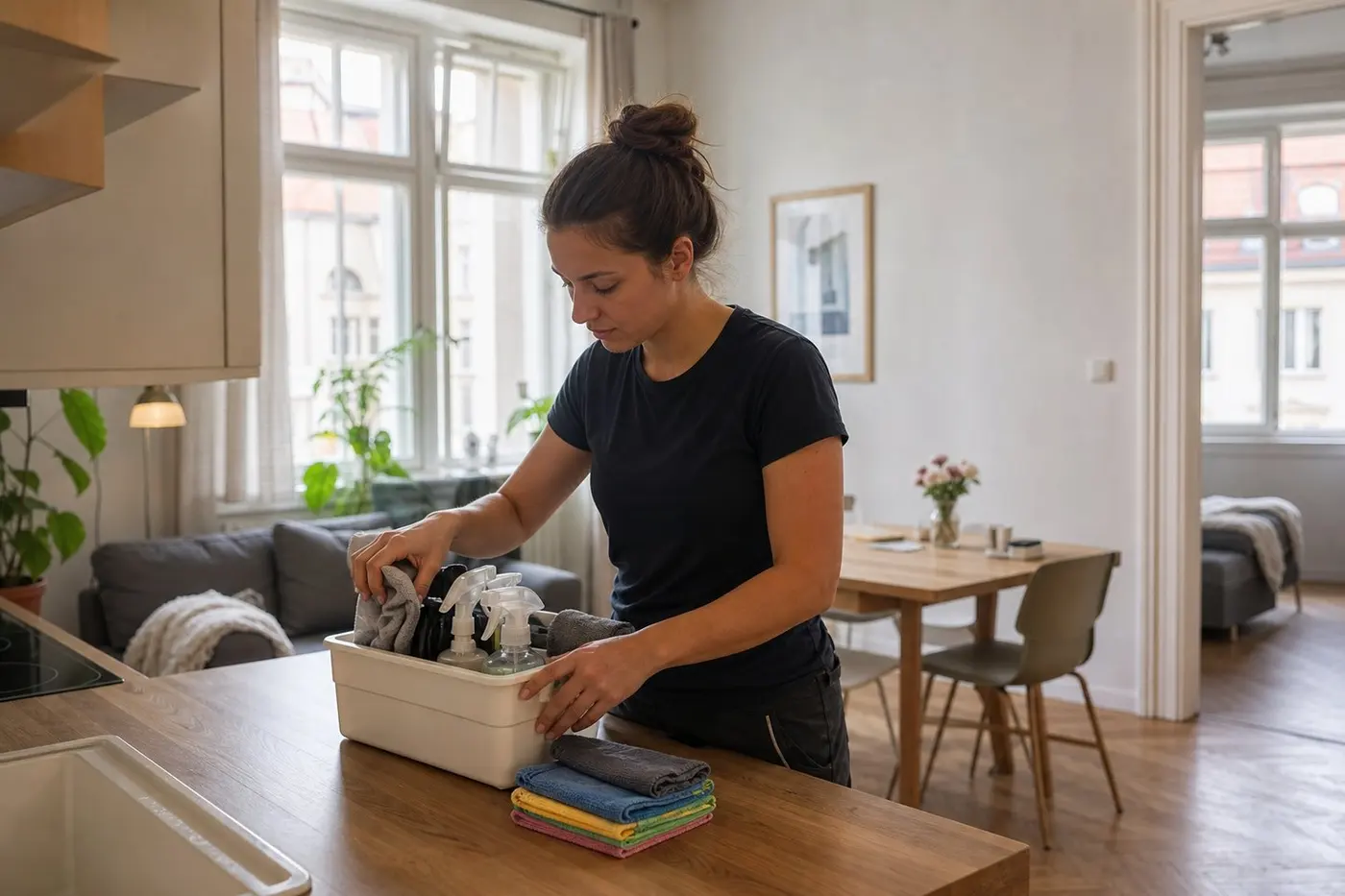
A client comes back after summer and wants her old Tuesday slot. Three hours, same price. Fair enough as a request. But a recurring house cleaning service only fits that slot when somebody has actually been doing the recurring part. After seven missed weeks, I would never confirm the old quote without checking the flat first. That is how a normal September booking turns into an hour of unpaid work.
Why the first clean after a break is not a normal recurring visit
The old three-hour visit worked because it happened every other week. The shower never got terribly chalky. Kitchen grease had fourteen days to build up, not two months. Dusting meant moving a few everyday objects, not clearing the summer's collection of fans, suitcases and half-unpacked bags.
Nothing has to be “filthy” for the maths to change. In a Prague flat with open windows, August leaves fine dust along the sills and behind furniture. Add children at home, more cooking and a dog returning from the cottage. Ten extra minutes in five different places is nearly an hour.
Homes change while cleaners are away, too. A new rug matters. So does a glass shower, a home-office desk or another shelf full of ornaments. Those details alter the cleaning service scope, even when the floor plan is identical.
One Vinohrady job sticks in my mind. Before summer, the cleaner finished comfortably in three hours. When she returned, the family had a puppy, a thick rug and two new display shelves. The owner had not tried to hide the changes; she genuinely saw them as minor. They added close to an hour. With no new agreement, the cleaner would have had two bad choices: work free or leave the bathroom half done.
“You managed it last time” is not a useful benchmark when last time had a different starting point.
What to confirm before going back
I would not demand a formal inspection from a long-standing client. A short written check is enough.
Confirm the date, arrival window and access. Ask whether the key still works and whether anybody will be home. Parking deserves its own question. Around Vinohrady, Karlín or the centre, a changed permit zone can add cost and wreck the rest of a cleaner's diary. The same goes for carrying a vacuum up five floors because the client's machine has broken.
Then ask what has changed. This message is direct without sounding suspicious:
> Before I confirm the first September visit, could you send me two to four current photos of the kitchen and bathroom and mention any changes since my last clean? I will use them to confirm the first visit's time, work and price. We can set the later appointments as recurring visits again.
Close-ups help more than glossy room photographs. Ask for the hob, shower screen, hall floor and any sofa covered in pet hair. A client who dislikes sharing photos can write a description or show the relevant areas on a ten-minute call.
Supplies may have changed. Check the vacuum bags, cloths and products kept at the property. A new wooden floor or limestone bathroom needs the right chemistry, not whichever bottle happens to be under the sink.
Now put the work in order. “Same as before” is too loose. I prefer something like:
- bathroom and kitchen first;
- all clear, reachable floors vacuumed and mopped;
- dust removed from accessible surfaces;
- windows, oven and cupboard interiors quoted separately.
That is practical cleaning client communication. The customer knows what will be done, and the cleaner has something firmer than a memory of a spring visit.
A reset clean or a longer first appointment?
Give the client two choices. That is plenty.
Option 1: book a reset clean
The first appointment gets a separate, longer block. The cleaner tackles heavier bathroom and kitchen work, accumulated dust and skirting boards, then leaves the home ready for ordinary maintenance. A deep clean before recurring service could take five hours where the former visit took three.
Call it a reset clean if that is what it is. “Full deep clean” often makes clients picture windows, oven racks, grout, cupboard interiors and every corner of the balcony. If those jobs are excluded, say so.
This option suits a home that missed several appointments, had a busy summer or gained a substantial list of tasks. It costs more once, but the next visit starts from a known baseline.
Option 2: extend the first slot
For a home in moderate condition, add perhaps 60 or 90 minutes. Fix the priorities before arrival and allow lower-ranked work to move to visit two. The first bill stays smaller, although the household may need two visits before the usual routine feels comfortable again.
Do not estimate the reserve from floor area alone. Bathrooms, limescale, pet hair, crowded surfaces and access matter more. I have seen a simple 75 m² new-build in Stodůlky take less time than an ornate 55 m² Žižkov flat.
Keep specialist or open-ended jobs separate: windows, a badly soiled oven, fridge interiors, upholstery extraction, pigeon mess on a balcony and mould removal. Put one of those into an already tight visit and something basic will be missed.
How to discuss price without apologising
The client is not paying a penalty for going on holiday. They are ordering more work. Say that, then give the numbers.
> The old fortnightly visit was three hours. For the first visit after the break, I expect four and a half to five hours because the kitchen, bathroom and settled dust need extra attention. I will charge the actual time, with a limit of CZK 2,500 unless we agree to continue. If the next clean fits the old scope again, we will return to the usual three-hour price.
CZK 2,500 is an example, not a recommended market price. Every provider has her own rate and must account for products, travel, parking and the work itself. What matters here is the shape of the offer: name the reset visit, explain the calculation and set a point beyond which the client must approve more time.
One more line belongs in that message: parking, products and any minimum booking charge. I learned not to leave those details for the doorstep. A short job across Prague can consume more of the day than a longer one nearby.
There is no need to write “Unfortunately I have to charge more.” Nothing unfortunate has happened. The work is larger. State the cap, list the exclusions and ask for a written yes. One chat message beats negotiating beside a bucket afterwards.
How to rebuild the recurring routine after the first visit
The return visit tells you more than the old checklist. Note the rough timings while they are fresh: 25 extra minutes in the kitchen, 15 in the hall because of the dog, a different product needed for the shower. Then message the client that afternoon. What got done? What did not? Will three hours honestly work next Thursday?
I split the new list into three groups. Bathroom, kitchen surfaces, floors and reachable dust happen every time. Doors, skirting boards and radiators rotate. Oven, windows, balcony and cupboard interiors wait for a separate yes. An extra request can still come in; it adds time or replaces another job.
Book the next two or three months by actual dates. September calendars are messy, and “as before” is how appointments get missed. If the service pauses again, the terms can say that the next visit will be estimated from the home's condition.
A free first visit is a poor way to restart recurring cleaning. The cleaner pays for the reset with her own evening or with the next job she cannot take. Two honest options work better.
If the household needs another provider, ČistýKout offers a no-obligation cleaning enquiry for Prague homes. It is a straightforward place to agree scope and expectations before booking.