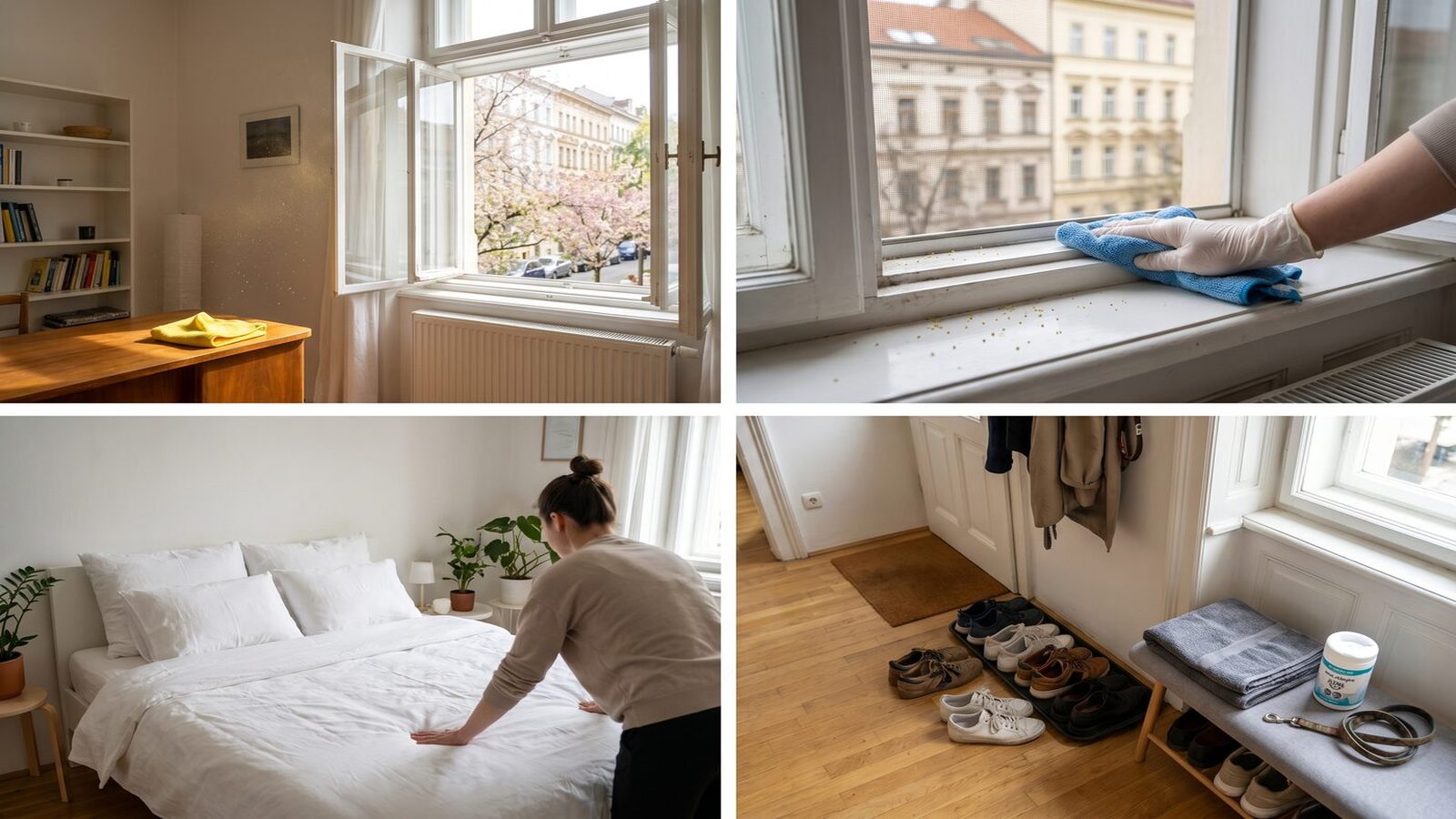
Opening the windows of a Prague apartment in May brings in more than just a breeze. Along with the fresh air comes pollen, fine dust, street soot, and everything else that settles on your window sills, insect screens, and shoes throughout the day. This is why pollen in an apartment can feel so relentless. Most people expect their home to be a sanctuary, but for allergy sufferers, the reality is often different: waking up congested, sneezing through breakfast, and dealing with irritated eyes even if they barely stepped outside.
The timing is the real challenge. In the Czech Republic, early May usually marks the overlap between the tail end of tree pollen and the beginning of the grass season. Current pollen reports show high concentrations in the air, with oak, beech, and plane trees being especially active in cities. When you add everyday household dust, pet hair, and unwashed textiles into the mix, an allergy flare-up indoors can actually be more severe than a quick walk through the park.
I’m not here to give you generic advice like "stay indoors." For a family with kids, pets, and a busy work week, that just isn't realistic. It’s far more useful to have a simple, smart cleaning rhythm that lowers the pollen count without turning your life into a military drill. It's also important to recognize when your daily routine isn't enough and when it’s time to call in the professionals for a deep clean.
Why May is the toughest month for indoor allergies
May is difficult because several layers of "mess" tend to collide. You bring pollen home on your clothes, in your hair, on the stroller, and on your dog’s paws. Meanwhile, your home is still holding onto dust from the heating season—hidden behind radiators, under beds, and on top of wardrobes. As the weather warms up and we leave windows open longer, all those particles start circulating again.
A common mistake is thinking that more ventilation is always better. Honestly, sometimes it makes things worse. If you leave the windows wide open on a dry, windy afternoon in Vinohrady or Karlín, you’re inviting in street dust and pollen at the same time. If you then try to "clean" by quickly whisking a dry cloth around or using a cheap vacuum with a poor filter, you’re just stirring those allergens back into the air you breathe.
Another typical error is relying on a "fresh scent" instead of actually removing the particles. Air fresheners and scented sprays might mask the staleness, but they won't touch the pollen. For an allergy-prone household, a damp microfiber cloth and a logical order of work are worth far more than a lemon-scented spray.
I see this most often in family homes with lots of soft surfaces. A blanket stays on the sofa for weeks, the dog naps by the balcony door, and the bedding only gets changed when someone remembers. This doesn't mean the home is dirty; it’s just a normal, lived-in space. But for spring allergy management, this normal routine becomes a problem because allergens settle into soft surfaces much deeper than we realize.
Where pollen and fine dust hide the most
When we talk about dust, most people think of visible surfaces like shelves.
In reality, the bigger problems are the spots you don't see immediately. Curtains, throw pillows, fabric headboards, rugs, and pet beds are all "magnets" for pollen. They trap the particles and keep them there long after you’ve closed the windows.
The bedroom is usually the most critical area. If you’re waking up tired or with a scratchy throat, it’s often because of what’s in and around your bed. Bedding picks up pollen from your hair and clothes every single day. Even a decorative bedspread, while it looks great, acts as a massive filter for fine particles during peak pollen season.
Window sills and insect screens are another classic trap. In May, you can often see a fine yellow film building up within a day or two. Many people wipe the sill but forget the screen. If the screen is caked in pollen, every time you open the window, you’re essentially sifting that pollen straight into your room.
Don't underestimate the entry zone. Shoes, jackets, gym bags, and umbrellas all bring the outdoors inside. If you have pets, their beds and favorite spots on the sofa are high-traffic areas for allergens. With furry friends, the issue isn't just the fur itself—it’s the combination of dander and the pollen they "collect" while rolling around outside.
A 20-minute daily plan that actually makes a difference
The best cleaning plan isn't the most intense one; it’s the one you can actually stick to for more than three days.
For a home with allergy sufferers, I recommend 20 focused minutes a day, split into smart segments.
Start in the bedroom. Skip the bed-making for a moment and focus on wiping down surfaces near the bed with a damp cloth—the nightstand, headboard, sill, and lamp base. Then, shake out only what’s necessary, and do it away from the bed (or even better, outside). If you use a heavy bedspread, consider putting it away until the pollen counts drop.
Step two involves the textiles you touch every day. Change your pillowcases and bedding at least once a week. During a heavy pollen wave, some people find relief by changing pillowcases even more frequently. Don't forget to wash throw blankets and sofa covers regularly. You don’t have to do everything at once, but letting a blanket sit on the sofa for a month means you're breathing in whatever it’s trapped.
The third step is floors and soft surfaces. Always vacuum first, then mop. Never the other way around. And don’t just hit the middle of the room. For an allergy sufferer, the real "danger zones" are along the baseboards, under the bed, and near the entryways. If you're short on time, prioritize the rooms where you spend the most time sleeping or sitting.
Here is a practical weekly split:
- Monday: Bedroom surfaces and fresh pillowcases.
- Tuesday: Sofa, armchairs, and pet bedding.
- Wednesday: Window sills, screens, and the entry zone.
- Thursday: Vacuuming under the bed and behind furniture.
- Friday: Bathroom surfaces and dust-prone ledges.
- Saturday: Bedding and throw blankets in the wash.
- Sunday: Maintenance only, give the dust a chance to settle.
This routine isn't about being a hero; it’s about consistently lowering the allergen load so it never reaches a breaking point.
How to ventilate and vacuum without backfiring
Timing is everything when it comes to ventilation. During peak pollen days, a short, intense "burst" of air is better than leaving a window cracked all day. After a rainstorm, the air is usually much cleaner and safer for allergy sufferers. Conversely, on dry, windy afternoons, you're better off keeping the windows shut. Use your local pollen reports as a guide, ventilate when counts are low or when you can quickly flush the air and close up again.
Your vacuum’s filtration system is not a detail to overlook. A weak vacuum without a proper seal or a HEPA filter can actually suck up dust and spray the smallest particles right back into the air. If you're serious about home allergy cleaning, check your filters regularly. A full bag or a clogged filter turns a helpful tool into an allergen spreader.
Small habits after coming home also go a long way. Leave your shoes at the door. Don't toss your outdoor jacket onto the bed. Change into "home clothes" immediately, wash your face, and if the kids have been playing in the grass, a quick hair rinse before bed can save them from a night of sneezing. For dogs, a quick wipe of the paws and coat with a damp cloth after a walk is one of the easiest ways to keep pollen out of your living space.
When it’s time to book a professional clean
There are moments when the daily routine just isn't enough.
You’ll know it’s time when symptoms persist despite your best efforts, when vacuuming seems to make things worse, or if your home has older carpets, heavy drapes, and lots of upholstery that hasn't been deep-cleaned since the winter.
A professional deep clean is also a smart move after a renovation, a move, or a long heating season, especially in a home with kids and pets. At this stage, it’s not just about wiping surfaces. You need a deep extraction of dust from textiles, hidden corners, frames, and high ledges. In older Prague apartments, fine dust can settle in places that a weekly cleaning simply can't reach.
A quality professional service for an allergy-prone home should focus on methodical dust removal from top to bottom, careful vacuuming of soft materials, and cleaning the entry zones. Be wary of services that promise a "deep clean" in a suspiciously short time without addressing textiles or hidden edges. In allergy cleaning, the details are what actually provide relief.
To get your home ready for a pro team, clear away loose items from the floors and sofa so they can reach the actual problem spots. Make a list of the "worst" rooms, usually the bedroom and the areas around pet beds or balcony doors. Tell the team upfront that you're focusing on pollen and seasonal allergens. A good crew will adjust their process accordingly.
The bottom line is simple: In May, you don't win by cleaning the longest; you win by consistently removing the pollen and dust from the right places. If you want to start today, focus on the bedroom, the sills, and the bedding. That’s usually where you’ll feel the biggest difference.
If your home routine has hit a wall and you want to get your apartment back to a "breathable" state, you can send a no-obligation request through the ČistýKout contact form. If you already know you need a professional deep clean in Prague or regular home cleaning, it helps to say so upfront. In Prague, a professional deep clean makes the most sense right when the pollen season hits its peak and the family schedule gets too busy to keep up.