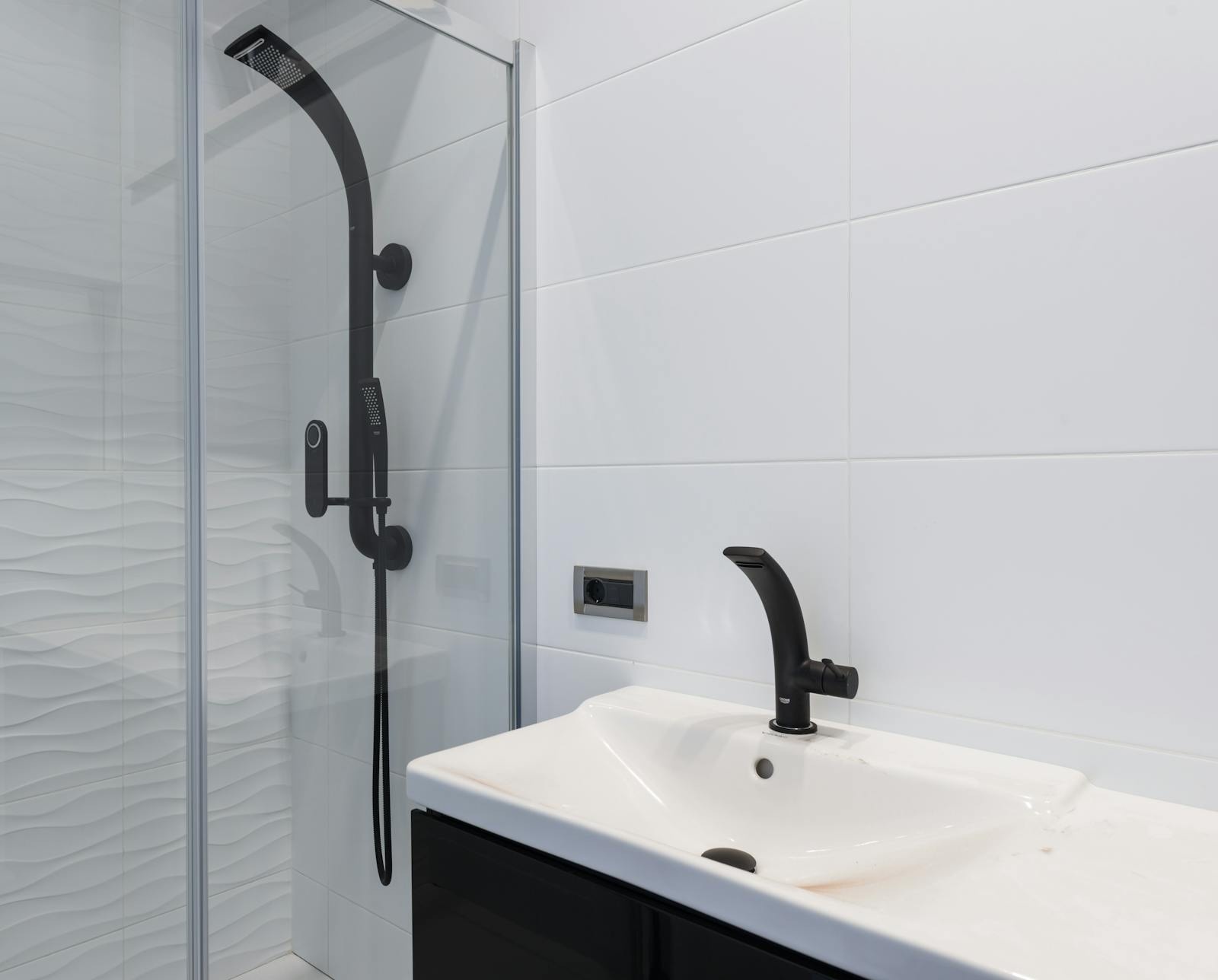
When people ask me how to remove limescale from a shower enclosure, they are usually looking for a single magic bullet. But that is exactly where the trouble starts. What works wonders on glass can permanently ruin the finish of a black tap. A powerful descaler that makes chrome shine can, if left too long, eat away at your grout or silicone seals. In Prague apartments with hard water, I see this pattern constantly: a quick cleaning attempt ends with cloudy glass or unsightly marks on expensive fixtures.
This article is more than just another bathroom guide. It is a decision-making manual based on materials and specific locations. If your shower combines glass, chrome, and black accents, you need a divided approach. Honestly, most damage during home cleaning isn't caused by the dirt itself, but by using the wrong method for the surface.
Why limescale builds up so quickly in a shower enclosure
Limescale is more than just a harmless white film. It is a collection of minerals from hard water—primarily calcium and magnesium—that bond to surfaces once the water evaporates. A shower enclosure provides the perfect environment: heat, humidity, constant wetting, and a cocktail of soap and shampoo residues.
In reality, the buildup happens quietly. After a shower, a thin film of droplets remains on the glass. If left to dry, they form the first layer. New deposits then cling to this film. After a week, you might not notice much. After a month, the glass starts to look cloudy. After a few months, you might feel like the glass is permanently stained.
The lower third of the glass, around the handles, the door tracks, and the area near the shower head are usually the worst hit. In older Prague apartments with poor ventilation, the moisture lingers longer, causing the scale to grow faster. In newer builds, I often see stylish black fixtures that look great but are incredibly sensitive to harsh handling.
A simple rinse with water just doesn't cut it. It might wash away loose suds, but it leaves the mineral film behind. When someone eventually tries a "deep clean" with a powerful product, they are often just trying to compensate for neglected maintenance, which is when the risk of surface damage is highest.
First, separate the surfaces so you don't damage them
Before you reach for any acidic cleaner, you need to know exactly what you are dealing with. Limescale on glass typically looks like a white film or dried water spots. If you wet the surface and the haze briefly disappears, that is a good sign. It means the deposit is on the surface and can likely be removed.
However, if the glass remains grey, rough to the touch, or looks "etched" even when wet, you may be dealing with microscopic surface damage. This cannot be fixed with standard home cleaning. While its appearance can be slightly improved, it won't ever return to a "like new" state.
On chrome fixtures, look for a chalky buildup around the joints and aerators. If a damp cloth doesn't take it off, it’s a mineral deposit. But if the chrome has lost its mirror finish, shows dark pitting, or has changed colour, the surface might already be compromised by previously used harsh chemicals.
Black fixtures are the most delicate of all. A white streak on a dark surface looks dramatic, but it’s often just a thin layer of minerals. This is where people make the biggest mistakes: using the abrasive side of a sponge or leaving an acid-based cleaner on for too long. Once the protective coating is scratched or stripped, the uneven finish is visible immediately.
When is it time to call in the pros? If you see rainbow-coloured maps on the glass, deep scratches on the metal, or if the corners are a mix of mold and hard crust. At that point, sheer force won't help—you need a change of strategy.
A safe at-home method, step by step
The golden rule is simple: never use a "one size fits all" approach. What cleans glass safely can be a disaster for a black tap.
For glass, a mild acidic approach is usually best. At home, a diluted vinegar solution or a gentle bathroom-specific descaler works well. Never work on a hot surface right after a shower, and don't let the product dry. Spray it on, let it sit briefly, wipe with a microfiber cloth, rinse, and dry immediately.
For heavier buildup on glass, try pressing a damp cloth soaked in your cleaner against the spot for a few minutes. This softens the scale much more safely than applying brute force. Anyone who tries to "scrub" away hard scale risks creating micro-scratches that will be more noticeable than the original dirt once the light hits them.
Chrome is a bit tougher, but you should still be moderate. Put the cleaner on the cloth first, rather than flooding the fixture. Avoid wire pads, magic erasers, or abrasive pastes. Your goal is to dissolve the minerals, not sand them off.
Black fixtures require the most restraint. If you have the manufacturer's guide, follow it. If not, stick to the safe route: a soft cloth, lukewarm water, and a drop of mild detergent. If you must use a descaler, choose a very gentle one, apply it to the cloth first, and rinse and dry the fixture immediately. With black faucets, it’s not about strength; it’s about consistency.
I often tell my clients: the more expensive your fixtures are, the more gently you should treat them. If you leave them for a month, you'll be tempted to use something strong. That is exactly the moment the surface starts to fail.
How to deal with awkward spots around profiles, seals, and grout
Almost anyone can handle a large flat pane of glass, but the real challenge lies in the details. Corners, bottom rails, door tracks, and the areas around silicone seals are where a mix of limescale, soap scum, and early mold tends to hide. Here, you don't need more power; you need smaller tools.
A microfiber cloth wrapped around your finger or a soft-bristled detailing brush works wonders. Apply your cleaner locally. If you flood the bottom of the shower with harsh chemicals, it can seep into joints and degrade the silicone, eventually leading to leaks or mold growth underneath.
Be cautious with silicone and grout. If the silicone is smooth and just has a surface film, a gentle wipe will do. If it’s already porous or turning black, standard cleaning won't help much—you'll just be smearing the grime.
When cleaning the details, try not to push the dirt further into the tracks. Use short strokes moving away from the joint, followed by a thorough rinse and drying. It is tedious work, and it's the part people skip most often, but it’s what keeps a shower looking new.
How to stop water marks from coming back after every shower
The biggest difference doesn't come from a heroic weekend deep clean. it comes from small habits after every shower. It might sound boring, but it works. Using a squeegee on the glass takes thirty seconds. Drying the tap with a cloth takes another thirty. In a hard-water home, this one minute is worth more than an hour of scrubbing later.
My experience is clear: those who squeegee the glass and air out the bathroom after a shower deal with far less limescale. Those who close the door, let the droplets dry, and rely on occasional heavy-duty cleaners stay stuck in a cycle of frustration.
A short weekly "reset" also helps. Not a full-blown session, just ten minutes of focused work: wipe the glass, rinse the rails, dry the tap. For households with hard water, this is the only realistic way to keep a bathroom beautiful without risking damage to the materials.
If you want to go further, you can look into a water softener, but for a standard Prague apartment, simple discipline delivers the best results. Nothing fancy—just consistency.
When professional deep bathroom cleaning makes sense
There are times when DIY methods just aren't enough. If a shower has been neglected for a long time, the glass is cloudy all over, the tracks are sticking, and the silicone is changing colour, standard cleaning won't cut it. At this stage, you aren't just fighting limescale—you're dealing with layers of grease, soap, and mold.
A professional deep clean also makes sense if you aren't sure what your fixtures are made of. Many modern designer pieces have coatings that require a specific touch. One wrong move with a harsh chemical can cost more than a professional service. If you are comparing what to handle yourself and when to bring in help, the CistýKout blog has more practical bathroom and home-cleaning guidance.
When booking a service, be specific. Tell us if you have glass, chrome, or black fixtures, and let us know what you’ve already tried. Close-up photos of the corners and the overall state help us choose the right technology that will be effective yet gentle on your equipment.
If you are struggling with how to remove limescale from your shower enclosure and don't want to risk the finish, send your request through CistýKout. For heavily scaled bathrooms, the right method is the most important investment you can make.