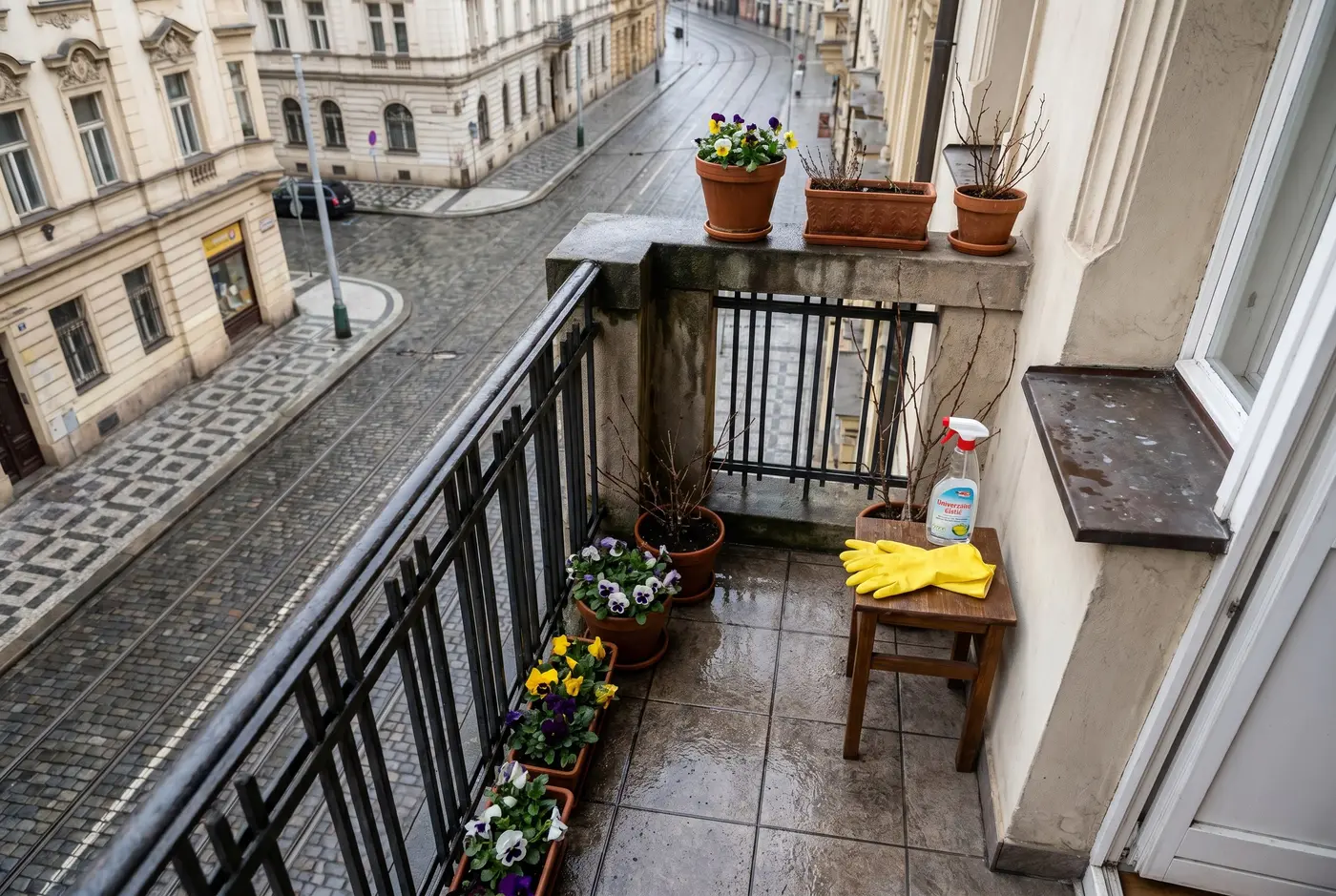
Most people think of spring balcony cleaning as a light reset. Sweep the floor, wipe the railing, put out a chair, done. In Prague flats, that is not always what you are dealing with. After winter, balconies often collect a mix of road dust, soot, damp dirt in the corners, blocked drains, and sometimes pigeon droppings that have been sitting there for weeks. At that point, balcony cleaning is no longer just a tidy-up. It becomes a hygiene job.
I have seen people make the same mistake again and again. They open the balcony door wide, grab a broom, sweep everything dry, and only later realize they just pushed dirty dust back into the living room. If you are wondering how to clean balcony after winter without making the mess worse, start by avoiding dry sweeping. If pigeon droppings are part of the problem, the safer route is slower: respirator on, dirt dampened first, waste removed in a controlled way, then proper washing and balcony disinfection.
What is actually risky about cleaning a balcony after winter
The risky part is not that a balcony looks dirty. The risky part is what happens when winter residue is dry, compacted, and easy to turn into airborne dust. In apartment buildings, especially near busier streets, balconies catch a lot more than leaves. Fine traffic dust, pollen, mold spores, old dirt trapped behind planters, and bird waste all gather on a very small surface. Once that gets disturbed, it can travel straight into the flat.
Pigeon droppings are a hygiene issue, not just an ugly one
Pigeon droppings on a balcony are often treated like a cosmetic problem. Wipe them off and move on. That is too casual. Older droppings can contain fungi, bacteria, and allergenic particles. The biggest mistake is dry scraping or sweeping because that breaks the material into fine dust.
In plain terms, if you are dealing with pigeon droppings balcony cleaning, treat it more like light contamination control than a normal wipe-down. No drama, just a realistic level of care.
Dust, mold, and allergens after winter
Winter leaves behind its own mess even when pigeons are not involved. Moist corners can develop mold. Drains fill with decomposing leaves and grime. Pollen season starts, then mixes with moisture and city dust. In enclosed balconies or older panel building loggias, that combination can get unpleasant fast.
One detail people miss is the black or grey film that appears in corners and under pots. It often looks like ordinary dirt, but it can be a mix of moisture, mold residue, road dust, and organic debris. If you spread that around with one cloth, you are not really cleaning. You are redistributing it.
When to be extra careful because of children or allergies
If someone in the home has asthma, allergies, or a weakened immune system, balcony cleaning needs a stricter approach. In many Prague apartments the balcony sits right off the living room or kitchen, so anything you stir up can end up indoors within seconds. The same goes for homes with small children. They do not need to be anywhere near the cleaning while contaminated dust is being handled.
This is one of those cases where doing it yourself is not automatically the better choice. If the contamination is heavy, calling professionals is not overkill. It is often the sensible option.
How to prepare safely before you start
The first rule is simple: avoid dry cleaning. Do not sweep aggressively, do not beat dusty textiles over the railing, and do not try to vacuum contaminated residue unless you know the machine and filter are suitable for that job.
Respirator, gloves, and dampening the dirt
For safe balcony cleaning after winter, prepare at least an FFP2 or FFP3 respirator, gloves, older clothes that go straight into the wash, and ideally eye protection. People sometimes laugh at goggles until cleaning solution splashes back from a railing or a scraper flicks dirty water up.
Dampening the dirt is the key move. Spray the affected areas with water mixed with a suitable cleaner or disinfectant and let it sit for a few minutes. The goal is not to flood the balcony. The goal is to stop dried dirt and droppings from turning into airborne dust.
What to prepare in advance
Lay everything out first so you are not walking in and out of the flat with contaminated gloves:
- FFP2 or FFP3 respirator
- gloves
- strong waste bags
- spray bottle with water and cleaning solution
- plastic scraper or spatula
- paper towels or cloths you can discard
- bucket of warm water
- mop or deck brush
- disinfectant suitable for washable outdoor surfaces
A small practical tip that saves extra work: close the balcony door while preparing the area, remove nearby textiles, and keep shoes, laundry racks, and cushions out of the splash zone.
What to avoid during dry removal
A standard household vacuum is a bad idea for this kind of work unless you are sure it is designed for contaminated fine dust. Strong water pressure can also backfire on an apartment balcony. You may end up sending dirty runoff onto the balcony below, which is not a great way to meet the neighbors.
I would also avoid aggressive metal tools on painted railings, composite decking, or delicate tiles. You are trying to remove contamination, not add scratches and permanent marks.
Step by step: a safer way to clean
This job rewards patience. Slow is cleaner here.
1. Remove bulky waste and loosened dirt
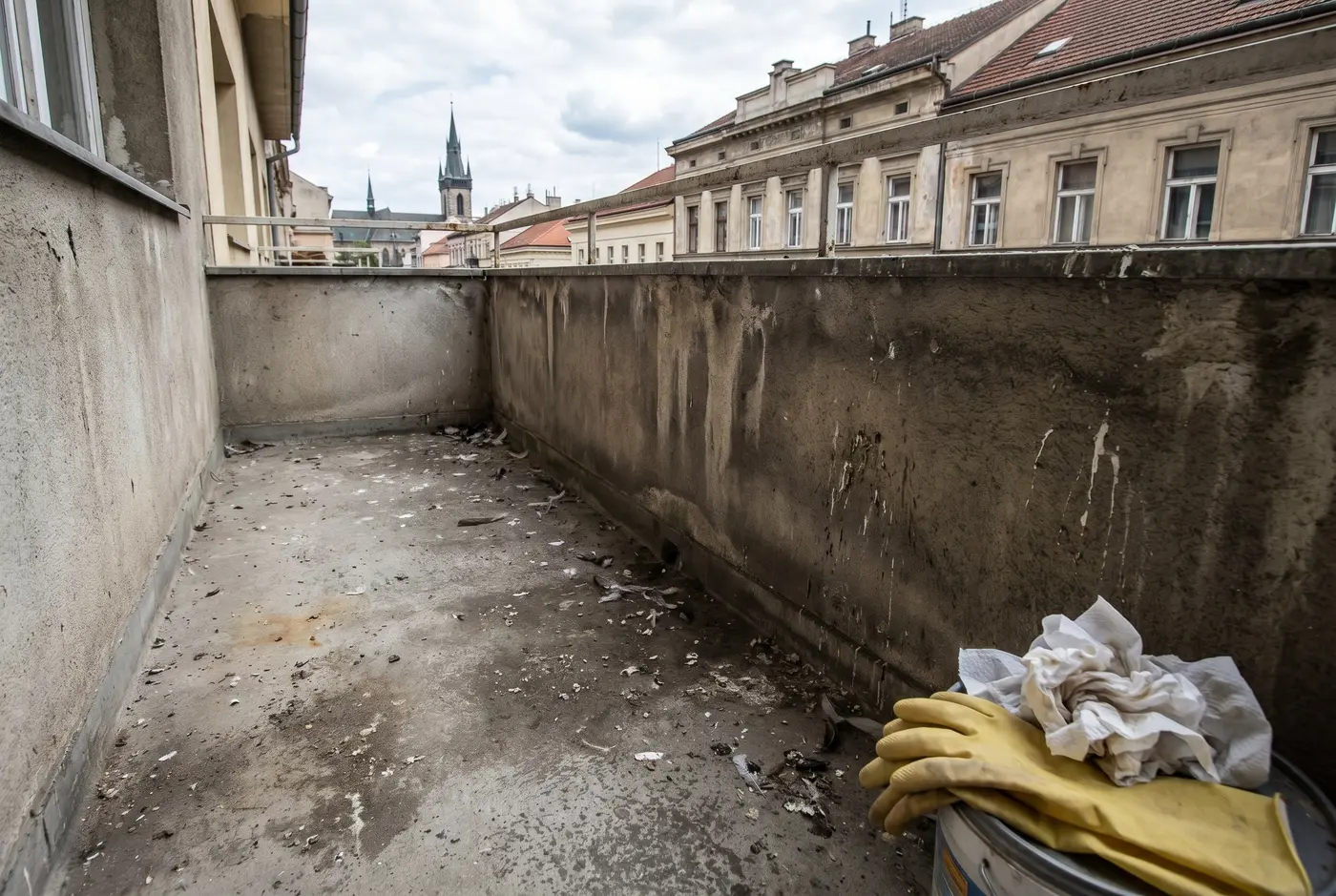
Take out anything that can be moved easily: planters, mats, cushions, small furniture, empty boxes. Textiles should go aside for washing. Pick up loose waste first. When you reach droppings or compacted dirt, dampen them thoroughly, wait a moment, then lift the material with a plastic scraper into a bag or onto disposable towels.
If the buildup is thick, do not force it in one go. Spray, wait, lift part of it, spray again, repeat. That slower rhythm reduces dust and is gentler on the surface too.
2. Wash the floor, railing, and drains
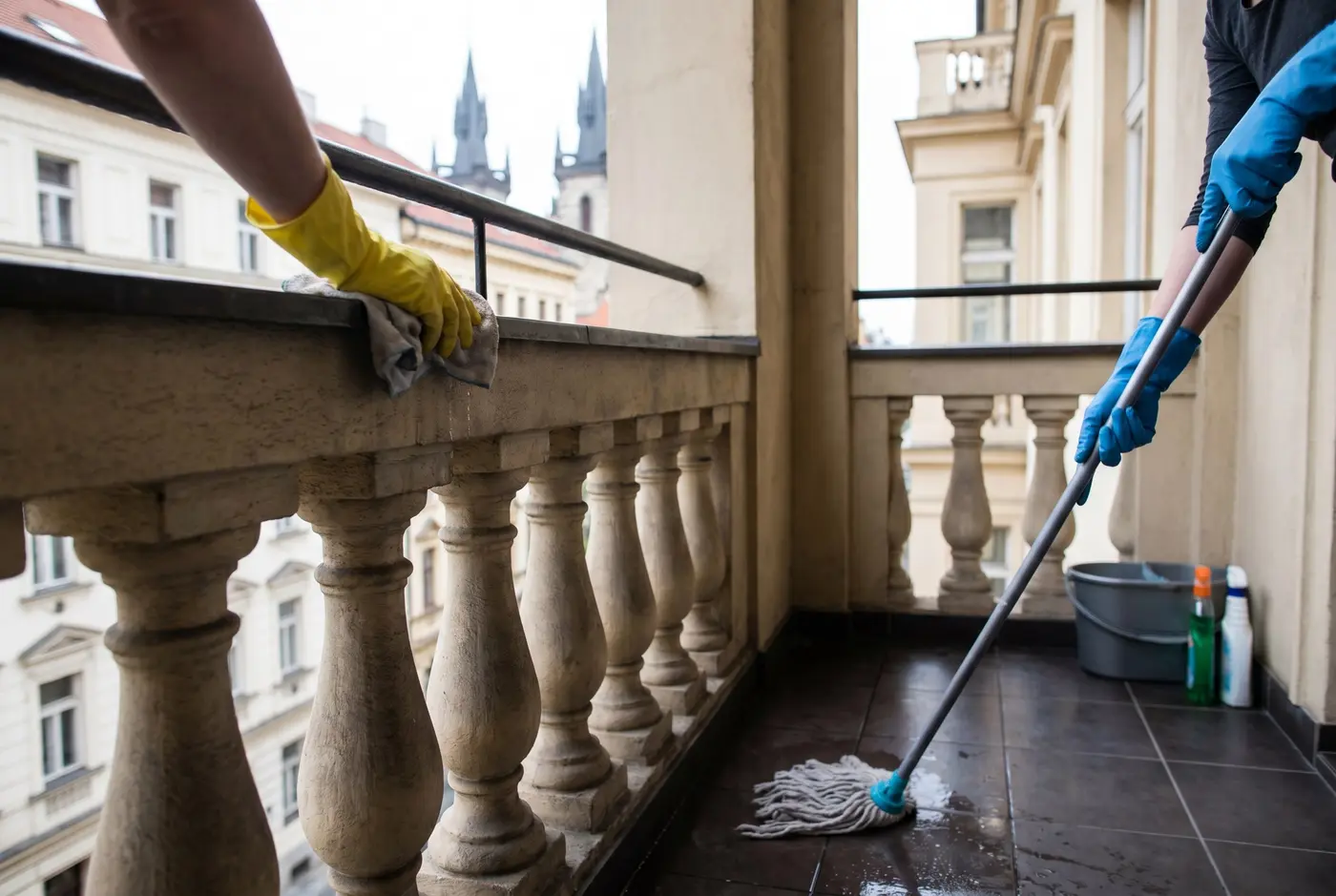
Once the rough contamination is gone, start washing. I usually recommend working from top to bottom: railing, wall areas, then floor. Warm water with the right cleaning product is enough for most balcony floors, but city grime often means you will need fresh water more than once.
Do not skip the corners and drains. Those hidden spots are where trapped leaves, feathers, dust, and residue create odor. A blocked drain may not seem urgent until the first heavy rain leaves the balcony standing in dirty water.
With wood or composite surfaces, go easy on both chemistry and water volume. Test the product first if you are unsure.
3. Finish with balcony disinfection
After physical removal and washing comes balcony disinfection. This is the step many people skip because the balcony already looks clean. Visual cleanliness is not the same thing as hygienic safety.
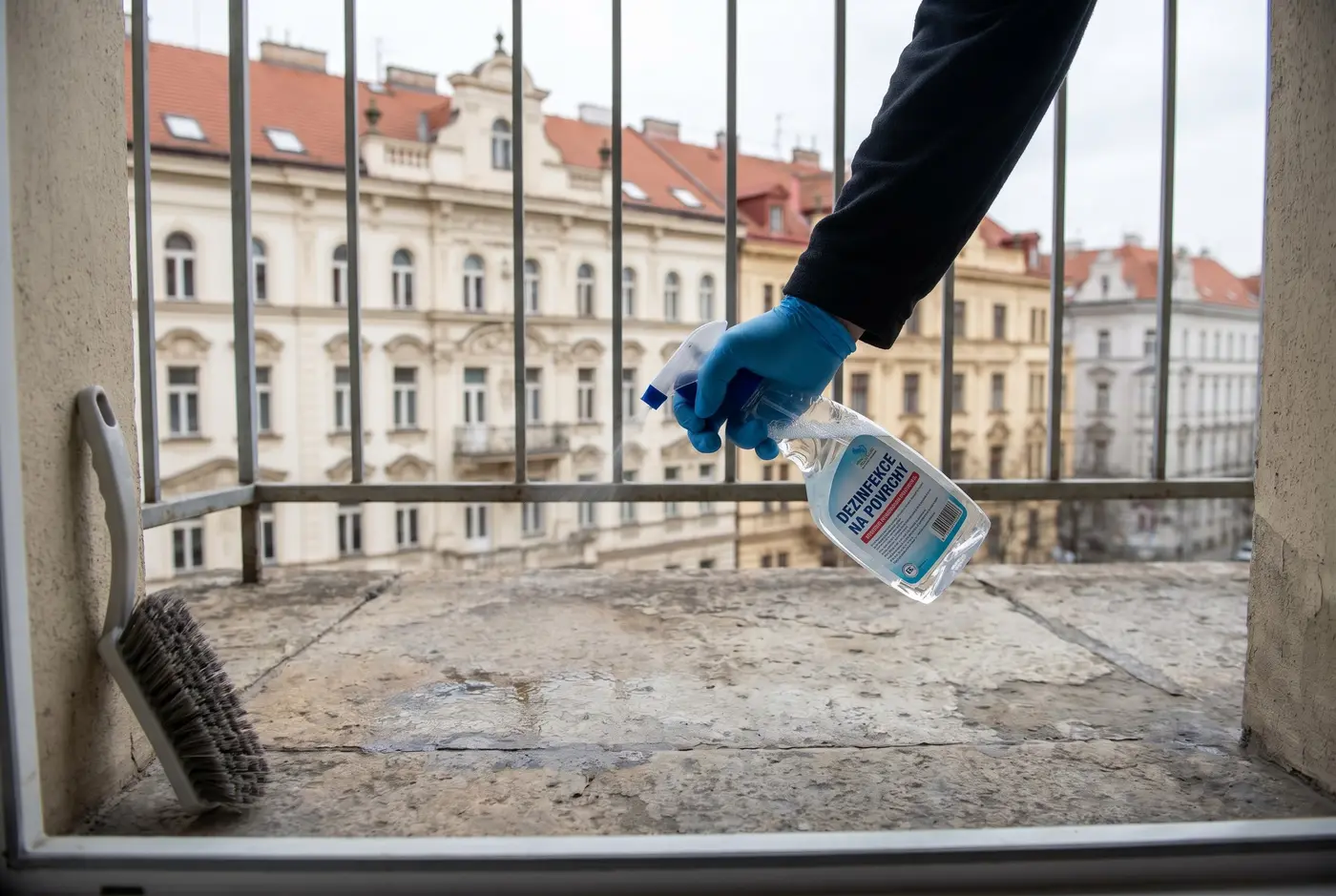
Use a disinfectant that is appropriate for the surface and follow the label. More product is not always better. On some materials, stronger chemistry simply means stains or damage. Focus especially on corners, parapets, railings, drains, and the areas where pigeon droppings balcony contamination was concentrated.
Let the product sit for the recommended contact time, then wipe or rinse according to instructions. Bag the used waste carefully, remove gloves at the end, and wash your hands properly afterwards.
When you should not do it yourself
There is a point where self-service stops making sense.
Heavy buildup and strong odor
If the balcony has multiple old layers of droppings, visible nesting residue, or a strong smell the moment you open the door, this is no longer a small spring balcony cleaning task. It is a contamination problem. The same goes for surfaces that have absorbed the mess over time.
Signs of nesting, contamination, or parasites
If you find nesting material, eggs, a dead bird, or insect activity, stop and reassess. That is not routine balcony cleaning anymore. It may require safer handling, deeper disinfection, and sometimes advice on legal restrictions around nesting periods.
Difficult access or risky surfaces
A narrow balcony on a high floor, slippery tiles, broken edges, awkward leaning over the railing, fragile wood, or damaged coatings all raise the risk. For a few square meters, it is simply not worth an injury or surface damage.
How to stop the mess from coming back quickly
A good clean is only half the job.
Pigeon prevention matters more than people think
The most effective prevention is physical. Netting, properly placed anti-bird spikes on landing edges, and removing comfortable perching spots work better than occasional scare tactics. Reflective tape and fake birds sometimes help for a few days, then city pigeons ignore them.
Keep a short weekly routine
The best spring balcony cleaning job is the one you do not have to repeat from zero a month later. A ten-minute weekly routine helps a lot: wipe the railing, check corners, clear fresh dirt, inspect the drain, and deal with small messes immediately.
Watch the balcony after rain and during pollen season
Rain often leaves a dirty film behind, and pollen season adds a sticky layer that clings to every surface. Leave that there too long and the next balcony cleaning session will be harder than it needs to be.
If you want one practical rule, it is this: handle light mess early, and do not play hero with heavy contamination. If your balcony needs more than a basic clean, ČistýKout is a Prague-based cleaning option worth considering. You can reach out through the contact form on cistykout.cz and decide from there without pressure.