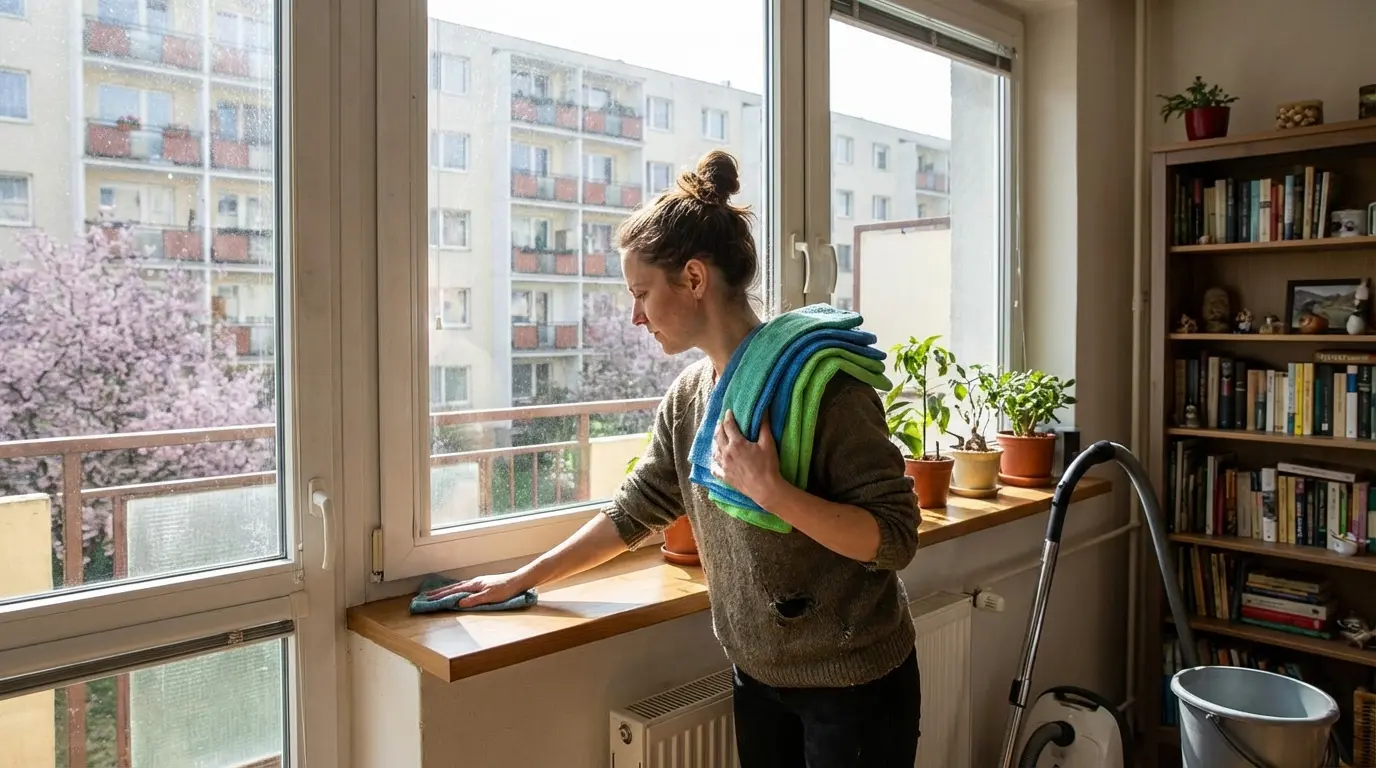
Spring apartment cleaning sounds reasonable right up to the moment when you empty one shelf, move a stack from the window sill, and suddenly the whole flat looks worse than before. That is why spring apartment cleaning works better as a sequence, not as a heroic one-day marathon. This guide gives you a realistic room by room cleaning plan for a Czech apartment, with clear order, sensible priorities, and a calm way to decide what to do yourself and what is worth outsourcing.
Most people do not fail because they are lazy. They fail because they start in three rooms at once. The bathroom spray is already working, the bed is full of clothes, the kitchen counter is covered with random things from the hallway, and by late afternoon there is a lot of effort but no finished space. A better system is simple. Prepare the flat first, follow an order that prevents duplicate work, then clean one zone at a time. In a smaller apartment, two or three shorter sessions often work better than one exhausting day. Friday evening for the hallway and bedroom, Saturday for the kitchen and bathroom, Sunday for windows and floors. That is still a proper deep clean apartment routine. It is just realistic.
What to prepare before spring cleaning
Before you start wiping anything, decide the scope. Do you want the whole flat done in one weekend, or do you want to spread the work over several shorter blocks? For most working people, the second option is easier to finish. A one bedroom or compact two room apartment can usually be cleaned thoroughly across two or three solid sessions. If you have a larger flat, a balcony, children, or limited storage, the work naturally expands.
One small preparation step saves an absurd amount of energy: create four categories before you begin.
- trash
- laundry
- donate or pass on
- belongs somewhere else in the apartment
Without those categories, cleaning turns into carrying the same objects around. You pick up a charger from the living room, take it to the bedroom, notice a pile on the chair, start sorting that, then remember the bathroom mirror is still covered in cleaner. That is how people lose momentum.
Your spring cleaning checklist does not need twenty specialized products. For a normal apartment, this is enough:
- several microfiber cloths
- vacuum cleaner with a narrow attachment
- mop and bucket
- kitchen degreaser
- bathroom descaler
- glass cleaner for mirrors and windows
- sponges, gloves, trash bags
- a stable step stool
If you live in a Czech apartment block or an older city flat, open the windows before you start. A quick burst of fresh air helps more than keeping one window cracked for hours. The air feels lighter, dust moves less stubbornly, and the work is simply less annoying.
It also helps to estimate time by zone, even loosely. Kitchen: 90 to 120 minutes. Bathroom: 60 to 90. Living room and bedroom: around 90. Hallway and storage spots: 30 to 45. Those are not promises. They are a reminder that some tasks, especially greasy kitchen surfaces and hard water limescale, usually take longer than people expect.
The order of work that saves time
If one thing decides whether an apartment cleaning routine feels manageable, it is the sequence. Not because cleanliness needs to be perfect, but because cleaning the same area twice is frustrating.
The basic logic is straightforward:
- declutter first
- do dry tasks next, like dusting, vacuuming corners, cleaning the tops of wardrobes and radiators
- then move to wet cleaning on surfaces, tiles, mirrors, cabinet fronts, and switches
- leave the floors until the very end
The top to bottom rule matters more than most people think. If you mop first and then dust upper shelves, you have created your own extra work. The same goes for moving between rooms without finishing a zone. It feels productive for ten minutes, then the flat turns into a collection of half-finished tasks.
A better approach is to complete one area enough that it visibly improves. Not perfect. Finished enough to feel calmer. That is especially important in smaller apartments, where every surface quickly becomes temporary storage during cleaning.
A useful order for a normal apartment looks like this:
- open windows and start washing any curtains, throws, or removable textiles
- declutter the hallway, bedroom, and visible surfaces
- dust higher areas, lamps, frames, shelves, and radiators
- tackle windows if the weather and time make sense
- clean the kitchen and bathroom in focused blocks
- vacuum and mop the whole apartment last
Windows deserve their own note. In many flats, especially upper floor apartments or older buildings with wide sills and double windows, window cleaning can derail the entire day. Treat it as a separate block if needed. The same is true for textiles. Washing cushion covers, throws, or curtains happens in the background, but you still need time to remove, wash, dry, and put them back.
Spring cleaning room by room
Kitchen
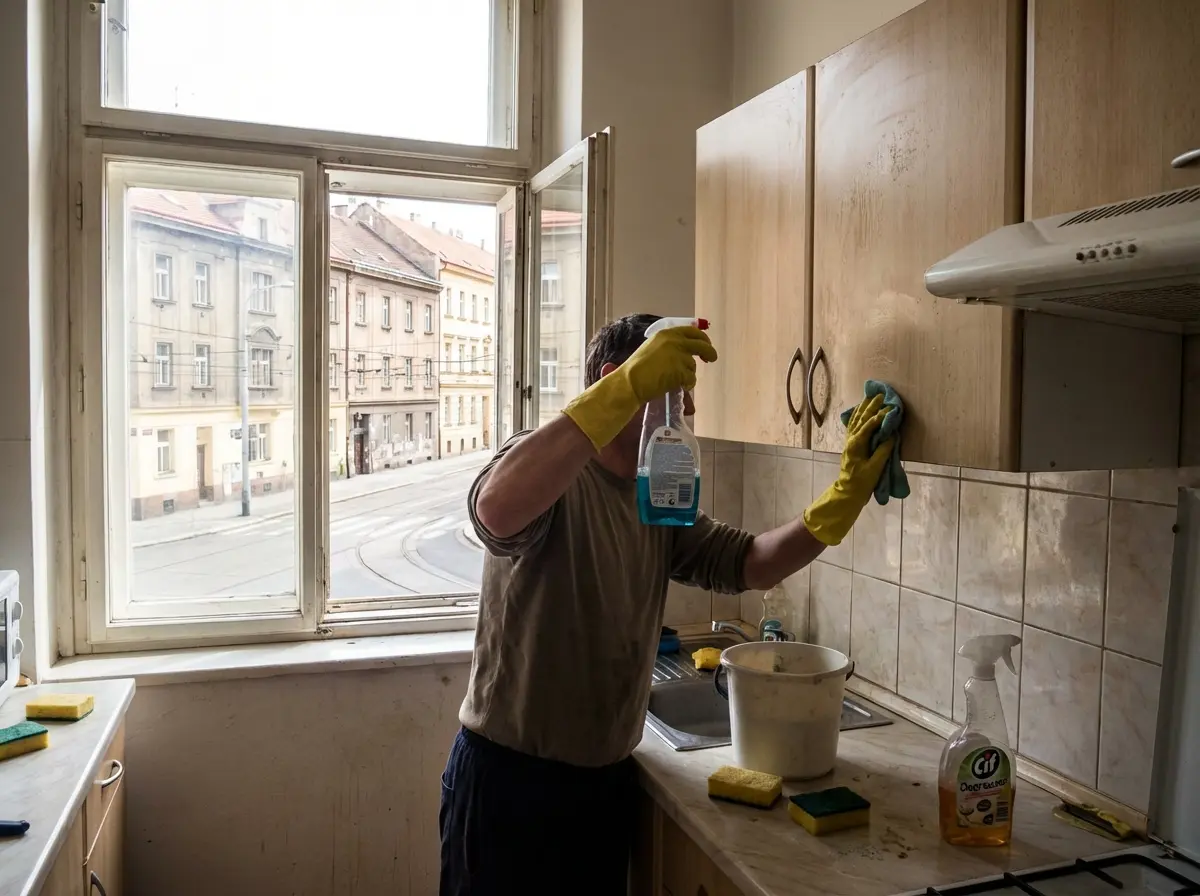
The kitchen is where spring cleaning often stops feeling light. On the surface it may look acceptable, but grease settles in layers, especially in apartments where cooking happens daily and ventilation is average at best. In a modest Prague flat, that usually means cabinet fronts, handles, the extractor hood exterior, the area around the hob, and the small sticky strip behind appliances.
Start by clearing the worktop and checking the fridge and pantry. Expired sauces, old spices, open packets, and crumbs in lower cabinets create more mess than people realize. Then move through the kitchen in a simple order:
- cabinet fronts and handles
- backsplash or wall behind the worktop
- switches and spots around handles
- extractor hood exterior and filter if accessible
- fridge seals
- the area behind small appliances
This is a good place to be honest about time. Deep cleaning apartment kitchens nearly always takes longer than expected. Pulling out the kettle, toaster, or coffee machine often reveals crumbs mixed with grease and dust, the exact kind of dirt that does not disappear with one quick wipe.
If you are losing time, prioritize the areas you touch every day and the ones that affect the feeling of cleanliness fastest: worktop, cabinet fronts, cooker area, fridge, and sink zone. The inside of every upper cabinet can wait for another session.
Bathroom and toilet
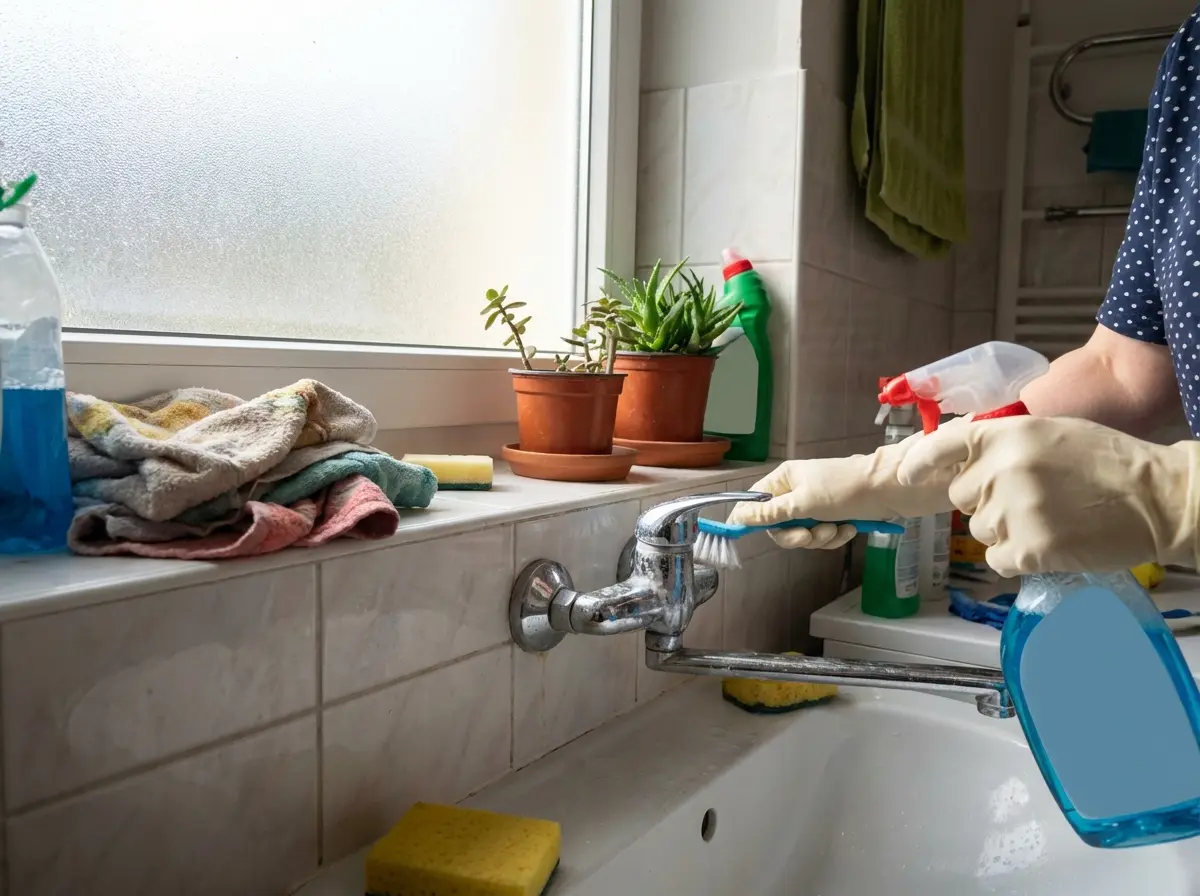
The bathroom is the second classic time trap. Limescale around taps, shower screens, drains, and tile edges rarely disappears after a fast pass. In hard water areas, and there are many of them, you save effort by applying descaler first and letting it sit before scrubbing.
Focus on these zones:
- taps, shower fittings, and sink edges
- mirror edges and shelves
- grout and the top edges of tiles
- drains
- ventilation grille
- washing machine drawer and filter, if relevant
People often forget the flush button, the outer sides of the toilet bowl, the wall around the toilet paper holder, and the upper edge of the bathroom door. They are small details, but together they change how fresh the room feels.
And this is where outsourcing starts to make practical sense. If the bathroom has built-up scale, stained grout, and neglected corners, forcing yourself through two exhausting hours does not always save money or energy. Sometimes it just ruins your weekend.
Living room and bedroom
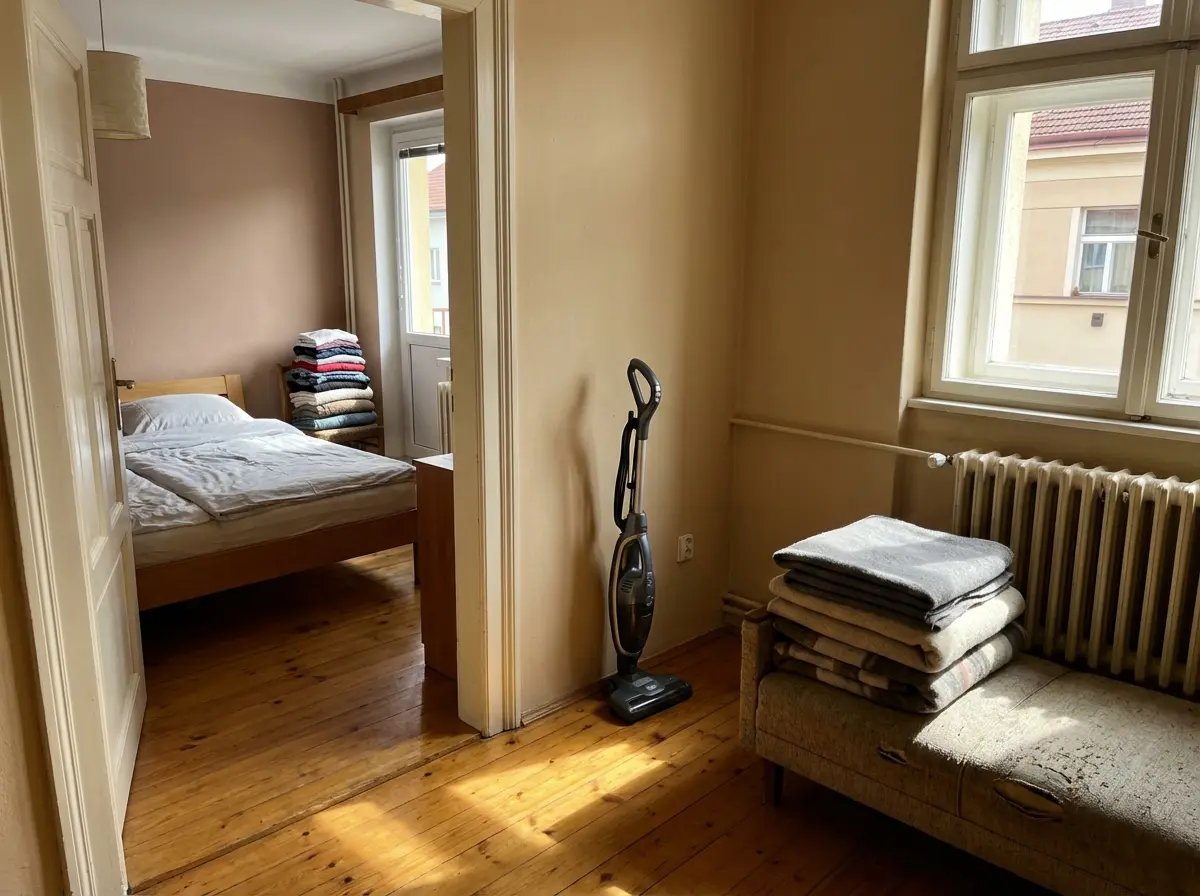
This part usually feels more rewarding because the visual result comes quickly. It is also where hidden dust builds up all winter. Shelves, lamps, picture frames, radiator tops, window sills, under the bed, behind the sofa, and the top edges of doors quietly collect it all.
A simple order works well:
- remove textiles that need washing
- dust the higher surfaces and lamps first
- vacuum under the bed and behind the sofa
- wipe window sills, frames, and radiators
- reset the most visible storage surfaces
In the bedroom, rotate the mattress if the mattress type allows it, then vacuum the base or slats and the floor around the bed. Once a season is enough. In the living room, one shelf or one media unit is often more useful than trying to reorganize the entire space at once.
Funny enough, in many smaller apartments the bedroom becomes a bigger obstacle than the kitchen. Not because it is dirtier, but because the bed turns into a temporary dumping ground for all the things you plan to sort later. Once the bed disappears under random piles, motivation goes with it. A box for "belongs elsewhere" is more useful than using the bed as storage during cleaning.
Hallway, balcony, and storage zones
The hallway is small, but it sets the tone for the whole apartment. After winter it often holds dust, sand, dried dirt from shoes, and the slow build-up of coats, scarves, bags, and things with no clear place.
Spring is the right moment for a seasonal swap. Store heavy coats, review shoes, clear the shoe cabinet, shake out or wash the doormat, wipe switches, the mirror, and the wall around door handles. In a small flat, even a modest hallway reset changes the whole atmosphere because the entrance stops feeling like storage overflow.
If you have a balcony, keep the scope reasonable. Sweep it, wipe the railing, clean the small table or chair, and remove winter dust and pollen. For storage zones, avoid opening every cupboard at once. One high shelf, one cabinet above the washing machine, one hallway cupboard. That is enough.
What people most often forget
This is where most generic checklists become too broad to help. In real apartments, the most overlooked places are often the ones that quietly collect grime all year:
- light switches and door handles
- door frames and the top edges of doors
- radiator tops and the space behind them
- tops of wardrobes
- skirting boards
- remotes, bins, and bin lids
- extractor filters
- window tracks and sills
- vents
- corners near the ceiling
- the floor under or behind the washing machine or fridge, if it is safe to move them
These details do not all need to happen in one day. The point is to know they exist, so your room by room cleaning plan reflects how apartments actually get dirty.
When it is worth hiring professional cleaners
Not every home needs the same depth of spring cleaning. Sometimes regular upkeep plus one focused afternoon is enough. Sometimes it clearly is not.
Hiring help makes sense when:
- the apartment has not had a true deep clean in a long time
- windows are difficult or awkward to clean safely
- the kitchen has heavy grease build-up
- the bathroom has stubborn limescale or neglected grout
- you need a full reset before Easter visits, after illness, after renovation dust, or before moving
- you know a whole day of cleaning will cost you your weekend and still leave the hardest jobs unfinished
It helps to think about professional support as a sensible shortcut, not a luxury service for perfect homes. You can still sort clothes, clear surfaces, and handle lighter tasks yourself. But windows, deep kitchen degreasing, serious bathroom scale, radiator dust, or a full apartment reset are exactly the jobs where professional cleaners save time, physical effort, and a lot of frustration.
If you want the heavy parts done properly without spending your entire free weekend on them, it is worth looking at residential cleaning options through CistýKout. Low pressure, practical, and often much more realistic than promising yourself that next Sunday you will somehow do everything alone.
Spring apartment cleaning does not need to be perfect, and it definitely does not need to happen in one heroic day. Pick a scope that matches your real energy, follow an order that prevents repeat work, and get help with the toughest parts when it makes sense. That is not cheating. It is how people actually finish the job.