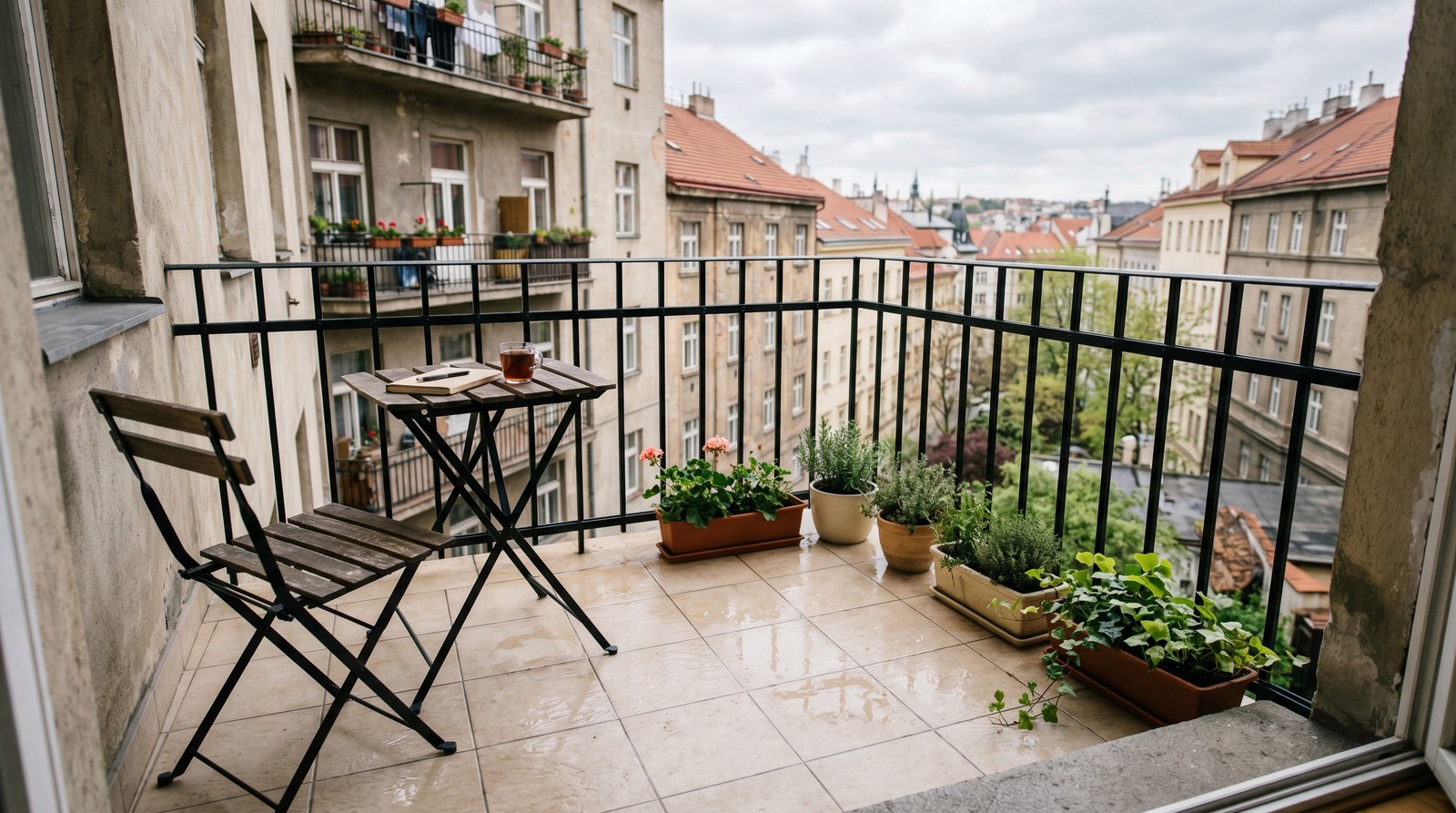
The first warm weekend in April tends to create the same little shock for Prague residents. You slide open the balcony door, envisioning coffee in the sun, and instead find a heavy layer of grey dust, unsightly water marks, slippery green patches near the base of the walls, and that stubborn greasy film winter leaves behind. Spring balcony cleaning sounds straightforward on paper, but this is where people usually do the most damage. All it takes is one overly harsh cleaner, one blast from a pressure washer, and an attempt at a "one-size-fits-all" approach for tile, wood, and WPC. That shortcut is the fastest way to faded surfaces, crumbling grout, or permanently scratched boards.
City balconies and compact terraces face a different reality than the gardens described in generic advice. You have limited space, shared drainage, neighbours directly below you, and a direct path back into your living room for every bit of loosened grime. I wouldn’t treat it as one chaotic scrub. It works much better as a sequence: clear the space, remove dry debris first, clean from top to bottom, and match the chemistry to the surface.
What usually builds up on a balcony or terrace after winter
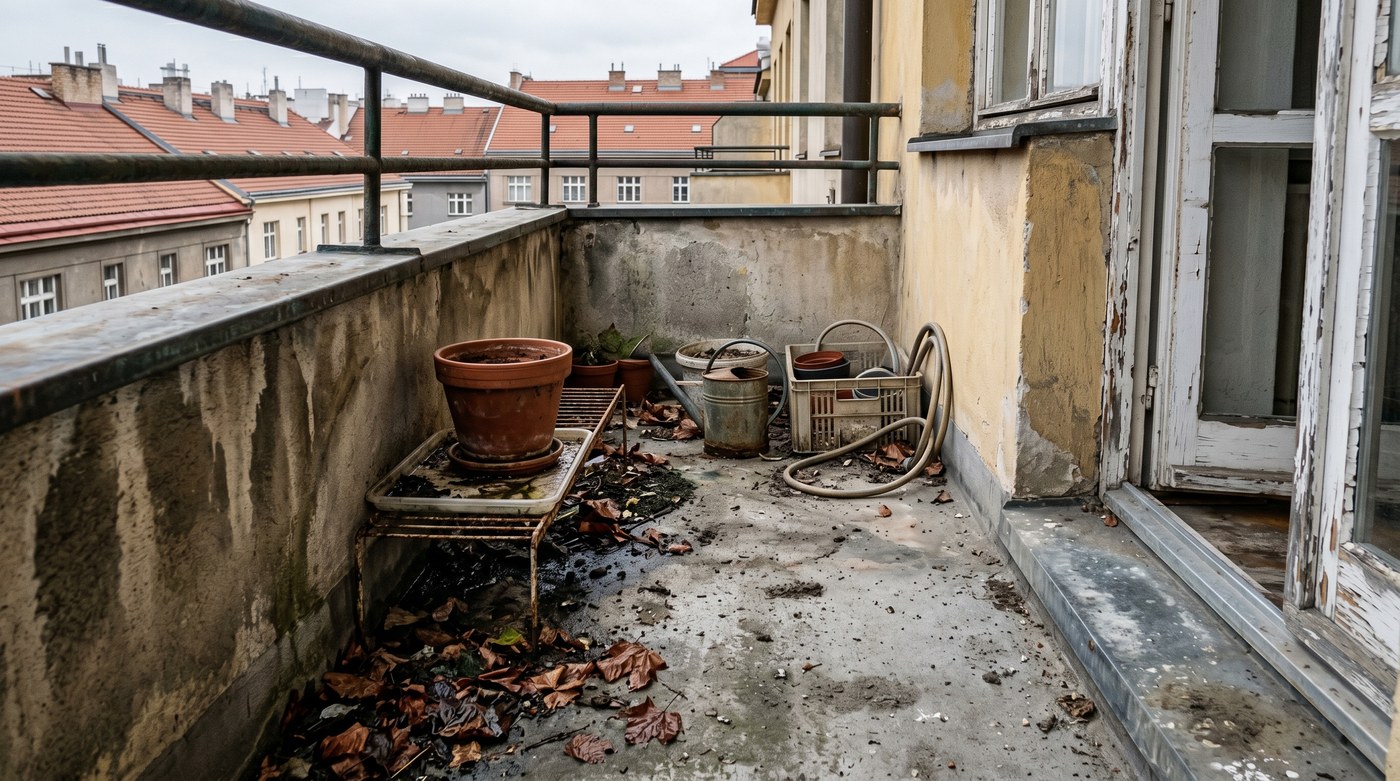
It is rarely just simple dust. On an urban Prague balcony, months of road grime, soot from heating, pollen, decaying leaf fragments, and a sticky oily film settle on every surface. This residue is most visible on railings, sills, and within the folds of window frames. If your flat faces a busier street or an enclosed courtyard, the build-up is usually significantly heavier. You can see it on the glass, but you really feel it when a damp cloth turns black after a single wipe.
Then there is the biological layer. Algae on the floor, moss in the shaded corners, and those dark stains that look cosmetic until you step on them and find they are dangerously slippery. They collect wherever moisture lingers: behind large planters, around the drain, and along walls that don't get much direct sun. In generic guides, this is often called "dirt," but it’s a living biofilm that requires a specific approach if you want to stop it from coming back.
A quick sweep is never enough. While a broom removes loose debris, it ignores the greasy residue and the thin bio-layer. This is why many people think they’ve cleaned the space, only to see the same marks reappear after the first spring shower or a proper mopping. On tiled floors, this film is especially stubborn around the grout lines.
Don't forget the vertical surfaces. The underside of the railing, the outer sill, the frame of the balcony door, and the tracks of the sliding door all collect grime. If you start with the floor, all that dust and those tiny black drips from above will eventually ruin your work, forcing you to repeat half the job.
How to clean without dragging the mess back into your home
A little discipline goes a long way here. Start by moving everything out of the way – cushions, rugs, textiles, drying racks, and any lightweight furniture. Shift your planters and check what’s hidden underneath. That ring of muck under a flower pot is often the most stubborn part of the whole balcony.
Next comes the dry stage. Sweep up leaves, loose dirt, dead plant material, and the fine grit that collects in corners before you introduce any water. For door tracks, a vacuum with a narrow nozzle is an absolute lifesaver. It’s a small detail, but it prevents you from stepping in wet grit and carrying it straight onto your living room carpet.
The cleaning order should be strict: railings and upper surfaces first, then the doors and frames, and only then the floor. I recommend keeping two different cloths ready – one for the first "dirty" pass and one for the final wipe. Using the same cloth for the entire job usually means you are just relocating the grey film from one corner to another.
A practical trick for Prague apartments: place an old towel or an absorbent mat right inside the balcony door before you start. It catches moisture from your shoes and accidental splashes from the bucket. In a compact flat, this saves more cleanup time than you might expect.
How to clean different surfaces without damaging them
This is the most critical part of the process. Surface-specific cleaning is the difference between a refreshed balcony and an expensive repair bill.
Tile and grout
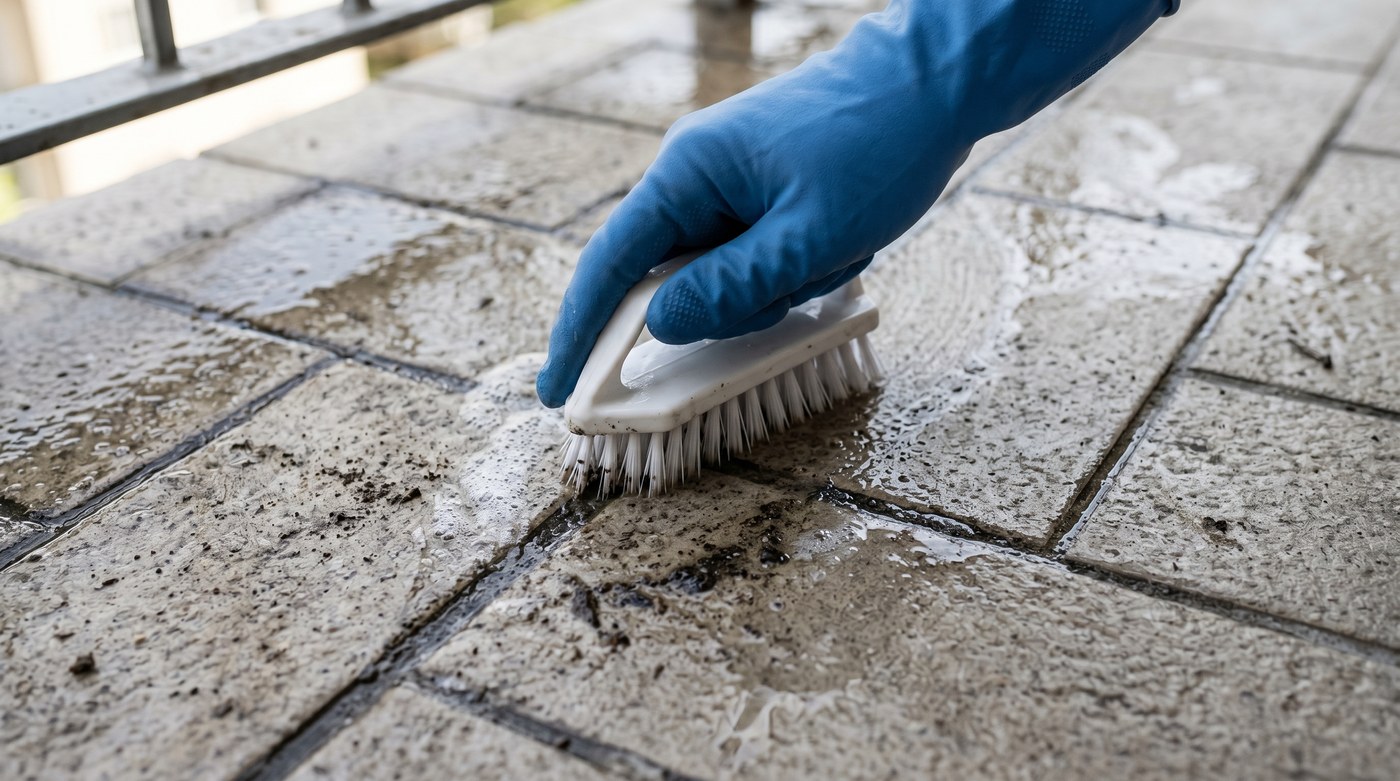
While ceramic or dense exterior tile is generally forgiving, it still has limits. Start with lukewarm water and a mild, pH-neutral cleaner rather than reaching for a heavy degreaser right away. A medium-bristle brush is usually enough for routine dirt, light algae, and water marks.
Grout lines need more caution. On older balconies, grout can be surprisingly brittle. An aggressive brush or high-pressure water can strip it out faster than you'd think. If your tiles need a deep clean, work in two gentler passes instead of one violent one. Loosen the film first, then come back for the deeper stains.
If you are dealing with mineral streaks or dark edges, let the cleaner sit for a few minutes and scrub by hand. It is slower, but it is infinitely safer than blasting the area with force. In small urban spaces, control always beats raw power.
Wooden decking and terrace boards
Wood is where impatience becomes visible. Soft or weathered boards can be damaged in seconds. Avoid chlorine-heavy products, strong alkaline cleaners, and stiff wire brushes. Wood is absorbent; if you oversaturate it or damage the surface fibres with aggressive scrubbing, it will grey, crack, and lose its smoothness much faster.
For wood, use a dedicated timber cleaner or a very mild soap solution and a soft brush. Always scrub in the direction of the grain – never in frantic circles. If you find algae build-up, let the solution dwell first to loosen it. I have seen many people spend twenty minutes fighting the surface with brute force when ten patient minutes would have delivered a much cleaner, more even result.
If you need to clean a terrace after winter and the boards still look grey and "thirsty" even after a thorough clean, you might be looking at a maintenance issue. Once the wood is fully dry, it likely needs a fresh coat of oil, which goes beyond a simple spring clean.
WPC and plastic elements
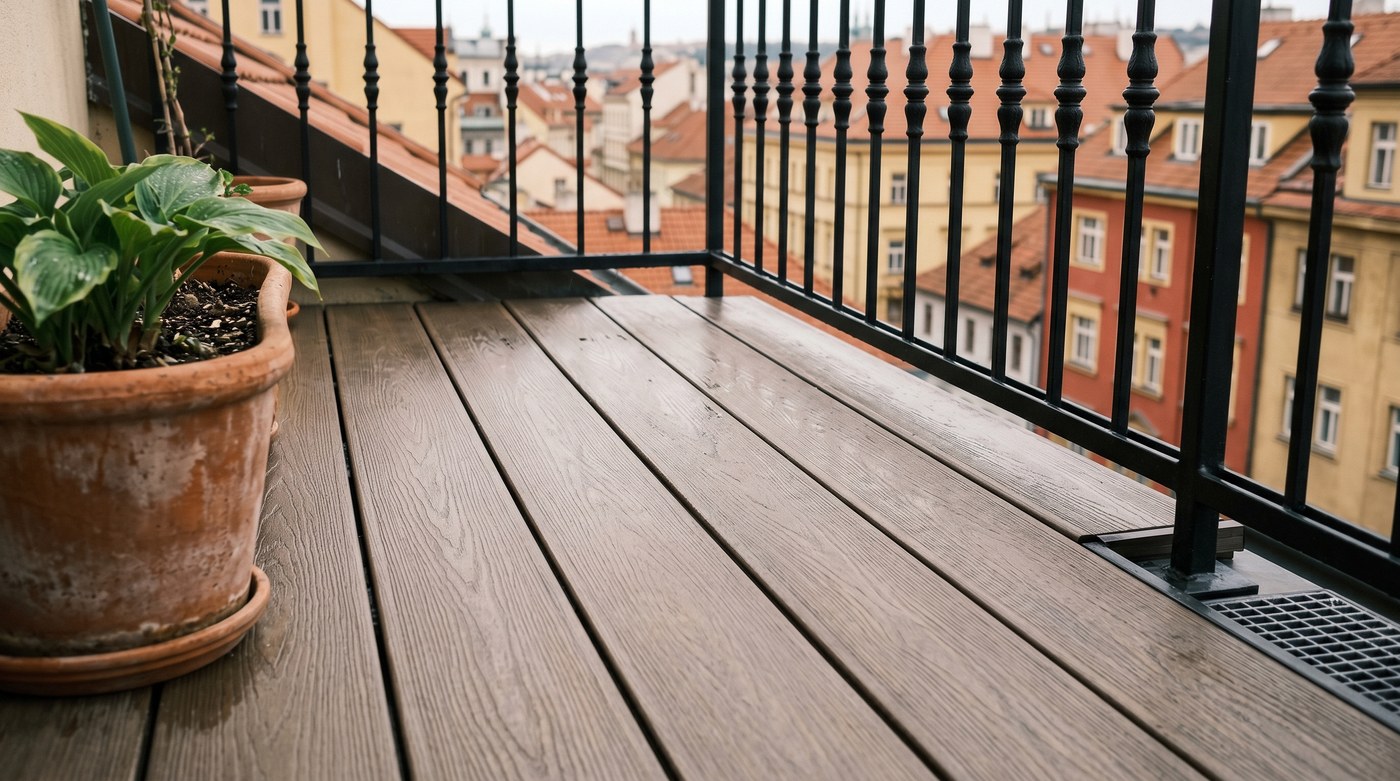
WPC (wood plastic composite) can be deceptive. It looks sturdy and "maintenance-free," but it has its own vulnerabilities. The most common mistake is using a pressure washer too close to the surface. High pressure can dull the finish, leave visible lines, and open up the texture so that future dirt settles in even deeper.
For WPC, storage boxes, and plastic furniture, a mild soapy solution and a soft cloth or brush are all you need. If you are unsure how the material will react to a new cleaner, test it on a hidden corner first. It’s simple advice that has saved many a balcony from permanent staining.
What to watch: chemicals, pressure washers, and drainage
A pressure washer isn't inherently bad, but it isn't a universal solution. On durable outdoor tile with solid grout and a clear exit for the water, it can be helpful. On a small apartment balcony, however, it usually creates more mess than it clears – splashing dirty water onto the facade, windows, and often directly onto the neighbour below. For wood and WPC, keep the pressure low and the nozzle at a safe distance.
Chemicals are another area where people tend to overshoot. Strong degreasers, bleach, and acidic cleaners can permanently fade composite surfaces or mark dark tiles. If your main issue is algae, you don't necessarily need the strongest product on the shelf; you just need the right product and enough time for it to work.
Respect the drainage. Before you start any wet cleaning, clear the outlet of leaves, soil, and moss. If the drain blocks halfway through, you’ll quickly find yourself standing in a dirty lake that will inevitably find its way toward your doorstep or the neighbors' balcony.
A good rule of thumb is to use less water than you think you need and move it gradually toward the drain with a squeegee. A balcony is a sensitive space, not a driveway.
When it makes sense to combine balcony cleaning with a seasonal home clean
Most of the time, the two are inseparable. Once you are already dealing with the winter grime at the threshold, it is the perfect time to include windows, frames, sills, and door tracks. These transition zones are where the heaviest film collects. If you leave them dirty, even a spotless balcony floor will look unfinished.
This is also the time to wash cushion covers, shake out the outdoor rugs, and wipe down the metal or plastic furniture frames. If you ignore these details, your first "sun coffee" will be spent noticing the streaks you missed, which quickly ruins the effect of the clean floor.
In Prague neighborhoods like Vinohrady or Smichov, we see a consistent pattern: people focus only on the floor, then realize the dirty glass and frames make the whole space look tired. This is where a professional, one-off deep seasonal clean makes sense. By handling the balcony, windows, frames, and the adjacent living areas at once, the result lasts significantly longer.
In short: clear the space, start dry, work from the top down, and respect the material. Tile, wood, and WPC are not the same, and treating them with a single aggressive method is a recipe for a costly mistake.
If you want your balcony or terrace ready for the season without the guesswork, you can request a non-binding quote through the ČistýKout contact form. In Prague, we can help you handle the balcony, windows, and a full seasonal deep clean in one efficient visit.