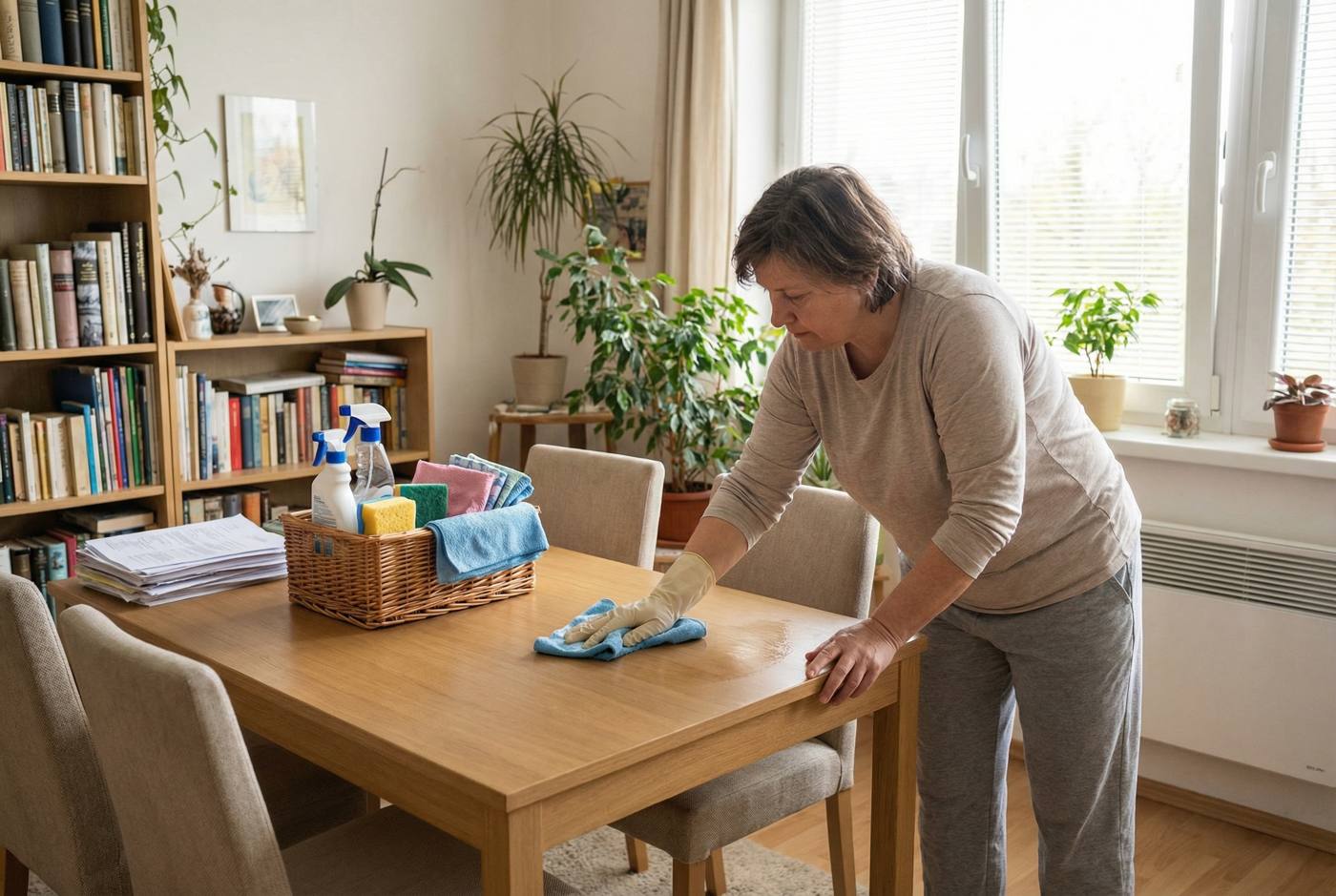
Spring cleaning sounds worse in your head than it usually is in real life. A lot of households imagine one brutal weekend, every cupboard emptied at once, children getting cranky, and that sinking feeling that if you start, you now have to turn the whole flat upside down. That is exactly why people keep postponing it until spring is almost over.
A useful spring cleaning checklist does not need to look like a magazine makeover. Most homes get more value from tackling the neglected high impact spots and working room by room. Some days you do the fridge and greasy kitchen fronts. Another day you handle limescale in the bathroom and stop there. Good. The goal is not perfection. The goal is a home that feels lighter and easier to live in.
Why spring cleaning does not need to drain your whole day
The mental block is usually the same: you picture pulling everything out of every cabinet, making a mess in all rooms at once, and running out of energy halfway through. In a small flat, especially one with limited storage, that plan falls apart fast. If you live in a compact apartment with one bathroom and a combined kitchen living area, perfectionism is not helpful. It just eats up time.
A more realistic spring cleaning plan starts with priorities. Pick one room or one zone. Handle the jobs that have the biggest effect. In the kitchen, that might be the fridge, grease around the hob, and the top of the cabinets. In the bathroom, limescale and grout. If time is tight, skip low impact jobs like reorganising every shelf. Your home does not need to look staged. It needs to feel fresher.
What to prepare before you start
The most tiring part is often not the cleaning itself. It is the chaotic start. You begin in the kitchen, then realise you forgot a rubbish bag, a basket for misplaced items, and a proper degreaser. Five minutes later you are walking in circles and the momentum is gone.
Keep the prep simple: microfibre cloths, an all purpose cleaner, a kitchen degreaser, a bathroom limescale product, gloves, a sorting bag, a box or basket for things that belong elsewhere, a vacuum, and a mop. If you have a small brush or an old toothbrush for grout and corners, even better. That one tool is more useful than most clever cleaning hacks.
Then set a realistic scope. One or two rooms per block is enough. In a smaller flat, one block might be the kitchen and entrance area together. In a family home, one block might be just the bathrooms. The moment you plan the whole home for one afternoon, you make it easier to quit before you begin.
One rule saves a surprising amount of time: sort first, clean second. Things that are out of place, empty packaging, expired cosmetics, old receipts, random cables, all of that slows you down. Put on music, set a 45 or 60 minute timer, and only focus on the room in front of you. Not the whole home.
Room by room spring cleaning checklist that actually works
Kitchen
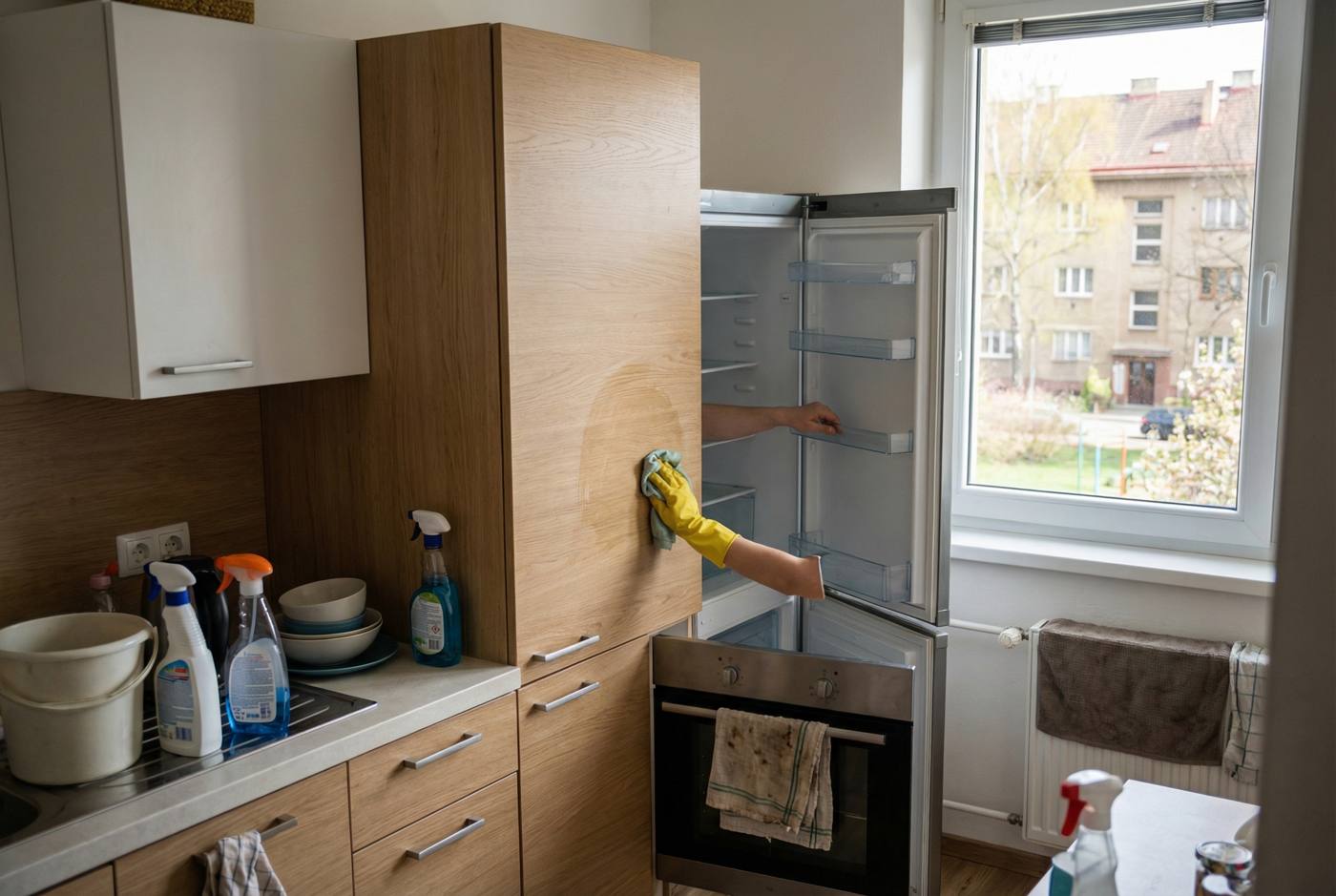
The kitchen is often the best place to start because the result shows quickly and the neglected spots make a real difference. Break it into essentials, often skipped places, and optional extras.
- Essentials: extractor hood and filter, grease around the cooker, cabinet fronts near the hob, fridge shelves, fridge seals, bin and the floor around it.
- Often skipped: the tops of cabinets, crumbs under small appliances, expired items in the pantry, handles, switches, and the fridge door handle.
- If you still have time: move the microwave or toaster safely, wipe the backsplash to eye level, reorganise spices, clean the side of the fridge.
A good enough version for a busy week is simple: fridge, cooking area, bin, handles, floor. A fuller deep cleaning pass adds the hood filter, pantry, spots under appliances, and the tops of the cabinets. In an open plan room, grease and crumbs spread farther than people expect, so this area is usually worth the effort.
Bathroom and toilet
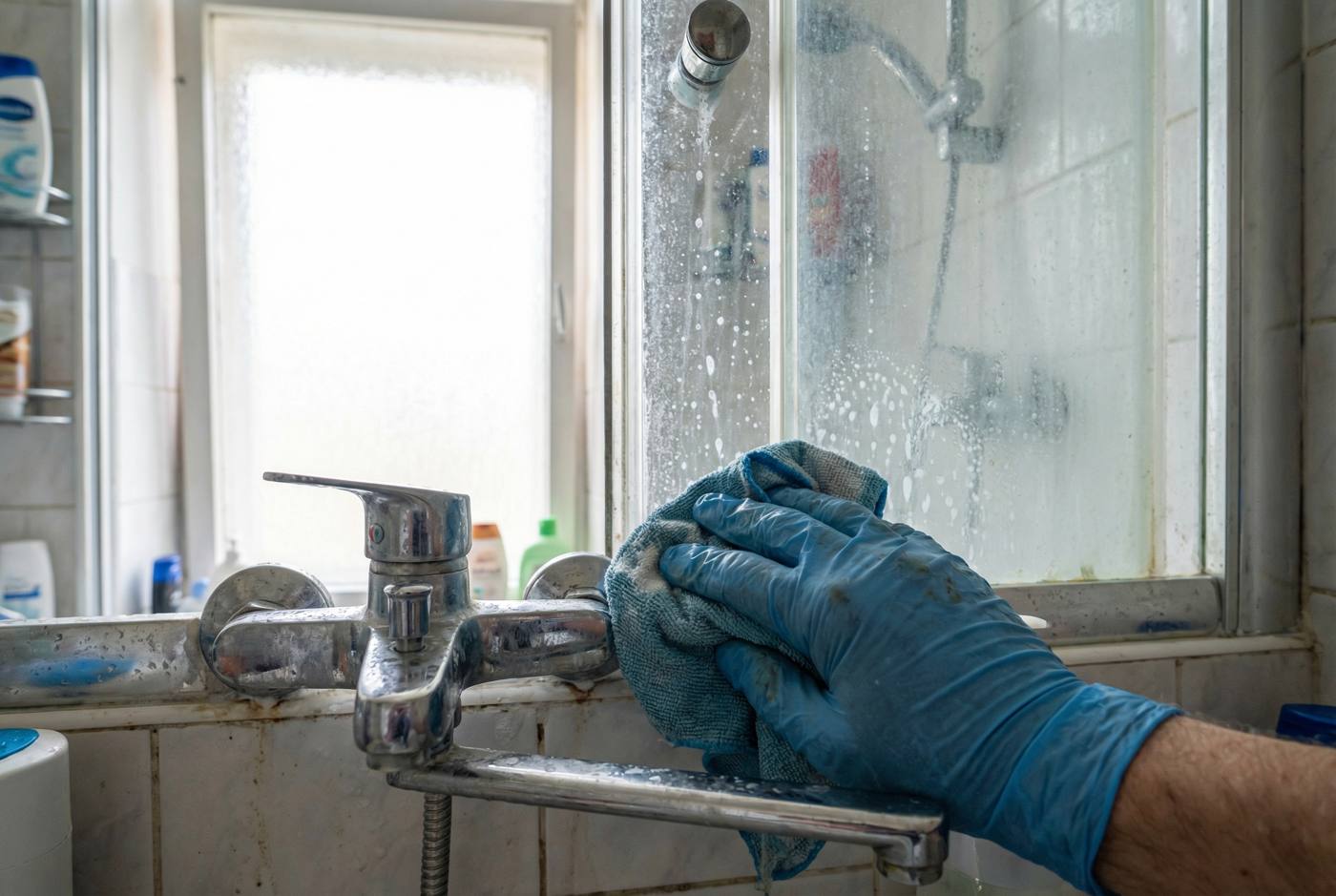
In a small bathroom, results show quickly, but only if you work on the right spots. A quick wipe of the sink is not the same as a proper reset. Limescale, shower glass, grout, and high touch surfaces matter much more.
- Essentials: sink, taps, shower or bath, limescale on glass and tiles, toilet including the floor around it, trap, mirror, floor.
- Often skipped: toilet roll holder, switches, ventilation cover, the tops of cabinets, expired cosmetics and medicines, lower edges of the bath or shower frame.
- If you still have time: scrub grout in detail, sort backup products, wash bathroom mats, clean bins and toothbrush holders.
This is also where a realistic spring cleaning by room approach helps. A solid basic pass may take an hour. But if the shower has built up limescale for months, or the grout has darkened over time, this is one of the first places where outsourcing can save a lot of frustration.
Bedroom
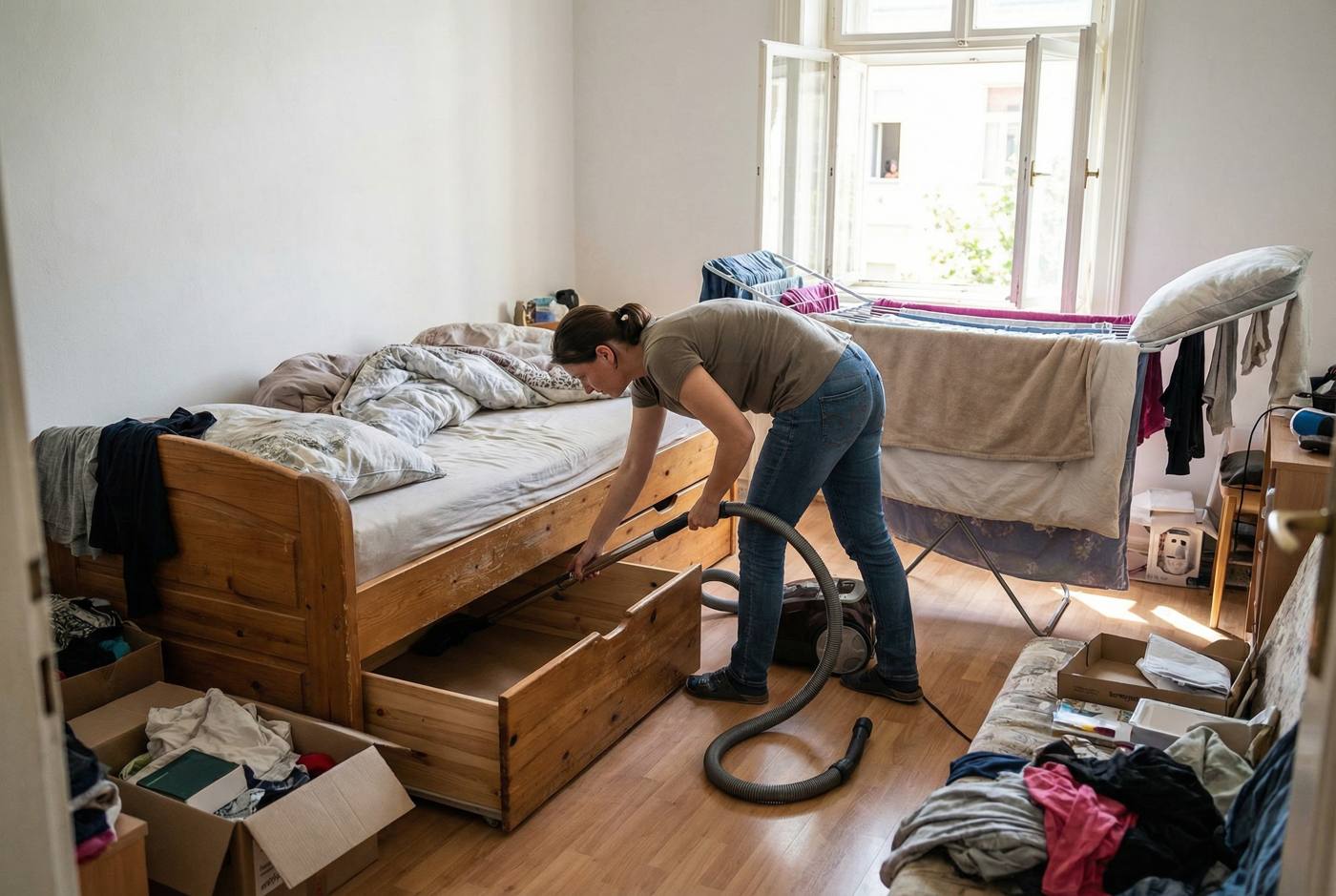
The bedroom is not always the dirtiest room, but it quietly collects dust, textiles, and piles of things that were dropped there in winter. Focus on the areas that affect freshness and sleep.
- Essentials: vacuum under the bed, air or vacuum the mattress, wash the mattress protector, wipe bedside tables and lamps, vacuum corners.
- Often skipped: high wardrobe shelves, blinds or curtains, the space behind the headboard, seasonal wardrobe rotation, dust on frames and sills.
- If you still have time: rotate the mattress if suitable, sort out clothes you did not wear all winter, wipe the inside of the wardrobe.
One practical split works well here: one person sorts clothes and bedding, the other vacuums and dusts. In smaller flats, clearing under bed storage and the top of wardrobes already changes the room more than people expect.
Living room and entrance area
This is the place to focus on textiles and contact points. A living room can look tidy while still feeling dusty because the remotes, switches, lamp shades, sofa crevices, and entrance dirt traps were ignored.
- Essentials: vacuum the sofa and crevices, wipe tables, handles, remotes, and switches, dust lamps and frames, vacuum the doormat and entrance area, check shoe storage.
- Often skipped: edges under the sofa, radiator tops, upper frame edges, cables around the TV, baskets and storage boxes full of small clutter.
- If you still have time: wash throws and cushion covers, move lighter furniture, sort entrance bags and boxes.
A household in Prague 9 told us they used to postpone spring cleaning because they imagined doing the whole flat in one Saturday. The result was always the same: piles everywhere and bad mood by lunch. Once they switched to room blocks - bathroom on Wednesday, kitchen on Thursday, bedroom and living room on Saturday - the flat looked better and nobody lost the weekend.
The places people forget most often
A home can look clean at first glance and still feel slightly off. Often the reason is not a major mess. It is the small daily touch points and the areas above and below eye level. Door handles, switches, radiator tops, ventilation covers, curtain rails, the edge under the sofa, the space behind the bin, the mattress protector, or the pet corner.
You do not need to catch all of them. If you are already tired, pick three overlooked spots and stop. Those small areas often decide whether your home feels actually reset or just quickly tidied.
How to split the work across 3 to 7 days
The most realistic spring cleaning plan uses 60 to 120 minute blocks. An all day effort sounds efficient and usually is not. If work, children, or simple lack of energy are part of the picture, shorter blocks are easier to finish.
- 3 day plan: day 1 kitchen and entrance, day 2 bathroom and toilet, day 3 bedroom and living room. Best for smaller flats that already get regular upkeep.
- 5 day plan: day 1 prep and sorting, day 2 kitchen, day 3 bathroom, day 4 bedroom, day 5 living room plus overlooked details. A strong fit for couples and families.
- 7 day plan: one smaller block per day, usually 45 to 90 minutes. Monday fridge and pantry, Tuesday bathroom, Wednesday toilet and washing machine area, Thursday bedroom, Friday living room, Saturday entrance and textiles, Sunday leftover details only.
In family homes, splitting roles helps. One person sorts and puts things back. The other wipes and vacuums. And once the priority jobs are done, stop. That is not laziness. That is what a realistic spring cleaning plan looks like.
When a deep cleaning service makes sense
Some situations go beyond a normal room by room spring cleaning plan. Long-postponed build-up in the kitchen, heavy limescale in the bathroom, a move-in or move-out reset, recovery after illness, allergy-prone homes, larger houses, or simply families with no spare time. In those cases, forcing a full DIY marathon is often the least efficient option.
A professional deep cleaning service can also make sense when you only outsource the hardest zones. Plenty of households handle the bedroom and living room alone, then book help for the kitchen and bathroom where detail work takes the longest. That is not indulgent. It is practical.
If you want to compare options without awkward outreach, CistýKout can help you find a cleaner for exactly the parts that tend to drag spring cleaning out: kitchen grease, bathroom limescale, neglected detail work, or a full home refresh before guests or holidays. If you already know you need help with the toughest jobs, this is the natural place for an internal link to the main cleaning services category or a deep cleaning service page.
Short takeaway: start with one room, not the whole flat
A useful spring cleaning checklist starts with one room, one time block, and a few jobs that make the biggest difference. Save the checklist, split the work at home, and skip the low impact tasks if time is tight.
And if the hardest parts keep getting pushed back, getting help is reasonable. Kitchen grease, bathroom build up, and long ignored details can eat an entire weekend faster than most people expect.