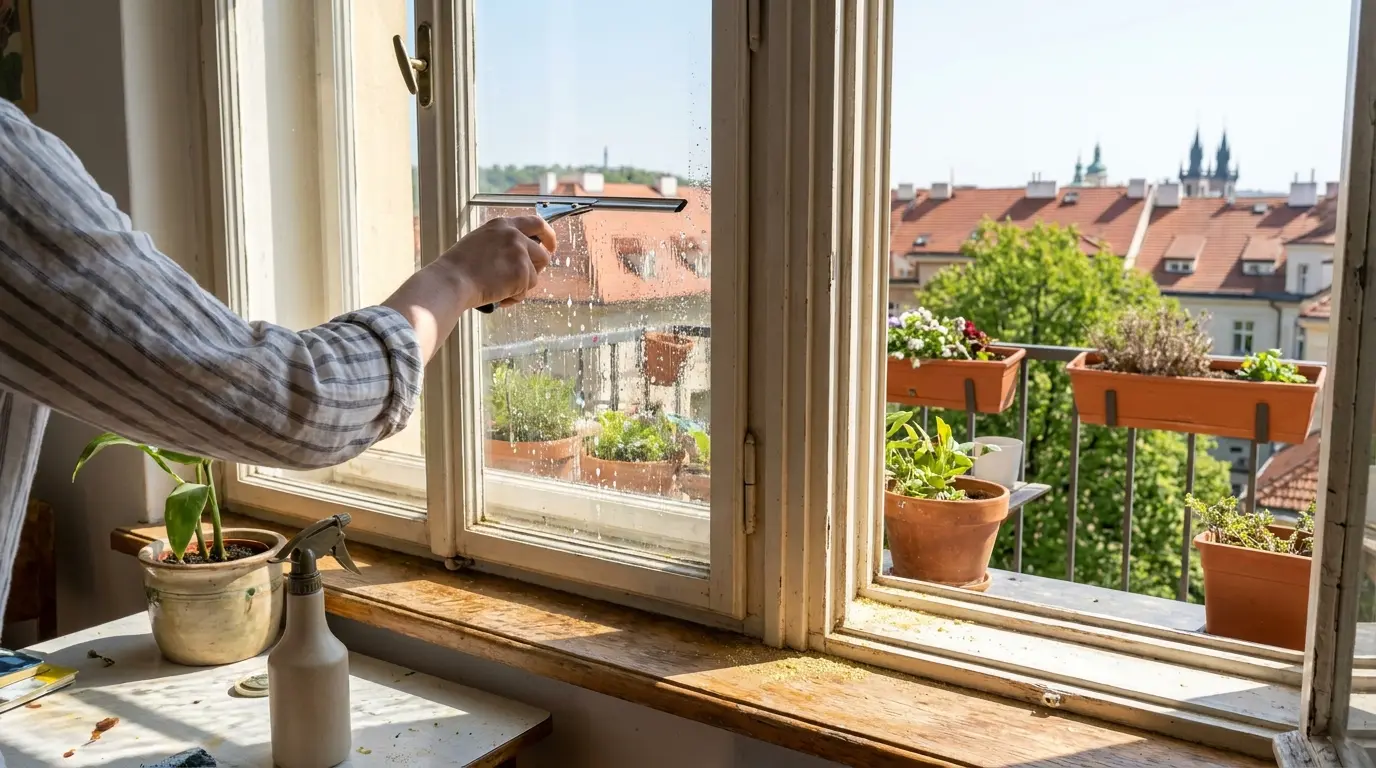
From inside the flat, spring windows often look fine. Then the morning sun hits the glass and the truth shows up all at once. There is a thin yellow film from pollen, dusty edges around the frame, rain marks on the balcony doors, and that tired grey layer that builds up after a full Prague winter. The annoying part is not just the dirt. It is how easy it is to underestimate the job. People plan two quick hours on Saturday, then wonder why half the weekend disappeared into cloths, tracks, frames, and one stubborn streak they can still see from the sofa.
Why spring windows are worse after winter than they look
Spring window cleaning is not just about dust. What sits on the glass is usually a mix of pollen, road dust, a slightly greasy heating-season film, dried rain spots, and whatever settled there during those windy late-winter weeks. In Prague you notice it quickly in flats near busy roads, tram lines, or open courtyards. The glass looks dull, but the real trouble starts when you wash it the wrong way.
Glass, frames, sills, and balcony door tracks all collect different kinds of mess. That matters. If you go in with one wet cloth and treat everything as the same surface, you are not really cleaning. You are moving grime around. That is how streaks happen, and why windows can look almost worse once they dry.
I think this is where most DIY attempts lose the battle early. People skip the dry phase. They see visible dirt, grab the spray, and start wiping. Pollen half dissolves, dust smears, and the corners turn into a grey paste. On a cloudy pane that may seem acceptable. Against light, every shortcut shows.
There is also the timing problem. Direct sun is brutal on window cleaning. Water evaporates too fast, cleaner dries before you finish the section, and the glass ends up with marks no matter how hard you polish. Large balcony doors and full height windows make this worse because you are covering more surface and racing the light at the same time.
What to prepare before you start cleaning
You do not need a cabinet full of products. A short, sensible kit works better:
- a vacuum with a narrow nozzle, or at least a soft brush for dry debris
- two good microfiber cloths, one for washing and one kept dry for the final edges
- a squeegee with a clean rubber blade
- a bucket of lukewarm water
- a mild dish soap or simple glass cleaner without waxy residue
- an old towel under the sill
- for balconies and terraces, a hand brush and extra cloth for tracks, frames, and outer ledges
What would I avoid? Harsh cleaners, overly foamy mixtures, and tired old cloths that shed lint. A lot of people still reach for newspaper because that used to be the classic trick. Sometimes it worked years ago. On modern glass, it often leaves smudges and a strange dull shine instead of actual clarity.
A small bit of planning saves real time. If you have several windows, map the order before you start. North side rooms first, then the living room, balcony doors last, or whatever keeps you away from direct sun. A bright overcast day is close to perfect for spring window cleaning. It sounds unglamorous, but boring weather is often your best helper here.
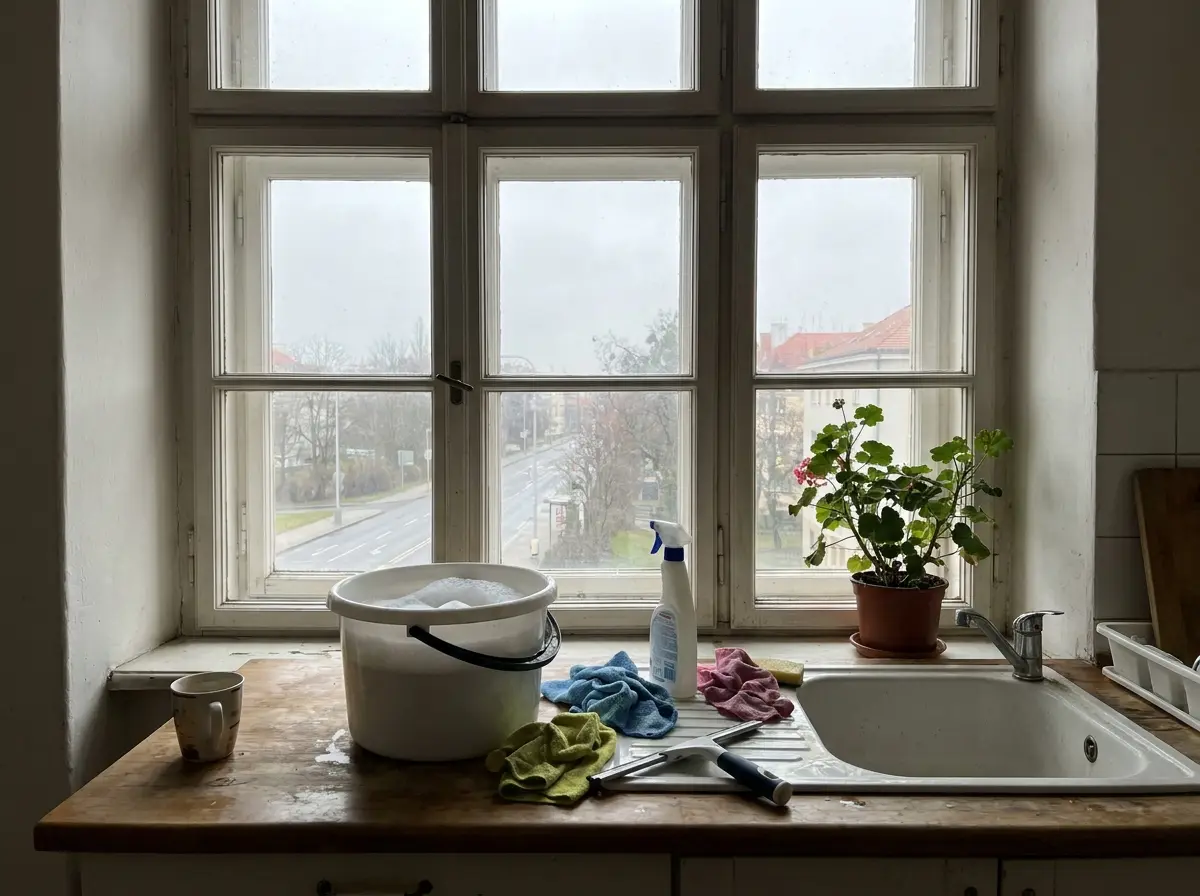
One more practical note from real flats: clear the sill before you touch the glass. Plants, candles, decor, all of it. Otherwise you spend the next hour moving things with damp hands and leaving rings of dust where each item used to sit.
Step by step: windows, frames, and sills
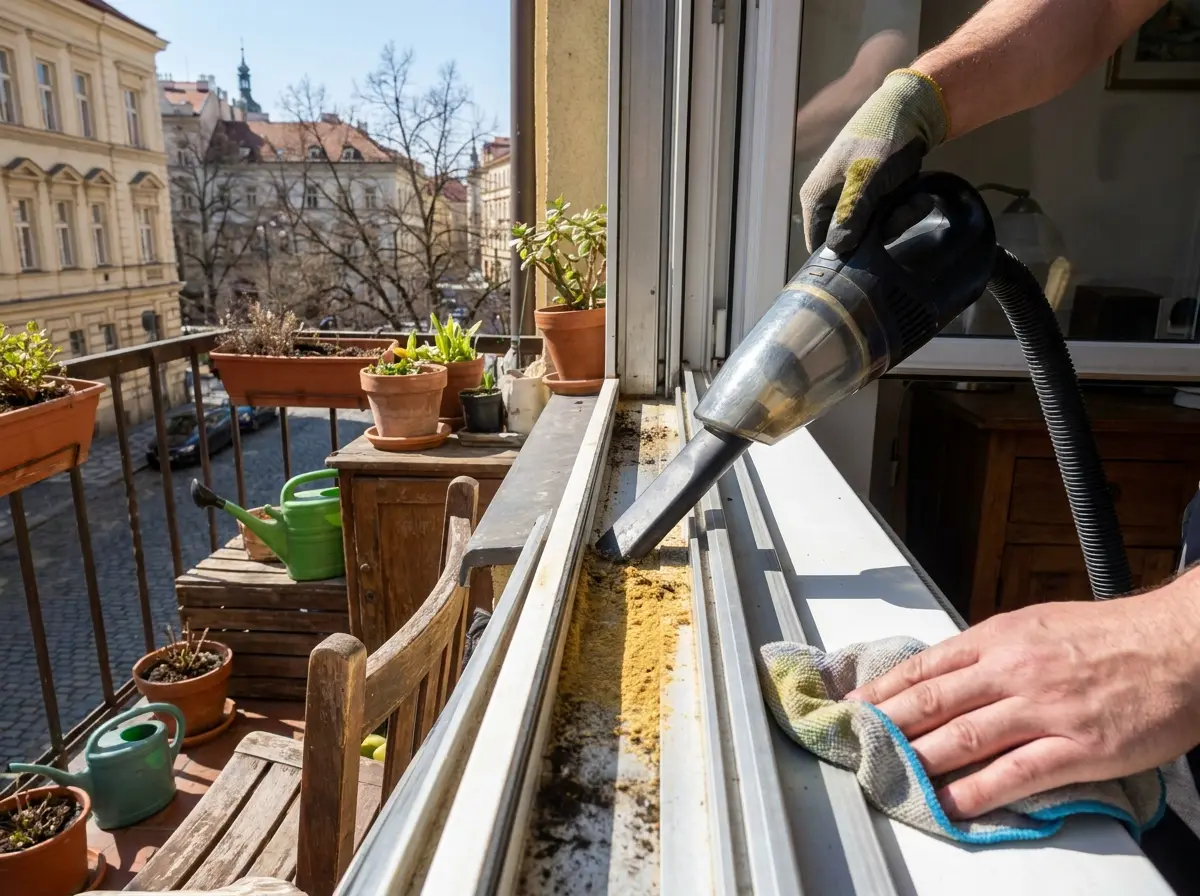
Start dry. That is the step people skip, and it is the one that makes the rest easier. Vacuum or brush away loose dust from frames, corners, sills, and especially balcony door tracks. If dry grit stays there, the wet cloth turns it into sludge.
Clean the frames before the glass. Not after. Frames are often dirtier than they look, and if you leave them until the end, you drag dirt back onto glass you already finished. Use a lightly damp cloth, not one dripping wet. Plastic frames are usually straightforward. Painted wood or aluminium needs a gentler touch and no abrasive scrubbing.
Do the sill next. If the outer sill is safely reachable from inside or from a solid terrace, clean it before the glass too. If you would have to lean out from a higher floor to reach it, that is the point where DIY pride should stop. A cleaner window is never worth an unsafe stretch.
Then move to the glass. Wet the surface evenly, clean section by section, and pull the squeegee down in straight lines or in an S pattern. The detail that changes everything is simple: wipe the rubber blade dry after each pass. If you keep using a wet dirty blade, you are basically painting the same water back onto the pane.
Finish with a dry microfiber cloth around the edges, lower corners, and bottom strip of the frame. Tiny leftover droplets hide there. Later they turn into the exact streaks that make people blame the product instead of the process.
How to clean balcony doors and outdoor sections after winter
Balcony doors are always the spring trouble spot. The glass gets rain marks, the frame collects pollen, the bottom tracks trap dust and leaf fragments, and the outer side often holds onto grime from traffic and winter moisture. Terraces add their own extra layer - sand, soil from pots, black streaks from wet weather, sometimes even fine construction dust if the area has been busy.
Start with the tracks and seals. Vacuum, brush, wipe. Be gentle with the seals and avoid aggressive chemicals that dry them out. On sliding doors, the track is often what decides whether the whole job feels truly clean or only half done. The glass can be spotless, but if the bottom rail still looks grey, the room never gets that fresh spring reset.
For outer surfaces, the same rule applies as indoors: dry debris first, wet cleaning second. On a balcony facing a busier street, expect the first bucket of water to get dirty almost immediately. That does not mean the method failed. It just means there was more buildup than the glass let on.
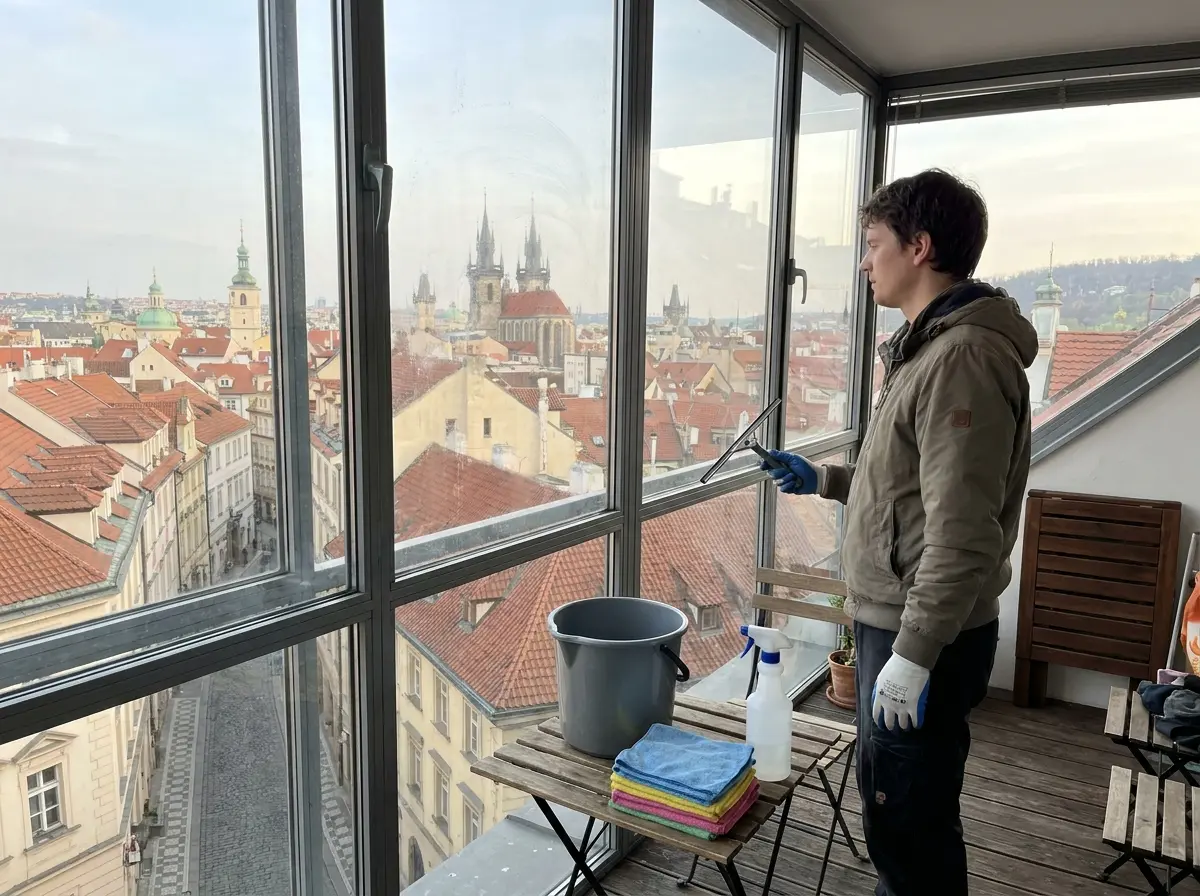
For higher floors, I would keep this very simple. If the outer side is not safely reachable from inside or from a stable terrace position, do not force it. Large panes, corner balcony sets, and full height windows on upper floors are exactly where many people decide it is smarter to book help. The work gets awkward fast, and awkward cleaning usually means worse results even before safety becomes the obvious concern.
The most common mistakes that ruin the result
The first classic mistake is cleaning in direct sun. The second is using the wrong cloth. The third is skipping frames, edges, and lower corners. Clean glass without clean frames never really looks clean. It only looks less dirty.
Another common problem is using too much product. People assume stronger solution equals better cleaning. With windows it often does the opposite. Excess soap leaves a film, the squeegee drags, and you spend longer buffing the same pane.
Then there is the time estimate. In a smaller flat with basic windows, this can still be manageable. Add balcony doors, larger panes, multiple rooms, and terrace details, and suddenly you are looking at three to five hours of real work. That is without breaks, setup, or washing the cloths afterwards. At that point, plenty of people decide the job is no longer a tidy home task. It is a half-day project.
When it makes sense to book professional window cleaning
For me, the decision point is clear. Once you move from two ordinary windows to a full set - balcony doors, French windows, several rooms, higher floors, difficult exterior access - the question stops being only about price. It becomes a time and energy decision.
A very typical Prague scenario is a 3-room flat with a balcony and several larger panes after winter. Doing it yourself can take half a day, sometimes more if you are being careful. A professional team arrives with the right kit, works in a clear order, and usually gets a cleaner result faster. That is not indulgent. In many homes it is just practical.
It also makes sense when you want the windows done together with the balcony or terrace. Glass alone is one thing. Glass plus frames, tracks, sills, and outer surfaces is another job entirely.
Before booking, confirm three details: what is included in the price, whether frames and sills are part of the service, and how the provider handles harder-to-reach exterior sections. Some quotes cover glass only. Others cover the full window set. That difference matters more than it sounds in a short price message.
If you are dealing with spring window cleaning in Prague and would rather keep your weekend than spend it chasing streaks around balcony doors, ČistýKout is one Prague-based cleaning option worth considering. You can send a soft, no-pressure request through the contact form and specify whether you need just the windows, or the balcony and terrace as well.