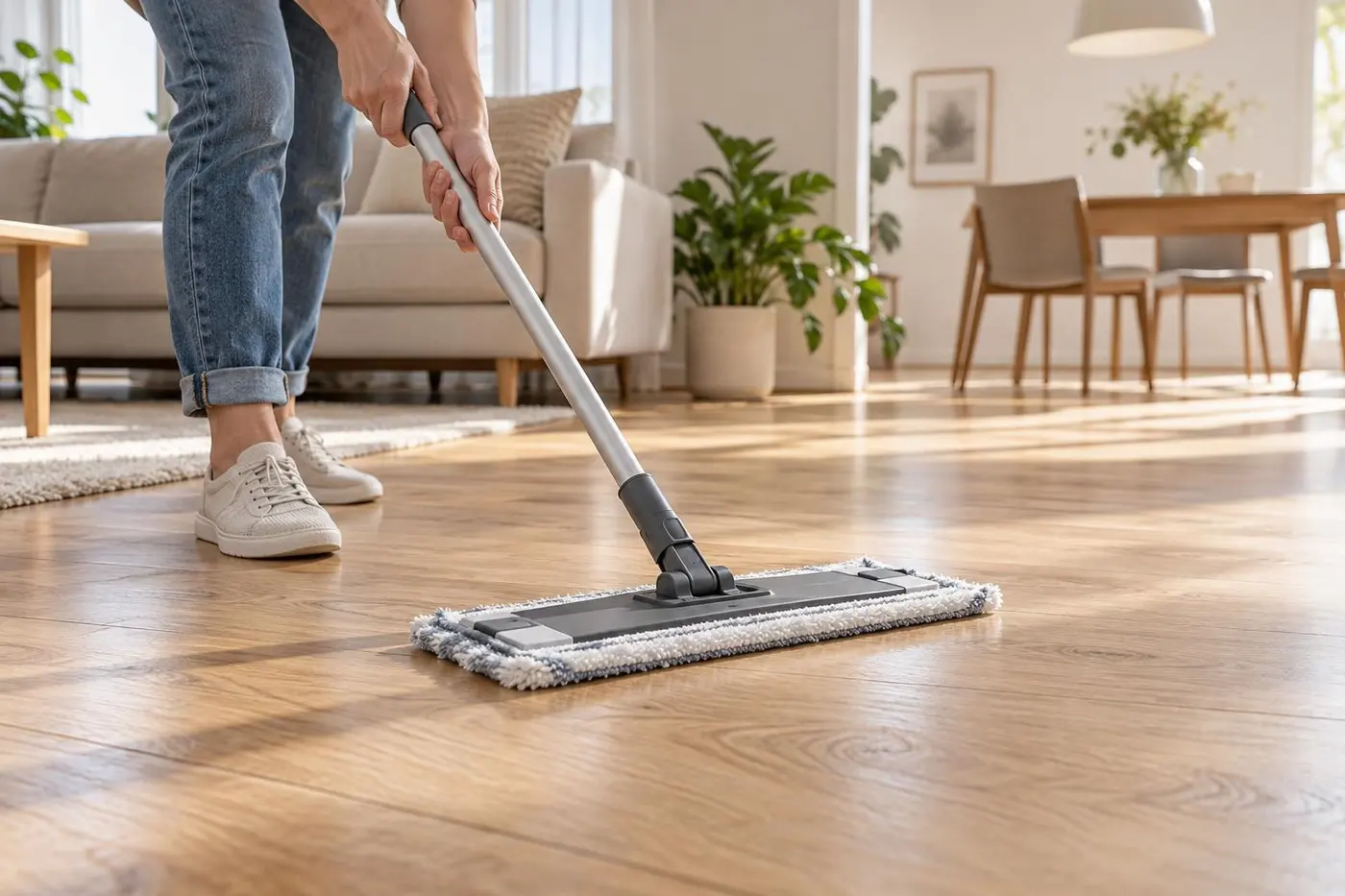
A sticky floor after mopping rarely needs another generous splash of scented cleaner. It needs a diagnosis. The usual causes are dried product, dirty mop water spread across the room, a clogged pad, or a formula that does not suit the floor finish. Pause before filling the bucket again. Another wet pass can thicken the film, and on laminate or wood it can turn an annoying cleaning problem into actual damage.
First work out what is actually on the floor
Start when the floor is completely dry. Run clean fingertips over a busy route, then compare it with a sheltered area under a chair or close to the wall. If both spots feel equally tacky and the trouble began after you changed products, cleaner residue is the likely culprit. If the route between the kitchen and hall is much worse, you may be dealing with cooking grease or dirty water that the mop carried through the flat.
A damp white cloth gives you a useful second check. Pick a hidden patch, perhaps beneath a cabinet, and wipe an area about 20 by 20 centimetres with plain lukewarm water. Dry it straight away. Grey or brown on the cloth suggests soil. Foam, a slippery wet feel and tackiness after drying point towards floor cleaner residue. Pale, chalky streaks may come from hard water. Prague water can certainly leave mineral marks, but minerals alone do not usually make a floor sticky.
A streaky floor after mopping is not automatically dirty again. Let a test patch dry before deciding whether you are seeing loose soil, minerals or product film.
Stop if you see whitening, peeling, swelling or a patch whose sheen no longer matches the surrounding floor. That may be a damaged finish rather than dirt. Take a photo in daylight and find the floor maker's care instructions before trying anything stronger.
I once saw a flat in Prague 4 where the owners had spent three evenings “degreasing” their vinyl. Each round made it tackier. A test beneath the kitchen units improved with plain water, then turned cloudy when more cleaner was added. The problem was not old grease. It was several layers of a shine-enhancing product.
Why extra cleaner does not mean a cleaner floor
Surfactants loosen grease and help water carry dirt. They still have to leave the surface with the dirty solution. If you pour in more concentrate than the label allows, or clean an entire home with one saturated pad, some of that solution dries where it sits. Fine dust and footprints then cling to the residue. By the next day the floor looks dirty again, sometimes worse than before.
“One capful per bucket” is less precise than it sounds. How large is the cap, and did you put ten litres in the bucket or only three? A concentrate diluted at 1:200 needs 25 millilitres in five litres of water. A casual pour can easily double that. A ready-to-use spray is a different product and normally should not be diluted. Check the label whenever you switch between a household cleaner and a professional concentrate intended for machine use.
Hard water can add a dull veil, but vinegar is not a safe default fix. Acid may dull a lacquered wood finish and can affect some resilient flooring surfaces. Floor manufacturers commonly recommend a mild neutral-pH product and careful dosing. Some ready-to-use formulas should not be rinsed at all when applied as directed. When removing somebody else's buildup, check both the floor maker's instructions and the cleaner label.
Proper floor cleaner dilution depends on the water actually in the bucket, not the bucket's advertised capacity. Measure five litres once and mark the level. It is a very unglamorous trick. It also works.
A safe correction for each floor type
To remove cleaning product buildup, do not begin with wet scrubbing. Vacuum loose grit, dust and pet hair first, using the same dry-before-damp order recommended when cleaning a flat before moving in. Test a small hidden area with lukewarm water and a new or thoroughly washed microfibre pad. Let it dry fully. If one or two light passes improve the patch, you can probably lift the film in a controlled way. If nothing changes, the surface becomes duller, or it softens, stop.
Vinyl and PVC
Work in sections of roughly two to four square metres. Loosen the film with a lightly damp mop, then use a second clean pad to collect the water and dissolved residue. Rinse the pad often. Otherwise you are simply moving the buildup. A stubborn film may call for a neutral product approved by the manufacturer, not a heavy kitchen degreaser. Many vinyl floors have a protective polyurethane layer; high-alkaline chemicals, abrasive powders and solvents can harm it.
True linoleum
Linoleum and PVC are different materials, though people often use “lino” for both. True linoleum reacts poorly to strongly alkaline chemicals. Use a well-wrung mop and a cleaner approved for linoleum. If the floor has an old wax or polymer coating, an enthusiastic home stripping session can leave blotches. Finding out how the surface was maintained is more useful than reaching for a stronger bottle.
Laminate
Water control matters most here. The mop should be damp, never dripping. Do not let liquid sit in the joints, and dry each section with clean microfibre. Rinsing will not reverse swollen edges. A steam mop is not a universal shortcut either: heat and moisture can enter the seams, and that damage may fall outside the warranty.
Lacquered wood
You are cleaning the lacquer, not bare timber. Use very little moisture and a product made for that finish. Skip vinegar, ammonia and strong degreasers unless the floor manufacturer explicitly permits them. If plain water fails on the test patch, do not turn the whole room into an experiment. A matte lacquer may briefly look “cleaner” after a harsh treatment because part of its top layer has been altered. That is damage, not progress.
The same material-first rule applies to balcony cleaning without surface damage: the finish matters more than a popular universal home remedy.
Mop, water and sequence: the mistakes that bring residue back
The first is using one bucket for the whole home. After the kitchen, the water may contain grease, dust and dissolved cleaner. Carry it into the bedroom and you spread the mixture again. Change the water as soon as it turns grey, begins to foam, or is no longer clear. For heavy buildup, two containers help: clean water in one and a separate rinse bucket for the dirty pad.
The second problem sits in the mop head. Fabric softener coats microfibre, reducing absorbency and leaving its own film. Wash pads according to the label, without softener and without an oversized dose of laundry gel. A quick rinse under the tap is not enough after a greasy job. Replace a pad that stays smelly, feels stiff or releases dirt only when it touches the floor.
Then there is impatience. Until a section dries, you cannot judge whether the tackiness has gone. Children, a dog or slippers add fresh soil while you work, making the result harder to read. Clean one section, let it dry, and compare it with an untreated patch. Only then move on. This is slower for ten minutes and faster over the whole afternoon.
When a home rinse is no longer enough
Stop the home treatment if the colour changes, the surface peels, laminate seams swell, or the floor stays slippery after it is fully dry. A soft rubbery feel on vinyl and an uneven sheen on wood are warnings too. More water or stronger chemistry will not repair those problems.
Floors with polymer, wax or another maintenance coating may need professional base cleaning followed by a new protective layer. That is different from ordinary mopping. The cleaner needs to know the material, the age of the finish and the chemicals already used. Before booking, gather the floor name if you have it, a photo of the product label, your approximate dilution and a short list of previous attempts.
If the surface is uncertain or you would rather not gamble on another round, send a no-obligation cleaning request through Čistýkout. Mention the floor type, the size of the area and include daylight photos. A Prague-based cleaning professional can then judge whether a careful residue-removal rinse is appropriate or whether the finish needs specialist treatment.