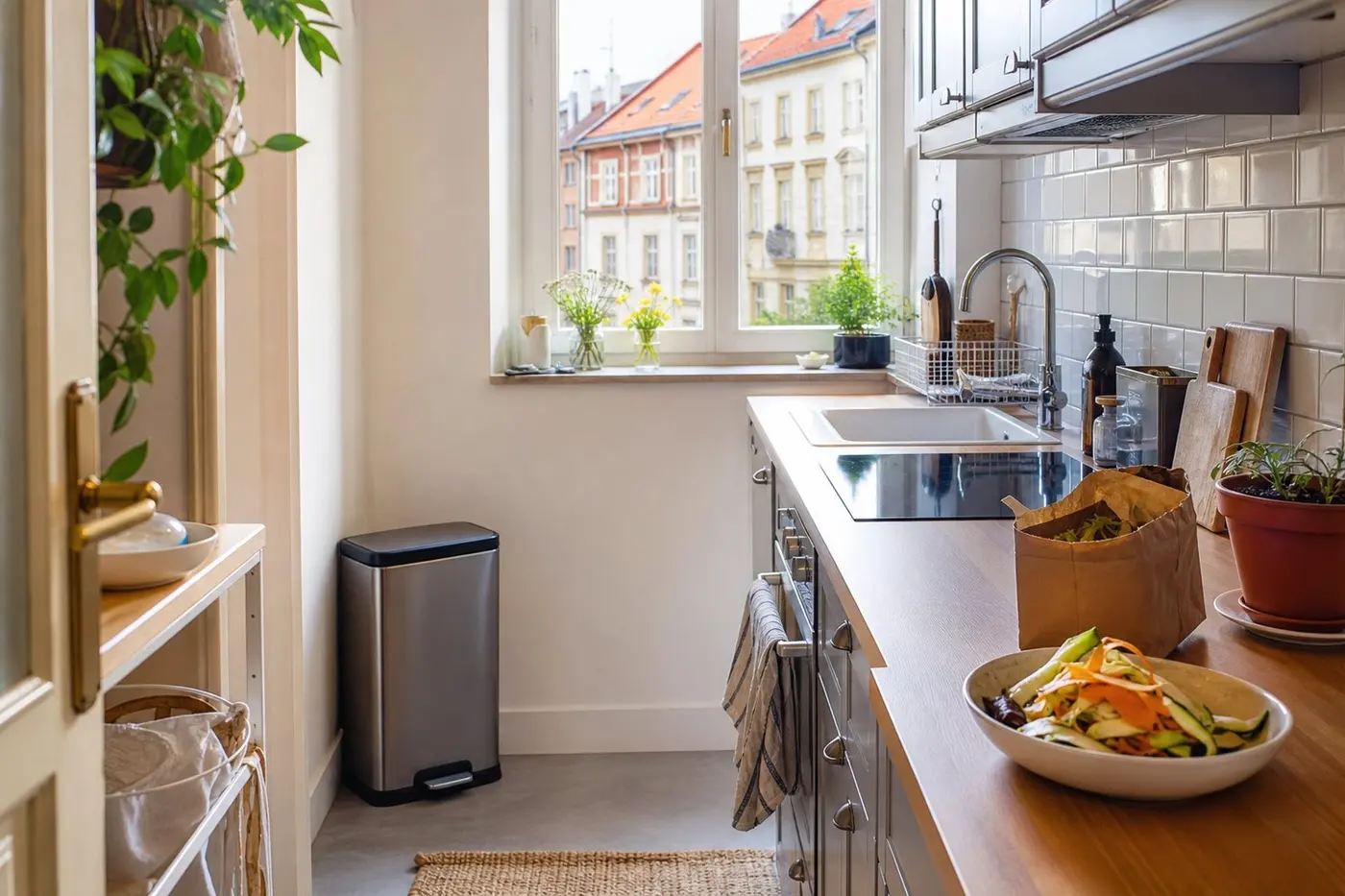
Trash can odor gets worse in summer because a warm kitchen turns tiny food leftovers into a much bigger problem. You take the bag out, wipe the counter, open the window, and still there is that sour smell when someone lifts the lid. In a Prague apartment with the kitchen connected to the living room, it travels fast. The source is rarely just the bag. It is usually the bin, the food waste container, the sink strainer, crumbs near the plinth, sticky cabinet handles, and the little splash under the liner that nobody noticed.
Fruit flies make the whole thing feel worse. People reach for vinegar traps, and fair enough, traps can help. But a trap does not clean the place where the flies are feeding. The useful order is less glamorous: remove the fermenting waste, wash the surfaces that hold the smell, dry the bin properly, and only then think about prevention. Air freshener is not a fix. In July, it often just makes the kitchen smell like lemon sprayed over old melon peel.
Why the bin smells in summer even when you take it out
Food breaks down faster in warm weather. A banana peel, tomato scraps, fish packaging, a paper towel soaked with sauce, or watermelon rind can start smelling within hours if the kitchen is warm. The bin may sit next to a dishwasher, under a sink cabinet with poor airflow, or in a corner that gets afternoon sun. Taking the bag out every other day may be fine in February. It is often not enough in June.
Liquid is the part people underestimate. A liner leaks a little, juice collects at the bottom, and the next clean bag covers it. From the outside everything looks fine. Then someone opens the lid and the smell rises from the plastic underneath. The lid, pedal, handles, and inner rim collect residue too. Those are touched often and cleaned rarely.
Small kitchens make the odor spread wider. The cabinet door under the sink, the floor in front of the bin, the wall behind it, and the narrow strip near the plinth can all hold tiny spills. If children throw away yogurt cups or banana peels themselves, something misses the bag now and then. That is normal home life. It just means kitchen odor cleaning needs to include the area around the bin, not only the trash itself.
My quick test is blunt but useful: remove the bag, smell the empty bin, then the lid, then the floor and cabinet around it. Nobody enjoys doing it. Still, it tells you immediately whether the problem is a full bag or a dirty bin corner.
Food waste, fruit and fruit flies
Food waste odor is sharper in a flat without a balcony. Fruit peel, coffee grounds, tomato ends and damp paper bags steam quietly inside a small container. In winter you may get away with two days. In summer, especially in a warm apartment in Vinohrady, Žižkov or Dejvice, the container can turn sour by evening.
Fruit flies in the kitchen are not attracted only to a fruit bowl. They also go for sticky juice on the counter, a drop of wine near the bin, a damp cloth by the sink, crumbs in a bread bag, or a sink strainer with soft food caught underneath. That is why throwing away the old fruit sometimes changes nothing. The flies are still being offered several tiny feeding spots.
In summer I would empty indoor food waste daily. Melon, fish scraps or anything wet should go sooner. If you keep a small caddy on the counter, line it with a paper bag or a piece of newspaper to absorb moisture. A lid helps, but it is not magic. If the container stays damp inside, the lid simply holds the smell in place until the next time you open it.
A client once told us she had cleaned the kitchen three times and still had flies around the counter. The fruit was gone. The bin was empty. The real issue was a thin sticky line between the worktop and the back trim, probably from cutting watermelon. You could barely see it. A white damp cloth found it in two seconds. That is the annoying truth about summer kitchens: the visible mess is not always the active mess.
Clean these spots around food waste if the flies keep coming back:
- the inside and lid of the food waste caddy,
- the counter underneath it,
- the backsplash behind it,
- the area around the fruit bowl,
- the sink strainer and draining board,
- the floor under the counter and near the bin.
A vinegar trap can reduce adult flies while you clean. Treat it as backup. If fermenting residue stays in the kitchen, the trap will look like it is failing because new flies keep finding food.
How to clean the bin without covering the problem with fragrance
Start by removing the bag and any loose waste. If the bag leaked, deal with it now. The longer liquid sits at the bottom, the more it clings to plastic and small seams. With pull-out bins under the sink, take the whole container out. Cleaning only the visible front half usually leaves the worst part behind.
Warm water, dish soap and a sponge or brush are enough for most trash bin cleaning. Wash the bottom, inner sides, top rim, lid, pedal and handles. The pedal and lid often hold greasy fingerprints and tiny splashes from waste. If the bin smells sour, use diluted vinegar, let it sit briefly, and rinse well. Vinegar should help remove residue. It should not become another smell layered on top.
Drying matters more than people think. Turn the bin upside down or wipe it with a dry cloth before putting in a new liner. A wet bin plus a plastic bag is a small greenhouse for odor. If space is tight, put the bin in the bathtub or shower for ten minutes and finish with a paper towel.
Use disinfectant when it makes sense: leaked meat packaging, nappies, pet waste, or a genuinely contaminated bin. For ordinary peel and packaging, thorough washing usually matters more than a strong scent. Scented liners can be a trap. Day one smells like lavender. Day two smells like lavender fighting sour food waste. Anyone who has opened the under-sink cabinet after a hot weekend away knows that smell.
Kitchen spots that keep the odor going
The bin is the beginning, not the whole story. To remove summer kitchen odor, follow the route food waste takes. You cut fruit on the counter, carry peel to the caddy, rinse hands at the sink, drip something onto the floor, and push crumbs toward the plinth. Each step can leave enough residue for odor or flies.
Clean the sink strainer daily if you wash fruit, rinse plates with sauce, or drain pasta. Do not just knock the scraps into the bin. Wash the underside too. The area around the tap and the seam where the sink meets the worktop stays damp, so small bits of food hang around longer than expected.
Wipe the whole counter, not only the obvious stain. Fruit juice often dries into a thin sticky film. You notice it when your hand drags slightly across the surface. Cabinet doors and handles need warm water and a little degreaser because cooking grease mixes with hands touching the bin, the fridge and the food waste container.
The floor near the bin deserves more than a fast mop pass. Lift the bin, wipe underneath, and check the plinth. Breadcrumbs, onion skins and tiny scraps can sit there for weeks. In older panelák kitchens with narrow gaps around the cabinet, a slim vacuum nozzle or an old toothbrush does a better job than a mop.
Cloths and sponges count too. Do not leave them wet and crumpled by the sink during hot weather. Wash or replace them more often than you do in winter. And please do not use the same cloth for the bin area and the dining table. That is how a smell quietly moves from one surface to another.
When a bigger kitchen clean is the sensible option
A quick summer reset takes twenty to forty minutes: take out the waste, wash the bin, clean the food waste caddy, scrub the sink strainer, wipe the counter, handles and floor near the bin. If the odor returns after that, widen the clean. It does not mean the kitchen is disgusting. It means the smell has found several small places at once.
A deeper kitchen clean makes sense after a holiday, before guests arrive, or after a weekend of heavy cooking. Pulling bins out of the cabinet, degreasing the inside of the doors, cleaning the plinth, washing the draining board, scrubbing around the sink and mopping under small appliances is not a five-minute job. But it is the difference between “it smells less bad” and “the kitchen feels normal again.”
Signs that a fruit fly trap is not enough:
- the smell returns a few hours after taking out the rubbish,
- flies sit on a clean-looking counter or cabinet door,
- the bin smells even when empty,
- the under-sink area feels damp or sour,
- mopping moves the smell around but does not remove it.
At that point, it is practical to treat the bin, sink, counter and floor as one job. ČistýKout is a Prague-based option if you want a one-off kitchen clean before visitors or after a trip. In the contact form, describe the real situation: trash can odor, food waste odor, fruit flies in kitchen, small apartment kitchen, or a post-holiday clean. That gives the cleaner a better brief than a vague “kitchen cleaning”. They will know to check the bin, sink area, cabinet handles, plinth and sticky surfaces together.
The best prevention is boring, which is probably why it works. Empty food waste more often in summer. Do not put a fresh liner into a wet bin. Wipe sweet spills when they happen. For recurring trash can odor, the biggest wins are a dry bin, faster food-waste removal and wiping the sticky spots around the sink. Every few days, clean the places you do not see at first glance. It is not a dramatic deep clean. It is a small summer kitchen routine, and it saves you from smelling the bin every time someone opens the lid.