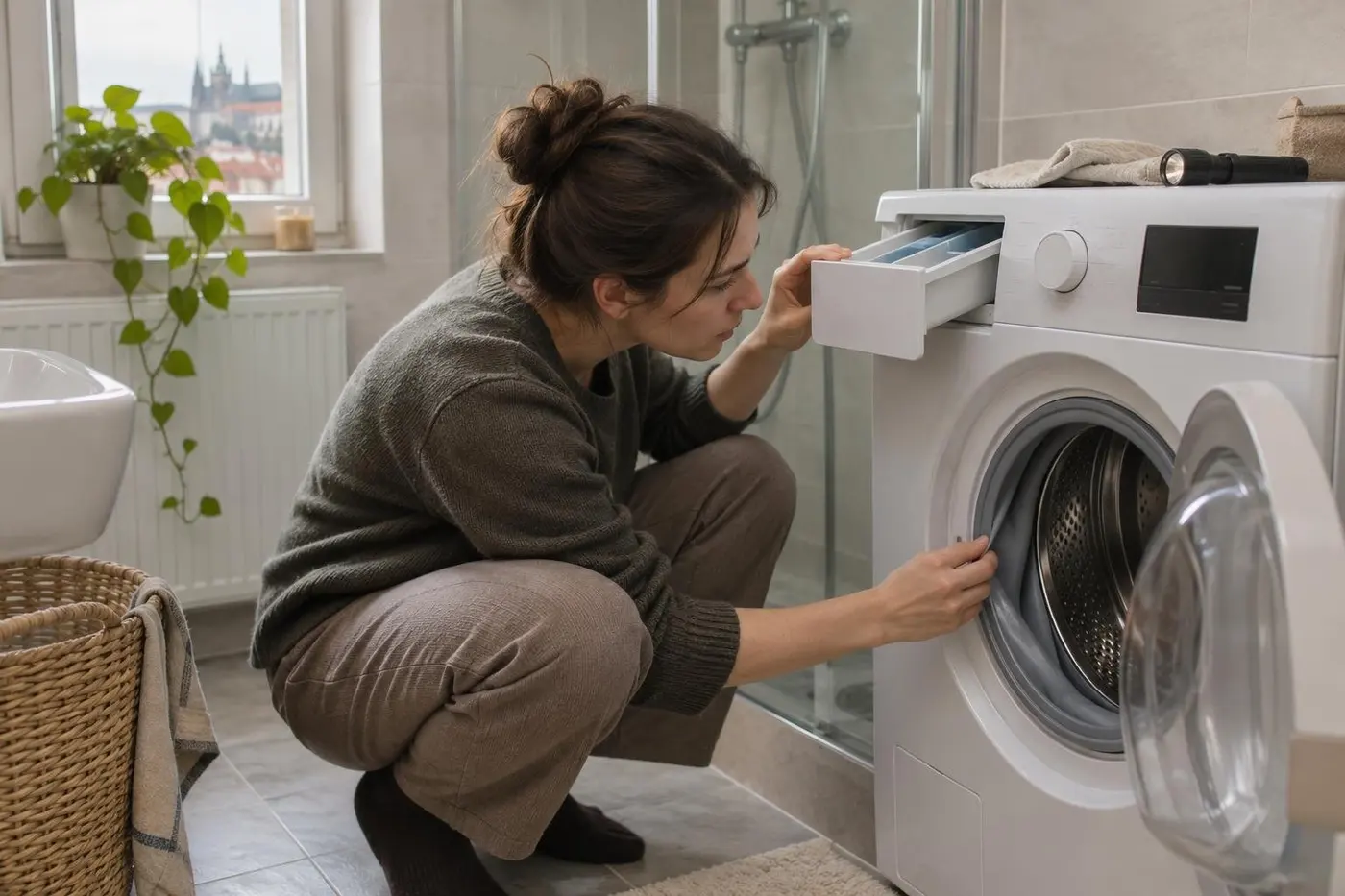
You cleaned the rubber door seal, ran an empty cycle and felt rather pleased with the result. Then the black specks or musty smell came back. The seal is already clean, so this guide follows the returning source through five other places. When washing machine mold keeps coming back, the cause may be hiding in the dispenser drawer, the water channels above it, the pump filter, the drain, or the wash routine that keeps feeding fresh residue into the machine.
First find where the smell is actually coming from
Do the first check without spraying another cleaner around. Open the empty washer as soon as a cycle ends and smell near the drum, the open dispenser and the lower filter hatch. Repeat the same check the next morning. A smell that changes while the machine sits tells you more than another look at the gasket.
- A musty smell straight after a wash usually points towards detergent residue, a dirty dispenser route or stale water near the pump.
- A sewer-like smell that is stronger after several idle hours makes the drain hose, trap and waste connection more likely suspects.
- Black dots on plastic or rubber may be mold. A slippery grey or pinkish film is more often biofilm: detergent, fabric softener, lint and microorganisms living together in a damp layer. You do not need to identify the species before cleaning it.
A short diagnostic route
- The odor is strongest at the dispenser: clean the drawer, then inspect the channels above it.
- It comes from low down, or draining sounds slow: check the pump filter and trapped water.
- It smells like a drain after the machine has stood overnight: inspect the hose, trap and waste pipe.
- Every part looks clean but the odor returns within a week or two: change detergent dosage, wash temperatures and drying habits.
Stop using the appliance if it leaks, smells of burning, trips the breaker or will not drain. Switch it off, unplug it and arrange a repair. Let hot water cool before opening a filter, and never mix chlorine with vinegar, citric acid or another cleaner.
The dispenser drawer and the channels above it
The search phrase mold in detergent drawer hides two possible sources: the removable tray and the fixed space above it. Remove the drawer as shown in the manual for your model. Many release with a coloured tab, but the mechanisms differ. Take out the softener insert, wash the pieces in warm water with a soft brush and dry them. Avoid wire brushes and force.
A clean drawer does not mean the water route is clean. Shine a phone light into the opening and look up at the rinse holes. A dark, slippery rim can hide there. Wipe only the accessible surface with a damp cloth or narrow soft brush. Do not push tools into pipes or dismantle the inlet.
I saw this exact problem in a small flat in Prague's Žižkov district. The owner had scrubbed the gasket until it looked new and washed the dispenser every month. Two loads later, the smell returned. A torch aimed above the drawer revealed a black band around the rinse holes. She had cleaned the tray for years, but never the ceiling it slides beneath.
Too much liquid detergent and softener feeds the film. A full dose on a half load can create excess foam and residue, especially in soft water. Dose for water hardness and load size, then leave the drawer ajar to dry.
The filter, pump and trapped water
If your checklist simply says clean washing machine filter, add one instruction above it: prepare the floor before touching the cap. Turn the appliance off, unplug it and follow its manual. Put a low tray under the hatch and surround it with towels. A washer squeezed beside a cabinet in a Prague panel flat rarely leaves room for a bucket.
Use the emergency drain tube first if the machine has one. Otherwise loosen the cap gradually, close it when the tray fills, empty the tray and repeat. Hot water can scald. The manual takes priority over a generic video.
Remove lint, hair, coins and other pocket debris. Rinse the filter and wipe its seat. Do not insert tools into the pump or open its housing. If the manual exposes the impeller, check only for an obvious obstruction. Stiff movement or grinding needs a technician. Refit the filter, run a short drain and check the cap for leaks.
Slow drainage shows up as a longer cycle, prolonged pump noise, unusually wet laundry or water left in the drum. Stale water around the pump warms again during the next wash, so the washing machine smells musty even when the seal looks clean.
The drain hose and trap
The hose is the fourth location. If the washer smells neutral after a cycle but has a sewer odor the next morning, gas or dirty water may be returning through the waste connection. A nearby basin that gurgles while the washer drains points the same way.
Look behind the appliance without pulling on hoses. The drain hose must not be kinked, crushed or pushed so far into a standpipe that its end sits in wastewater. There is no universal correct hose height. Use the installation diagram for the model: a hose set too low can siphon, while one routed too high may strain the pump.
Check accessible trap joints for buildup and leaks. Do not disconnect the washer hose unless you can refit its clamp and seal correctly. A loose joint can flood your flat and the neighbour below.
Call a plumber if the sink or floor drain also smells, wastewater backs up or several fixtures gurgle. Call an appliance technician for repeated error codes, harsh pump noise or a machine that still will not drain. Tenants should speak to the landlord before altering fixed plumbing.
Habits that stop mold returning
The fifth place is the operating routine. To prevent washer mold, change the conditions that keep leaving the machine damp and coated: repeated 30°C cycles, liquid detergent, softener and a closed door. One hot cleaning cycle will not compensate for the same habits continuing.
Check local water hardness and the detergent label. Prague's supply varies by source and district, so the same capful for every load is unreliable. Leave room in the drum for rinsing and try several washes without softener. If the slippery film disappears, you have found part of the cause.
Use warmer washes when care labels and the manual allow them; towels and bed linen often permit 60°C. Run the drum-clean programme as directed, or follow the maker's advice for an empty maintenance cycle. Remove laundry promptly, wipe pooled water from the gasket and leave the door and drawer safely ajar.
A manageable monthly check
- After every load: remove laundry, wipe pooled water and let the drum and drawer dry.
- Once a month: look at the ceiling above the dispenser and run the maker's maintenance programme.
- Every few months, or whenever draining slows: inspect the pump filter; use the manual and household use to set the interval.
- When a sewer smell appears after idle time: inspect the drain route instead of spraying the gasket again.
After a full clean, run the washer for a week without softener and with a measured detergent dose. If the odor stays away, the routine was maintaining the buildup. If black specks or smells return after all five checks, book a technician; the outer tub and internal hoses are not safely accessible without dismantling the machine.
For the basic gasket-cleaning steps, see Washing machine odors: filter, seal and dispenser. This guide starts where that job ends and follows the routes that can bring the dirt back.
If you would rather combine the washer area with a thorough bathroom or utility-space clean, send a no-obligation request through ČistýKout. It is a practical Prague-based option for household cleaning; appliance repairs and blocked plumbing still belong with the appropriate technician.
Sources for the safety and maintenance steps
- Bosch: odor removal, dispenser cleaning and pump-filter checks
- LG: causes of musty odors and drying the washer between loads