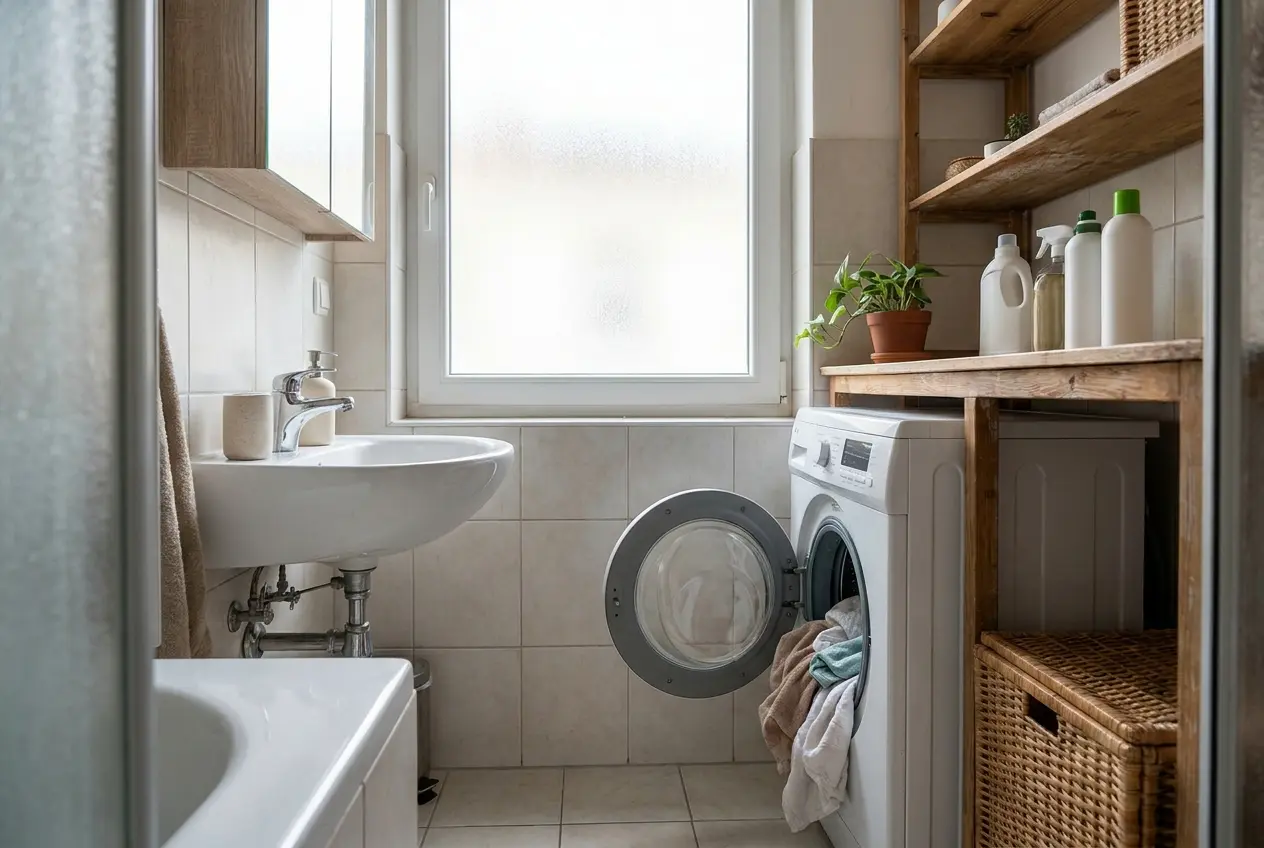
That "funky" washing machine smell rarely shows up as a full disaster. It usually creeps in. You open the drum, catch a sour, stale note, and ignore it for a week. Then the towels come out looking clean but still wrong. That's the moment it clicks: the machine isn't the only problem anymore. The smell has moved into the laundry. If your clothes smell after washing, the issue has usually spread beyond the drum already. In small Prague flats, this happens all the time. The washer sits in a bathroom with weak airflow or in a narrow kitchen corner, most loads run at 30 or 40 degrees, and the damp air just hangs around.
Most people do try to fix it, but they often aim at the wrong target. They'll run a hot cycle, dump in some vinegar, maybe wipe the door glass, and hope for the best. The real catch is that washing machine smell lives in the places you don't see: the deep folds of the rubber seal, the gunked-up filter, and that slimy cavity behind the detergent drawer. It's a cocktail of moisture, old softener, lint, and skin oils that forms a thin film of grime. If those spots stay dirty, the smell is just going to keep coming back.
Why a washing machine smells even when it looks clean
From the outside, your machine might look pristine. The drum shines under the bathroom light and the door glass is crystal clear. But a washer isn't like a toaster, it's a damp, closed system that spends its life mixing warmth with organic residue from your clothes. When you stick to lower temperatures, you're essentially giving that buildup a comfortable place to settle in and grow.
The trouble usually starts in the hidden folds of the door seal where water and grit sit undisturbed. Then there's the detergent drawer, if you look behind it, you'll often find gel and softener that has dried into a sticky, gray residue. Finally, there's the filter at the bottom, where stagnant water and whatever was left in your pockets create a much sharper, musty odor.
Temperature is only part of it. Too much detergent is a huge part of the problem. People assume more soap means cleaner clothes, but mostly it means more residue. It sticks inside the machine, holds on to dirt, and starts to sour the second moisture stays put. That is why cleaning washing machine buildup early matters more than masking it with fragrance.
Prague apartments, especially the older ones, aren't exactly famous for generous airflow. You finish a load, shut the door, slide the drawer back in, and the whole machine stays damp for hours. In that environment, seeing mold in washing machine seal areas isn't a surprise, it's just the natural result of daily habits. Your towels are usually the first to tell on you. They might seem okay right out of the wash, but once they sit in a basket or a humid bathroom for a day, they smell like they've been forgotten in a damp basement.
If you're not sure where the stink is coming from, try a simple sniff test. Smell the drum, then the rubber seal, then pull the drawer out and smell the housing. If the seal or drawer smells ten times worse than the drum, you've found your culprit. This is where "how to clean a washing machine" stops being a general idea and becomes a very specific afternoon project.
How to clean the seal, detergent drawer, and filter step by step
Before you dive in, grab some old cloths, gloves, a small bowl for the inevitable water spill, and, most importantly, a soft brush or an old toothbrush. A phone flashlight is actually a lifesaver here because a lot of the sludge hides in dark corners you'll miss otherwise.
1. Clean the rubber seal
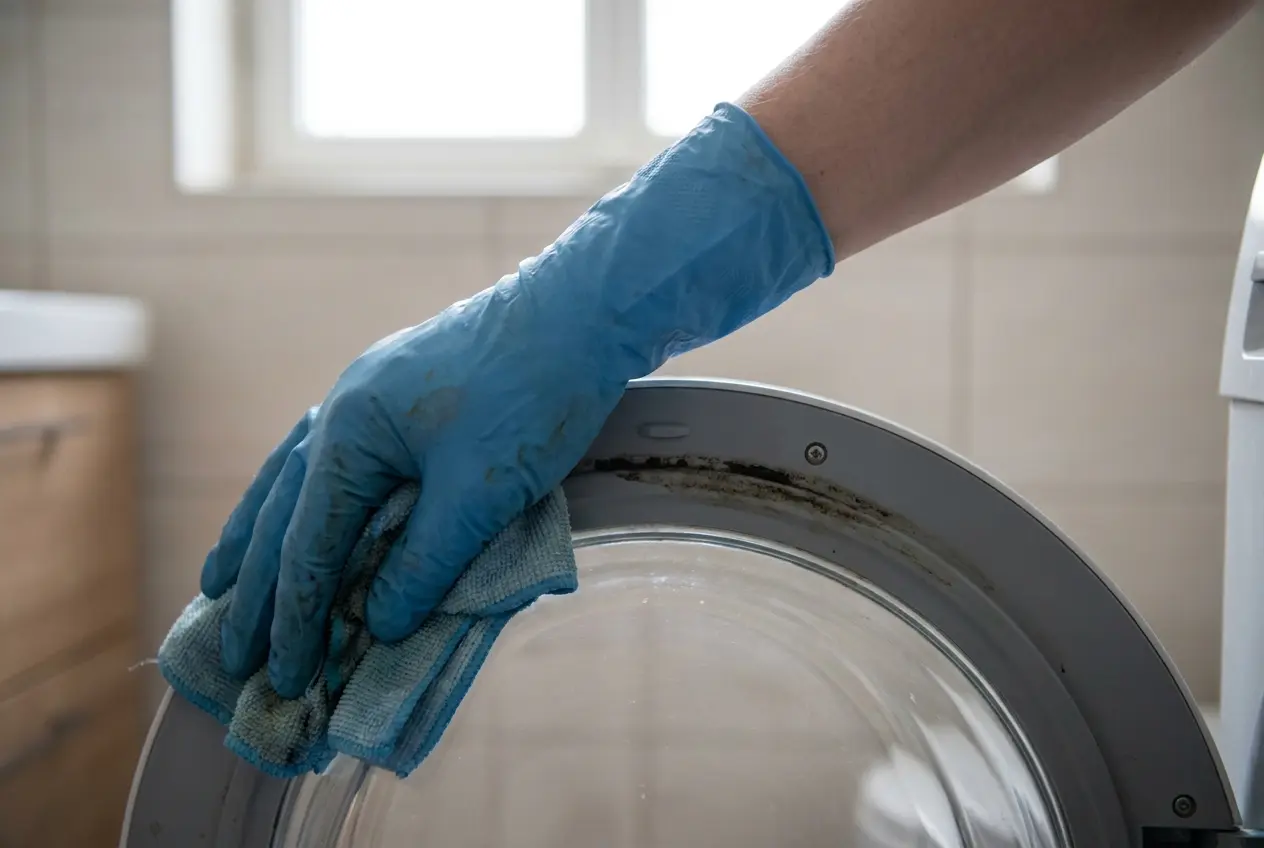
Gently pull that rubber gasket back. You don't need to rip it out, just peel the folds back so you can see into the inner track. You'll probably find a mix of hair, grit, and black specks of mold. Use a dry cloth to scoop out the loose debris first, because if you go straight in with a wet rag, you're just going to smear the grey sludge around.
Once the big stuff is gone, move in with a damp cloth and a mild cleaner. If the stains are old and dark, it might take a few passes. Whatever you do, don't attack the rubber with a harsh abrasive or heavy chemicals, if you damage the seal, it'll just hold onto dirt even more aggressively next time. The trick is to brush the lower edge where water pools and, this is the part most people forget, dry it thoroughly with a paper towel afterward. Closing the door on a wet, freshly cleaned seal just resets the whole problem.
2. Clean the detergent drawer and the cavity behind it
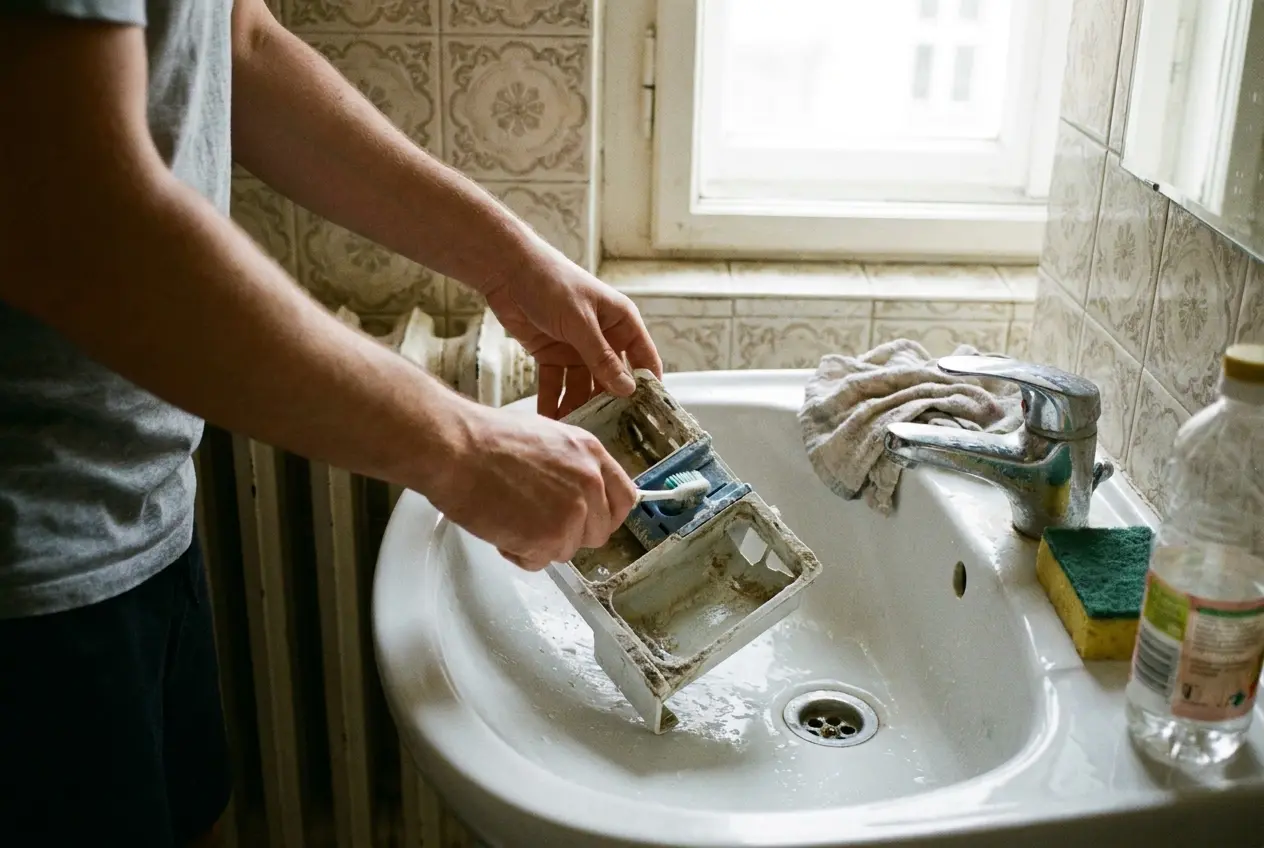
Pull the drawer all the way out. Most machines have a little release tab in the middle you need to press. Once it's out, let it soak in warm water for a bit to loosen that slimy gel residue and old softener. Scrub the corners with your toothbrush until it looks new again.
But don't stop there. Look inside the hole where the drawer used to be. That housing gets skipped constantly, and it's often the smelliest part of the whole machine. Use your brush and a narrow cloth to get into the tracks and the ceiling of that cavity. The amount of hidden gunk in there can be genuinely shocking. In small, humid homes, this area holds onto odors longer than the drum ever will, so making washing machine filter cleaning and drawer scrubbing a single routine is the only way to stay ahead of it.
3. Clean the filter
For most of us, the filter is out of sight and out of mind until something goes wrong. But it's also a massive source of musty odor. It's usually behind a little flap at the very bottom. Put your towels and a shallow tray down before you open it, because there is always trapped water waiting to jump out.
Open it slowly and let the water drain. Then, pull the filter out and clear away the hair, coins, and threads that have been sitting in that stagnant pool for months. Give the housing a quick wipe as well. A common mistake is just rinsing the filter and ignoring the space it sits in, or tightening it back up so hard you'll need a wrench to open it next time. If the smell hits you the second you open that flap, a hot wash won't fix it, you need this manual deep-clean first.
When a hot cycle helps, and when it is not enough
A hot cycle is great, but it's not magic. Think of it as the final polish after you've done the hard work, not a replacement for it. If there's still physical grime on the seal or the filter is full of hair, running the machine on 90 degrees will just make the smell warmer for a couple of hours.
Once the parts are actually clean, then you run that empty hot cycle. People always ask about using vinegar or baking soda versus a dedicated cleaner. It really depends on how long it's been since the last clean.
Vinegar, baking soda, or a dedicated cleaner?
Vinegar is okay for maintenance and light odors, but I wouldn't make it a weekly habit, especially on older machines where the rubber parts are already a bit brittle. Baking soda is gentle and helps neutralize smells, but it's not going to melt away months of softener slime on its own. If the machine has been neglected or you use a lot of liquid detergent, a proper dedicated washing machine cleaner is usually the smarter move.
If the smell is mild after a long winter of cold washes, a hot cycle is probably enough. But if the odor persists even after a thorough manual scrubbing, you might be looking at a deeper issue like poor drainage or a moisture problem in the bathroom walls themselves.
How to stop the smell from coming back in normal day to day use
Keeping the smell away is actually easier than the big deep-clean. It's about small, boring habits rather than heroics. The biggest win is just leaving the door and the detergent drawer slightly ajar after every load. You don't need them wide open all day, just a few hours is usually enough to let the moisture escape so mold doesn't have a chance to start. That simple habit does more for musty laundry than most people expect.
Next, take a look at how much detergent you're actually using. Most of the time, the machine smells because we're using way too much soap. Extra fragrance doesn't fix a musty odor, it just feeds the very layer of residue that's causing the problem.
Try a simple 30-day routine instead of waiting for the smell to come back:
- after each wash, leave the door and drawer slightly open and wipe moisture off the seal
- once a week, check the folds of the gasket and rinse the drawer
- once a month, do washing machine filter cleaning and run a hotter cycle for towels or bedding
That short routine does more than another round of perfume-heavy softener, and it helps stop musty laundry before it becomes your default.
If you find yourself running almost everything on a cold cycle, try to schedule one 60-degree wash every week or two for your towels or bedding. Machines just aren't designed to live on lukewarm water forever, they need that occasional heat to flush out the background residue before it turns into a problem.
When it is time for service or a wider bathroom cleaning reset
Sometimes, the washer is just a symptom of a larger problem. If the mold keeps reappearing within days or the whole room feels damp even when you haven't done laundry, the issue might be the room's ventilation. Weak extraction fans and trapped humidity can turn any bathroom into a petri dish.
You should probably call for service if you see water pooling in the drum after a cycle, if the seal is physically cracked, or if that sharp smell won't go away even after you've scrubbed every inch of the machine.
A wider bathroom clean is often the only way to hit the reset button if the odor seems tied to the air in the room rather than just the machine. If you're in Prague and the idea of tackling a deep bathroom and washer clean feels like too much, ČistýKout is a practical local option. You can use the contact form for a no-pressure enquiry, and if the smell is part of a bigger humidity problem, it also helps to look at bathroom cleaning in Prague. If you want more practical reading first, our home cleaning tips are a good next step.