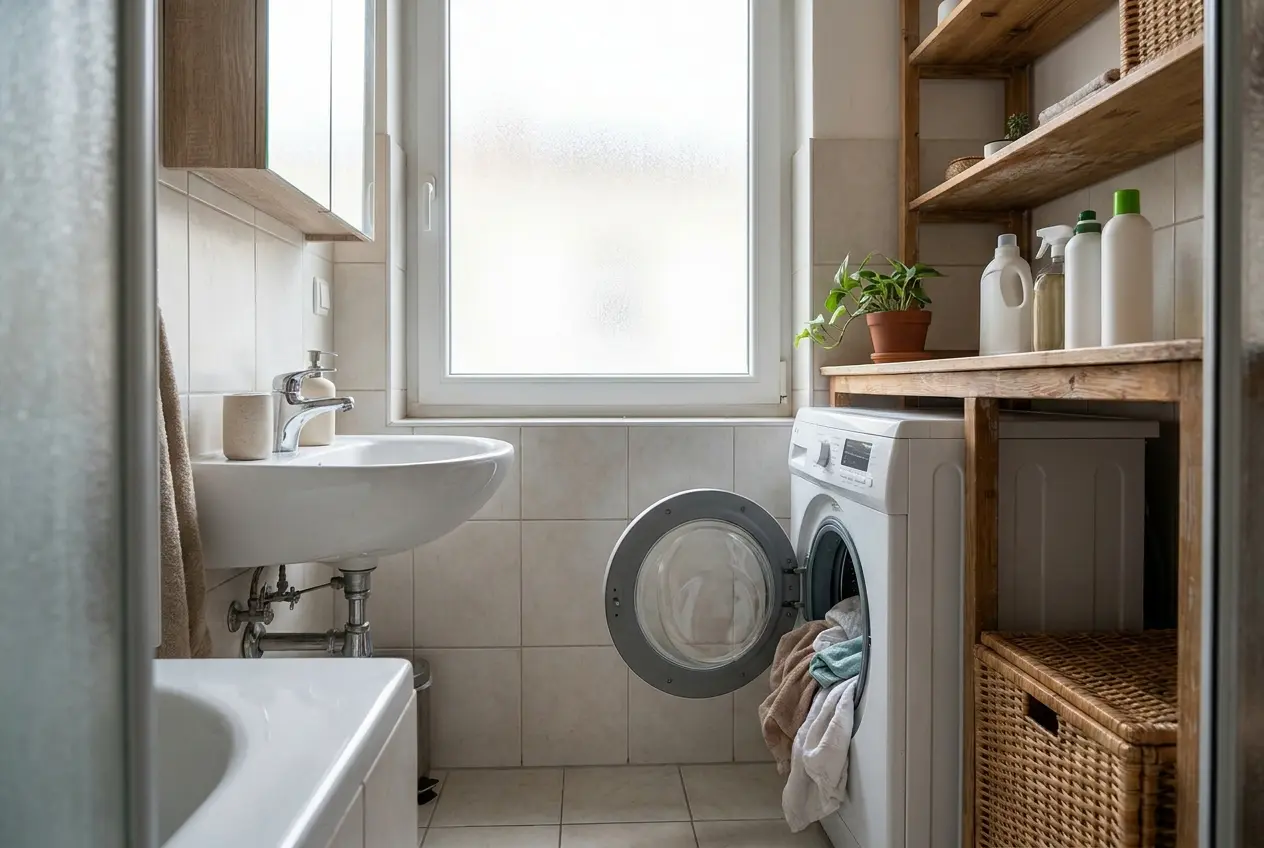
A bad washing machine smell rarely arrives all at once. It usually creeps in. First you open the drum and notice a stale note that was not there last week. Then your towels come out technically clean but somehow off. A day later the whole bathroom picks up that same damp sour smell. In Prague flats this is common for a simple reason: the machine often sits in a small bathroom with weak airflow, most loads run at 30 or 40 degrees, and the door gets shut right after unloading because there is no space to leave it open. This is exactly how washing machine smell starts moving from the machine into the laundry.
The most common advice is often the most incomplete. Run an empty hot cycle. Add vinegar. Use a more scented detergent. Sometimes that gives temporary relief. But it does not solve the actual source when the smell is trapped in the rubber seal, the filter, or the detergent drawer housing. Once grime, old liquid detergent, softener residue, and damp lint build up there, fragrance only masks the problem for a moment.
How to tell where the smell is really coming from
Before you clean anything, work out what kind of smell you are dealing with. Musty, moldy, and drain-like odors point to different places.
A flat stale smell usually means trapped moisture and residue from repeated low temperature washing. A sharper sour smell often comes from old detergent gel, fabric softener, and the slimy film that builds up where water sits. A heavy, dirty, almost sewer-like smell points you toward the filter area and possibly the drainage, not just the visible parts near the door.
A quick three point smell test helps more than most people expect. Smell the drum first. Then smell the folds of the rubber door seal. Then pull out the drawer and smell both the drawer itself and the cavity behind it. In many homes the drum is not the worst part at all. The seal or drawer housing is. Useful news, because the source is often reachable without taking the machine apart.
Separate machine odor from laundry odor too. A washer that smells bad the second you open it has a source inside the appliance. When the machine itself is only mildly stale but towels and T-shirts smell bad a few hours later, your washing habits may be part of the problem. Low temperatures, overloading the drum, too much detergent, and slow drying in a humid bathroom all work together.
One thing that almost never helps on its own is stronger perfume. A sweet fabric softener poured over residue does not clean anything. It just creates a more expensive version of the same problem.
The three places to clean first
If you are wondering how to clean a washing machine, do not start with the shiny drum. Start with the places that stay wet and stay hidden.
1. The rubber door seal
Washing machine door seal cleaning should come first. Pull the rubber fold back all the way around and inspect the lower section carefully. Water sits there, along with hair, lint, threads, dust, and black or grey buildup. People are often surprised by how much mess is hiding in a part they thought they already wiped.
Start dry. That matters. Use paper towels or an old cloth to lift out loose debris before adding water. Going in with a wet rag straight away turns the buildup into sludge and smears it deeper into the fold. After that, use warm water and a mild cleaner. An old toothbrush works well because it reaches the seam and the narrow lower channel where grime likes to sit.
2. The detergent drawer
Next comes detergent drawer cleaning. Pull the drawer all the way out, soak it in warm water, and scrub the corners, especially the fabric softener section. Softener buildup looks harmless when it is pale blue or white, but once it mixes with damp dust it develops that sour sweet smell many people recognise immediately.
The bigger issue is usually behind the drawer. Shine your phone light into the cavity. The top surface, side tracks, and back wall often hold a sticky grey layer of old product. This hidden residue is exactly why a machine can still smell after the drawer itself looks clean.
3. The filter and the dirt at the bottom
The third priority is the washing machine filter. It is the least glamorous part of the job and one of the most important. Put towels and a shallow tray on the floor before opening it because old water usually comes out first.
Remove the filter slowly, clear out hair, fluff, coins, threads, and anything else that has been sitting in stagnant water, then wipe the housing as well. That last part gets skipped a lot. People rinse the filter and screw it back in, but the compartment it sits in can smell even worse.
A much stronger odor the moment you open the filter flap means you are no longer dealing with a simple surface wipe issue. You are in the right place, and that is exactly why this step has to happen before any hot maintenance cycle.
The right cleaning order, without the usual mistakes
The order matters because each step sets up the next one.
First remove and soak the parts you can take out, mainly the detergent drawer. While that is soaking, wipe the seal dry and clear out loose dirt. Then open the filter, let the trapped water drain, and clean that area. After the loose grime is gone, move to warm water, cleaner, and a brush for the stuck-on residue.
Try to think in terms of mechanical cleaning first, chemical help second. Warm water does not need to be extreme. What matters more is patience. A few careful passes with a brush usually beat one harsh attack with an aggressive product.
Vinegar is fine for light maintenance, but I would not lean on it as the universal answer, especially with older rubber parts. Baking soda can soften mild smells, but it does not dissolve months of detergent slime on its own. If the buildup is serious, a proper washing machine cleaner is the more sensible option.
The last step is drying. People underestimate this constantly. Leave the cleaned seal wet, slide a damp drawer back in, and shut the door, and you have recreated the same conditions that caused the smell in the first place. Dry the seal well, let the drawer dry, and only then run an empty hot cycle if the machine manual allows it.
That hot cycle is the finish, not the cure.
What to do when the smell has already spread to your clothes
If the machine smell is now showing up in your laundry, check your routine as closely as the appliance itself.
First, look at temperature. When every load runs at 30 or 40 degrees for weeks, residue from detergent, body oils, and damp fabric has an easy life inside the machine. This does not mean washing everything at 90 degrees. It means towels, cloths, and bed linen should occasionally get a hotter wash so the machine is not living on gentle cycles forever.
Second, look at drum load. An overloaded drum does not rinse well. Water and detergent do not circulate as they should, and more residue stays behind in both the clothes and the machine. You notice this quickly with towels, sportswear, and anything thick.
Third, look at timing. Leaving wet laundry in the drum overnight is one of the fastest ways to make both the clothes and the washer smell wrong by morning. It is easy to do in real life. The cycle finishes late, you think you will empty it tomorrow, and the stale damp air wins.
A problem that survives a full manual clean and a hot maintenance cycle needs thinking beyond basic upkeep. Slow drainage, persistent water in the drum, odd gurgling during emptying, or a strong drain smell from the filter area all justify a closer look at the hose, waste connection, or a service call.
How to stop the smell coming back long term
The good news is that prevention is simple. It just has to be consistent.
After each wash, leave the door and the detergent drawer slightly open for a few hours. In a tight Prague bathroom, that's mildly annoying—I know—but it works. Wipe any standing water from the lower fold of the seal. That takes half a minute and prevents a lot of repeat buildup.
Once a week, rinse the drawer and check the seal for damp lint or threads. Once a month, open the filter, clear out debris, and run a hotter maintenance load. You do not need a dramatic chemical routine or five internet hacks in rotation.
My rule is simple: less perfume, more dryness. With washing machine odor, that is often the whole game.
When the smell is not just about the appliance anymore and the whole bathroom feels damp or stale, it may be time for a wider clean. In Prague, ČistýKout is a practical local option. You can send a no pressure enquiry through our contact form. And if the washer issue is part of a bigger hygiene or moisture problem, our cleaning services in Prague and more home cleaning tips are a sensible next step.