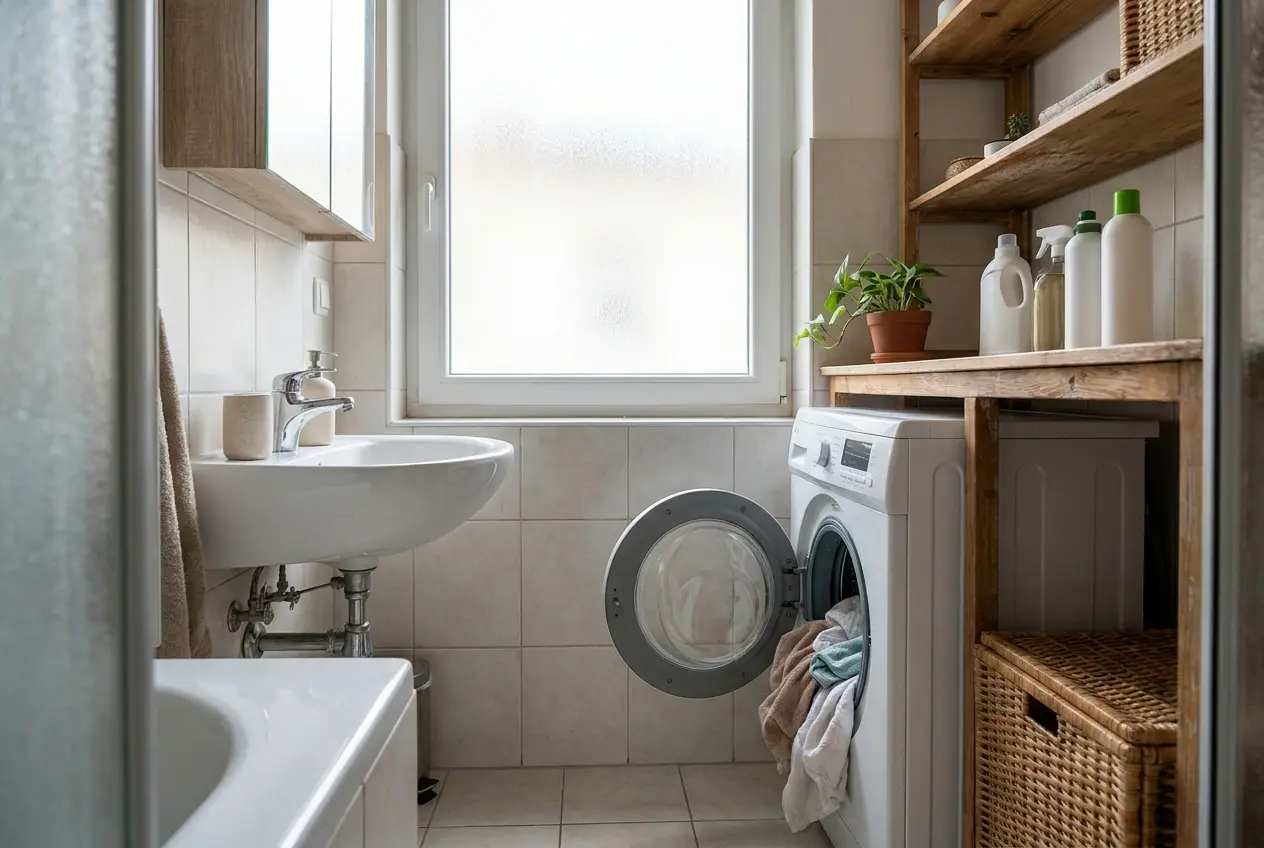
That "funky" washing machine smell rarely arrives with a dramatic warning. Usually it sneaks in. You open the drum and catch a sour, stale note for a second, then ignore it. A few days later your towels come out technically clean but somehow flat, and that is when it clicks: the problem is no longer staying inside the machine. It is moving into your clothes. In Prague flats, especially older ones in Žižkov, Vršovice, or compact panelák bathrooms, this is painfully common. The washer sits in damp air, most cycles run at 30 or 40 degrees, and the door gets shut right away because space is tight.
Most people do try to fix it. They run a hot cycle, pour in vinegar, wipe the glass, and hope the washing machine smell disappears. Sometimes it does, briefly. Then it comes back because the real source never got touched. The usual culprits are mold in washing machine seal folds, sticky residue behind the detergent drawer, and stagnant grime around the filter. That is where the smell lives.
This guide keeps things practical. I will show you where the odor usually starts, how to clean the parts you can reach without damaging the machine, and when the issue has crossed from routine maintenance into service territory or a wider bathroom hygiene problem.
Where the smell in a washing machine usually starts
From the outside, the machine can look perfectly fine. The drum shines, the door glass looks clean, and nothing seems obviously wrong. But a washing machine is a damp closed system. It mixes warmth, detergent, lint, body oils, and leftover water over and over again. If you mostly wash on low temperatures, that residue gets a comfortable place to stay.
The first trouble spot is usually the door seal. Water sits in the fold. Hair and lint collect there. Then the detergent drawer starts building up a sticky layer of gel and softener, especially if you use scented products generously. The filter is the third classic source. It traps threads, coins, fluff, and a small pool of stale water that can smell much worse than the drum itself.
Too much detergent makes the whole thing worse. People assume more product means cleaner laundry. I see the opposite all the time. Extra gel often stays inside the system, clings to the drawer housing and lower parts of the machine, and turns into that sour film nobody notices until clothes smell after washing.
It also helps to separate two different problems. One is a machine that smells when you open it. The other is laundry that starts smelling musty a few hours later. If the drum itself stinks, the source is probably inside the appliance. If the washer smells only mildly stale but towels sour up later, humidity in the bathroom or slow drying may be part of the story too.
My quick test is simple: smell the drum, then the rubber seal, then pull the drawer out and smell the housing behind it. One area is usually much worse than the rest. Start there instead of treating the whole machine as one vague problem.
How to clean the seal, drawer, and filter step by step
You do not need an entire shelf of products for cleaning washing machine parts properly. You need gloves, old cloths, paper towels, a shallow tray, and a soft brush or old toothbrush. A phone flashlight helps more than most people expect because the dirtiest buildup often hides in corners your bathroom light never reaches.
Clean the rubber seal first
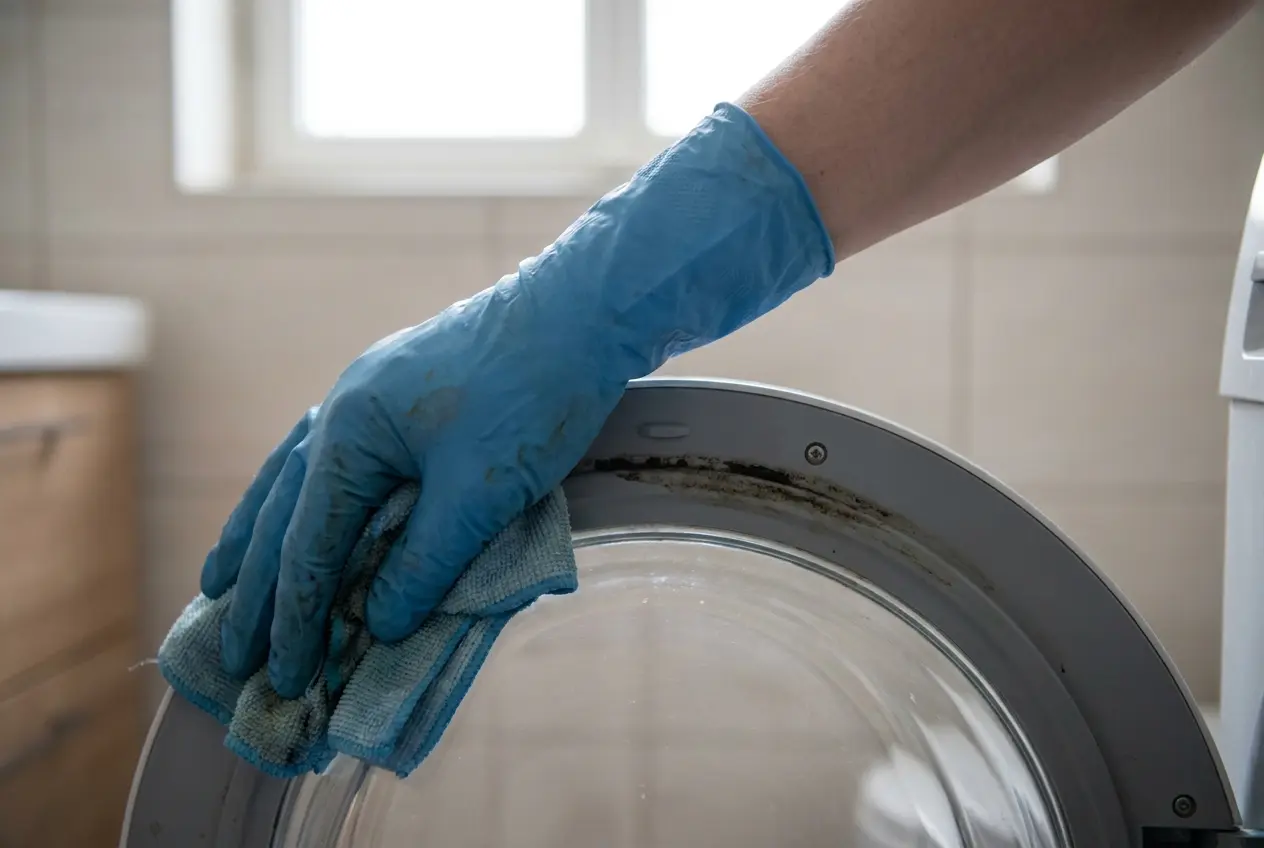
Pull the rubber gasket back gently and inspect the inner fold. This is where mold in washing machine seal folds usually shows up first, together with hair, lint, and black residue. Start dry. Scoop or wipe out the loose dirt before adding any moisture. If you begin with a wet cloth, you usually just smear grey sludge deeper into the fold.
Once the loose debris is gone, wipe the area with warm water and a mild cleaner. If dark marks are stuck on, use the brush patiently. Do not attack the rubber with harsh scrubbing or aggressive chemicals. Damaged rubber holds dirt even faster next time, and then the problem gets more expensive.
The last step matters a lot. Dry the whole seal thoroughly with paper towels or a clean dry cloth. People clean it, leave it damp, close the door, and accidentally rebuild the same conditions that caused the smell in the first place.
Remove and wash the detergent drawer
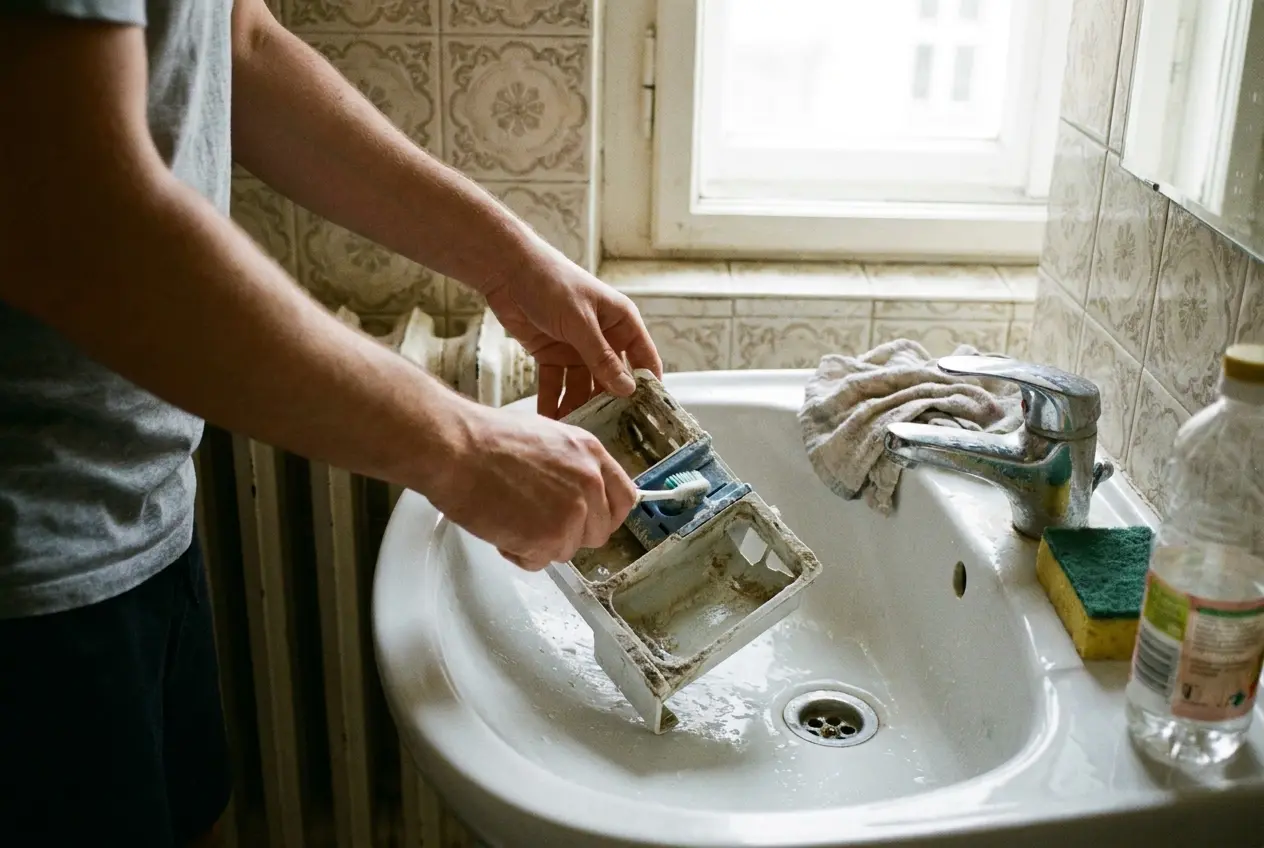
Pull the drawer all the way out. Most machines have a small plastic release tab in the middle. Let the drawer soak in warm water for a few minutes, then scrub the corners, the softener section, and the underside where product dries into a greasy film.
Now check the cavity behind it. This is where people stop too early. Shine your light inside and look at the roof and the back corners of the housing. In many homes, that hidden space smells worse than the drawer itself. If you use pods, liquid detergent, and softener together, buildup forms faster than most people think.
Use a narrow cloth and brush to clean the tracks and inner surfaces. It is fiddly work, but it is also one of the most effective things you can do if the machine has that sour sweet smell that keeps returning.
Open and clean the filter
Washing machine filter cleaning is the step many households postpone the longest. Fair enough. It is messy. It is also one of the biggest odor sources.
The filter usually sits behind a small flap near the bottom front of the machine. Put towels and a shallow tray down before opening it because trapped water almost always spills out. Loosen the filter slowly, let the water drain, and remove the lint, hair, fluff, threads, and pocket debris sitting inside.
Do not stop after rinsing the filter itself. Wipe the cavity where it sits too. If the smell from that area is sharp, swampy, or weirdly sweet, the machine needed manual cleaning long before it needed another empty hot cycle.
How to run a cleaning cycle so it actually helps
A hot cleaning cycle is useful, but it is not magic. Think of it as the finishing step, not the whole job. If the seal is still slimy and the filter housing still stinks, an empty 90 degree wash mostly warms the smell up.
Once the visible grime is gone, run the machine empty on a hotter setting that matches the manufacturer guidance. In many front loaders that means 60 to 90 degrees, but I would still check the manual rather than trust a random internet tip.
People ask about vinegar constantly. I treat it as a light maintenance option, not a cure-all. It can help with mild odor, but I would not lean on it week after week on older machines with tired rubber parts. Baking soda can soften smells, but it will not dissolve months of greasy buildup behind the drawer.
If the machine has been neglected for a while, a dedicated washing machine cleaner usually makes more sense than another homemade experiment. And no, extra fabric softener does not solve the problem. It just perfumes it for a short while, then the sour note comes back underneath.
Mistakes that make the smell come back fast
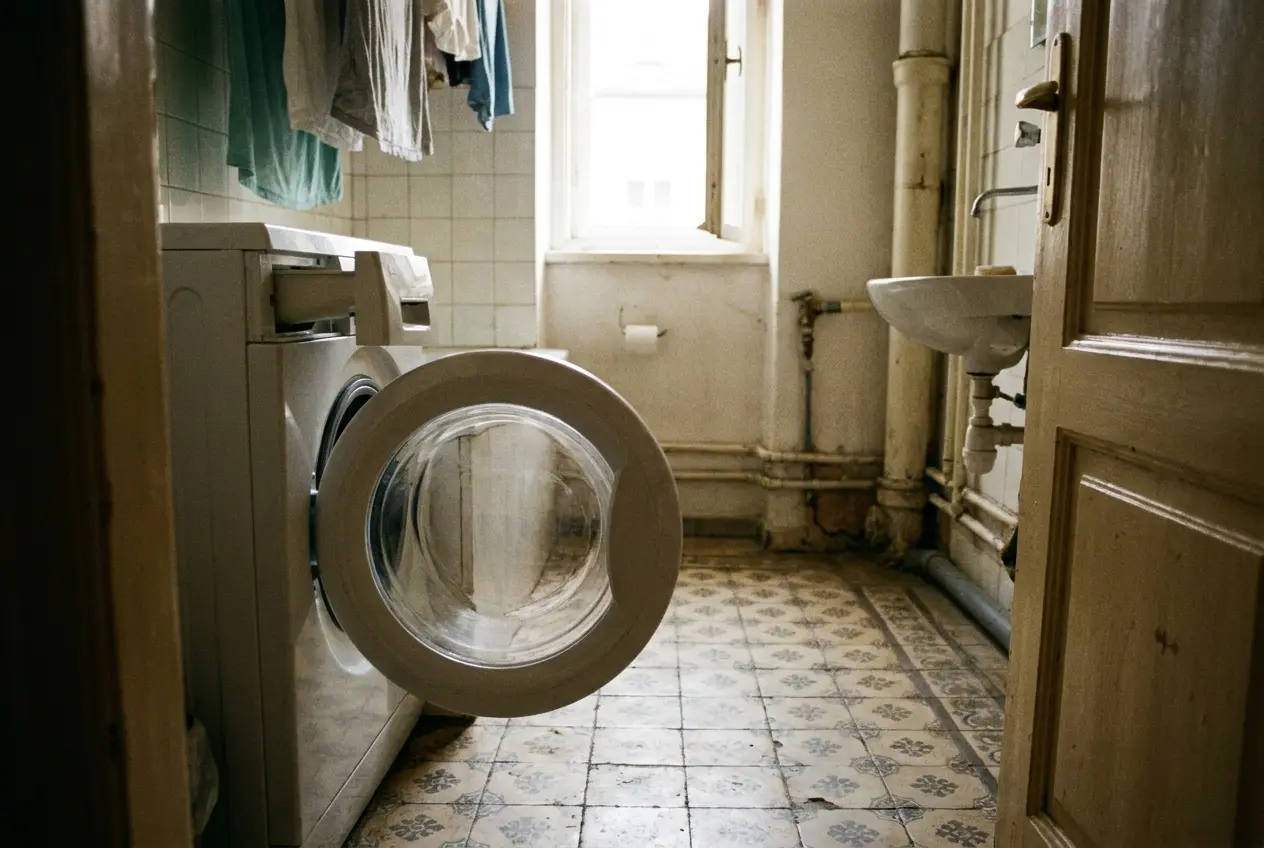
The first mistake is closing the door right after the cycle. I understand why people do it. In a small bathroom, an open washer door is annoying. Still, trapped moisture keeps the odor cycle going. Leave the door and drawer slightly open for a few hours.
The second mistake is using too much detergent. This happens a lot with sportswear, bedding, and towels because people assume those loads need extra cleaning power. Usually they just leave more residue behind.
Third, do not leave wet laundry sitting in the drum for hours. Once clean clothes stay in that humid space too long, you are not dealing only with appliance odor anymore. You are creating textile odor as well.
Another common issue is washing almost everything on low temperatures forever. I am not suggesting 90 degree cycles for every load. But towels, cloths, and some bedding can usually handle hotter washes now and then, and the machine benefits from that too.
When maintenance is not enough and it is time to call for service
Good maintenance solves a lot. Not everything.
If the washing machine smell stays strong after you have cleaned the seal, the drawer, the filter, and then run an empty hot cycle, the issue may be deeper in the drainage path, internal hoses, or buildup you cannot safely reach at home.
I would start thinking about service if the smell is still strong the next day after a deep clean, if water keeps pooling in the drum or around the filter area, if the machine drains slowly, or if the seal is cracked and quickly grows mold again.
There is also the bathroom itself. Sometimes the washer is only part of the story. If the whole room smells damp, towels dry slowly, and grout lines are darkening, the main problem may be humidity rather than the machine alone.
A short 30-day prevention plan
The best prevention is boring, which is probably why it works.
After every wash, leave the door slightly open, pull the detergent drawer out a little, wipe moisture from the seal, and take the laundry out without a long delay.
Once a week, check the gasket folds for hair or sludge and rinse the drawer quickly.
Once every 30 days, do washing machine filter cleaning, run a hotter empty maintenance cycle, and pay attention to whether towels or bedding still pick up any stale smell.
That routine is not glamorous, but it works better than perfume-heavy shortcuts.
If the odor is turning into a wider bathroom hygiene problem and you would rather not deal with it alone, ČistýKout is a Prague based cleaning option worth considering. You can send a soft, no pressure enquiry through our contact form. If the smell is tied to dampness and grime around the appliance, our cleaning services in Prague and home cleaning tips are a sensible next stop.