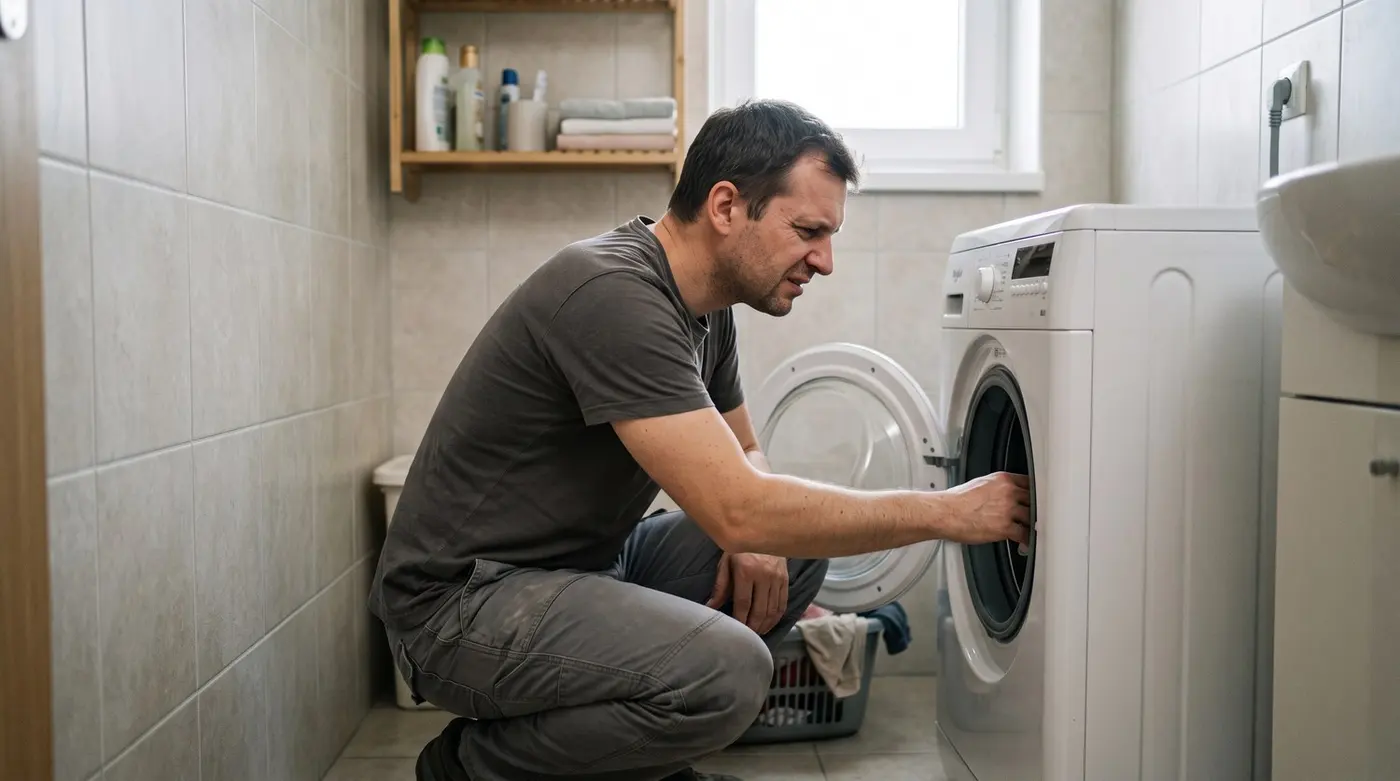
If your washing machine smells even though the door seal is clean, stop scrubbing the same spot. Our Czech guide to the seal, filter and drawer covers that first check. Once the seal is clear, odour often hides in the drawer, pump filter, drain hose or detergent residue. The best clue is: when is the smell strongest?
The timing of the smell points towards its source
Before taking anything apart, smell the empty drum after a few hours, notice the odour while the washer drains, then check wet laundry as the cycle ends. This simple sequence stops you cleaning every part at random.
Write down the phase before cleaning anything. After each safe step, use only the ordinary test cycle allowed by the manual. Let the machine dry between tests, too. Several interventions at once make it impossible to tell whether the drawer, filter or drain caused the change.
When a washing machine smells while empty, suspect standing water or residue around the drawer and filter. Odour during draining suggests the hose, trap or waste pipe. A neutral drum with stale towels points instead to excess detergent, cool washes or laundry left wet too long.
A cellar-like odour usually comes with damp product and fibre residue. Sewage shifts attention to the pump and waste connection. Hot plastic or burning is not a cleaning problem.
Stop the programme for any burning or electrical smell. Switch off and unplug the washer if you can do so safely, and do not run another cycle "to check". A technician should inspect the wiring, motor, belt or pump.
I saw the other pattern in a Žižkov flat. The clean seal had fooled the owner into running three maintenance cycles. The filter eventually produced a hair tie, two coins and fibres sitting in old water. Timing gave the answer; the drum did not.
The detergent drawer and channels hold residue out of sight
A washing machine detergent drawer can look clean from above while its underside feels greasy. Residue collects around the softener insert. Remove the drawer rather than wiping its front edge.
Check the manual first. Most drawers release with a tab; a screwdriver may break the mechanism. Rinse removable pieces in warm water, use a soft brush on gel and dark specks, and wipe only the housing you can reach. A long object may push dirt farther into the inlet channel.
Never mix bleach, acid, vinegar or other cleaners. Use a product approved by the appliance maker and rinse well. Some combinations release dangerous fumes or damage seals.
Let the parts dry before refitting them, then leave the drawer slightly open after washing. In a windowless Prague panel-flat bathroom, that habit helps more than scented softener.
Open the pump filter only after draining the water safely
Advice on how to clean a washing machine filter makes the job look like one quick twist. The housing may hold plenty of water, and a hot cycle can leave it hot enough to scald.
Switch off and unplug the washer, let the water cool and follow its manual. Set out a low container and absorbent towels. Some models have an emergency drain tube; others release water as you loosen the cap gradually. Never spin it out in one fast movement.
Once drained, clear coins, hair and fibres from the filter. Never probe the pump housing with a knife or force the impeller. If something is lodged beyond easy reach, call a service engineer.
Wipe the thread and seal before refitting. The ring must not be twisted, cracked or gritty. Tighten as directed and watch for leaks during a short test cycle.
The drain hose can bring sewer smells back
If a washing machine smells mainly while draining, inspect the hose. It must not be kinked, crushed or fitted against the installation guide. Connection height and the hose loop prevent siphoning, but measurements vary by model.
If another drain smells too, the appliance may not be the source. A dry trap, blockage or shared drainage fault belongs with a plumber or property manager. Sewage odour on days without washing is the clue.
Do not pull inaccessible plumbing from behind a cabinet or pour random mixtures down the drain. Chlorine and acidic cleaners must never meet. Drain cleaner cannot fix hose height or a loose joint. If you cannot see the connection, get help.
Too much detergent washes poorly and feeds residue
Foam is not proof of cleaning power. Excess gel may rinse badly and leave a film in the machine and textiles. Soft water needs less than hard water; load size and product concentration also change the dose. A full cap is not universal.
Use the pack's dosage table and your address's water hardness. Measure concentrated gel. If the drawer stays slimy or towels lose absorbency, reduce the dose within the maker's guidance and skip softener for several loads. Fragrance only covers the cause.
Quick 20 or 30°C programmes may leave more residue. Keep delicate clothes within their care labels, but occasionally choose a suitable cycle for towels or bedding. Follow the maker’s instructions for any drum-clean programme.
Unload promptly and leave the door and drawer safely ajar. Mold in a washing machine rarely comes from one mistake. Damp weeks, leftover product and a permanently shut door do the work together.
When home maintenance ends and service begins
At home, clean only the accessible drawer, filter and visible drain connection described in the manual. Panels, electrical parts and internal hoses are service work. Call a technician for a recurring pump error, jammed filter or impeller, a leak, or poor heating. Error codes and repeated poor results tell you more than touching the door.
Call a plumber or building manager when several drains smell, pumping causes loud gurgling, or trouble began after the washer moved. Cleaning cannot repair a badly arranged waste connection.
Once the source is fixed, prevention is short:
- unload promptly and let the drum and drawer dry;
- dose for the water, load and product concentration;
- inspect the drawer every few weeks and the filter at the interval in the manual;
- balance low-temperature washing with suitable care cycles for robust laundry and the appliance.
When a washing machine smells, do not attack every component at once. Follow the timing, start with the most likely accessible source and test after each step. You will know what helped and avoid hiding a fault beneath perfume.
For a thorough bathroom or utility-area clean in Prague, send a no-obligation request through the ČistýKout contact form. Describe the smell and when it appears. Appliance repair belongs with a technician, but the surrounding buildup does not have to be your job.