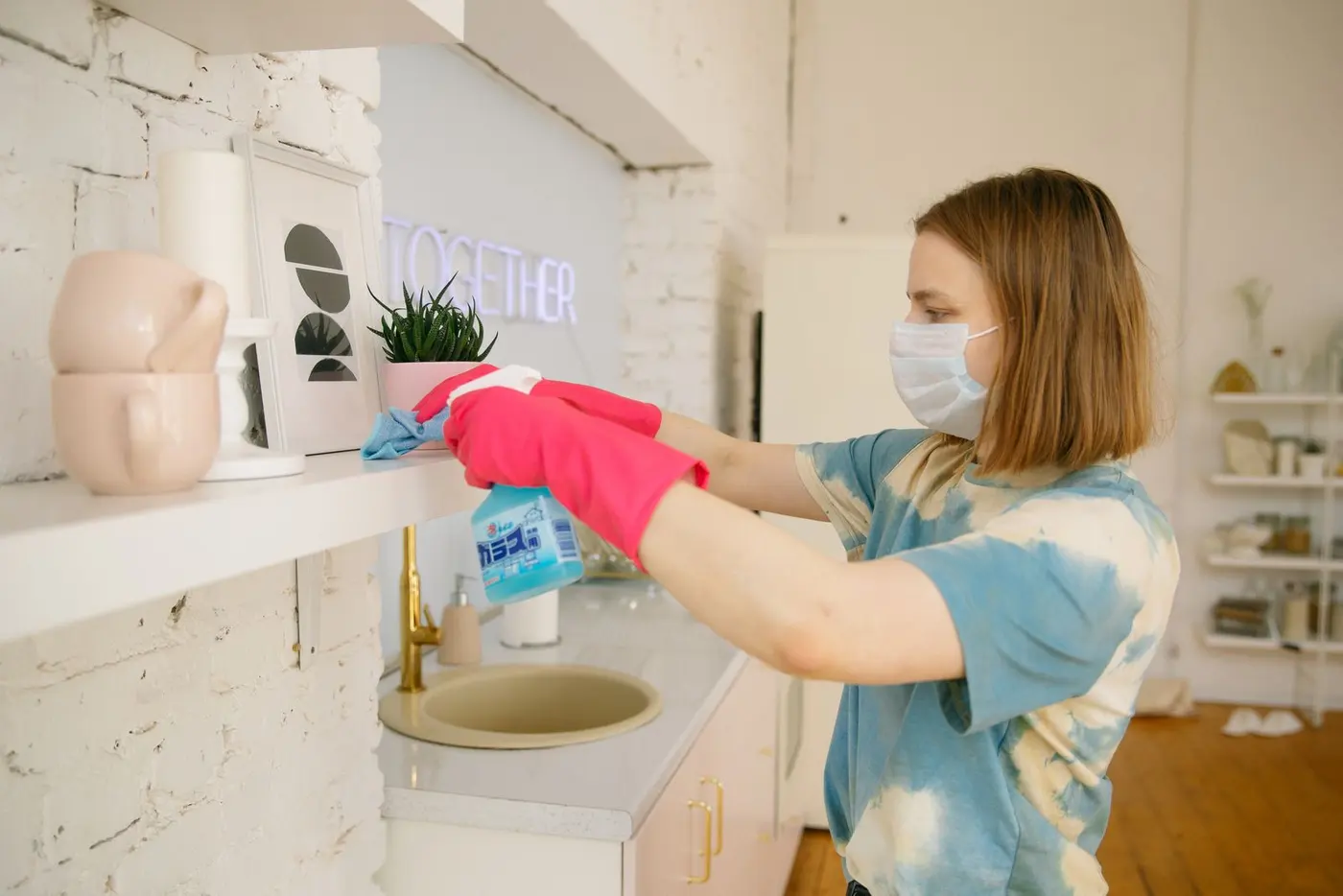
When clients ask what can a cleaner do in 4 hours, I never give the same answer for every flat. In a maintained Prague one-bedroom, four hours may cover the kitchen, bathroom, dusting and floors. On a first visit to an identical flat, old grease and limescale can use most of that time. Four hours can deliver a clear, useful result. They do not automatically buy a top-to-bottom clean of the whole home.
Four hours do not mean the same job in every home
A regular cleaner picks up where the previous visit ended. The hob is not carrying months of grease, the shower glass has been descaled recently, and the kitchen counter is mostly clear. Work starts straight away.
A first house cleaning visit has a slower opening. The cleaner does not yet know which finish scratches easily, where supplies belong or how the client wants small items handled. Quite often, the first pass also reveals neglected work: dust behind radiators, sticky cabinet fronts, or a hard ring around the taps.
Deep cleaning is a different booking again. Add an oven, windows, cabinet interiors and a badly scaled shower to a four-hour slot and the cleaning service scope has already moved beyond routine maintenance. Those are separate blocks of work. Promising the entire list usually means rushing through every room and finishing none of them well.
Square metres are a poor house cleaning time estimate on their own. A 70 m² flat occupied by one adult may take less time than a 48 m² home shared by two children and a dog. Bathrooms matter. So do cluttered surfaces, floor type, stairs, pet hair and the actual level of dirt. An older panel flat in Prague may have a packed entrance hall and a tiny bathroom that is awkward to work in. A new-build can have two toilets, large glass panels and glossy cabinet doors covered in fingerprints.
Asking how long a flat takes to clean is a bit like asking how long it takes to cross Prague. The answer changes with the starting point, the destination and what gets in the way.
Pick the three zones with the greatest impact
Most four-hour bookings need three lead zones. For many homes, that means the kitchen, bathroom and main living area. It is not a fixed formula. A client who works from home may care more about the study. Parents with a crawling baby may put the living-room floor ahead of polished taps.
To prioritize professional cleaning without an argument at the door, deal with hygiene first. The toilet, basin, shower, food-preparation surface and sink outrank fingerprints on a bedroom door. The small visual touches feel satisfying, but they should not take time away from the one bathroom everyone uses.
Replace “clean the whole flat” with an observable result:
- leave the bathroom and toilet hygienically clean, including taps and visible limescale,
- degrease the kitchen counter, hob, sink and accessible cabinet fronts,
- dust reachable living-room surfaces, then vacuum and mop,
- move to the bedroom only if time remains.
That wording gives the client a result they can recognise. It also stops the cleaner from having to guess whether bedroom skirting boards matter more than grease behind the hob.
I remember a first visit in Vinohrady where the original request was to “do a little bit everywhere”. Ten minutes in, we changed it: bathroom, kitchen and the floor where a toddler played. The bedroom waited. That was not an unfinished clean. It was a sensible plan that reached a stopping point.
A sample four-hour cleaning plan
A time plan is not a stopwatch for every tap. It prevents the first task from swallowing half the visit before anyone notices. One cleaner has 240 minutes in a four-hour booking. I would keep 15 to 20 minutes unassigned because real homes always produce a surprise.
Option A: a maintained one-bedroom or smaller two-bedroom flat
- 10 minutes to confirm priorities and prepare supplies,
- 50 minutes for the bathroom and toilet,
- 60 minutes for kitchen surfaces, sink, hob and appliance exteriors,
- 45 minutes for dusting reachable surfaces in the living room and bedroom,
- 45 minutes for vacuuming and mopping,
- 20 minutes for the entrance hall, final check and buffer.
A maintained flat may leave enough time to change one bed or wipe doors. It is still a trade. Extra work needs to replace something else.
Option B: the first visit to the same size flat
- 15 minutes to inspect the space, discuss delicate finishes and confirm order,
- 80 minutes for a bathroom with heavier build-up,
- 90 minutes for kitchen grease and frequently touched surfaces,
- 35 minutes to vacuum and mop the main routes through the flat,
- 20 minutes for a final check and buffer.
The bedroom dusting or detailed living-room work may not happen on that visit. This is not a failed estimate if everyone agreed to the order beforehand. The dishonest move would be pretending that a first clean runs at the same pace as a weekly maintenance visit.
Treat these figures as a working model, not a productivity rule. Dried grease on an extractor hood does not care about a timetable. Nor does a shower that has not been descaled for months. That is what the buffer is for.
Jobs that rarely fit without prior agreement
Some tasks sound small until somebody does them properly. An oven is the classic example. Racks need to come out, product needs contact time, baked residue has to be loosened, and every surface must be rinsed safely. An hour can disappear there. Windows, cabinet interiors, severe limescale and upholstery cleaning create the same problem.
A routine visit commonly covers accessible surfaces, bathroom fixtures, the toilet, kitchen worktops, dusting, vacuuming and mopping. The following jobs usually need their own allowance:
- washing windows and frames,
- deep-cleaning the oven or the inside of a fridge,
- emptying and washing cabinet interiors,
- treating old limescale or mould,
- extracting dirt from carpets, mattresses or upholstery,
- cleaning after decorating or building work.
If an extra job appears at the door, use one plain rule: a new priority replaces an old one. Cleaning the oven today might mean dropping the bedroom or part of the floor plan. Extending the booking is the other option, but only when both sides agree.
This boundary protects the standard of the work. Split four hours across fifteen requests and the cleaner may touch every room without making any room feel finished. Most clients would rather have a clean bathroom, a completed kitchen and fresh floors than seven half-done areas.
Confirm the scope before the visit and check it afterwards
Good estimates begin before the cleaner arrives. Current photos of the bathroom, kitchen and main living space are usually enough for a first view. Add the floor area, number of bathrooms, pets, when the last proper clean happened and the jobs that cannot be dropped.
The cleaner should answer with a short summary: “I will start with the bathroom and kitchen, then clean the floors in the main rooms. The bedroom is second priority. Windows and the oven are not included this time.” That single message prevents more disappointment than a long, generic task list.
Before work begins, agree on:
- which zones must be finished,
- what moves to the next visit if the first zone takes longer,
- who can approve extra time.
Use the final five or ten minutes to walk through the agreed areas. Note any limitation and record what will wait. The check is not an invitation to add free work at the door; it closes the agreed booking properly.
After four hours, both people should know what was completed and why. If the flat needs a larger first reset, two visits are more honest than a promise to squeeze everything into one. The second visit is often quicker, and regular cleaning becomes much easier to predict.
For later visits, an agreed regular home cleaning service makes the time estimate more predictable. If you are also weighing the budget, the guide to home cleaning prices in 2026 explains what changes the final cost.
If you need help setting a realistic scope in Prague, send ČistýKout a few photos and your three main priorities through the contact form. You can ask without commitment and get a plan built around the time you actually want to book.