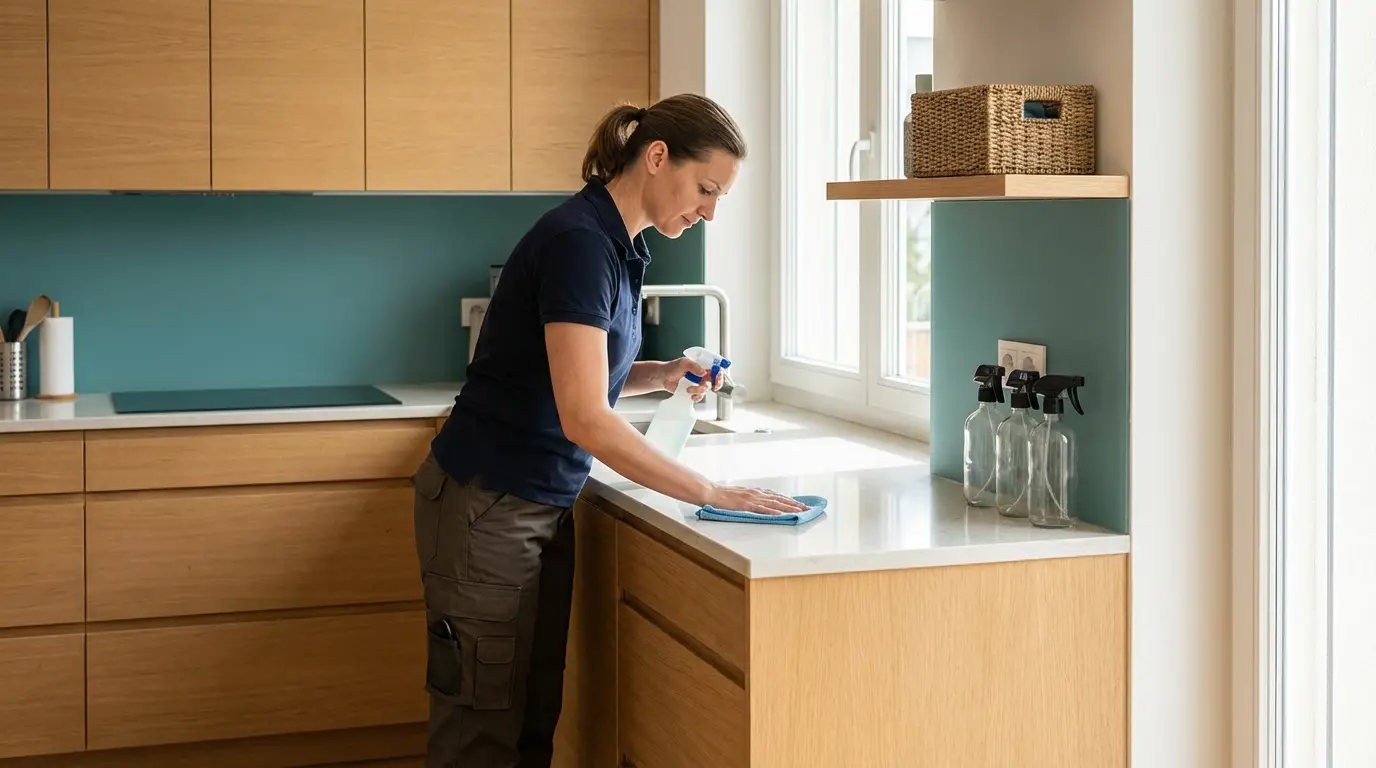
A cleaner does not deserve higher pay because she is attractive. She deserves it when her work is excellent, she is reliable, she communicates well, and she leaves the home in visibly better shape than she found it. Still, the provocative question in this title does not come out of nowhere. People often confuse appearance with professionalism, warmth, and trust. Cleaning happens where people are least polished: at home. Keys are left on the table, kids' things spill into the hallway, a half-folded laundry basket waits in the bedroom, and sometimes there is a prescription sitting by the sink. Clients notice very quickly whether someone feels safe to have in that space. In that setting, first impressions matter. They just should not be the thing that sets the price.
Why so many people think of this question in the first place
Most people would never phrase it as bluntly as the headline does, but the instinct is familiar. When someone looks polished, calm, pleasant, and self-assured, we tend to assume they are also better at their job. That shortcut shows up everywhere, not only in cleaning. It shapes how people judge receptionists, waiters, estate agents, and trainers. With home cleaning, though, there is another layer. The service happens in private space, where clients are naturally more alert to whether someone feels safe, respectful, and easy to trust. Appearance can influence that first reading very quickly.
But a pleasing appearance and strong results are not the same thing. One mother in Brno learned that the practical way last December. She needed regular help in her flat because two small children and full-time work had already eaten through her patience for late-evening cleaning. The first cleaner she chose had beautiful profile photos, warm messages, and the kind of polished presence that makes people relax. The visits were pleasant. The results were not. Dust stayed on the skirting boards, bathroom fittings still showed marks, and the greasy area around the cooker somehow survived every round. She later switched to another cleaner who looked less striking in the profile but worked with real method. The price was almost identical. The result was not even close.
What you are actually paying for when you hire cleaning help
The result
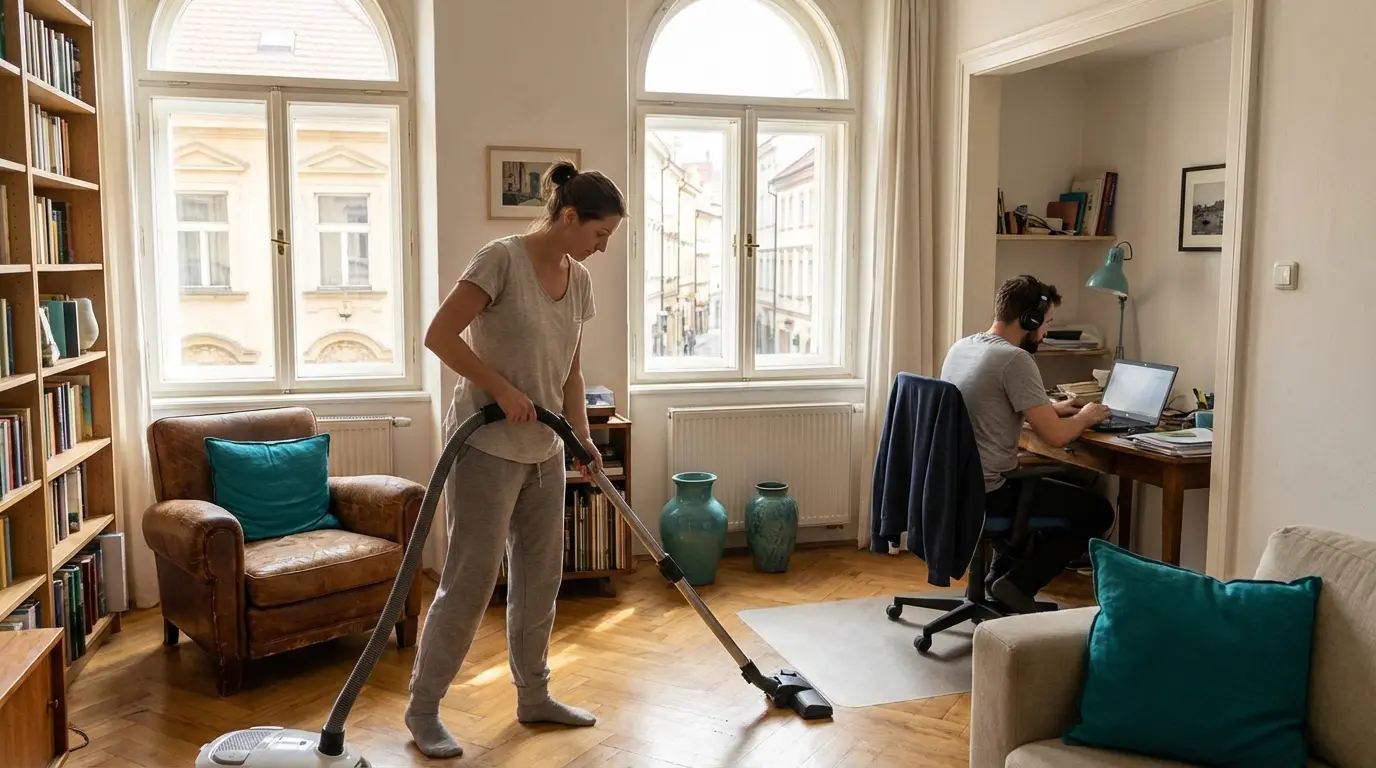
This part is simpler than people make it. You are not paying for a face, a body, or a flattering profile picture. You are paying for whether the place is genuinely clean after the visit. That means floors done properly, including the edges. It means taps without cloudy streaks, a kitchen without greasy corners around the hob, and the quiet sense that somebody noticed the home as a whole instead of just performing visible gestures. In Prague, regular cleaning rates often sit somewhere around 250 to 400 CZK per hour, with specialist work going higher. The real test comes later. You make tea at seven in the evening, walk into the bathroom, and realise there is nothing irritating left for you to fix. No cloudy tap. No greasy corner by the hob. No quick little job still waiting.
Reliability and timing
Reliability never looks glamorous on a profile page, but ask any parent in Prague 6 or anyone juggling Zoom calls from a kitchen table and they will tell you the same thing: dependable beats impressive. A cleaner who reliably shows up at 9:00 on Wednesday and gets on with the work is worth more than someone who is charming but chaotic. For families with children, people working from home, and short-term rental hosts, that matters a lot. A slightly higher rate can be justified by something as unglamorous as removing mental load. No chasing. No last-minute confusion. No wondering whether the keys will be returned on time or whether the dog can be let back into the room.
Discretion and trust
Cleaning is unusually intimate work. A school letter may be left on the table, medication in the bathroom, a laptop open in the bedroom, or expensive equipment sitting in the hallway. Trust is not a nice extra in this line of work; it is part of the core value. Experienced cleaners understand that instinctively. They do not comment on the household, ask more than they need to, or leave behind the feeling that they have pushed too far into private life. Honestly, that kind of calm discretion matters more to many clients than whether the cleaner happens to be photogenic.
Communication and independence
There is also real value in someone who can communicate like a normal adult and then get on with the work. Good cleaners ask about priorities, remember them, mention problems when needed, and do not require a dramatic back-and-forth over every small detail. That shifts the whole feel of the service. The flat gets cleaned, yes, but just as important, the client is not dragged into endless coordination. In Prague or Brno, where people already spend half the week racing between work, school runs, and errands, that kind of ease is worth real money.
When attractiveness shapes the first impression but not the actual outcome
Pretending looks do not matter at all would be dishonest. They do, especially in the first minute at the door. Someone neat, calm, and easy in conversation often gets read as more competent before the work has even started. Some clients also confuse attractiveness with service quality. It is common enough to be worth saying plainly. The problem starts when that vague first impression turns into a pricing principle, or worse, into the expectation that appearance should make up for weak work.
There is an uglier version of the same problem too. Sometimes cleaners are judged more lightly, taken less seriously, or subtly sexualised because of how they look. That is rotten for everyone involved. The cleaner is doing physical, detailed work that also requires tact and self-control, and still somebody in the room may be reading her through a stereotype instead of seeing an actual professional. In that situation, appearance may attract attention faster while also dragging the conversation away from the only thing that should matter: the quality of the service.
Where the unfairness comes from
A lot of it begins with how domestic cleaning is talked about. People still discuss it as if it were some small, almost automatic household task that simply happens in the background. Good cleaning is work. It is physical effort, time management, attention to surfaces, familiarity with products, and a steady awareness that you are moving through somebody else's private space. Once the role gets mixed with sexualised assumptions or cheap jokes, the market stops behaving fairly. The price of the service starts drifting away from labour and toward appearance, which is bad economics and worse basic manners.
You can see it in ordinary client behaviour too. People will negotiate over a hundred crowns while expecting punctuality, discretion, key handling, ironing, window cleaning, flexibility, and perfect results after a renovation. In Prague, Brno, and the commuter towns around both, the pattern is familiar: clients want premium service but still judge the price through vibes. Scope, difficulty, consistency, and trust should be doing the heavy lifting in that calculation. Too often they are not.
How to set a fair cleaning rate instead
Type of cleaning
A routine maintenance clean in a smaller flat is one thing. A move-out clean, a post-tenant reset, or a home still carrying fine renovation dust is another. If someone can do the harder, less pleasant jobs without chaos or damage, a higher rate makes sense. Looks have nothing to do with that.
Frequency
Weekly or fortnightly cleaning is usually easier to price than one-off rescue visits because the space stays under control. Buildup never gets too wild, and the work develops rhythm. A cleaner who can maintain that standard over time has a stronger claim to a higher rate than someone who merely photographs well.
Size and complexity of the home
There is a big difference between a studio flat and a family house with multiple bathrooms, stairs, pets, and a kitchen that genuinely gets used. Square metres matter, but so does layout. So does clutter. So do children's rooms. A fair price has to reflect the reality of the space, not the appearance of the person cleaning it.
Special requirements
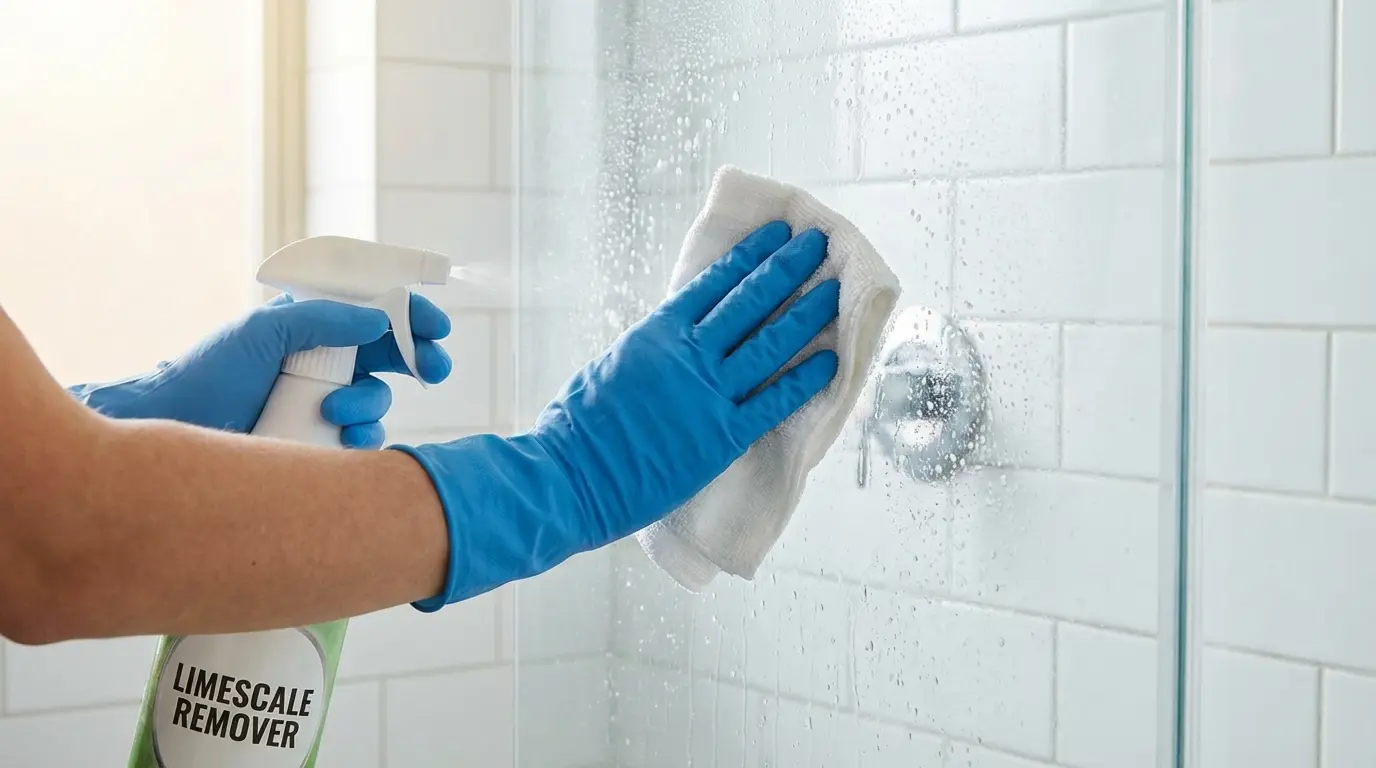
Some clients need ironing, eco-friendly products, extra care because of allergies, or secure opening and locking when nobody is home. Those things increase responsibility, time, and pressure for precision. That is where a higher rate becomes logical. Attractiveness is not.
How to spot a cleaner whose higher price is justified
- She arrives on time and does not keep reshuffling appointments.
- She can explain clearly what is included in a standard visit and what counts as extra work.
- She notices details without being reminded every single time.
- She communicates calmly and respects the privacy of the household.
- After a few visits, the home stays consistently clean instead of only looking freshly done for one afternoon.
- She is honest about what cannot sensibly be promised for an unrealistically low rate.
That list is useful for clients choosing through a platform as well, especially when they do not have a personal recommendation from friends. A strong profile is not merely one that looks polished. It is one that signals method, clear service boundaries, and normal, grounded communication. Those are the things that deserve trust and money.
Conclusion: appearance may catch attention, but people pay for something else
So the blunt answer to the headline is no: a cleaner does not deserve more money because she is sexy. She deserves more when she is genuinely excellent. Punctual. Discreet. Efficient. Thorough. Dependable over time. Appearance may shape the first few seconds, but the real value shows up later in a clean home and a client who can finally exhale. If you want to choose more fairly, it makes sense to compare experience, service scope, and trustworthiness rather than surface-level impression. That is exactly the kind of choice CistýKout is built to support.