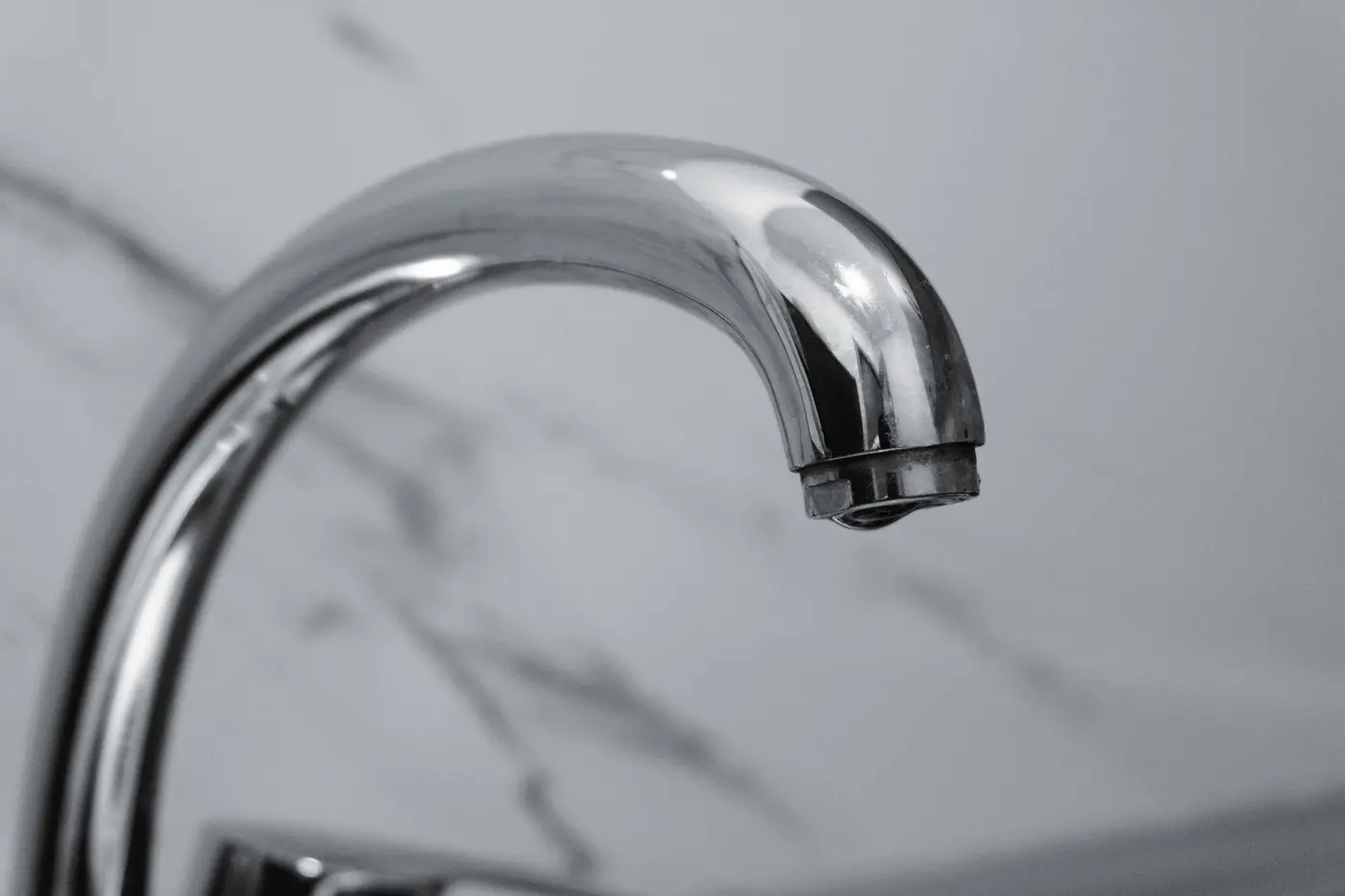
Someone recommends vinegar in almost every cleaning thread. Fair enough: it is cheap, easy to find in Prague supermarkets and genuinely useful on plain glass. I still would not carry one spray bottle around the whole flat. If you are wondering what not to clean with vinegar, look past the mess and work out what sits underneath it. The limescale may be replaceable. A marble sill or coated tap is not.
Why vinegar cleans and damages at the same time
That sharp smell comes with an acidic pH. Acetic acid reacts with the minerals in hard-water scale, helping the crust dissolve. Very handy on suitable glass. The awkward bit is that marble, limestone and travertine contain calcium compounds too. Vinegar does not politely stop when it reaches the expensive material below the deposit.
Time matters more than cleaning videos tend to admit. A weak solution wiped off sound, uncoated glass within a minute is one thing. A wet cloth left on a fitting until morning gets eight hours to find a scratch, joint or vulnerable coating. Warmth and a stronger mix speed things up.
My working rule is deliberately cautious. Plain glass may be fine after a prompt rinse. Calcium-based stone and cement get no vinegar. Lacquer, oil, wax and decorative metal finishes need their own care instructions. For an appliance, I check the manual for the model rather than borrowing a recipe written for somebody else's kettle.
Natural stone and cement grout: the expensive mistake
Stone identification trips people up. A pale sill in an older Vinohrady flat could be marble; a patterned bathroom tile could be travertine rather than ceramic. Put acid on either and it may leave a cloudy patch with a slightly rough feel.
Here is the nasty surprise: that patch is often an etch, not a stain. Look across it in side light. If the sheen has changed, cleaning harder will not bring it back. Wetting the mark may hide it for a moment, but it returns as the stone dries. Polished marble can need repolishing by a stone specialist.
Cement grout deserves some restraint as well. One accidental splash is unlikely to wreck it. Repeated vinegar soaking can roughen the surface and slowly weaken it. And one spray near a stone worktop rarely lands on a single material; it catches grout, silicone and the nearby fitting.
For routine care, I reach for warm water, a soft cloth and a product labelled pH-neutral and safe for that stone. The Natural Stone Institute lists neutral cleaner, stone soap or a little mild dishwashing liquid. Use less than you think, rinse it away and dry. A heavy dose of soap leaves a smeary film.
Taps, shower heads and metal finishes
A tap may look metallic while the part you are actually touching is a very thin finish. Chrome, matt black lacquer, PVD gold, brass and copper do not share one cleaning rule. Nor do two black taps necessarily have the same coating.
This is why the overnight vinegar bag makes me nervous. It bathes the spout, joints, seal and finish because a few outlet holes have scale in them. If the surface turns pale or patchy, polishing can take off more of the coating. Some makers allow short contact with diluted vinegar on specified models. Others say mild soap only. I would trust the product sheet, not the loudest comment under a video.
Try the small fix first. Rub flexible silicone nozzles with a finger. If an aerator unscrews, follow the manual, remove the seal where appropriate and treat the scaled insert on its own. A fixed outlet calls for a local, approved descaler and a timer. Rinse promptly.
Most fingerprints do not need acid at all. A drop of washing-up liquid in warm water, a soft cloth, then a clean rinse and drying usually sorts them out. Boring? Yes. It also leaves the finish where it belongs.
Appliances, seals and electronics
Vinegar advice for appliances becomes contradictory because appliances are different inside. A coffee-machine maker may specify a measured vinegar solution. The next one sells a particular descaler because of its tubing, heater, pump and seals. Do not transfer instructions from a kettle to a washing machine, iron or robot mop.
Rubber is not a single recipe either. Different elastomers react differently to repeated acid exposure, and nobody can identify a door seal's compound by looking at it. If vinegar is absent from the manual, I do not pour it into a hidden circuit and hope that the rinse reaches everything.
Screens are an easier call. Keep vinegar and ordinary window spray away from televisions, laptops, phones and touch panels. Their anti-glare or fingerprint coatings can mark. Switch the equipment off, begin with a dry microfibre cloth and use only the damp method its maker approves. Put liquid on the cloth, never straight onto a control panel.
Watch printed symbols and painted appliance doors too. In kitchens I have seen a cleaner remove the greasy halo around a knob, along with part of the marking. Start with weak soapy water on a cloth. Then wipe with clean water and dry, taking care around edges.
Wood, wax and protective floor finishes
You are almost never washing bare wood. The mop meets lacquer, oil, hardwax oil or wax, and that finish will be more worn by the hall than by the window. An acidic homemade mix can dull it or exaggerate those differences. Too much liquid may also work into joints. Laminate and vinyl have their own wear layers and seams, so they belong in the manual-first group.
One Žižkov rental sticks in my mind. Somebody had mopped its oiled parquet with a vinegar mix measured by eye, probably the same way I used to measure washing-up liquid: one confident squeeze. By the sunny window the boards looked all right. The hall was another story. Each pass of the mop had left a grey track. We stopped trying to wash the tracks away once it became clear that the old oil, rather than dirt, had gone missing. A flooring specialist cleaned the room and oiled it again.
Spilt some? Grab an absorbent cloth and press it onto the puddle. I would rather replace that cloth twice than smear the vinegar across another square metre. Follow with a barely damp cloth and dry the spot. Then leave it alone for a while. Baking soda is tempting because the fizz feels like action, but gritty paste and timber are an unhappy pair. Later, crouch down and look across the dry board towards a window. If the sheen has altered, ring the flooring maker or a floor specialist before opening another bottle from the kitchen cupboard.
A quick patch test and safer alternatives
A useful patch test copies the planned clean. First identify the material and finish. Find the manufacturer's care sheet. On an inconspicuous spot, use the same dilution, amount and contact time, then rinse and let it dry fully. Check the colour, sheen, texture and feel in daylight. I look again the following day before treating a large area.
Cannot tell engineered stone from marble? Choose the neutral option until you know. Guessing is a particularly poor bargain when the worktop cost more than the entire cleaning cupboard.
| Problem | Skip this | Start here | |---|---|---| | Scale on marble or travertine | Vinegar, lemon, acidic bathroom spray | pH-neutral stone cleaner; specialist advice for a heavy crust | | Dirty cement grout | A long acid soak or wire brush | Grout-safe neutral or mildly alkaline cleaner, soft brush | | Scale on a black or gold tap | Vinegar bag overnight | Soapy water or a finish-approved local treatment | | Blocked aerator | Soaking the whole tap | Remove and clean the insert as the manual directs | | Grease on a painted appliance | Neat vinegar, rough sponge | Weak soapy water on a cloth, clean rinse, dry | | Screen or touch panel | Vinegar, window spray, direct spraying | Dry microfibre or an approved product on the cloth | | Oiled or waxed timber | General-purpose vinegar water | Cleaner made for that finish and very little water |
Never combine vinegar with chlorine bleach. The mixture can release toxic chlorine gas. A sealed bottle containing vinegar and baking soda is another bad idea: the ingredients mostly neutralise one another while gas raises the pressure.
So, vinegar stays in my cleaning kit, but it does not get a universal pass. The safest method begins gently and changes only when the material, the instructions and the patch test agree.
If trial and error feels too risky on a stone counter, coated tap or oiled floor, send ČistýKout a no-obligation enquiry. We can help you find a Prague cleaner who checks the surface before reaching for the spray.