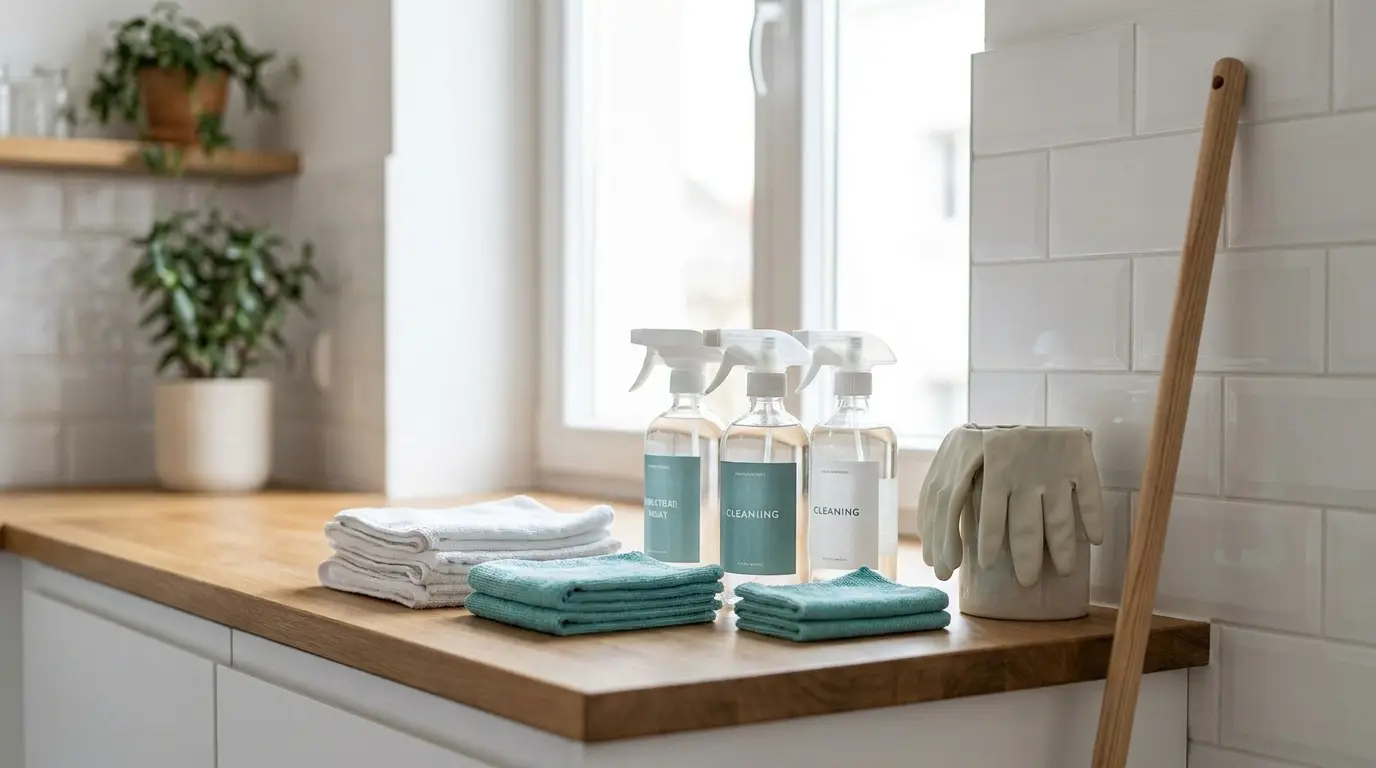
Cleaning supplies sound like a small detail until the cleaner is already on the way and the only things at home are an elderly mop, a vacuum with a full bag, and one lemon spray that has seen better years. For a professional cleaning service, equipment shapes the whole job. It affects what can be cleaned well, what needs more time, and what should be booked as a different service. So the real question is not only “how much does cleaning cost?” It is also “what will the cleaner actually use?”
Should the cleaner bring their own equipment?
Sometimes yes. Sometimes no. Both are normal. Some private cleaners bring their own cloths, gloves, basic products and favourite bathroom cleaner. Others use the client’s vacuum, mop and surface-specific products. For regular home cleaning, that arrangement is common, especially in Czech apartments where the client already has a vacuum stored in the hallway and a mop somewhere behind the washing machine.
The tricky part is that “I bring my own supplies” can mean very different things. One provider means cloths and detergents. Another brings a full cleaning caddy, spare mop heads, brushes, glass tools and a handheld vacuum. A third may own an upholstery extractor, but only brings it when you ask and book that service in advance. Not every vacuum is a household hero, and not every cleaner travels with half a cleaning warehouse in the boot.
That is why it is worth asking before the first visit. Not when hard water marks are already staring at everyone from the shower screen. Clear expectations save time, money and that awkward kitchen silence where nobody wants to admit the mop is useless.
Common cleaning supplies used at home
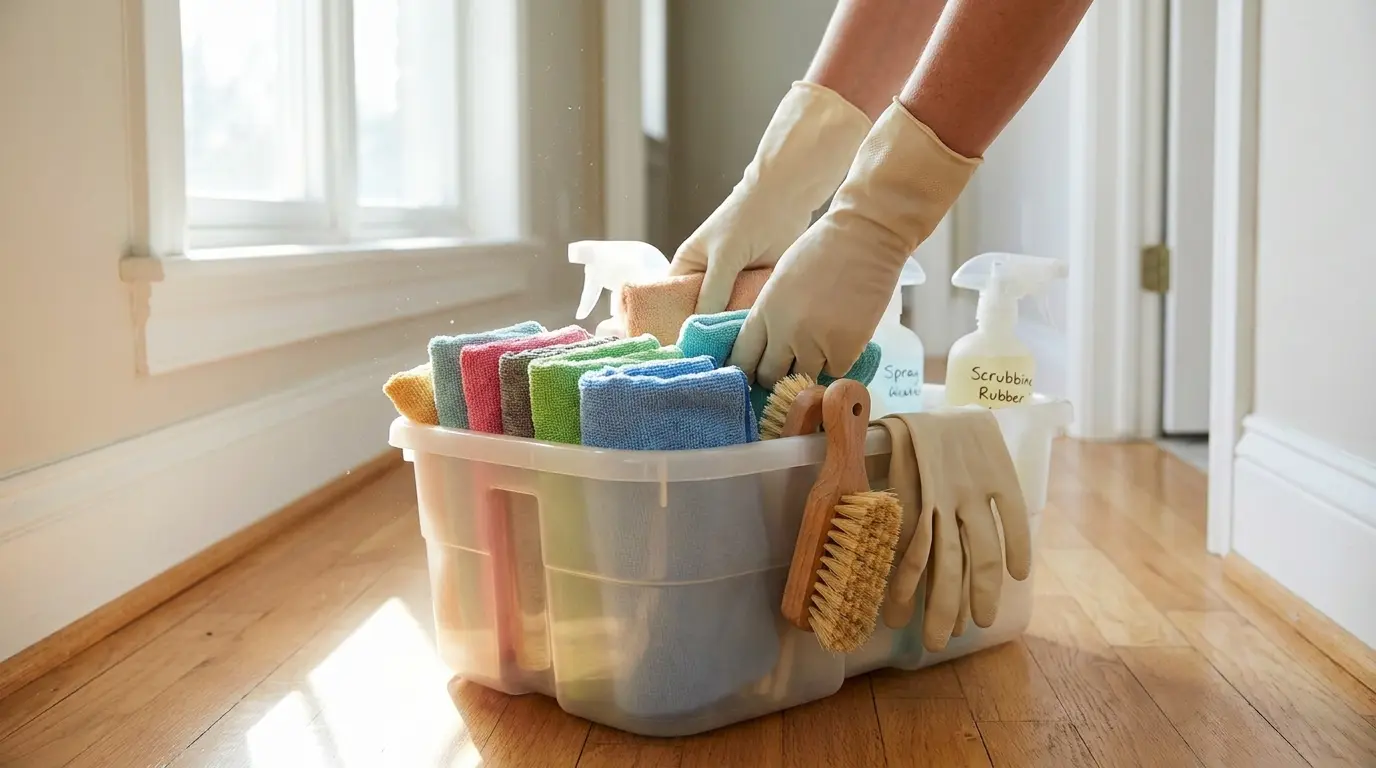
Regular house cleaning usually depends on a familiar set of tools: microfiber cloths, sponges, small brushes, gloves, mop, bucket, vacuum cleaner, bathroom cleaner, kitchen cleaner, degreaser, glass cleaner and something suitable for floors. Nothing magical. It just needs to be clean, functional and right for the surface.

The difference is often in the details. A good cloth does not leave fluff on glass. The right mop does not turn laminate flooring into a small pond. A grout brush can do more than another splash of aggressive cleaner. And a decent vacuum with a clean filter is immediately noticeable, especially in a flat with a dog, a cat or both.
A cleaner who brings tested tools can often work faster. They do not need to search for your spare vacuum bag or inspect three bottles under the sink, one empty and one last used during a move in 2019. Still, client-owned products make sense for sensitive surfaces. Wood floors, natural stone, matt black taps and special kitchen finishes deserve caution. Bravery is not a cleaning method.
When machines, steam cleaners and extractors make sense
A steam cleaner sounds like a science-fiction gadget that fixes grout, grease and possibly your mood. Reality is more ordinary. Steam can help on some hard surfaces, in bathrooms, around taps and in places where you want to reduce chemical use. It is not automatically suitable for everything. Some lacquered surfaces, wood, glued materials and delicate joints may react badly.
An upholstery or carpet extractor is a different type of tool. It can be useful for sofas, mattresses, carpets, dining chairs and car seats. The machine may look simple, but the price includes transport, setup, water, cleaning solution, drying time and a person who knows how not to over-wet the fabric. If somebody offers machine sofa cleaning for the same price as a basic cleaning hour, ask what exactly is included.

Floor machines are more common in offices, building corridors, shops and larger spaces. In a normal flat, they make sense only sometimes, for example after renovation, on larger tiled areas or in a house with many square metres. Homes more often use smaller machines: steam mops, handheld steam cleaners, extractors, strong vacuums, cordless vacuums for finishing touches and, occasionally, polishing tools for specific floors.
The machine itself is not the guarantee. A badly used steam cleaner is still badly used. A cloth, a mop and a clear agreement can sometimes do more than ten miracle attachments.
Do only cleaning companies have professional equipment?
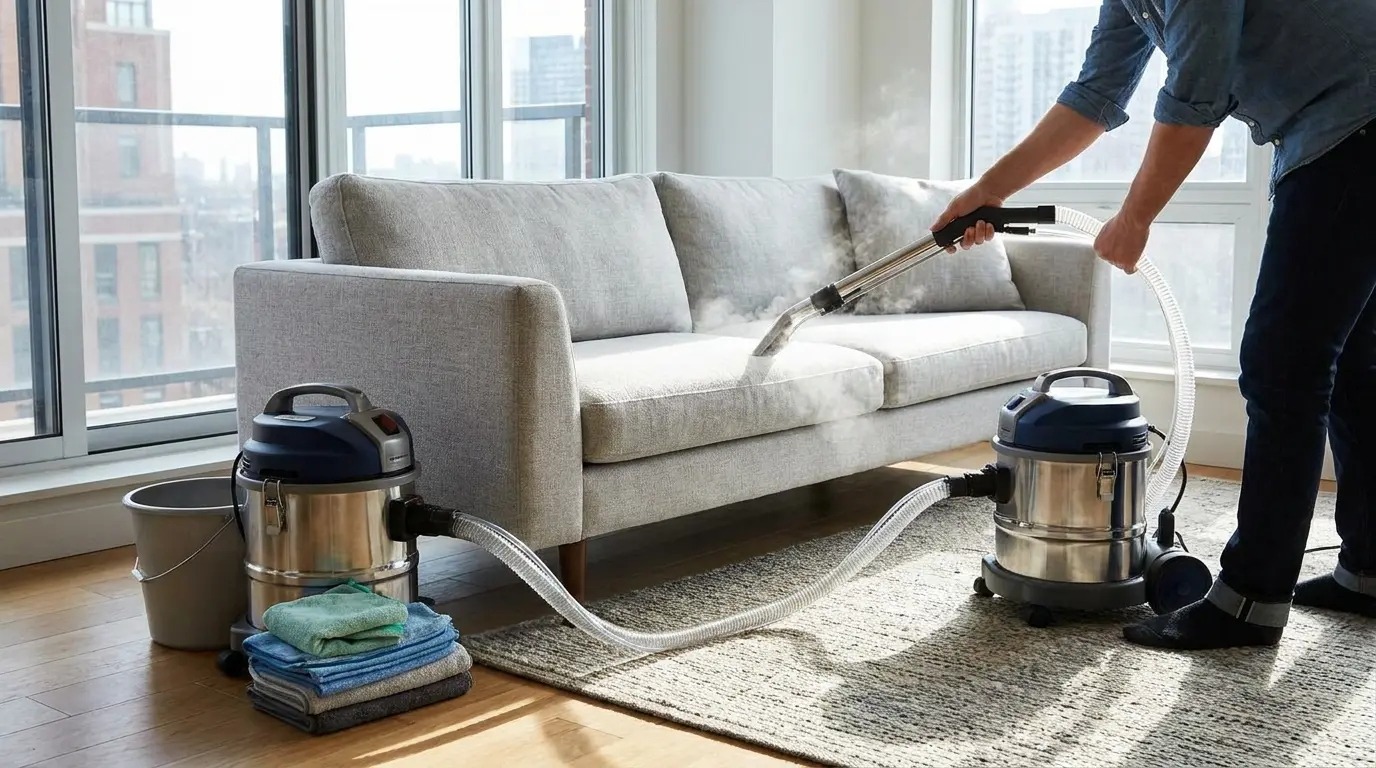
No. Cleaning companies are more likely to own larger machines because they can use them across many jobs and store them properly. They can also send two people when heavy equipment or a large deep clean is involved. Companies more often offer extractors, single-disc floor machines, stronger vacuums, steam equipment and post-renovation cleaning tools.
That does not mean an independent cleaner arrives with only a rag and good intentions. Many self-employed cleaners have excellent basic kits, their own detergents, good mops, separate cloths for different surfaces and small equipment. Some specialise in windows. Others are strong at bathrooms, regular apartment cleaning, or detailed work where reliability matters more than machinery.
The difference is usually scale. A private cleaner may be perfect for regular cleaning of a two-room flat in Vršovice. A company may be a better fit for a large house after renovation, machine carpet cleaning in an office, or a job that needs a team, equipment and a fixed deadline. It is not about prestige. It is about the job.
How equipment affects the cleaning price
Yes, equipment can affect the price. Not always dramatically, but it can. Basic supplies cost money: products, cloth washing, mop heads, gloves, transport. Many providers include these costs in the hourly rate. For regular cleaning, it is common for the client to provide the vacuum and mop, while the cleaner brings cloths and selected products. In other cases, everything is included.
Specialised machines change the calculation more clearly. You are paying for the machine, transport, preparation, longer working time and skill. Sofa or carpet cleaning may be priced per item, per square metre or as a package. Deep cleaning may be priced by scope rather than by a simple hour.
A basic apartment clean is not the same as deep bathroom cleaning with limescale removal and grout work. Both may be called “cleaning”. One is routine maintenance. The other is a small campaign against mineral deposits. The mop may look confident, but it knows the difference.
Questions to ask before booking

The best questions are simple. You do not need to know every microfiber type or the exact model of a steam cleaner. You need to know who brings what, what is included and what costs extra.
Ask things like:
- Do you bring your own cleaning supplies and products? - Do you use my vacuum and mop, or do you bring your own? - Do you have equipment for carpets, sofas or heavily soiled surfaces? - Is steam cleaning or machine cleaning included, or charged separately? - What products do you use on wood, stone, stainless steel, glass and bathrooms? - Do I need to prepare anything before you arrive? - Does the price change depending on the equipment needed?

For sensitive surfaces, send a photo or describe the material. “We have an oiled wooden floor” is much more useful than “normal flooring”. Normal flooring does not really exist. There is flooring that survives the wrong product, and flooring that reminds you about it every time the light hits it.
Where can you find this information? In the provider profile
On CistýKout, it makes sense to compare more than price and location. Look at equipment too. A useful profile should tell you whether the provider brings their own supplies, what types of cleaning they offer, and whether they handle steam cleaning, carpets, upholstery, windows or deep cleaning. If it is not written there, ask. One extra message is better than a badly arranged first visit.
For customers, equipment is a signal. Not the only one, but a meaningful one. It shows how the provider thinks about the work, whether they understand the difference between regular cleaning and deep cleaning, and whether they can say clearly what they can and cannot do.
And if you clean for clients, do not hide good equipment in the car. Put it in your profile. Add photos of your clean caddy, steam cleaner, extractor or the products you use regularly. Clients do not need a novel about every sponge, but they do want to know you are not arriving to improvise with their old dust cloth.
For providers: equipment builds trust
Good equipment does not guarantee good cleaning. Fair enough. But clear information about equipment helps clients understand your price and the type of work you are best suited for. If you have an upholstery extractor, say so. If you use gentle products for homes with children or pets, mention it. If you bring separate cloths for kitchens and bathrooms, that small detail looks professional.
On CistýKout, you can create a profile, list your services, describe your equipment and add photos. It should be simple because the point is simple: clients should not have to guess, and you should not have to explain the basics again in every first message.
Start today. Create your profile on cistykout.cz, show what you work with, and help clients understand why choosing you makes sense. Good equipment is not showing off. It is part of a fair agreement.