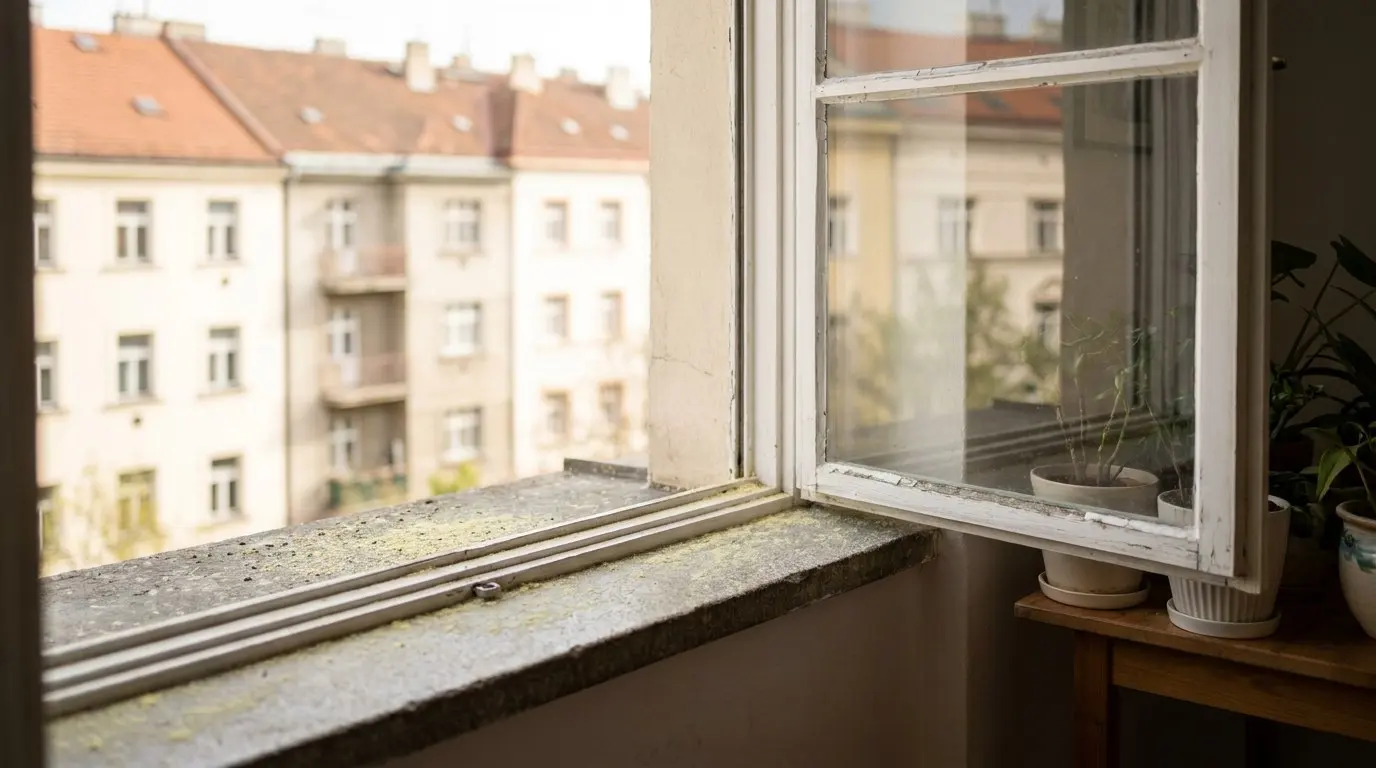
Washing your windows after pollen season seems straightforward enough—until you take a closer look at your windowsills in late May. In Prague, as in most urban areas, the mess isn’t just simple dust. It’s a stubborn cocktail of yellow pollen, gritty street soot, and a greasy urban film that clings to glass and frames alike. If you approach this like a standard spring cleaning, you’ll likely find yourself just moving the pollen around or, worse, dragging it right back into your living room.
Why post-pollen windows are a different problem from normal spring dirt
We all know what standard spring dirt looks like: a few fingerprints on the inside, some dried raindrops on the outside, and perhaps a thin layer of dust on the sill. Post-pollen grime is a much trickier beast. Pollen doesn't just sit politely on the surface; it settles into the existing traffic dust and bonds with the residue on your frames, creating a sticky film that smears rather than lifts away.
The glass is often just the tip of the iceberg. The real buildup hides in the frame corners, drainage channels, seals, sliding tracks, and the inner sill where the window stands open. Professional cleaners see this constantly in Prague apartments, especially those near busy roads or tram lines, or in older buildings where windows are kept open for ventilation. The glass might look dull, but the true filth is hiding just a centimeter to the side.
For allergy sufferers, this buildup is more than just an eyesore; it changes the very environment of the home. A windowsill can look only mildly dirty while still making a room feel dusty all day long. If you wipe a frame carelessly or create a draft while cleaning, that fine residue is kicked back into the air. If your home still feels "heavy" even after a thorough vacuuming, the culprit is often sitting right there in the window zone.
Of course, a modern, tightly sealed flat requires a different touch than a classic rental in Žižkov or Holešovice. In newer buildings, the grime is usually concentrated on the exterior. In older city apartments, where ventilation is more organic and frames have seen years of seasonal residue, the cleanup requires a much more methodical approach.
What to prepare before you clean the glass, frames, and sills
You don't need an exhaustive shopping list to get the job done right; you just need the right sequence and a few practical tools. A vacuum with a soft brush attachment is a lifesaver here. Beyond that, gather two or three microfiber cloths, a bucket of lukewarm water, mild dish soap (or a gentle window cleaner), a squeegee, and a detail brush—an old toothbrush works perfectly for corners and tracks.
Be mindful of your frame materials. Plastic (uPVC) frames generally handle mild soapy water well. Wooden frames, however, require a lighter touch and less moisture to avoid damage. Aluminum frames should never be scrubbed with anything abrasive; even if the dirt seems stuck, a rough sponge can leave permanent marks that become painfully visible when the sun hits the frame.
What should you avoid? Keep strong degreasers away from rubber seals, stay away from rough sponges on coated surfaces, and avoid the urge to frantically wipe dry surfaces. Dry cleaning only works in specific spots where pollen is loose in corners. On glass or smooth sills, a dry cloth usually just creates a hazy smear that’s even harder to remove.
One vital tip for those with allergies: deal with the collected debris immediately. Empty your vacuum, toss out disposable wipes, and don't let the grime sit in an open kitchen bin. It might seem like a small detail, but you've already disturbed the pollen once—don't give it a second chance to circulate through your home.
The right cleaning order so pollen does not come back into the flat
The secret to a professional-grade finish is the order of operations. Never start with the glass. Instead, tackle the areas where grime accumulates in thick layers: the sills, frame corners, tracks, seals, and insect screens. Loosen and remove the bulk of the residue before you ever introduce a damp cloth.
A professional cleaning sequence looks like this:
- Minimize airflow: Close other doors and windows to prevent drafts.
- Dry removal: Vacuum or gently brush away loose pollen from sills, frame edges, and corners.
- Wipe frames: Use a damp cloth to clean frames and sills from top to bottom.
- Detail work: Clean the tracks, drainage holes, and seals individually.
- The glass: Wash the panes only after the surrounding surfaces are clean and under control.
- The final check: Ensure no dirty water has dripped from the frame onto your fresh glass.
The "top to bottom" rule is essential. The upper edge of a window frame often hides a surprising amount of fine dust. If you leave it for last, it will simply fall onto the glass you just spent time polishing. Similarly, cleaning from the inside out ensures you stabilize the interior environment before tackling the heavier outdoor mess.
A common mistake is creating a cross-draft. Opening every window and door while dry-dusting is the fastest way to move pollen from your windowsills onto your sofa, dining table, and bed. During peak pollen weeks, a "slow and steady" approach wins: less air movement, less dry wiping, and more deliberate movements.
In older Prague rentals, pay special attention to the drainage holes and hinges. If you flood these areas with water too early, you'll turn dry yellow dust into a muddy sludge that seeps into the tracks. A quick pass with a cotton swab or detail brush beforehand will save you from having to clean the same mess twice.
How to clean frames, tracks, and sills without residue or streaks
Yellow pollen buildup lingers longest in the spots a standard cloth can’t reach. Look closely at the frame corners, lower rails, balcony door tracks, and the folds of the rubber seals. On white plastic, this shows up as a dull grey tinge; on darker frames, it looks like greasy smudges. On wooden frames, it tends to hide around the hardware and along fine seams.
The most effective method is straightforward: vacuum first, then use a lightly damp brush to loosen the residue. Wipe the gunk away with a clean cloth rather than pushing it deeper into the crevices. If the grime is particularly sticky, let a mild cleaner sit for thirty seconds—but no longer. There’s no benefit to soaking the frames.
Apply the same logic to the sills: remove the loose layer, wipe with a damp cloth, and then dry immediately. If someone asks how to clean window sills during pollen season, that is the practical answer: lift the loose dust first, then wipe, then dry before residue can settle again. If a sill is left to air-dry, any remaining fine dust will dry into a visible film, making it feel like you never cleaned it at all.
Don't neglect the seals. Most people run a cloth over the frame and call it a day, yet the rubber seals often hold more pollen than the glass itself. A quick pass with a damp cloth followed by a dry one is usually all it takes. This job rewards patience and technique over aggressive chemicals.
Insect screens are another hidden culprit. If they’ve been in place all through May, they are likely saturated with pollen. Every time you open the window, that residue vibrates loose and drops back onto the sill. If you’re doing a deep clean, remove the screens, rinse them thoroughly, let them dry, and only then reinstall them.
If you’re struggling with streaks on your glass, the problem usually isn't your glass cleaner—it’s a contaminated cloth or squeegee. If your frames aren't clean, they’ll keep dirtying your tools, leading to a never-ending cycle of smearing.
How to keep windows cleaner for the rest of pollen season
A quick maintenance routine is far more effective than a grueling top-to-bottom scrub every weekend. That is also why window cleaning after pollen season should be followed by lighter upkeep instead of a full reset every few days. Take ten minutes every few days to wipe down the interior sills and the lower frame edges. Check the tracks once a week and deal with buildup while it's still light.
Strategic ventilation also helps. On high-pollen days, wait for a burst of rain or air out the rooms early in the morning rather than leaving windows cracked open at midday. In central Prague, pollen is rarely the only issue; it mixes with city soot, creating a residue that behaves differently than the "cleaner" pollen found in the suburbs.
Professional help is worth considering if you have large glass partitions, hard-to-reach French windows, or if your allergies make the cleaning process a health hazard. While most people can manage a quick wipe of the glass, the meticulous cleaning of frames and sill joints is where professional expertise really shines.
If you’d rather spend your weekend enjoying the Prague spring instead of chasing yellow dust around your flat, ČistýKout is a Prague-based option worth considering. You can send a no-pressure enquiry through the contact form and let us know the size of your flat and what kind of windows need attention most.